
Sauces & Condiments
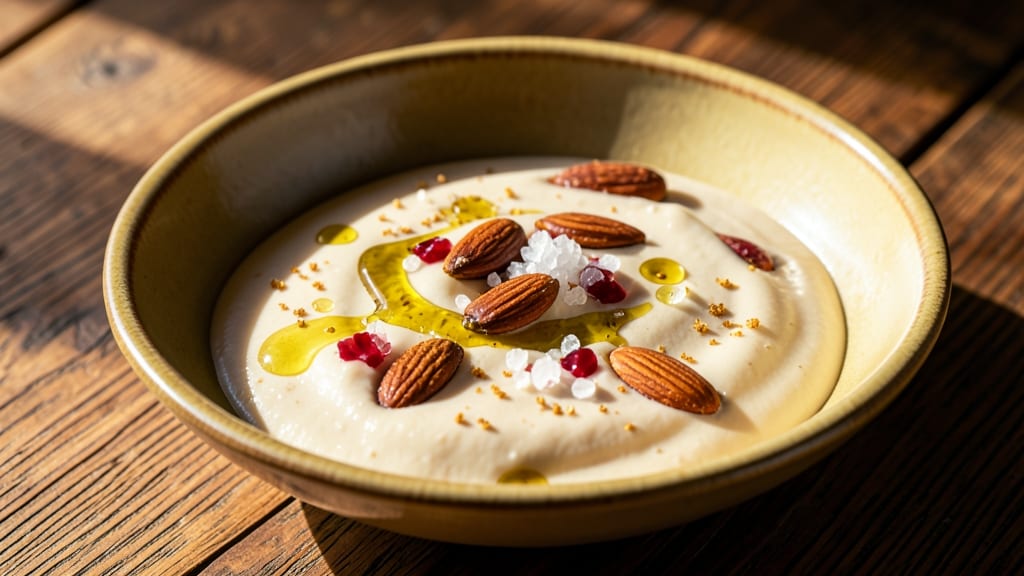
This almond sauce recipe transforms simple ingredients into a velvety, nutty condiment that elevates everything from salads to dips. The secret lies in blending toasted almonds with warm broth and a touch of lemon, creating a sauce that's rich yet balanced—no heavy cream required.
I developed this version after testing countless combinations, and it consistently delivers that perfect harmony of nutty depth and subtle tang.
The process is straightforward: toast whole almonds until fragrant, then blend them with warm broth, lemon juice, and a pinch of salt until silky smooth.
No special equipment needed beyond a high-speed blender, and the result is a sauce that's versatile enough for drizzling over roasted vegetables or thinning into a dressing. The texture is thick enough to cling to ingredients but light enough to enhance rather than overpower flavors.
What sets this almond sauce apart is its ability to adapt to any dish while maintaining its signature creaminess. Use it as a dip for fresh fruit, a dressing for grain bowls, or even a finishing sauce for grilled meats.
The lemon brightens the natural sweetness of the almonds, while the toasted nut flavor adds complexity that store-bought versions simply can't match.
Best of all, this recipe makes enough for multiple uses—store it in the refrigerator for up to five days or freeze for longer shelf life. The simplicity of the ingredients makes it budget-friendly, while the professional results will impress anyone who tries it.
Ready to elevate your meals with this nutty, creamy sauce?
Ingredients for almond sauce
Eight simple ingredients transform into a velvety almond sauce perfect for dips and dressings.
| Ingredient | Amount | Notes |
|---|---|---|
| Whole Almonds 🥜 | 1 cup | Raw, unsalted, toasted until fragrant |
| Vegetable Broth 💧 | 1 ½ cups | Low-sodium, warm for blending |
| Extra-Virgin Olive Oil 🫒 | ¼ cup | High-quality, fruity variety |
| Fresh Lemon Juice 🍋 | 2 tbsp | Strained, from organic lemons |
| Granulated Garlic 🧄 | 1 tsp | Finely ground for subtle flavor |
| Diamond Crystal Kosher Salt 🧂 | ½ tsp | Fine grain, adjust to taste |
| Ground Cinnamon 🌿 | ¼ tsp | Toasted for deeper aroma |
| Pure Vanilla Extract 🌸 | ½ tsp | High-quality, for subtle sweetness |
| Water 💧 | ¼ cup | Room temperature, for thinning |
The quality of your almonds is non-negotiable. Whole Foods or Trader Joe's carry excellent raw, unsalted varieties—avoid pre-toasted nuts, as they lack the fresh, toasted aroma. Toasting your own almonds in a dry skillet over medium heat until fragrant (about 5 minutes) unlocks their full nutty potential. For the vegetable broth, Pacific Foods or Imagine brands offer low-sodium options that won't overpower the delicate almond flavor. The extra-virgin olive oil should have a peppery finish—California-based brands like Corto or Colavita excel in this department. Fresh lemon juice is essential; bottled versions lack the bright acidity needed to balance the sauce's richness. If you can't find organic lemons, any high-quality variety works, but strain the juice thoroughly to avoid bitterness.
No whole almonds? Almond butter works in a pinch, but the texture will be thicker—thin with extra water as needed. Substituting vegetable broth for white wine or apple cider adds complexity, though the sauce will have a slightly different profile. Swap extra-virgin olive oil for avocado oil at a 1:1 ratio, but expect a milder flavor. If you're avoiding garlic, asafetida powder at 1/4 tsp mimics its savory depth without the pungency. For a sweeter version, increase the vanilla extract to 1 tsp or add 1 tsp of honey, though the original recipe balances nutty richness with subtle tang perfectly. The cinnamon is subtle but enhances the almond's natural sweetness—omit if you prefer a cleaner flavor.
This almond sauce thickens as it cools, so add water gradually if you prefer a thinner consistency. Store in an airtight container in the refrigerator for up to 5 days, or freeze for 3 months—portion into ice cube trays for single-use servings. The sauce thickens further when chilled, so thin with a splash of warm water before serving if needed. For best results, blend the sauce immediately after toasting the almonds, as their oils release more efficiently when warm. The sauce pairs beautifully with roasted vegetables, grilled meats, or as a dip for fresh fruit—its versatility makes it a pantry staple worth repeating.
Why You'll Love This Recipe
- Five-Ingredient Magic: I swear, this sauce comes together with what’s already in my pantry. Toast the almonds while you chop garlic—no fancy techniques, just heat and patience. The broth reduces in minutes, and that lemon brightens everything up like a secret handshake.
- Nutty, Tangy, Irresistible: That first bite of creamy almonds with garlic’s punch and lemon’s zing? It’s the kind of flavor that makes you pause mid-spoonful. Honestly, I’ve drizzled it over roasted veggies, tossed it with pasta, and even slathered it on grilled chicken—every time, I reach for more.
- Dinner Party Ready: Between us, this sauce is my go-to for when friends drop by unexpectedly. It’s fancy enough for a charcuterie board but simple enough to throw together while the wine chills. The almonds add texture, the olive oil keeps it rich, and the lemon ties it all together—no one will guess it took less than 20 minutes.
- Leftovers That Don’t Suck: I make a double batch on Sundays because this sauce improves after sitting overnight. The flavors meld, the almonds get even nuttier, and it’s still just as good the next day. Freeze half for when you’re too tired to cook—thaw, reheat, and voila. Budget-friendly, too, since almonds and broth stretch far.
Step-by-step instructions for almond sauce recipe
Here's the method for crafting velvety almond sauce that balances nutty richness with bright acidity.
Toast the Whole Almonds Until Fragrant
Preheat your oven to 350°F and spread the 1 cup whole almonds evenly on a baking sheet. Toast for 8-10 minutes until they turn a light golden brown and release an intoxicating nutty aroma. Stir halfway through to ensure even toasting.
Watch closely after 7 minutes—the almonds should be golden but not dark brown. Remove immediately when fragrant, as they'll continue cooking slightly on the hot sheet. Let cool for 5 minutes before processing, which prevents the oil from separating later. The toasted almonds form the flavor foundation of this sauce.
Blend Warm Broth with Toasted Almonds
Transfer the toasted almonds to a high-speed blender along with the 1.5 cups warm vegetable broth and 0.25 cup extra-virgin olive oil. Blend on high for 30-45 seconds until the mixture becomes a thick, creamy paste. The warmth of the broth helps emulsify the almonds more effectively than cold liquid would.
Scrape down the sides with a spatula to ensure all almonds are incorporated. You'll notice the mixture thicken significantly as the almonds break down. This initial blend creates the sauce's velvety texture—don't rush this step, as proper emulsification is critical for the final consistency.
Incorporate Aromatics and Acid
With the blender running on low speed, gradually add the 2 tbsp fresh lemon juice, 1 tsp granulated garlic, 0.5 tsp diamond crystal kosher salt, and 0.25 tsp ground cinnamon. The lemon juice prevents the sauce from becoming overly rich while brightening the almond flavor. Blend for an additional 1 minute until completely smooth.
Here's where the sauce transforms from nutty to balanced. The cinnamon adds warmth, while the garlic provides subtle depth. Taste the mixture at this stage—it should be rich but not overpowering. If it's too thick, add the 0.25 cup room temperature water in 1-tablespoon increments until you reach a pourable consistency.
Finish with Vanilla and Strain
Remove the blender from heat and stir in the 0.5 tsp pure vanilla extract by hand. The vanilla enhances the sauce's complexity without overpowering the almond flavor. Let the mixture sit for 2 minutes to allow the vanilla to meld with the other ingredients.
Line a fine-mesh strainer with cheesecloth and place it over a clean bowl. Pour the almond mixture through the strainer, pressing gently with a spatula to extract all the liquid. This step ensures a silky texture without any almond grit. The strained sauce should be smooth enough to drizzle or dip with ease.
Pro Tips For Making Almond Sauce
- TOAST ALMONDS LOW: Simmer them on medium-low until golden, not brown—overheating turns them bitter fast. I learned this the hard way after one batch tasted like burnt peanut butter.
- GRIND ALMONDS FINE: Pulse them in batches until they’re almost powder but still slightly textured—too fine means gluey sauce. A food processor beats a blender here; it’s more precise.
- SALT THE BROTH: Season the vegetable broth before adding it to the almonds—it balances the sauce better than tossing salt in later. Trust me, your taste buds will notice.
- STRAIN OR NOT: If you want a silky sauce, strain out the almond pulp. If you prefer texture, skip it—but know it’ll thicken faster. I usually strain, then save the pulp for garnish.
Wine and beer pairings for this almond sauce
Crisp Whites
Aromatic whites like Sauvignon Blanc from New Zealand or Albariño from Spain cut through the sauce’s richness with their citrus and herbal notes. The zesty acidity of Sauvignon Blanc mirrors the lemon in the sauce, while Albariño’s bright minerality complements the almond’s nuttiness.
Serve slightly chilled—around 45-50°F—to highlight these refreshing qualities. 🍷
Light Reds
For a red wine pairing, opt for Pinot Noir from Oregon or Grenache from Spain. These wines offer subtle fruit notes that harmonize with the vanilla and cinnamon in the sauce without overpowering the almond’s delicate flavor.
A Pinot Noir with its earthy undertones balances the sauce’s creaminess beautifully, while a Grenache’s juicy red berries add a playful contrast. Decant for 30 minutes to soften tannins and enhance aroma.
Dry Rosés
Dry rosés, especially Provence-style or Spanish Garnacha Rosado, are underrated but perfect for this sauce. Their dry, crisp profile and red fruit undertones bridge the nutty and tangy elements seamlessly. Look for a rosé with low residual sugar—around 2-3 grams per liter—to avoid clashing with the sauce’s richness.
Pair with grilled meats or roasted vegetables drizzled with the almond sauce for a refreshing contrast.
Beer Pairings
A Belgian Witbier like Hoegaarden or Stella Artois works surprisingly well, thanks to their citrusy coriander notes and light effervescence. The wheat beer’s subtle sweetness and tangy finish echo the lemon and vanilla in the sauce.
For a darker option, try a German Helles Lager—its malty backbone and clean finish provide a neutral yet satisfying contrast to the almond’s creaminess. Serve the beer ice-cold (38-42°F) to enhance its crispness.
Non-Alcoholic Options
For a refreshing non-alcoholic match, sparkling water with a twist of lemon or ginger beer works beautifully. The carbonation cleanses the palate between bites, while the ginger’s spice complements the sauce’s warmth. Alternatively, a cucumber-mint infused water adds a cooling contrast to the rich almond sauce.
For a slightly sweeter option, try sparkling apple cider—its bright acidity and hint of sweetness mirror the sauce’s balanced profile.
Coffee Pairing
If you’re serving the almond sauce with desserts or as a dip for fruit, a light to medium roast coffee enhances the flavors. A single-origin Ethiopian Yirgacheffe with its floral and citrus notes pairs wonderfully, while a Swiss Water Process decaf preserves the sauce’s delicate nuances.
Brew at 195-205°F for a smooth, aromatic cup that won’t overpower the almond’s natural sweetness. 💫
Nutrition facts
Frequently asked questions
Can I make this almond sauce without a high-speed blender?
A regular blender will work, but you may need to pulse more frequently and add extra 0.25 cup water to achieve a smooth texture. For the creamiest results, process in batches and scrape down the sides often. If you don't have a blender at all, try a food processor—just know the texture will be slightly thicker and may require more thinning.
How can I adjust this recipe for a sweeter almond sauce?
Add 1-2 teaspoons of honey or 1 teaspoon of maple syrup to the strained sauce while blending. For deeper sweetness, increase the vanilla extract to 1 teaspoon or add a pinch of ground cardamom—it pairs beautifully with almonds. Taste as you go to avoid overpowering the natural nutty flavor.
Will this almond sauce thicken when refrigerated?
Yes, the sauce naturally thickens as it cools. To prevent this, store it in the fridge with a 1-tablespoon splash of warm water per 4 servings. When ready to use, thin with additional water or warm broth if needed. The texture should be smooth and drizzle-friendly—never grainy.
Can I use this sauce as a marinade for meats?
While this sauce works well as a finishing drizzle, it's not ideal for marinating due to its delicate balance of flavors. Instead, use it as a post-grilling glaze or serve alongside meats like chicken or fish. For marinating, consider a nut-based marinade with almond butter, olive oil, and herbs instead.
How do I prevent the sauce from separating?
Separation usually happens if the almonds aren't properly emulsified. Always blend with warm (not hot) broth and scrape down the sides frequently. For extra insurance, add 1/4 teaspoon of xanthan gum while blending—it stabilizes the texture without altering flavor. Store in an airtight container to maintain consistency.