
Appetizers
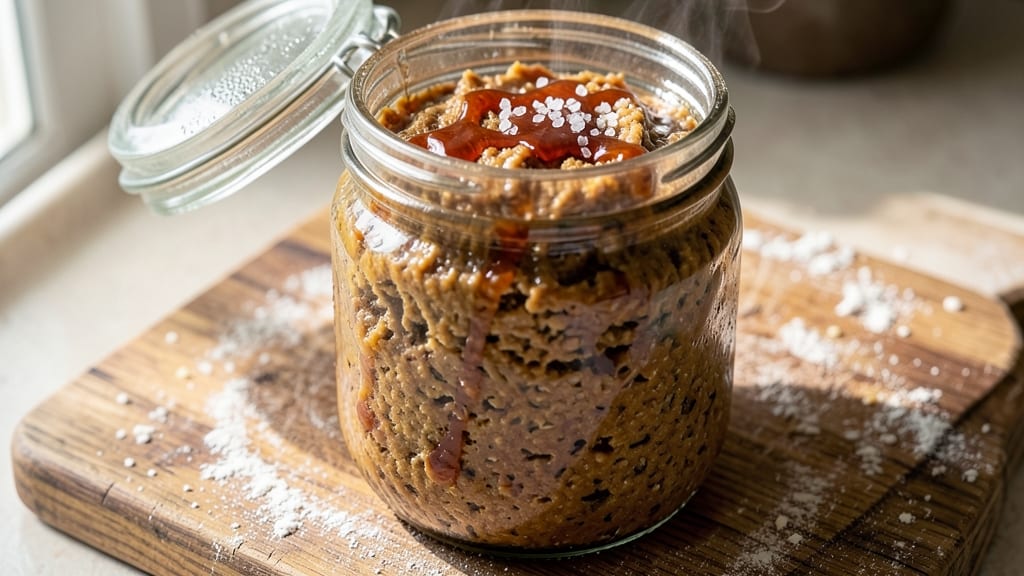
Creating an authentic Amish friendship bread starter without yeast unlocks the secret to that signature rustic flavor and airy texture using just flour and water.
This traditional method relies on natural fermentation, where wild yeast and bacteria in the flour develop over time, creating a tangy, slightly sweet starter that forms the heart of every loaf. The Amish have perfected this technique for generations, passing down the art of patience and precision in baking.
The beauty of this recipe lies in its simplicity—no commercial yeast, no complex ingredients, just flour and water. What makes it special is the overnight fermentation process, where the dough develops its signature open crumb and rich flavor.
This method also eliminates the need for kneading, keeping the process accessible even for beginners while delivering restaurant-quality results at home.
By following this recipe, you’ll achieve a loaf with a crisp golden crust and a tender, slightly chewy interior, all infused with the natural tang of the sourdough starter. The aroma alone will transform your kitchen into a warm, inviting space, just like the Amish kitchens where this tradition began.
This bread is perfect for sharing—whether as a gift or a centerpiece for any meal.
The key to success is consistency in feeding your starter and allowing the dough to rise slowly. With just a few simple steps, you’ll create a loaf that tastes like a slice of homemade tradition.
Let’s get started on this timeless recipe that brings a taste of Amish craftsmanship to your table.
Ingredients for amish friendship bread starter recipe without yeast
Just flour, water, and time—no yeast needed for this traditional Amish sourdough magic.
| Ingredient | Amount | Notes |
|---|---|---|
| All-Purpose Flour 🌾 | 2 cups | Unbleached, organic preferred |
| Unchlorinated Water 💧 | 1 cup | Room temperature, filtered |
| Granulated Sugar 🍯 | ½ tsp | White or raw cane sugar |
| Sea Salt 🧂 | ¼ tsp | Fine grain preferred |
| Whole Wheat Flour 🌾 | ½ cup | For added nutrition |
| Honey 🍯 | 1 tbsp | Raw, unprocessed preferred |
| White Vinegar 🍶 | 1 tsp | For initial acidity boost |
| Rice Flour 🌾 | ¼ cup | For lighter texture |
| Active Sourdough Starter 🍞 | ½ cup | From previous batch or store-bought |
The flour choice matters—organic, unbleached all-purpose is standard, but the Amish often used stone-ground wheat flour. King Arthur or Bob's Red Mill are reliable brands. For the whole wheat portion, look for 100% whole grain with no additives. The rice flour adds lightness; Bob's Red Mill sells it in bulk. Store flour in airtight containers away from heat to preserve its natural wild yeast. If you're in a humid climate, add a silicone packet of rice to absorb moisture.
No white vinegar? Lemon juice at the same amount works equally well. Running low on honey? Maple syrup or agave nectar are direct swaps, though they may slightly alter the flavor profile. For the active starter, if you're starting from scratch, feed daily with equal parts flour and water for 5-7 days until bubbly. If using store-bought, check the expiration date—it should be active, not dormant. The salt can be omitted if you're sensitive to sodium, but it helps regulate fermentation.
This starter keeps indefinitely in the fridge, but feed it weekly to maintain activity. For long-term storage, freeze portions in ice cube trays. When ready to bake, let it sit at room temperature for 2-4 hours before using. The golden rule: if it smells like vinegar or has a grayish tint, discard and start fresh. A properly maintained starter should have a tangy, slightly sweet aroma and a bubbly, domed surface.
Why You'll Love This Recipe
- No Yeast Needed: Mixing this starter takes less effort than waiting for yeast to proof. Just flour, water, and a pinch of sugar—no waiting around for bubbles to form, no failed batches if you forget to proof it overnight.
- Sweet-Savory Balance: That touch of sugar and sea salt? It’s like a hug for your taste buds—warm, slightly tangy, and just sweet enough to make you reach for another slice. (Yes, I’ve been caught sneaking bites straight from the jar.)
- Weeknight Magic: Toss it into cornbread, pancakes, or even savory muffins—it disappears into any recipe without overpowering. My kids don’t even notice it’s “healthy” whole wheat flour doing the work.
- Never Wasted Dough: This starter keeps for weeks in the fridge, so you’re never scrambling for a last-minute loaf. Use a spoonful here, a spoonful there—no sad, hardened bread scraps left to toss. Budget-friendly and zero guilt.
Step-by-step instructions for Amish friendship bread starter
This method transforms simple ingredients into a robust starter without commercial yeast.
Combine Base Ingredients for Initial Fermentation
In a clean glass jar with a lid, mix the 2 cups all-purpose flour and 0.5 cup whole wheat flour thoroughly. The whole wheat flour adds nutrition and helps kickstart fermentation. Add the 1 cup unchlorinated water, 1 tsp white vinegar, and 1 tbsp honey to the dry mixture. Stir until a thick, shaggy batter forms—it should resemble wet sand rather than smooth dough.
Next, sprinkle in the 0.5 tsp granulated sugar and 0.25 tsp sea salt. The sugar feeds initial microbial activity while the salt regulates fermentation. Add the 0.5 cup active sourdough starter and stir vigorously for 2 minutes until fully incorporated. The mixture should be sticky but manageable. Cover the jar loosely with a cloth or lid (not airtight) and let it sit at room temperature.
Develop the Starter Over 24 Hours
Place the jar in a warm spot—ideally 75-80°F—away from direct sunlight. After 8 hours, you should notice small bubbles forming on the surface and sides of the jar. This indicates fermentation is beginning. Stir the mixture gently to redistribute any settled ingredients, then re-cover.
By 24 hours, the starter should have doubled in volume and developed a tangy, slightly sour aroma. If it hasn't bubbled significantly, extend the fermentation to 36 hours. The starter is ready when it passes the "float test"—drop a small spoonful into a glass of water. If it floats, it's active enough to use. If not, continue fermenting for another 12 hours and test again.
Incorporate Rice Flour for Texture Refinement
Once the starter has proven active, transfer it to a mixing bowl. Add the 0.25 cup rice flour and mix thoroughly. The rice flour lightens the texture and improves elasticity in the final bread. The combination of all-purpose, whole wheat, and rice flours creates a balanced starter with better rise and crumb structure.
Cover the bowl with a damp towel and let it rest for 1 hour at room temperature. This allows the rice flour to fully hydrate and integrate. The mixture should remain sticky but slightly more cohesive than before. If it feels too dry, add 1 tablespoon unchlorinated water and mix again.
Final Fermentation and Storage Preparation
Return the starter to the glass jar and place it back in the warm environment for 12-24 hours to fully mature. The starter should now exhibit vigorous bubbling, a pronounced sour aroma, and a slightly domed surface. This indicates peak fermentation and readiness for baking.
For long-term storage, refrigerate the starter in an airtight container. Before using, remove it from the fridge and let it sit at room temperature for 4-6 hours to revive. Feed it with 1 cup all-purpose flour and ½ cup water, then ferment for 4-6 hours until bubbly before baking. This starter can be maintained indefinitely with regular feedings.
Pro Tips For Making Amish Friendship Bread Starter Recipe Without Yeast
- Use Lukewarm Water: DESCRIPTION:
- Mix Whole Wheat Last: DESCRIPTION:
- Don’t Stir Too Often: DESCRIPTION:
- Store in a Glass Jar: DESCRIPTION:
Creative variations of this amish friendship bread starter recipe without yeast
Amish-Inspired Variations
The traditional Amish recipe uses just flour and water, but you can enhance it with local ingredients for a regional twist. In Pennsylvania Dutch Country, add 1 tbsp ground cinnamon and ½ tsp nutmeg to the dough for a spiced variation.
For a Midwestern touch, swap the honey for maple syrup and fold in ½ cup buttermilk—this creates a denser, slightly tangy loaf perfect for hearty breakfasts. 🌾
Gluten-Free Adaptation
For a gluten-free version, replace the all-purpose flour with a 1:1 gluten-free flour blend (like Bob’s Red Mill 1-to-1) and add ½ cup tapioca starch for elasticity. The rice flour in the original recipe already helps, but this blend ensures a lighter crumb.
Reduce the fermentation time to 18-20 hours—gluten-free starters ferment faster. Store-bought gluten-free starters (like King Arthur’s) can also kickstart the process. 💫
Sweet and Savory Twists
Transform this into a sweet loaf by adding ½ cup raisins or dried cranberries and 1 tsp vanilla extract to the dough. For a savory version, mix in 1 tbsp dried rosemary and ½ cup grated Parmesan cheese—this works beautifully as a dinner roll.
Both variations keep the signature open crumb while adding new depth. The savory version pairs perfectly with homemade tomato soup.
Herbed and Whole-Grain Boost
Incorporate 1 tbsp fresh rosemary or thyme (finely chopped) and ½ cup spelt flour for a nutty, aromatic loaf. Spelt adds a subtle sweetness and improves digestibility, while the herbs brighten the natural tang.
For extra texture, sprinkle 1 tbsp sesame seeds on top before baking. This version is ideal for holiday gift baskets—its rustic charm and hearty flavor make it a standout. ✨
Overnight Sourdough Hack
Skip the long fermentation by using a pre-made sourdough discard (from a 7-day-old starter) instead of the active starter. Mix ½ cup discard with 1 cup all-purpose flour and ½ cup water, let it sit for 4 hours until bubbly, then proceed with the recipe.
This cuts prep time by half while keeping the authentic sourdough flavor. Perfect for busy bakers who still want that Amish-style tang. 💡
Seasonal Flavor Infusions
In fall, add ½ cup pumpkin puree and 1 tsp pumpkin pie spice for a festive loaf. For summer, swap the honey for agave nectar and fold in ½ cup blueberries—the acidity balances the sweetness beautifully.
In winter, a honey-cinnamon glaze (mix 2 tbsp honey with 1 tsp cinnamon) brushed on after baking adds warmth. Each season’s twist keeps this bread fresh and exciting year-round. 🌟
Nutrition facts
Frequently asked questions
How long does it take to create an active Amish sourdough starter?
With daily feedings, a basic starter typically becomes active within 5-7 days. The recipe you're using builds on this foundation, requiring an additional 24-36 hours of fermentation to develop the signature tang. For fastest results, use a pre-made discard from a 7-day-old starter—just mix it with flour and water for 4 hours before baking.
Can I use this starter for other baked goods besides friendship bread?
This versatile starter works beautifully for cinnamon rolls, pancakes, and even waffles. For rolls, replace ½ cup of the starter with melted butter and a touch of vanilla. In pancakes, use ¼ cup starter per batch for that authentic sourdough flavor. The key is maintaining a 1:1:1 ratio of starter-to-flour-to-water when feeding.
What if my starter smells like vinegar or looks gray?
This means your starter has gone bad—discard it immediately. A properly maintained starter should smell tangy (like yogurt) and have a bubbly, domed surface. To prevent this, always use unchlorinated water, store it in a clean glass jar, and feed it every 24 hours if refrigerated. For a fresh start, mix 1 cup flour + ½ cup water and let it ferment for 3 days before using.
Why does my bread turn out dense instead of light and airy?
Dense bread usually means under-fermentation or insufficient rice flour. Ensure your starter passes the float test (spoonful floats in water) before baking. Also, verify you've added the full ¼ cup rice flour—it's crucial for lightness. For extra lift, let the dough rise in a preheated oven with the light on (creates a warm, humid environment).