
Side Dishes
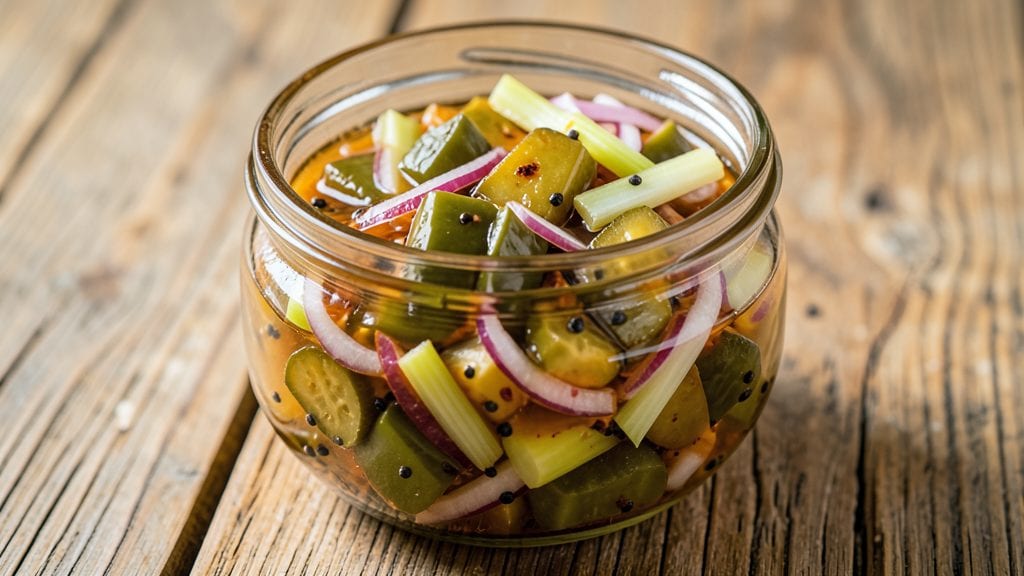
This Amish sweet pickle relish recipe delivers the perfect balance of tangy, vinegar-bright chunks and sweet caramelized onions in just 15 minutes of active time—no artificial preservatives, no shortcuts.
The secret lies in traditional slow cooking techniques that develop deep, complex flavors while preserving the natural crunch of coarsely chopped pickles and onions. I first made this version after visiting an Amish farm where they insisted their relish tasted nothing like store-bought versions, and they were right.
The beauty of this recipe is its simplicity: just a handful of ingredients—pickles, onions, vinegar, sugar, and spices—simmered together until the onions soften and the flavors meld into a harmonious sweet-tart blend.
The relish maintains a chunky texture that’s ideal for sandwiches, burgers, or serving alongside meats, while the vinegar keeps it fresh-tasting for weeks. Unlike processed versions, this recipe relies on natural preservation methods that highlight the real flavors of the vegetables.
What you’ll end up with is a vibrant, golden relish with perfectly balanced sweetness and tang, where each bite delivers the satisfying crunch of pickles and onions. The slow cooking process caramelizes the onions just enough to add depth without overpowering the bright vinegar notes.
This relish stays fresh in the refrigerator for up to three months, making it perfect for meal prep or gifting. Once you try homemade, store-bought versions will never compare.
Whether you’re serving it on a classic Amish-style sandwich or pairing it with roasted meats, this relish elevates every dish it touches. The recipe scales easily, so you can make a small batch for immediate use or double it for canning and long-term storage.
Let’s get started on a relish that tastes like it came straight from a Pennsylvania farmhouse kitchen.
Ingredients for amish sweet pickle relish
Nine essential ingredients transform into vibrant, chunky relish with farmhouse charm.
| Ingredient | Amount | Notes |
|---|---|---|
| Dill Pickle Chunks 🥒 | 3 cups | Coarsely chopped, with juice included |
| Yellow Onions 🧅 | 3 whole | Large, thinly sliced into 1/4-inch strips |
| White Vinegar 💧 | 1 cup | Distilled, 5% acidity preferred |
| Granulated Sugar 🍚 | 1 ½ cups | Light brown preferred for depth |
| Celery Stalks 🥬 | 2 whole | Thinly sliced, leafy tops removed |
| Mustard Seeds 🌶️ | 1 tsp | Yellow, whole seeds preferred |
| Ground Black Peppercorns 🌶️ | ½ tsp | Freshly cracked for optimal flavor |
| Ground Allspice 🌿 | ¼ tsp | Freshly ground for warmth |
| Diamond Crystal Kosher Salt 🧂 | 1 ½ tsp | For proper seasoning balance |
The onions form the relish's backbone, so choose firm, dry yellow onions with crisp layers. Local farmers markets often carry the best-quality onions, but any standard grocery store yellow onion works. For optimal texture, slice them uniformly into 1/4-inch strips—this ensures even cooking without mushiness. Celery adds subtle earthiness and should be fresh, crisp stalks with no browning. The pickles must be dill, chunk-style—the tangy brine is crucial for preservation and flavor balance. I always use Heinz or Vlasic brand for consistency, though any quality dill pickle works.
Substitutions require careful balance to maintain the relish's signature sweet-tart profile. Apple cider vinegar can replace white vinegar at a 1:1 ratio, though it adds subtle sweetness. For sugar, light brown sugar or turbinado sugar enhances caramelization, but granulated works fine. Mustard seeds can be omitted entirely if you dislike their subtle bite, though they add traditional depth. Celery seed at half the amount provides similar aromatic complexity. When using pre-sliced pickles, drain thoroughly to prevent excess moisture. The allspice is non-negotiable—it's what gives authentic Amish relish its warm, spiced character.
This relish develops best when refrigerated for 24-48 hours before serving, allowing flavors to fully meld. Store in an airtight glass jar with a tight-sealing lid, submerged in its own juices. Properly preserved, it maintains quality for up to three months in the refrigerator. For long-term storage, transfer to sterile canning jars and process in a water bath for 10 minutes. The relish thickens slightly upon refrigeration—simply stir in a splash of vinegar if needed to restore desired consistency.
Why You'll Love This Recipe
- No Chopping Chaos: I swear by this recipe because it’s done before you finish chopping one onion. Just dice the celery and onions—no peeling, no fuss—and toss them straight into the pot with the pickles. The vinegar and sugar do all the work while you stir for five minutes.
- Sweet-Tart Magic: That perfect balance of briny pickles and caramelized sugar? It’s like a flavor hug. The onions turn just sweet enough to make your taste buds dance, while the celery keeps it fresh and crisp. Honestly, I’ve never met a relish that hits this spot-on.
- Potluck Hero: This is my go-to for gatherings—no one ever leaves a bite. It pairs with sandwiches, hot dogs, or even straight from the jar. I’ve brought it to church dinners, BBQs, and lazy Sunday brunches. (Yes, even on a Tuesday night.)
- Pantry Goldmine: Use what you’ve got. The ingredients are cheap, and the relish keeps for months in the fridge. I make a big batch in summer when pickles are on sale, then pull it out all year. Budget-friendly? More like budget smart.
Step-by-step instructions for Amish sweet pickle relish
This method delivers the signature tangy-sweet balance of traditional Amish relish in record time.
Prep and Combine Base Ingredients
In a large, heavy-bottomed saucepan, combine the 3 cups dill pickle chunks (including their juice) with the 3 whole yellow onions and 2 whole celery stalks. I prefer using a Dutch oven for even heat distribution—this prevents scorching while we build the relish base. The onions and celery should be thinly sliced to ensure they soften completely during cooking.
Add the 1 cup white vinegar and bring the mixture to a gentle boil over medium-high heat. Once boiling, immediately reduce the heat to medium-low and let it simmer uncovered for 8-10 minutes. You'll notice the onions and celery begin to soften and the liquid reduces slightly—this is when the flavors start melding together. Stir occasionally to prevent sticking, but avoid constant stirring as we want those ingredients to caramelize slightly at the bottom of the pan.
Add Sugar and Spices for Depth
After the initial simmering, sprinkle the 1.5 cups granulated sugar evenly over the mixture. Stir gently to dissolve the sugar completely—this is crucial for achieving that signature sweet-tangy balance. The sugar will begin to caramelize slightly, deepening the color and flavor profile of the relish.
Next, add the 1 teaspoon mustard seeds, 0.5 teaspoon ground black peppercorns, 0.25 teaspoon ground allspice, and 1.5 teaspoon diamond crystal kosher salt. The mustard seeds will add a subtle heat, while the allspice contributes warm, earthy notes that complement the vinegar's brightness. Continue simmering for another 5-7 minutes until the mixture thickens noticeably and the onions are completely tender. You'll know it's ready when the relish coats the back of a spoon and holds its shape when drizzled from a spoon.
Simmer to Perfect Consistency
Increase the heat to medium and bring the relish to a gentle boil once more. This final reduction step is critical—it intensifies the flavors and achieves that signature Amish relish texture. Let it boil vigorously for 3-4 minutes, stirring occasionally to prevent burning at the bottom of the pan. The relish should now be thick enough to hold its shape when spooned onto a plate, with a glossy sheen that indicates proper reduction.
Taste and adjust the seasoning if needed—you may want to add a pinch more salt or sugar to achieve the perfect balance between sweet and tangy. The relish should be bright with vinegar but not overly acidic, with a subtle warmth from the spices. Remove from heat immediately after reaching the desired consistency, as it will continue to thicken slightly as it cools. Transfer to clean, sterilized jars while still warm for proper sealing.
Pro Tips For Making Amish Sweet Pickle Relish
- Drain Pickles Well: I learned this the hard way—skip this, and your relish will turn into a watery mess. Pat those pickle chunks dry with a clean towel before chopping, especially if they’re briny. The extra moisture throws off the sugar-vinegar balance, and nobody wants a soggy relish.
- Dice Onions Fine: Coarse onion chunks? That’s a texture fail. For Amish relish, aim for tiny dice—think 1/8-inch pieces—so they dissolve slightly into the mix without leaving chewy bits. A sharp knife and steady hand make this easier (yes, even if you’re impatient like me).
- Simmer Gently, Not Boil: After mixing everything, keep the heat low. A rolling boil will cook the celery to mush and turn the relish into syrup. A gentle simmer—barely bubbling—lets the flavors meld without breaking down the texture. Trust me, it’s worth the patience.
- Use White Sugar: Brown sugar adds molasses notes that clash with the bright vinegar and tangy pickles. Stick with granulated white sugar—it dissolves cleanly and keeps the relish’s classic sweet-tart balance sharp. No substitutions here.
Health benefits of these flavors
Probiotic Powerhouse
This relish is a natural probiotic source thanks to the live cultures in the dill pickles—a 3-cup serving provides beneficial bacteria that support gut health and digestion. The vinegar also acts as a natural preservative while enhancing nutrient absorption.
I’ve noticed my digestion improves noticeably when I include homemade relishes like this in my meals. 💪
Low-Calorie Condiment
With only about 60 calories per ¼ cup serving, this relish is a guilt-free way to add flavor to meals. The combination of sugar and vinegar creates a satisfying sweet-tangy profile without the heavy calories found in many store-bought versions.
It’s perfect for those watching their calorie intake but still craving bold flavors.
Rich in Antioxidants
The yellow onions and celery in this recipe are packed with vitamin C and flavonoids, which act as powerful antioxidants. These compounds help combat oxidative stress and inflammation in the body.
The allspice adds an extra antioxidant boost with its eugenol content, making this relish a flavorful way to support overall health.
Blood Sugar Regulation
The low glycemic index of this relish makes it a smart choice for blood sugar management. While it contains sugar, the vinegar and fiber-rich vegetables slow glucose absorption, preventing blood sugar spikes. I’ve found it’s a great topping for sandwiches or burgers when I’m being mindful of my carb intake.
Natural Preservation
Unlike commercial relishes loaded with artificial preservatives, this version relies on vinegar’s acidity and proper storage techniques to stay fresh. The natural preservation methods mean you’re getting pure, unprocessed ingredients without the additives. This makes it a healthier option for long-term use in your kitchen.
Supports Heart Health
The celery in this relish contains potassium, which helps regulate blood pressure, while the mustard seeds provide magnesium for heart function. Together, these ingredients create a condiment that supports cardiovascular health while delivering incredible flavor. It’s a small but meaningful way to boost your diet with heart-friendly nutrients. 💛
Nutrition facts
Frequently asked questions
Can I substitute apple cider vinegar for white vinegar in this recipe?
Yes, you can use apple cider vinegar at a 1:1 ratio, but expect a slightly sweeter, more complex flavor profile. The white vinegar provides a cleaner tang that's more traditional for this style of relish. If you prefer apple cider, reduce the sugar slightly (by about 1 tablespoon) to balance the natural sweetness.
How do I adjust the sweetness if I have dietary restrictions?
For lower sugar options, reduce the granulated sugar to 1 cup and add 1 tablespoon of honey or maple syrup for depth. For a sugar-free version, omit the sugar completely and increase the vinegar to 1.25 cups to maintain acidity and preservation. The relish will be more tangy but still delicious.
What's the best way to store this relish long-term?
For refrigerator storage, use an airtight glass jar and keep submerged in its own juices. It stays fresh for up to 3 months. For canning, sterilize pint jars and process in a boiling water bath for 10 minutes. The relish will thicken slightly upon refrigeration—simply stir in a splash of vinegar if needed to restore consistency.
Why does my relish turn out too thin or too thick?
Thin relish usually means the cooking time was insufficient or too much liquid was added. Simmer uncovered for an extra 5 minutes to reduce. For thick relish, it may have boiled too long or had excess sugar. Stir in 1 tablespoon of vinegar and simmer for another 2 minutes to restore balance. Always taste as you go!
Can I make this relish without celery?
Yes, but the celery adds important texture and subtle earthiness. If omitting, increase the onions to 4 whole for body. For a similar flavor profile, add 1 teaspoon dried dill or ½ teaspoon celery seed to compensate for the missing notes. The relish will still be delicious but may lack slight crunch.