
Sauces & Condiments
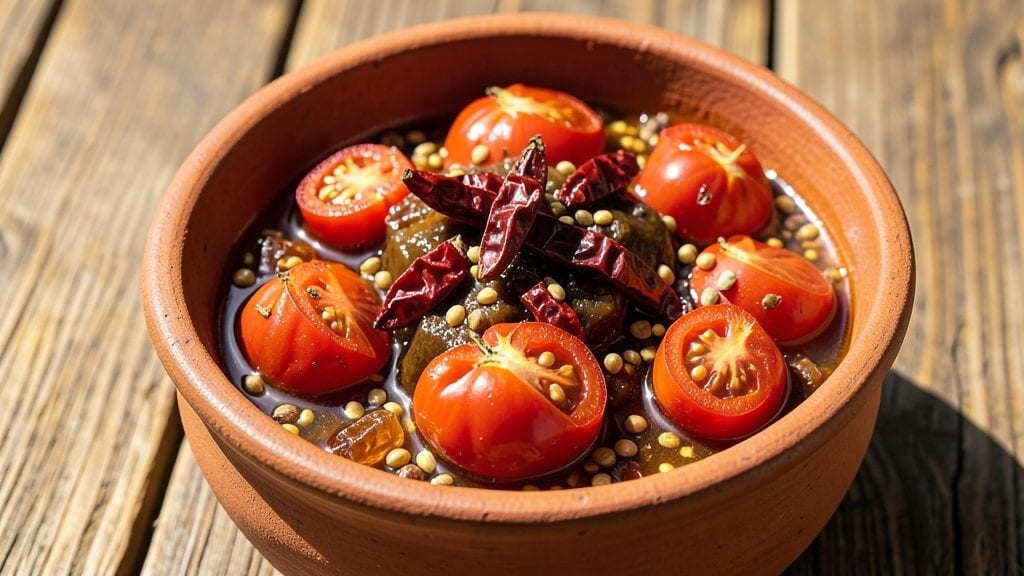
This Andhra tomato pickle recipe delivers the fiery tang and crunchy spice crystals that turn every meal into a celebration. Growing up in Boston, I never imagined how a South Indian condiment could become my kitchen's secret weapon—until I tasted its perfect balance of sweet, sour, and heat.
The tamarind base creates that signature tang, while dried chilies and mustard seeds develop into fragrant spice crystals that add depth with every bite.
The magic happens during the slow fermentation process, where the flavors meld into something complex yet approachable. Unlike quick pickles, this recipe requires patience—about two weeks—but the result is a condiment that lasts months and elevates rice, dosas, or even grilled meats.
The spice blend is precise: red chilies for heat, fenugreek for aroma, and jaggery for sweetness, all balanced by the tangy tamarind.
What you'll end up with is a vibrant red pickle with layers of flavor—crunchy spice crystals that burst between your teeth and a tangy-sweet sauce that coats every bite.
It's the kind of condiment that transforms simple meals into restaurant-quality experiences. The best part? It improves with age, so you'll want to make a big batch.
Perfect for pairing with steamed rice, dosas, or even as a bold topping for snacks. Here's how to make it the traditional way—authentic and unforgettable.
Ingredients for andhra tomato pickle
Ten ingredients transform into a condiment that turns every meal into a flavor explosion.
| Ingredient | Amount | Notes |
|---|---|---|
| Red Tomatoes 🍅 | 4 lbs | Roma or vine-ripened preferred |
| Tamarind Paste 🍯 | 1 ½ cups | Unsweetened, block preferred |
| Dried Red Chilies 🌶️ | 1 cup | Whole, medium-hot variety |
| Mustard Seeds 🌱 | ¼ cup | Whole, yellow preferred |
| Fenugreek Seeds 🌿 | 2 tbsp | Whole, lightly toasted |
| Jaggery 🍯 | 1 cup | Granulated or block form |
| Asafoetida 🌿 | ¼ tsp | Crushed, for aroma |
| Salt 🧂 | 1 ½ tbsp | Fine sea salt preferred |
| Turmeric Powder 🌶️ | 1 tsp | Freshly ground preferred |
| Cumin Seeds 🌿 | 1 tbsp | Whole, toasted lightly |
The tomatoes are the heart of this pickle—Roma tomatoes pack the best texture and acidity, but any firm, vine-ripened variety works. Grab them from Whole Foods or your local Indian grocery for the juiciest ones. Tamarind paste is non-negotiable—unsweetened block tamarind gives that authentic tang. If you can only find sweetened, reduce the jaggery by half. For the chilies, Kashmiri red chilies from an Indian market add color and mild heat, but any dried red will work. Toast your spices—fenugreek, cumin, and mustard seeds—until they smell fragrant. This step is worth the extra minute.
No tamarind paste? Lemon juice plus 1 tbsp vinegar gets you close, but the flavor won't develop the same depth. Short on jaggery? Brown sugar or honey works in a pinch, but jaggery's caramel notes are essential. Mustard seeds giving you trouble? Skip them entirely—the recipe still shines. For heat, adjust the chilies—more for extra kick, fewer for mild. The asafoetida might be hard to find, but garlic powder at half the amount adds a similar depth. Store-bought tamarind pulp? Strain out the seeds first for a smoother texture.
This pickle gets better with time—2 weeks minimum for the full flavor explosion. Store in a sterilized glass jar with a tight seal. Keeps for up to 6 months in a cool, dark place. The spice crystals form after a week—wait for them before serving. Portion into smaller jars for gifting—everyone will ask for seconds. Freeze portions if you won't use them within 3 months, but the texture changes slightly after thawing.
Why You'll Love This Recipe
- Few Ingredients, Big Bang: I swear by this—just tomatoes, tamarind, chilies, and a handful of seeds. No fancy prep, no hidden pantry staples. The mustard and fenugreek seeds sizzle in oil, and boom, that’s your flavor base. Honestly, I’ve made it with whatever tomatoes were on sale, and it still hits every time.
- Tangy Heat That Stays: That tamarind paste cuts through the richness of the tomatoes, while the dried chilies linger like a slow-burning campfire. The fenugreek? It’s the secret—earthy, almost nutty, and it ties everything together. Not too sweet, not too bitter, just right. (Yes, even on a Tuesday night.)
- Pantry Staple for Weeks: Between us, this pickle gets better with age. I make a big batch and it lasts months—perfect for when I’m lazy or forget to shop. Slather it on dosas, mix it into rice, or just eat it with bread. It’s my go-to for when I don’t feel like cooking at all.
- Budget-Friendly Spice Bomb: Tomatoes and tamarind are cheap, and a few chilies stretch forever. The mustard seeds and fenugreek? Tiny quantities, huge payoff. I’ve fed a crowd with this for under $5. It’s the kind of recipe that makes me feel like I’m feeding people like a pro—without breaking the bank.
Step-by-step instructions for Andhra tomato pickle
This bold Andhra pickle delivers layers of fiery heat, tangy tamarind, and sweet jaggery perfection—let's build it together.
Prepare the Tomatoes for Cooking
Wash the 4 lbs red tomatoes thoroughly and cut them into quarters, leaving the stems intact. This shape helps them cook evenly while preserving their structure. Place them in a large, heavy-bottomed pot and add 1.5 cups tamarind paste, breaking it into chunks as you go. The tamarind will dissolve into a thick, tangy syrup that forms the pickle's base.
Sprinkle the 1 cup dried red chilies over the tomatoes and tamarind. These chilies will soften as they cook, releasing their deep, smoky heat. Add the 1 tbsp cumin seeds and 2 tbsp fenugreek seeds next—these will toast and release their aromatic oils. Stir everything gently to combine, ensuring the spices coat the tomatoes evenly. This step creates the flavor foundation, so don't rush it.
Cook Until Soft and Syrupy
Cover the pot and cook over medium heat for 30 minutes, stirring occasionally. You'll see the tomatoes begin to break down and release their juices, which will mix with the tamarind to create a thick, glossy sauce. After 30 minutes, reduce the heat to low and let it simmer uncovered for another 45 minutes, stirring every 15 minutes to prevent sticking.
You're looking for the tomatoes to become completely soft and mushy, with the mixture reducing to a thick, jam-like consistency. The sauce should coat the back of a spoon and have a deep red color. If it's not thick enough after 45 minutes, continue simmering for another 10-15 minutes—this concentrated flavor is what makes Andhra pickles so special.
Build the Spice Crystals
While the tomatoes cook, dry-toast the 0.25 cup mustard seeds in a separate small pan over medium heat until they begin to pop and turn golden brown—this should take about 2-3 minutes. Immediately transfer them to a bowl to stop the toasting process. In the same pan, lightly toast the 1 tbsp cumin seeds until fragrant, about 1 minute, then add them to the mustard seeds.
Add the 1 cup jaggery to the pan and melt it completely, stirring until it becomes a smooth, golden syrup. This sweet element balances the heat and acidity in the final pickle. Remove from heat and stir in the 0.25 tsp asafoetida and 1.5 tbsp salt. The asafoetida adds a unique umami depth that's essential to authentic Andhra flavor.
Combine and Simmer to Perfection
Pour the jaggery mixture over the cooked tomatoes and stir thoroughly to combine. Add the 1 tsp turmeric powder and mix well—this gives the pickle its signature golden hue. Increase the heat to medium-high and bring the mixture to a gentle boil. Once boiling, reduce the heat to low and let it simmer uncovered for 20-25 minutes, stirring frequently to prevent burning.
You'll know it's ready when the mixture thickens significantly and forms small, crunchy spice crystals on the surface. These crystals are what give Andhra pickles their signature texture contrast. The pickle should have a glossy sheen and be thick enough to hold its shape when spooned. Taste and adjust seasoning if needed—you might want to add a bit more salt or jaggery to balance the flavors.
Cool and Store for Maximum Flavor
Remove from heat and let the pickle cool completely at room temperature. This cooling process allows the flavors to meld and intensify. Once cooled, transfer to clean, sterilized glass jars. The pickle will continue to develop its complex flavors over the next 24 hours, so be patient—this waiting period is crucial for achieving that authentic Andhra taste.
Seal the jars tightly and store in a cool, dark place. This pickle will keep for up to 6 months, with flavors deepening over time. The contrast of sweet jaggery, tangy tamarind, and fiery chilies makes this versatile for rice, dosas, or even as a condiment with grilled meats. Each bite should deliver a perfect balance of heat, sweetness, and umami that's uniquely Andhra.
Pro Tips For Making Andhra Tomato Pickle
- BLISTER CHILIES FIRST: Toss dried red chilies in a dry pan over medium-high heat for 30 seconds before adding oil—just until they darken slightly. This deepens their smoky flavor and prevents them from floating in the oil later. (Yes, even if they look a little charred, that’s the point.)
- CUT TOMATOES UNIFORM: Quarter tomatoes lengthwise, then slice each piece into ¼-inch strips for even cooking. Uneven chunks turn mushy or stay raw in the center. I learned this the hard way after pulling out half-cooked tomato bits from a jar months later.
- TEMPER MUSTARD LAST: Add mustard seeds and fenugreek only after the oil is shimmering hot—right when you hear the first pop. If you add them too early, they’ll burn and taste bitter. (Pro tip: Use a slotted spoon to skim out seeds if you prefer less texture.)
- STRAIN TAMARIND WELL: Soak tamarind paste in warm water for 10 minutes, then strain through a fine sieve to remove fibers. Lumpy tamarind makes the pickle taste gritty and uneven. I used to skip this—now I don’t. The difference is noticeable.
Essential equipment for andhra tomato pickle
Heavy-Bottomed Pot
This is non-negotiable for Andhra tomato pickle. The 4 lbs of tomatoes and tamarind release a lot of liquid, so you need a pot with 4-6 quarts capacity and thick base to prevent scorching.
I use my trusty Le Creuset Dutch oven—it handles the long simmer beautifully without hot spots. If you don't have one, a stainless steel stockpot works too, but watch the heat closely to avoid burning. The key is even heat distribution for that perfect jam-like consistency. 🌡️
Glass Jars for Storage
After all that cooking, you'll need sterilized glass jars with airtight lids to preserve your pickle. I recommend quart-sized mason jars—they're sturdy enough for the thick mixture and seal tightly to prevent contamination.
Before filling, wash jars and lids with hot, soapy water, then sterilize by boiling for 10 minutes or running through a dishwasher cycle. The glass preserves the vibrant red color and lets you see those coveted spice crystals forming.
Pro tip: Leave ½ inch headspace at the top to account for expansion.
Fine-Mesh Strainer
A fine-mesh strainer (like the OXO Good Grips) becomes your best friend when handling the tamarind paste and any fibrous bits from the tomatoes. If you're using block tamarind, you'll need to strain out the seeds and fibers to get that silky-smooth base.
For the final pickle, straining isn't required, but if you prefer a smoother texture, give it a quick pass through the strainer before jarring. This step ensures your pickle has that restaurant-quality consistency. 🍯
Small Pan for Spice Toasting
Toasted spices make all the difference in this pickle, so you'll need a small, heavy-bottomed pan (like a 6-inch cast iron skillet) for those mustard seeds and cumin. These spices burn quickly, so keep the heat at medium-low and watch like a hawk.
A spoon or spatula with a long handle helps you stir continuously without getting too close to the heat. The moment the mustard seeds start popping, remove them immediately—they should be golden brown, not blackened. This quick toasting step unlocks their full aroma potential. 🌱
Wooden Spoon
While the pickle simmers, you'll want a wooden spoon (I use a silicon-coated one for durability) to stir gently and prevent the mixture from sticking to the bottom. Wood won't react with the acidic tamarind or the jaggery, and it's gentle on your nonstick or enamel pot.
Avoid metal spoons—they can scratch surfaces and react with the acidity over time. Stirring every 15 minutes during the 45-minute simmer ensures even cooking and prevents burning. This is where patience pays off for that perfect texture. 🔥
Digital Kitchen Scale
Precision matters with spices like fenugreek and mustard seeds, so a digital kitchen scale (I love the OXO Good Grips) takes the guesswork out of measurements. For instance, 2 tbsp fenugreek seeds weighs about 10 grams, not always the same as volume measurements.
The scale ensures you hit the exact ratios needed for that authentic Andhra balance. If you don't have one, use the spoon-and-level method, but know that volume can vary with how tightly you pack the spoon.
For jaggery, a scale is especially helpful—it's denser than sugar and volume measurements can be inconsistent. 💡
Nutrition facts
Frequently asked questions
Why does this Andhra pickle need to ferment?
The fermentation process is what develops the complex, layered flavors that make this pickle special. The tangy tamarind and sweet jaggery work together over time to create a perfect balance of heat, sweetness, and acidity. The spice crystals that form during fermentation add that signature crunch and depth that you won't get from quick pickles. Patience is key—this is what transforms a good pickle into an unforgettable one!
Can I make this pickle without jaggery?
Yes, but the flavor will be different. Jaggery adds a unique caramel note that balances the heat and acidity. You can substitute 1 cup brown sugar or honey (reduce other liquids slightly to compensate). For a more authentic taste, try palm sugar if available. Just remember, jaggery's molasses-like quality is hard to replicate perfectly.
How spicy will this pickle be?
The heat level depends on the chilies you use. With 1 cup dried Kashmiri red chilies, you'll get a mild to medium heat with beautiful color. For extra spice, add ½ cup bird's eye chilies or increase to 1.5 cups of the dried red chilies. Always taste before storing—you can adjust the heat by adding more or less during the final simmer.
What's the best way to use leftover pickle?
This versatile pickle elevates everything! Spread it on hot dosas or idlis for breakfast, mix into rice for lunch, or use as a bold topping for grilled meats. For a quick snack, pair with papadums or puri. The sweet-spicy balance works surprisingly well with cheese plates too—try it with sharp cheddar or goat cheese for a fusion twist!
What if my pickle turns out too runny?
Don't worry—this is fixable! Simmer the pickle uncovered for an additional 15-20 minutes, stirring frequently, until it thickens. If it's still too thin, mix in 1 tbsp cornstarch with 2 tbsp water, stir it in, and simmer for another 5 minutes. The key is patience—let it reduce naturally over time. For next batch, ensure your tomatoes are fully cooked and the mixture reaches that jam-like consistency before cooling.