Snacks
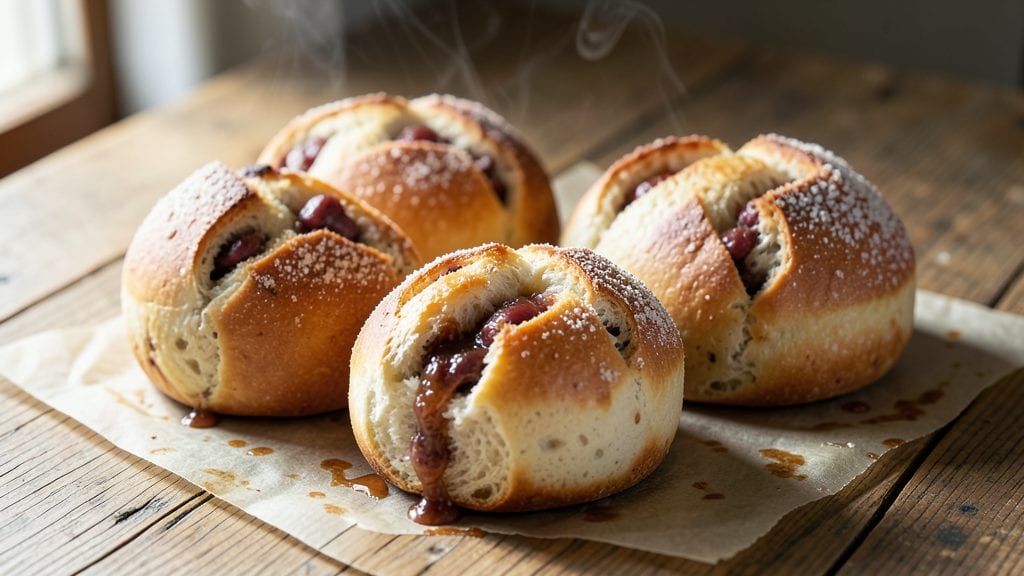
This Anpan bread recipe brings the comforting flavors of Japan to your kitchen with its signature sweet red bean paste swirled inside a golden crust. The contrast between the tender, slightly chewy dough and the rich, velvety anko filling makes every bite irresistible.
I first discovered this recipe during a visit to a Tokyo bakery, where the aroma of freshly baked anpan filled the air—now, I recreate it at home with the same care and attention.
The beauty of anpan lies in its simplicity: just three main components—dough, filling, and a touch of butter—come together to create a loaf that's both rustic and elegant.
The dough develops a crispy exterior while staying soft inside, while the anko filling, made from sweet red beans, adds a natural sweetness that balances perfectly. This recipe delivers professional results without requiring advanced baking skills, making it accessible for home bakers.
By the time you pull this loaf from the oven, you'll have golden-brown crusts encasing swirls of sweet red bean paste, creating a visual and textural masterpiece.
The aroma alone will have everyone gathering around, and the first bite reveals that perfect harmony of textures—crisp, tender, and creamy all at once. This bread is ideal for breakfast, snacks, or even as a dessert with a dusting of powdered sugar.
For those looking to experiment, you can swap the traditional anpan filling with chocolate or custard for a modern twist. The technique remains the same, ensuring consistent results whether you stick to tradition or explore variations. Let's get started on creating your own anpan masterpiece!
Ingredients for anpan bread
Four ingredients for dough, three for filling—simple but transformative for homemade anpan.
| Ingredient | Amount | Notes |
|---|---|---|
| All-Purpose Flour 🌾 | 3 cups | Sifted for light texture |
| Granulated Sugar 🍚 | ¼ cup | For sweetness in dough |
| Active Dry Yeast 🍞 | 2 ¼ tsp | Instant yeast works too |
| Unsalted Butter 🧈 | ½ cup | Cold, cubed for dough |
| Milk 🥛 | ½ cup | Room temperature preferred |
| Large Egg 🥚 | 1 whole | Room temperature |
| Salt 🧂 | ½ tsp | Kosher or sea salt |
| Sweet Red Bean Paste (Anko) 🍡 | 1 ½ cups | Store-bought or homemade |
| Powdered Sugar 🍚 | 2 tbsp | For dusting finished loaves |
| Granulated Sugar 🍚 | ½ cup | For anko filling sweetness |
| Water 💧 | ¼ cup | For anko filling |
| Vegetable Oil 🫒 | 1 tbsp | For greasing loaf pan |
| Sesame Seeds 🌾 | 1 tbsp | Optional for topping |
The yeast is the heart of this dough, so check the expiration date—old yeast won’t activate. For the best results, I grab mine from Whole Foods or the bulk section at Trader Joe's, where it’s fresh and potent. The red bean paste (anko) is non-negotiable—store-bought works, but if you can find Japanese-style sweet red beans at an Asian market, the flavor is next-level. I’ve used Koyo brand anko before, and it’s worth the splurge. For the flour, King Arthur is my go-to—it’s reliable and gives that perfect chewiness. If you’re making this in hot weather, chill your dough for 30 minutes before shaping—it’s worth the wait.
No anko? Sweetened mashed beans or even Nutella can work in a pinch, though the texture won’t be identical. Running short on sesame seeds? Toasted poppy seeds or crushed pistachios add a nice crunch instead. The dough can be made a day ahead—just refrigerate it covered with plastic wrap. For the filling, if you’re making homemade anko, simmer azuki beans with sugar and water until soft, then blend until smooth. The key is patience—don’t rush the dough development. Let it rise until it’s nearly doubled, even if it takes an extra hour. And if your kitchen gets humid, cover the dough loosely with a towel to prevent a skin from forming.
Anpan keeps best at room temperature for 2 days in an airtight container, but it’s so good fresh that I rarely wait that long. For longer storage, freeze the loaves wrapped in plastic for up to 1 month. To reheat, warm in a 350°F oven for 10 minutes—the crust gets crispy again, just like fresh. I like to slice mine with a serrated knife for clean cuts. And if you’re feeling fancy, brush the crust with a little melted butter before baking for extra shine. The aroma alone will have everyone thinking you’re a pro.
Why You'll Love This Recipe
- Here’s what sold me: that sweet red bean paste (anpan’s star) turns this into a blank canvas. Use it for breakfast with a sprinkle of sugar, as a snack with a drizzle of honey, or even a dessert with whipped cream. My kids beg for it cold straight from the fridge—no judgment.
- Sweet Butter Magic: I’ll be real—this dough is ridiculously forgiving. The butter and milk create a tender crumb that practically melts in your mouth, and honestly? Even if I rush, it still turns out soft and golden. No kneading like sourdough, no waiting for hours—just mix, shape, and bake.
- Filling Flexibility: Here’s what sold me: that sweet red bean paste (anpan’s star) turns this into a blank canvas. Use it for breakfast with a sprinkle of sugar, as a snack with a drizzle of honey, or even a dessert with whipped cream. My kids beg for it cold straight from the fridge—no judgment.
- Weeknight Workhorse: Between us, this bread is my secret weapon for lazy mornings. I make a double batch on Sundays, and it’s still fresh by Friday—perfect for toast, sandwiches, or just tearing into with jam. The yeast does all the heavy lifting, so I’m not stuck babysitting a slow rise.
Step-by-step instructions for anpan bread
Here's how to create tender, golden loaves with that signature sweet red bean swirl.
Prepare the Anko Filling
In a medium saucepan, combine the 1.5 cups sweet red bean paste (anko), 0.5 cup granulated sugar, and 0.25 cup water. Place over medium heat and stir constantly until the mixture reaches a gentle simmer. You'll notice the anko begins to soften and blend smoothly with the sugar and water.
Continue cooking for 5-7 minutes, stirring frequently, until the mixture thickens noticeably. It should coat the back of a spoon and hold its shape when dropped from a spoon. Remove from heat immediately and let it cool to room temperature. This filling should be thick enough to pipe but still spreadable - if it's too stiff, add 1 teaspoon water and stir until smooth.
Make the Dough
In a large mixing bowl, combine the 3 cups all-purpose flour and 0.25 cup granulated sugar. Make a well in the center and add the 2.25 teaspoons active dry yeast, 0.5 teaspoon salt, and 0.5 cup cold cubed unsalted butter. Using your fingers, work the butter into the flour mixture until it resembles coarse crumbs.
In a separate bowl, whisk together the 0.5 cup milk and 1 whole large egg until well combined. Slowly pour this mixture into the flour mixture while stirring with a wooden spoon. The dough will begin to come together as you mix. Once combined, turn the dough onto a lightly floured surface and knead for 8-10 minutes until smooth and elastic. The dough should be soft but not sticky - if it's too sticky, add 1 tablespoon flour at a time until it reaches the right consistency.
First Rise and Shaping
Place the dough in a lightly oiled bowl, cover with a damp kitchen towel, and let it rise in a warm place for 1-1.5 hours or until it has doubled in size. You'll know it's ready when you poke it gently and it springs back slowly rather than immediately.
Once risen, punch down the dough to release any air bubbles. Divide it into 4 equal pieces (about 8 ounces each). Roll each piece into a 12-inch circle on a lightly floured surface. Spread ¼ of the cooled anko filling evenly over each circle, leaving a 1-inch border around the edges. This will create those beautiful swirls when baked.
Second Rise and Baking
Starting with one piece, gently roll the dough from the center outward, enclosing the anko filling completely. Place each shaped loaf seam-side down in a greased 8x4-inch loaf pan (you may need to use two pans). Brush the tops with a little milk and sprinkle with 1 tablespoon sesame seeds if using. Cover with a damp towel and let rise for 30-45 minutes until puffy.
Preheat your oven to 350°F. Bake the loaves for 25-30 minutes until they're golden brown and sound hollow when tapped on the bottom. The internal temperature should reach 190°F. If the tops brown too quickly, loosely cover with aluminum foil. Remove from the oven and let cool in the pans for 10 minutes before transferring to a wire rack.
Finishing Touches
While still warm, brush the tops of the loaves with a little milk and sprinkle with the remaining 2 tablespoons powdered sugar if desired. This creates that beautiful dusting you see on traditional anpan. Let cool completely before slicing - this allows the filling to set properly and makes for cleaner cuts.
Slice with a sharp serrated knife and serve warm. The crust should be crisp and golden, the interior tender with that perfect swirl of sweet red bean paste throughout. Store any leftovers wrapped tightly at room temperature for up to 3 days, or freeze for up to 1 month.
Pro Tips For Making Anpan Bread
- Weigh Your Butter: Butter is tricky—pack it tightly into the measuring cup or use a kitchen scale. I learned this the hard way after underestimating how much butter actually fits in a "cup" and ending up with dough that wouldn’t hold its shape. For anpan, you want that buttery richness without the dough turning greasy or collapsing.
- Proof at Room Temp: Skip the fridge—let your yeast-milk mixture sit for 5–10 minutes until it’s lukewarm (about 100°F/38°C). Cold milk kills the yeast; hot milk does the same. I used to rush this, and my dough would either take forever to rise or never rise at all. Patience here guarantees a fluffy, airy crumb.
- Knead Until Silky: Stop when the dough springs back slowly when poked and looks smooth, not sticky. Over-kneading dries it out; under-kneading leaves it gummy. For anpan, aim for about 8–10 minutes by hand or 5–6 minutes in a stand mixer. The dough should feel like soft, slightly tacky playdough—not gluey or crumbly.
- Brush, Don’t Drown: Before baking, brush the dough with an egg wash (1 egg + 1 tbsp milk), not a flood. Too much liquid steams the bread, making the crust soggy instead of crisp. I used to slather it on like icing, and my anpan turned out dense. Lightly coat it—just enough to glaze, not drench.
Perfect pairings for these flavors
Japanese Tea Pairings
The delicate sweetness of anpan pairs beautifully with jasmine green tea—its floral notes complement the red bean paste's natural sweetness without overpowering it. I recommend hot sencha tea served at 175°F to enhance the bread's crusty texture.
For a modern twist, try matcha latte with a touch of vanilla syrup to mirror the anko's richness. 🍵
Creamy Coffee Companions
A light roast Arabica with honey is my go-to pairing—its caramel notes harmonize with the anko's sweetness. For espresso lovers, a flat white with oat milk adds a velvety contrast to the bread's crisp exterior. Avoid bold, dark roasts that might clash with the delicate flavors. ☕
Seasonal Fruit Sides
Fresh persimmons or mandarin oranges cut through the richness of anpan beautifully. I slice ripe persimmons into thin rounds and arrange them on a plate alongside warm bread. For a tropical twist, mango slices with a drizzle of lime add vibrant freshness. 🍈
Modern Dessert Toppings
Dust your anpan with powdered sugar and serve with whipped cream for a classic dessert finish. For a gourmet touch, add edible gold leaf or a sprinkle of crushed pistachios for texture. A small scoop of vanilla bean ice cream on the side elevates the experience to restaurant-quality. 🍦
Alcoholic Pairings
Light sake at 45°F enhances the bread's natural sweetness without competing. For a dessert wine option, moscato d'Asti—its light effervescence and floral notes balance the anko's richness. Avoid heavy reds or tannic whites that could overpower the delicate flavors. 🍷
Nutrition facts
Frequently asked questions about anpan bread
Can I make anpan bread without a loaf pan?
Use a greased baking sheet for individual rolls instead. Shape the dough into 6-inch circles, spread with filling, roll up, and bake at 350°F for 18-20 minutes until golden. For a rustic look, bake in a cast-iron skillet with a lid for even browning.
Why is my anpan dough too sticky?
Sticky dough usually means too much liquid or under-kneaded gluten. Add 1 tablespoon flour at a time while kneading until smooth. If using whole wheat flour, reduce milk by 2 tablespoons—it absorbs moisture differently. The dough should be soft but pliable, not clingy.
How do I store leftover anpan?
Wrap cooled loaves tightly in plastic wrap or aluminum foil. Store at room temperature for 2-3 days in an airtight container. For longer storage, freeze for up to 1 month. To reheat, warm at 300°F for 10 minutes until crispy again. Never refrigerate—it makes the crust soggy.
What if I can't find anko paste?
Make a quick substitute by blending 1 cup cooked sweet red beans with 2 tablespoons sugar and 1 teaspoon honey until smooth. For a non-bean option, try Nutella or sweetened condensed milk (reduce sugar in dough by 1 tablespoon to balance). The texture won't be identical, but it works in a pinch!
Can I make anpan gluten-free?
Yes! Use a 1:1 gluten-free flour blend (like Bob's Red Mill) and add 1 teaspoon xanthan gum. Replace milk with almond milk and reduce yeast to 1.5 teaspoons—gluten-free dough rises slower. Expect a denser texture, but the flavor remains delicious. Let it rise 30-45 minutes longer than regular dough.