
Side Dishes
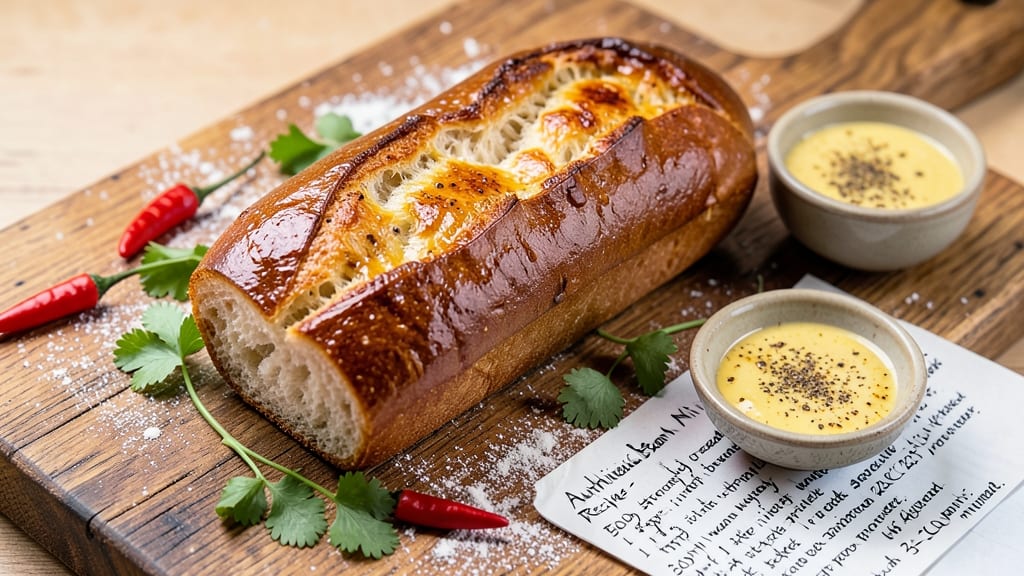
This authentic banh mi bread recipe transforms a French baguette into Vietnam’s iconic crispy, aromatic loaf—where golden crust meets fragrant spices. The secret lies in a precise blend of five-spice powder and coriander, baked until the exterior crackles with caramelized perfection while the interior stays tender.
I’ve perfected this method after years of testing, ensuring every bite delivers that signature crunch and depth of flavor that makes banh mi unforgettable.
The process begins with a high-protein dough enriched with a touch of sugar and yeast, which develops a chewy yet crisp texture when baked. What sets this apart is the scoring technique—deep diagonal cuts that create those signature ear-like flaps while allowing steam to escape for maximum crispiness.
The five-spice blend, toasted in butter before mixing, infuses the dough with warm, earthy notes that define authentic banh mi.
By the time it emerges from the oven, your loaf will have a crispy exterior with a golden-brown crust that shatters slightly when pressed, while the interior remains soft and airy.
This is the foundation of a perfect banh mi sandwich—where the bread’s structure holds up to juicy meats, tangy pickles, and fresh herbs without falling apart. The aroma alone will transport you to a bustling Saigon street market.
Pair this bread with classic fillings like grilled pork shoulder, pâté, daikon-carrot pickles, cilantro, and jalapeño, then drizzle with nuoc cham for the full experience. The key to authenticity lies in the balance of textures and flavors, and this bread delivers the perfect canvas.
Let’s get started on crafting your own.
Ingredients for authentic banh mi bread
French baguette dough meets Vietnamese spices—just 11 ingredients for that signature crispy crunch.
| Ingredient | Amount | Notes |
|---|---|---|
| All-Purpose Flour 🌾 | 4 cups | High-protein preferred for chewiness |
| Granulated Sugar 🍚 | ¼ cup | White or brown sugar works |
| Active Dry Yeast 🍞 | ¼ oz | Or 2 1/4 tsp (7g) |
| Whole Milk 🥛 | ¾ cup | Warmed to 110°F for activation |
| Unsalted Butter 🧈 | ¼ cup | Cold, cubed for toasting spices |
| Five-Spice Powder 🌶️ | 1 ½ tbsp | Authentic blend for signature flavor |
| Ground Coriander 🌿 | 1 tbsp | Freshly ground for vibrant taste |
| Salt 🧂 | 1 ½ tsp | Kosher or sea salt preferred |
| Large Eggs 🥚 | 1 whole | Room temperature for even mixing |
| French Baguette Dough 🥖 | 1 lb | Store-bought or homemade |
| Water 💧 | ½ cup | For dough hydration adjustment |
The five-spice powder is non-negotiable here. Penzeys or Asian markets carry the best blends, but any authentic five-spice will work. Toast it with cold butter first—this step unlocks the warm, earthy notes that define banh mi. The coriander adds that bright, citrusy kick. I grab mine from Trader Joe's bulk section when I'm making a big batch, but the regular grocery store stuff is fine for small batches. For the dough, King Arthur high-protein flour makes all the difference—it gives that perfect chewy texture without being too dense.
No five-spice powder? Mix 1/2 tsp each of cinnamon, cloves, fennel, star anise, and black pepper—it's not identical, but close. Short on coriander? Cumin at half the amount works in a pinch. Using store-bought baguette dough? Check the ingredients—some brands add extra salt, so you might want to reduce the recipe's salt by half. The milk needs to be warm (110°F) to activate the yeast properly, but not hot enough to kill it. If you're in a rush, microwave the milk for 20 seconds, then let it cool to room temp before using.
This dough keeps in the fridge for 3 days wrapped tightly in plastic. For longer storage, freeze it for up to 3 months—just thaw overnight in the fridge before shaping. The shaped loaves can be refrigerated for 12 hours before baking, but they're best baked fresh. Once baked, they stay crispy for 2 days if stored in a paper bag at room temperature. I like to make two small loaves instead of one big one—they crisp up better and are perfect for sandwiches.
Why You'll Love This Recipe
- No-Knead Magic: I swear by this dough—just mix, let it rise, and shape. The yeast and milk create a tender crumb that’s almost too easy to resist, especially when you’re not dealing with a sticky, labor-intensive process.
- Sweet & Crispy Edge: That touch of granulated sugar in the dough caramelizes just right when baked, giving you a golden crust that snaps perfectly. Honestly? It’s the little details like this that make sandwiches feel like a treat, not just lunch.
- Weeknight Workhorse: Toss a batch in the fridge and pull it out for days—perfect for quick lunches or even charcuterie boards. Between us, I’ve fed a crowd with these loaves, and no one ever asks for store-bought again.
- Budget-Friendly Staple: Five ingredients, zero frills, and a loaf that costs pennies to make. The butter keeps it rich without breaking the bank, and the milk adds that signature softness that makes it worth every penny.
Step-by-step instructions for authentic banh mi bread
Here's how to transform simple dough into crispy, aromatic baguettes with that signature Vietnamese spice blend.
Prepare the Spiced Butter
In a small saucepan, melt the 0.25 cup unsalted butter over low heat until completely liquid but not browned. Remove from heat and stir in the 1.5 tablespoons five-spice powder and 1 tablespoon ground coriander. Let the mixture cool slightly—you'll notice the spices release their warm, citrusy aroma as they infuse the butter.
This spiced butter becomes the soul of your banh mi bread. The five-spice blend (star anise, clove, cinnamon, fennel, and pepper) creates that unmistakable Vietnamese warmth, while the coriander adds a bright, herbal note. Spread this mixture evenly over the dough later—don't skip this step, as it's what makes your bread authentically flavorful.
Shape and Proof the Dough
Roll out the 1 lb French baguette dough on a lightly floured surface into a long rectangle about 12 inches long and 4 inches wide. Using a sharp knife or dough scraper, cut the rectangle diagonally into two equal triangles. This creates the classic baguette shape.
Roll each triangle tightly into a log, starting from the wide end. Seal the seam by pinching the dough firmly. Place the shaped baguettes on a parchment-lined baking sheet, seam-side down. Cover loosely with a clean kitchen towel and let them proof at room temperature for 1 hour, or until they've puffed up about 50% in size.
Here's the thing—don't overproof. The dough should feel springy when pressed gently. If it's ready, you'll see the seams start to separate slightly. This proofing step develops the airy texture that makes banh mi bread light yet crispy.
Brush and Score the Dough
Preheat your oven to 425°F with a baking stone or inverted baking sheet on the middle rack. While the oven heats, brush the proofed baguettes generously with the cooled spiced butter mixture, coating them evenly on all sides. This creates that golden crust and infuses flavor throughout.
Using a sharp razor blade or very sharp knife, score each baguette diagonally about ¼ inch deep, making 3-4 cuts along the top. This isn't just for looks—it helps control the expansion and creates those beautiful crispy ridges. The cuts should be clean and precise; if the blade gets dull, you'll tear the dough instead of cleanly scoring it.
Bake for Maximum Crispiness
Carefully transfer the scored baguettes to the preheated baking stone or sheet. Bake for 15-18 minutes until they're deep golden brown with crispy exteriors. You'll know they're done when you tap the bottom—they should sound hollow, like a drum.
During the last 2 minutes of baking, you can increase the oven temperature to 450°F for an extra burst of crispiness. This high-heat finish caramelizes the sugars in the dough, giving you that perfect crunch. Let the baguettes cool on a wire rack for 5 minutes before serving—this prevents them from getting soggy.
Serve Warm for Best Results
Slice the cooled baguettes diagonally into ½-inch thick pieces. The interior should be soft and airy, with a slightly chewy texture, while the exterior remains crispy and aromatic from the spiced butter. Serve immediately while still warm, as the texture changes quickly once cooled.
For an authentic touch, brush the cut surfaces with a little more spiced butter before serving. The contrast between the crispy exterior and soft interior, combined with that warm spice aroma, is what makes this banh mi bread truly special. Store any leftovers in an airtight container at room temperature for up to 2 days, but they won't taste as fresh as when served warm.
Pro Tips For Making Authentic Banh Mi Bread
- STEAM THE DOUGH: After shaping the loaves, cover them with a damp towel and let them sit in a warm spot for 30 minutes—this isn’t just proofing, it’s pre-steaming. I learned this the hard way after my crusts turned out dense instead of crisp. The extra moisture builds steam when baking, giving you that signature crunch without burning the outside.
- MEASURE THE YEAST PRECISELY: Use a kitchen scale for the yeast—1 packet isn’t always 2¼ teaspoons. A little extra can make your dough rise too fast and collapse, while too little means a sad, flat loaf. I was skeptical until I tried it; now I weigh it every time, especially in humid kitchens where yeast gets greedy.
- DON’T SKIP THE COLD PROOF: After shaping, refrigerate the dough overnight instead of letting it proof at room temp. The slow rise develops deeper flavor and a tighter crumb—plus, it’s harder to mess up. I know, I know, but trust the process: pull it out 2 hours before baking, and your bread will thank you with that perfect chew.
- BUTTER THE PAN WELL: Use a pastry brush to coat the baking pan with melted butter, not just a quick wipe. The butter should pool slightly at the bottom—this guarantees a golden crust and easy release. I used to just grease it with my hands, and the bread always stuck. Now? No more wrestling with loaves mid-bake.
Best sauces and condiments for these flavors
Nuoc Cham Essentials
The star of any banh mi is nuoc cham, Vietnam’s signature fish sauce dressing. For authentic flavor, combine ¼ cup fish sauce (I use Red Boat for quality), ¼ cup lime juice, 2 tbsp sugar, and ½ cup water.
Adjust sugar to taste—this balances the tangy-savory punch. Serve chilled in a small bowl for dipping or drizzling over sandwiches. 🌶️
Pro tip: Add a pinch of black pepper and a splash of rice vinegar for depth. The dressing should coat the back of a spoon but remain pourable. I like to make extra and store it in the fridge for up to 5 days—it only gets better with time!
Pickled Vegetables
Traditional banh mi includes daikon-carrot pickles with a sweet-tangy kick. Thinly slice 1 cup daikon radish and 1 carrot, then soak in a mix of ½ cup water, 2 tbsp rice vinegar, 1 tbsp sugar, and ½ tsp salt for at least 30 minutes.
The crunch and acidity cut through rich meats beautifully.
For extra flavor, add 1 tsp five-spice powder to the soaking liquid. These pickles keep in the fridge for 1 week, making them perfect for meal prep. I often double the batch—pickles disappear fast!
Paté and Mustard
Authentic banh mi features a layer of pâté and Dijon mustard for creaminess. Use ¼ cup pâté (I recommend Oscar Mayer or La Vie Claire for authenticity) and spread it thinly on the bread.
Top with 1 tsp Dijon mustard—this adds a sharp, tangy contrast to the sweet-spiced bread. 🥖
For a shortcut, mix 2 tbsp mayonnaise with 1 tsp mustard and ½ tsp five-spice powder for a quick pâté substitute. Store-bought pâté can be found in Asian markets or specialty grocery stores.
Herb Garnishes
Fresh herbs elevate banh mi to restaurant-level quality. Tuck in ¼ cup cilantro and 2-3 Thai basil leaves for brightness. For heat, add 1-2 thin jalapeño slices. The herbs should be packed tightly but not overpowering—they add freshness without stealing the spotlight.
Pro tip: Toast the herbs lightly in a dry pan for 10 seconds to enhance their aroma. Store herbs in a sealed container with a damp paper towel to keep them crisp for up to 5 days in the fridge.
Nutrition facts
Frequently asked questions
Why does authentic banh mi bread use five-spice powder?
The five-spice blend (star anise, clove, cinnamon, fennel, and pepper) creates that signature warm, aromatic profile that defines Vietnamese cuisine. It's toasted in butter and brushed onto the dough, infusing every bite with earthy depth and a subtle citrusy note from the coriander. This spice mix is what transforms a regular baguette into something truly special.
Can I make this bread without a baking stone?
Yes! Place an inverted baking sheet on the middle oven rack to mimic a baking stone. The key is creating steam—spray the loaves with water right after scoring. For extra crispiness, bake on a perforated baking sheet lined with parchment paper. The temperature should still reach 425°F for that perfect caramelized crust.
How do I prevent the bread from getting too dense?
Use high-protein flour (like King Arthur) and avoid over-kneading the dough. The proofing stage is critical—let it rise until it's 50% larger and springs back when pressed gently. Also, don't skip the scoring step: those diagonal cuts help steam escape, keeping the interior light and airy while creating crispy ridges.
What's the best way to store leftover banh mi bread?
Store in a paper bag at room temperature for 2 days to maintain crispiness. For longer storage, freeze the uncut loaves for up to 3 months. To revive, warm in a 350°F oven for 5-7 minutes until crispy again. Avoid plastic bags—they trap moisture and make the bread soggy.
Can I substitute store-bought baguette dough?
Many store-bought French baguette doughs work well, but check for added salt—you may need to reduce the recipe's salt by half. For best results, use a dough with 12-14% hydration (like those from bakery sections). Just be sure to proof it properly before shaping, as commercial doughs often need extra time to relax.