
Side Dishes
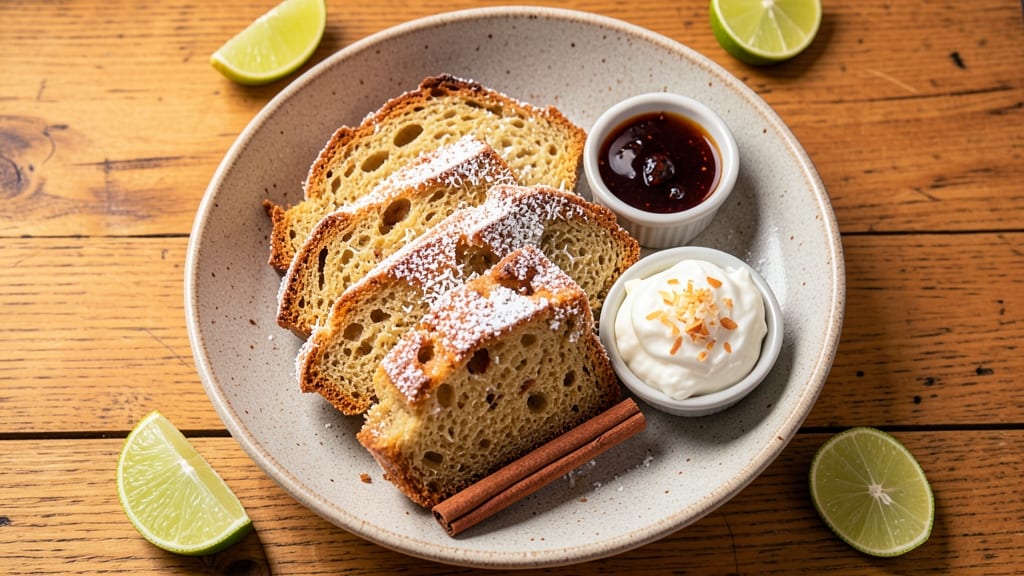
This authentic Jamaican coco bread recipe brings the warm, spiced sweetness of Jamaica straight to your kitchen, with its signature crusty top and tender crumb infused with rum.
The blend of coconut, spices, and a touch of dark rum creates a flavor profile that's both comforting and distinctly Caribbean—perfect for breakfast, brunch, or as a sweet side dish.
I've perfected this recipe through years of baking, ensuring every slice delivers that perfect balance of crispy exterior and moist, spiced interior.
The secret to authentic coco bread lies in the ingredients: freshly grated coconut, warm spices like cinnamon and nutmeg, and just the right amount of spiced rum to elevate the flavor without overpowering it.
Unlike many commercial versions, this recipe skips artificial flavors and relies on real, high-quality ingredients to deliver that true Jamaican taste. The dough requires a bit of patience—it needs to rest before baking—but the wait is worth it for that signature texture and aroma that fills your kitchen.
When baked to golden perfection, this coco bread has a crispy, almost crackly top that gives way to a tender, slightly dense crumb infused with coconut and spice.
The aroma alone—warm, sweet, and spiced—will transport you to a Jamaican bakery, while the flavor is rich yet not overly sweet, with just a hint of rum that adds depth.
Each slice is moist and flavorful, making it a versatile treat that pairs beautifully with coffee, tea, or even as a dessert with a dollop of whipped cream.
Traditionally, coco bread is a staple in Jamaican homes, often enjoyed with breakfast or as a sweet accompaniment to meals. This recipe stays true to its roots while being accessible for home bakers—no special equipment or advanced techniques required.
Whether you're serving it at a family gathering, sharing it with neighbors, or simply treating yourself, this coco bread will bring a taste of Jamaica to your table. Let's get baking!
Ingredients for authentic jamaican coco bread
Twelve ingredients blend Caribbean warmth and rum-infused richness for authentic Jamaican coco bread.
| Ingredient | Amount | Notes |
|---|---|---|
| All-Purpose Flour 🌾 | 3 ½ cups | Unbleached preferred for texture |
| Unsalted Butter 🧈 | ½ cup | Cold, cubed for dough |
| Granulated Sugar 🍚 | ¾ cup | Light brown sugar for depth |
| Freshly Grated Coconut 🥥 | 1 ½ cups | Sweetened, unsweetened blend |
| Dark Spiced Rum 🍹 | ¼ cup | Appleton Estate preferred |
| Large Eggs 🥚 | 2 whole | Room temperature |
| Milk 🥛 | ½ cup | Whole milk for richness |
| Ground Cinnamon 🌿 | 2 tsp | Ceylon cinnamon ideal |
| Ground Nutmeg 🌿 | 1 tsp | Freshly grated preferred |
| Baking Powder 🍞 | 1 ½ tsp | Double-acting type |
| Salt 🧂 | ½ tsp | Fine sea salt |
| Vanilla Extract 🌸 | 1 tsp | Pure Madagascar preferred |
| Toasted Coconut Flakes 🥥 | ½ cup | For topping, optional |
The freshly grated coconut is non-negotiable for authentic flavor. Sweetened and unsweetened blends from Trader Joe's or Whole Foods work best, but if you can't find a mix, use all sweetened—just add a pinch of salt to balance. For the rum, Appleton Estate is the gold standard, but any quality dark spiced rum will do. The Ceylon cinnamon adds that distinct Jamaican warmth—avoid cassia unless specified. If you can't find Ceylon, use regular cinnamon but reduce to 1.5 teaspoons. The butter should be cold when mixed into the dough to prevent overdevelopment, so pull it from the fridge right before measuring.
No freshly grated coconut? Shredded coconut from a can works in a pinch, but it lacks the moisture and texture. Short on spiced rum? Substitute with 1 teaspoon of vanilla extract plus 1 teaspoon of molasses for depth. The baking powder must be double-acting—single-acting won't rise properly. For a dairy-free version, swap the milk for coconut milk and use vegan butter, but the texture will be slightly denser. The toasted coconut flakes on top are optional but add that signature crunch—if you skip them, brush the top with extra rum for moisture before baking.
This dough needs time to develop flavor. Rest it for at least 1 hour before baking—overnight in the fridge is even better. Once baked, store wrapped at room temperature for 2 days or freeze for 3 months. Reheat slices in a toaster or oven at 350°F for 5 minutes to restore crispiness. The bread reheats beautifully and tastes even better the next day as the flavors meld. For serving, pair with Jamaican coffee or a dollop of whipped cream to highlight the rum notes.
Why You'll Love This Recipe
- No-Fuss Mixing: I swear by this dough—just flour, butter, and sugar kneaded until it’s almost too soft. The coconut and rum blend in like they’ve been friends forever, no fancy techniques required. Honestly, if I can handle it while chatting with my kids, anyone can.
- Taste Like a Vacation: That first bite? Warm, buttery layers with coconut crunch and a whisper of spiced rum—it’s like Jamaica’s sunshine in bread form. The sugar caramelizes just enough to make it irresistible, even when I’m too tired to care about "fancy" baking.
- Breakfast or Snack Hero: Slice it toasted for breakfast with jam, or pack it cold for lunch—it holds up perfectly. I’ve even used it to soak up stew juices (no judgment). Between us, it’s the one loaf that never feels like a waste.
- Budget Magic: A single batch costs pennies and stretches for days. Freeze slices for quick toast or crumbs for desserts—no sad, dried-out leftovers here. Plus, using pantry staples means I’m not scrambling for obscure ingredients every time I crave this.
Step-by-step instructions for authentic Jamaican coco bread
Here's the traditional method that delivers that signature crusty top and moist interior.
Prepare the Wet Ingredients
In a medium bowl, combine the 0.5 cup unsalted butter and 0.75 cup granulated sugar and whisk until fully melted and smooth. This creates a silky base for your dough. Add the 2 whole large eggs, 0.5 cup milk, 0.25 cup dark spiced rum, 1 teaspoon vanilla extract, 2 teaspoons ground cinnamon, and 1 teaspoon ground nutmeg to the butter-sugar mixture. Whisk vigorously for 2-3 minutes until the mixture becomes pale and slightly thickened.
Here's the thing—don't rush this step. The rum needs time to infuse with the other ingredients, and proper whisking incorporates air that will help create that signature light texture. You'll know it's ready when the mixture holds its shape briefly when you lift the whisk.
Combine Dry Ingredients
In a separate large bowl, sift together the 3.5 cups all-purpose flour, 1.5 teaspoons baking powder, and 0.5 teaspoon salt. This ensures even distribution of leavening agents throughout the dough. Make a well in the center of the dry ingredients and pour in the wet mixture you prepared earlier. Gently fold using a rubber spatula until just combined.
Add the 1.5 cups freshly grated coconut and fold it in using the spatula, being careful not to overmix. The dough will be thick and slightly sticky—this is normal. At this stage, the dough should resemble a soft cookie dough consistency. If it feels too dry, add 1 tablespoon milk at a time until it reaches the proper consistency.
Knead and Rest the Dough
Turn the dough onto a lightly floured surface and knead gently for 2-3 minutes until it comes together into a smooth ball. Be careful not to overwork the dough—just enough to develop the gluten slightly. Shape the dough into a round loaf about 8 inches in diameter and 3 inches thick. Place it on a parchment-lined baking sheet.
Cover the dough loosely with plastic wrap and let it rest at room temperature for 30 minutes. This resting period allows the gluten to relax and the flavors to meld. The dough should feel slightly firmer after resting, which helps prevent excessive spreading in the oven.
Bake to Golden Perfection
Preheat your oven to 350°F. Once preheated, bake the coco bread for 45-50 minutes until the top is deep golden brown and a toothpick inserted in the center comes out clean. The bread should have a beautiful crusty top with a slightly domed shape—this is what gives authentic Jamaican coco bread its signature appearance.
I know it seems like a long time, but resist the temptation to open the oven door early. The bread needs that steady heat to develop its crust properly. About 10 minutes before the bread is done, sprinkle the 0.5 cup toasted coconut flakes evenly over the top for that classic Jamaican touch.
Cool and Serve
Remove the bread from the oven and transfer it to a wire rack to cool for 15-20 minutes before slicing. This cooling period is crucial—it allows the internal structure to set properly, preventing a gummy texture. The bread should be warm but not hot when you serve it, with a moist interior that's lightly spiced and a crisp exterior.
For the best experience, serve the bread warm with a cup of Jamaican coffee or tea. The rum-infused flavor pairs beautifully with the warm spices, creating that authentic taste of Jamaica. Store any leftovers in an airtight container at room temperature for up to 3 days, or freeze for up to 3 months.
Pro Tips For Making Authentic Jamaican Coco Bread
- Grate Coconut Fresh: I learned this the hard way—pre-shredded coconut has too much starch and turns the bread gummy. Use a box grater or food processor for freshly grated coconut, and pat it dry with a paper towel to remove excess moisture before mixing. The texture difference is night and day.
- Chill the Dough: Jamaican coco bread needs time to develop its structure. After mixing, refrigerate the dough for at least 30 minutes—yes, even if you're impatient like me. This prevents the butter from melting too fast in the oven, giving you a flaky, layered texture instead of a dense brick.
- Don’t Overmix the Rum: The rum is there to flavor, not to turn your dough into a sticky mess. Add it sparingly (about 1-2 tablespoons) and mix just until combined. Overdoing it makes the dough sticky and hard to handle, and the alcohol can evaporate too quickly, leaving the bread tasting flat.
- Bake in Two Stages: Start with a hot oven (425°F/220°C) for the first 10 minutes to help the bread rise and brown quickly. Then drop to 350°F (175°C) to finish baking—this guarantees a crisp crust without burning the top. I used to skip this, and my bread always came out unevenly cooked.
Health benefits of these flavors
Rich in Fiber
This Jamaican coco bread is a fiber powerhouse thanks to the 1.5 cups freshly grated coconut and 3.5 cups all-purpose flour. A single slice delivers about 3 grams of dietary fiber, supporting healthy digestion and keeping you full longer.
The coconut adds both soluble and insoluble fiber, promoting gut health while balancing blood sugar levels naturally. 🌱
Natural Energy Boost
The combination of 0.75 cup granulated sugar and 2 whole large eggs provides a balanced energy release, perfect for breakfast or a midday pick-me-up. Unlike refined sugars, the coconut and spices help moderate this energy, preventing crashes.
The rum adds depth without excess calories, making it a guilt-free treat for active days.
Heart-Healthy Fats
The 0.5 cup unsalted butter and coconut provide healthy saturated fats in moderation, which support heart health when part of a balanced diet. Coconut contains medium-chain triglycerides (MCTs), known for their quick energy conversion and potential metabolic benefits.
Just be mindful of portion sizes—this bread is delicious but should complement a varied diet.
Stress-Reducing Spices
The 2 teaspoons ground cinnamon and 1 teaspoon ground nutmeg in this recipe aren't just for flavor—they're natural stress relievers. Cinnamon helps regulate blood sugar, while nutmeg contains compounds that promote relaxation.
The warm spices also stimulate circulation, making this bread both comforting and functional. A perfect mood booster for any time of day! ✨
Hydration Support
Coconut is naturally hydrating, thanks to its high water content and electrolytes like potassium. The 0.5 cup milk in the dough adds extra hydration benefits, making this bread a great choice for warm days or post-workout recovery.
The rum's alcohol content also has mild diuretic properties, balancing the bread's overall hydration effects.
Cultural Comfort Food
Beyond nutrition, coco bread offers emotional benefits—it's a staple in Jamaican culture that brings warmth and nostalgia. The act of baking it yourself (and sharing it with loved ones) releases endorphins, reducing stress.
That first slice's aroma alone triggers happy memories for many, making it more than just food—it's a comfort ritual. 💛
Nutrition facts
Frequently asked questions
Why does Jamaican coco bread have a crusty top?
The signature crust comes from baking at 350°F for 45-50 minutes until deeply golden. The coconut and spices create a natural barrier that concentrates moisture inside while forming a crisp exterior. For extra crunch, brush the top with melted butter or rum before baking.
Can I make this bread without rum?
Yes! Replace the 0.25 cup spiced rum with 1 teaspoon vanilla extract plus 1 teaspoon molasses for depth. The rum adds complexity but isn't essential for the base flavor. For a non-alcoholic version, use 0.25 cup coconut milk instead.
How do I store leftovers to keep them fresh?
Wrap cooled slices in plastic wrap or store in an airtight container at room temperature for 2 days. For longer storage, freeze for up to 3 months. Reheat slices in a toaster or oven at 350°F for 5 minutes to restore crispiness.
What's the secret to authentic flavor?
Freshly grated coconut and Ceylon cinnamon are key. Avoid pre-shredded coconut (it lacks moisture) and use dark spiced rum like Appleton Estate. The 30-minute dough rest also lets flavors meld—don't skip it!
Can I make this gluten-free?
Replace the 3.5 cups all-purpose flour with a 1:1 gluten-free blend (like Bob's Red Mill). Add 0.5 teaspoon xanthan gum to mimic gluten's structure. The texture will be denser, but the coconut and spices will still shine.