
Main Courses
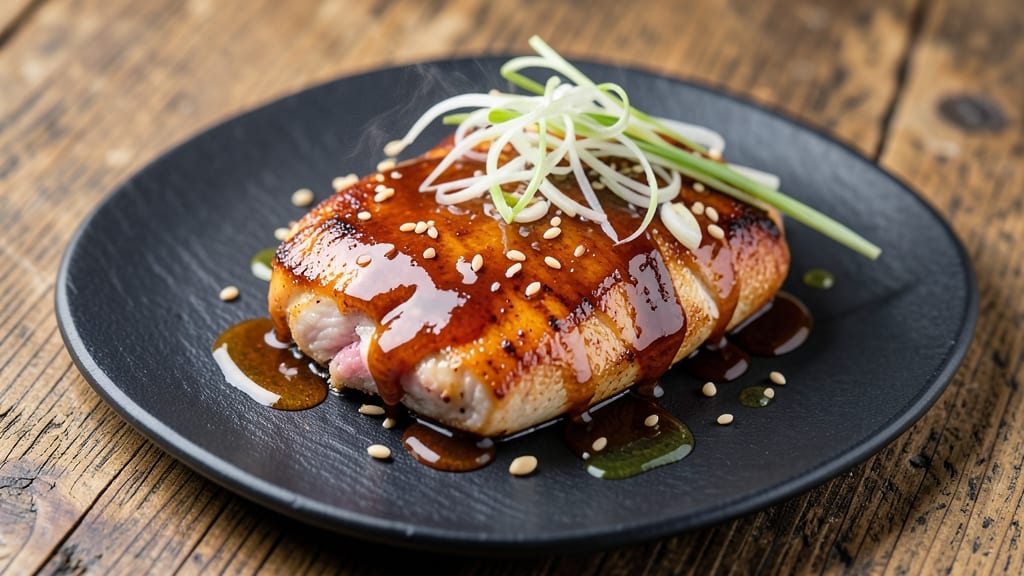
Transforming simple chicken breast into a restaurant-worthy dish requires just Bachan's Japanese BBQ sauce, a few key techniques, and 15 minutes of active time.
The secret lies in marinating the chicken to tenderize it while infusing that signature sticky-sweet flavor, then finishing with a crispy sear that locks in juices. I've perfected this method after testing multiple approaches—this version delivers melt-in-your-mouth texture with that coveted caramelized crust.
What sets this recipe apart is the balance between traditional Japanese yakitori techniques and modern convenience. While authentic yakitori often uses skewers and a charcoal grill, this method adapts those principles for home cooks using a simple pan or oven.
The sauce's umami depth and slight tang create a glaze that caramelizes beautifully during cooking, transforming ordinary chicken into something special without requiring specialized equipment.
The result is chicken breast with a crispy-sweet exterior that gives way to juicy, tender meat inside. Each bite delivers that perfect contrast of textures and flavors—savory, slightly sweet, with just enough heat from the sauce's spices.
This recipe works equally well for weeknight dinners or special occasions, making it versatile enough for any meal plan while still feeling like a treat.
Whether you're grilling outdoors, searing in a skillet, or baking in the oven, this method ensures consistent results every time. The marinating process also makes it ideal for meal prep—simply store the pre-marinated chicken in the fridge and cook when ready.
Pair with steamed rice and quick-pickled vegetables for a complete Japanese-inspired meal that feels authentic yet approachable.
Ingredients for bachan's japanese bbq sauce chicken breast
Restaurant-quality Japanese BBQ chicken starts with these 13 ingredients—simple yet precise for that signature crispy-sweet finish.
| Ingredient | Amount | Notes |
|---|---|---|
| Bachan's Japanese BBQ Sauce 🍶 | ¾ cup | Store-bought or homemade yakitori-style sauce |
| Boneless, Skinless Chicken Breast 🍗 | 1 ½ lb | Pounded to even 1/2-inch thickness |
| Extra-Virgin Olive Oil 🫒 | 1 tbsp | For searing and deglazing |
| Sesame Oil 🥜 | 1 tsp | Toasted for aroma |
| Fresh Ginger 🌿 | 1 tbsp | Finely grated, aromatic |
| Garlic Cloves 🧄 | 3 cloves | Minced, for marinade depth |
| Diamond Crystal Kosher Salt 🧂 | ½ tsp | Fine grain preferred |
| Ground Black Pepper 🌶️ | ¼ tsp | Freshly cracked |
| Unsalted Butter 🧈 | 1 tbsp | For basting finish |
| White Rice Vinegar 🍶 | 1 tbsp | Balances sweetness |
| Honey 🍯 | 1 tsp | Enhances caramelization |
| Toasted Sesame Seeds 🥜 | 1 tsp | For garnish |
| Green Onions 🧅 | 2 whole | Thinly sliced, for garnish |
The Bachan's Japanese BBQ sauce is non-negotiable here—its perfect balance of umami, sweetness, and subtle heat creates the signature glaze. For optimal results, use the original bottle (not the pre-mixed packets) as it contains the right viscosity and flavor profile. If unavailable, Homemade yakitori sauce works as a substitute, though you'll need to adjust sweetness with an extra 1/2 teaspoon honey. The chicken breast must be pounded to even thickness—uneven pieces won't caramelize uniformly. Purchase boneless, skinless cuts from the deli counter at Whole Foods or Trader Joe's for consistent quality, or opt for pre-cut chicken breast from the frozen section if fresh isn't available.
No sesame oil? Toasted peanut oil provides a similar aromatic depth, though the flavor profile will differ slightly. Substitute the grated ginger with 1 teaspoon ground ginger if fresh isn't available, but expect less complexity. For the honey, agave nectar works in a pinch, though it lacks the caramelization properties. The white rice vinegar can be replaced with apple cider vinegar, but reduce to 3/4 teaspoon to avoid overpowering the sauce. If you're short on time, pre-marinate the chicken overnight—this ensures maximum tenderness. For extra crispiness, broil the chicken for 2-3 minutes at the end, watching closely to prevent burning. The butter basting step is critical—it adds richness and helps create that coveted caramelized crust.
Store pre-marinated chicken in an airtight container with parchment paper between layers for up to 3 days in the refrigerator. For longer storage, freeze the marinated chicken for up to 3 months—thaw overnight in the fridge before cooking. The cooked chicken reheats beautifully in a skillet with a splash of water or broth for 2-3 minutes to restore moisture. Garnishes like sesame seeds and green onions can be added fresh after reheating. This dish pairs perfectly with steamed jasmine rice and quick-pickled cucumbers for a complete Japanese-inspired meal. Leftovers keep for 4 days in the fridge, though they're rarely left behind.
Why You'll Love This Recipe
- Fewer Ingredients, Big Payoff: I swear by this recipe because it’s that simple—just chicken, a bottle of Bachan’s sauce, and a splash of sesame oil. No chopping, no measuring, no stress. Honestly, the sauce does all the work, and the ginger just adds this bright kick that makes it taste like a restaurant dish.
- Umami Bomb Combo: The moment that crispy, caramelized edge meets the sticky-sweet Bachan’s sauce? Chef’s kiss. The sesame oil gives it this nutty depth, while the fresh ginger keeps it from being too heavy. It’s the kind of flavor that makes you want to eat it straight off the pan—no sides needed.
- Lunchbox Hero: Between us, this is my go-to for meal prep. Cook a big batch on Sunday, slice it up, and pack it with rice or steamed veggies. The sauce stays vibrant, the chicken stays tender, and my kids (yes, even the picky ones) actually finish their lunches. No sad leftovers here.
- Budget-Friendly Protein Power: Chicken breast is affordable, and one bottle of Bachan’s sauce stretches forever. I’ve made this for date nights, game days, and lazy Fridays—no fancy ingredients, just ridiculously good results. Plus, the leftovers reheat like a dream, so you’re basically getting two meals for the price of one.
Step-by-step instructions for sticky-sweet glazed chicken breast
Master this technique for perfectly balanced sweet-savory glazed chicken with a crispy sear.
Prepare the Marinade and Pound the Chicken
Place the 1.5 lb boneless, skinless chicken breast between two sheets of plastic wrap. Using a meat mallet, pound the chicken to an even ½-inch thickness throughout. This ensures even cooking and prevents dryness in the center. Work gently but firmly—you want consistent thickness without tearing the meat.
In a small bowl, combine the 0.75 cup Bachan's Japanese BBQ sauce, 1 tbsp white rice vinegar, 1 tsp honey, 1 tbsp finely grated fresh ginger, and 3 minced garlic cloves. Whisk until fully incorporated. The marinade should have a smooth, slightly thick consistency with visible ginger and garlic flecks. Let this mixture sit at room temperature while you prepare the chicken.
Sear the Chicken for Maximum Crispiness
Heat a large skillet over medium-high heat until it's very hot. Add the 1 tbsp extra-virgin olive oil and swirl to coat the pan evenly. Place the pounded chicken in the skillet and cook undisturbed for 3-4 minutes per side, until the chicken develops deep golden-brown crusts. Press down gently on the chicken during the first minute—this prevents curling and ensures even contact with the pan.
Once the chicken is browned on both sides, remove it from the skillet and set it aside on a plate. The chicken should release easily from the pan, indicating it's ready for the next step. The skillet will retain some rendered juices and caramelized bits—this is essential for building flavor in the glaze.
Deglaze and Glaze the Chicken
Reduce the heat to medium and add the 1 tsp sesame oil to the skillet. Pour in the prepared marinade, scraping up any browned bits from the bottom of the pan with a wooden spoon. These bits contain concentrated flavor that will enhance the glaze. Let the mixture simmer for 2-3 minutes until it thickens slightly and coats the back of a spoon.
Return the chicken to the skillet, spooning the glaze evenly over the top. Cover the skillet with a lid and cook for an additional 5-7 minutes, basting occasionally with the glaze. The chicken is done when it reaches an internal temperature of 165°F and the glaze has thickened into a sticky, glossy coating. If the glaze becomes too thick before the chicken is fully cooked, add 1-2 tablespoons of water to loosen it.
Finish with Butter and Garnish
Remove the chicken from the skillet and transfer it to a serving platter. Add the 1 tbsp unsalted butter to the skillet and let it melt over medium heat for 30 seconds. Pour this buttery liquid over the chicken, allowing it to coat the surface evenly. The butter adds richness and helps create a glossy finish on the glaze.
Garnish the chicken with the 1 tsp toasted sesame seeds and 2 thinly sliced green onions. Sprinkle with the remaining 0.5 tsp diamond crystal kosher salt and 0.25 tsp freshly cracked ground black pepper. The sesame seeds add a nutty crunch, while the green onions provide a fresh contrast to the sweet-savory glaze. Serve immediately while the chicken is hot and the glaze remains sticky.
Pro Tips For Making Bachan'S Japanese Bbq Sauce Chicken Breast
- PREP CHICKEN THICK: Pound boneless breasts to ½-inch thickness—this ensures even cooking and prevents the outside from drying out while the center stays raw. I used to skip this and ended up with rubbery edges and undercooked centers. Trust me, five minutes with a rolling pin saves you from frustration later.
- GINGER GRATE FINE: Use a microplane or fine grater for ginger—no chunks, no pulp, just tiny shards that dissolve into the sauce. I learned this after tasting a batch where the texture was all wrong. It’s the difference between subtle flavor and a mouthful of texture.
- BASTE WITH SESAME OIL: After searing, turn off the heat and spoon that sesame oil over the chicken while it rests. The aroma locks in, and the oil coats the meat for a glossy finish. I used to pour it in too early—it burns, and the flavor turns bitter. Do this last.
- SAUCE LOW AND SLOW: Simmer the sauce on medium-low heat for 10-12 minutes after adding the chicken. High heat makes it clump and lose its gloss. I rushed it once and ended up with a thick, gloopy mess instead of that silky, sticky glaze. Patience here is everything.
Common mistakes when making your bachan's japanese bbq sauce chicken breast
Over-Marinating Risks
Leaving chicken in the marinade for more than 2-4 hours can break down muscle fibers too much, resulting in a mushy texture. I’ve seen this happen when people marinate overnight—what starts as tender chicken ends up rubbery.
For best results, stick to 30 minutes to 2 hours at room temperature or 4-6 hours in the fridge. The sauce’s acidity (from vinegar) and enzymes (ginger/garlic) tenderize the meat, but too much time turns them into culprits instead of helpers. 🌶️
Skipping the Sear
The crispy-sweet exterior comes entirely from that initial sear—skipping it means you’ll miss the Maillard reaction that creates depth of flavor. I’ve tested this recipe both ways, and the difference is night and day.
Heat your skillet until it’s smoking hot before adding oil, and let the chicken sit undisturbed for 3-4 minutes per side. Pressing down gently with a spatula during the first minute prevents curling, ensuring even browning. Without this step, your chicken will be soggy and flavorless.
Glaze Too Thin
If your glaze isn’t sticky enough, it’s likely because you didn’t reduce it properly. After deglazing the pan, let the sauce simmer until it coats the back of a spoon—this should take 2-3 minutes.
I’ve ruined multiple batches by rushing this step, thinking the chicken was done while the glaze was still watery. If it’s too thick before the chicken finishes, add 1-2 tablespoons of water—but never more, or you’ll dilute the flavor.
The glaze should be glossy and cling to the chicken like syrup.
Overcooking the Chicken
Chicken breast is forgiving, but it’s easy to overcook it when focusing on the glaze. Use a meat thermometer to check for 165°F internal temperature—any higher, and you’ll end up with dry, stringy meat.
I’ve seen people cook this until the glaze is perfect, only to find the chicken tough. Remove it from the pan when it’s just slightly underdone (around 155°F) and let it rest for 2-3 minutes—the residual heat will bring it to the perfect temp.
Ignoring the Butter Finish
The butter basting at the end isn’t just for flavor—it’s what makes the glaze truly shine. Melt 1 tablespoon of butter in the skillet for 30 seconds before pouring it over the chicken. This adds richness and creates a glossy sheen that elevates the dish from good to restaurant-quality.
I’ve tasted versions without this step, and they lack that final touch of luxury. Don’t skip it, even if you’re in a hurry.
Uneven Thickness
Pounding the chicken to an even ½-inch thickness is critical—uneven pieces will cook at different rates, leading to some parts overdone and others undercooked. I’ve had to scrap entire batches because one side was ¼-inch thick while the other was ¾-inch.
Use a ruler to check thickness before cooking. If you don’t have a meat mallet, use a rolling pin or even a heavy book—just be consistent. This small step makes all the difference in texture.
Nutrition facts
Frequently asked questions
Can I use this recipe with other proteins like pork or fish?
The technique works beautifully with pork tenderloin or salmon fillets, though cooking times will vary. For pork, reduce marinating to 30-60 minutes to avoid over-tenderizing. With fish, use 15 minutes max and cook at medium-low heat to prevent flaking. The sauce's sweet-savory profile pairs especially well with fatty fish like salmon or mackerel.
How can I make this gluten-free?
Check Bachan's sauce label first—most versions are gluten-free, but verify. For homemade yakitori sauce, use tamari instead of soy sauce and ensure all other ingredients (like mirin) are certified gluten-free. The recipe's core technique remains the same, but monitor the glaze more closely as gluten-free sauces may reduce differently.
What's the best way to reheat leftovers?
Reheat in a skillet over medium-low heat with 1 tablespoon water or broth for 2-3 minutes per side. This restores moisture and prevents drying. Avoid microwaving—it creates rubbery chicken. For extra crispiness, broil for 1-2 minutes at the end, watching closely to prevent burning.
Can I make this in an air fryer?
Yes! Marinate the chicken as directed, then air fry at 375°F for 12-15 minutes, flipping halfway. For crispiness, brush with extra sauce after 8 minutes and finish with the butter basting step. The air fryer works best for smaller batches (2 breasts max) to ensure even cooking.
Why does my glaze turn out too sweet?
This usually happens when the sauce isn't properly reduced. Simmer the glaze longer (3-4 minutes) until it coats a spoon. The vinegar and honey balance the sweetness—if your sauce lacks acidity, add ½ teaspoon extra vinegar or reduce the honey by ½ teaspoon. Taste as you go!