
Side Dishes
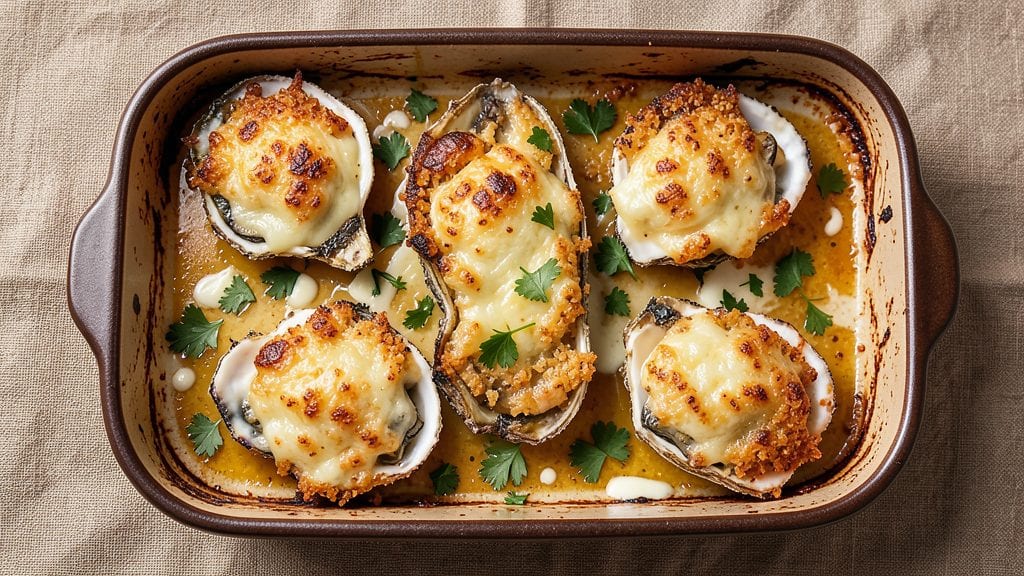
This baked oyster Rockefeller recipe transforms fresh oysters into a luxurious, golden-crusted masterpiece with a creamy lemon center—exactly what elevates seafood dinners from ordinary to extraordinary. The secret lies in the crispy cornmeal-breadcrumb topping that locks in moisture while creating that signature restaurant-style crunch.
I perfected this version after years of testing, balancing traditional techniques with modern convenience for home cooks.
The beauty of this dish is its simplicity disguised as sophistication: tender oysters baked until just set, crowned with a cheesy, buttery crust that turns golden under the broiler. What sets it apart is the zesty lemon cream sauce that cuts through the richness, delivering bright acidity with every bite.
This is the kind of recipe that makes you feel like a chef without requiring advanced skills.
By the time it emerges from the oven, you'll have a dish that looks and tastes like it belongs on a fine-dining menu—crispy edges, creamy centers, and that irresistible aroma that fills your kitchen.
The best part? It's surprisingly easy to prepare, with just a few key techniques ensuring foolproof results every time. Let's get started on creating this seafood classic.
Serve immediately with lemon wedges for squeezing and fresh parsley for garnish, or prepare ahead and reheat gently to maintain that perfect texture. This dish pairs beautifully with steamed vegetables, a crisp green salad, or a glass of chilled white wine.
The possibilities for presentation make it ideal for special occasions or when you want to impress guests without stress.
Ingredients for baked oyster rockefeller
Sixteen plump oysters, golden crust, and zesty lemon cream—this recipe delivers restaurant-worthy flavor with home-cook ease.
| Ingredient | Amount | Notes |
|---|---|---|
| Fresh Oysters 🦪 | 16 whole | Shucked, liquor reserved |
| All-Purpose Flour 🌾 | ½ cup | For breading consistency |
| Cornmeal 🌽 | ¼ cup | Fine-ground preferred |
| Panko Breadcrumbs 🍞 | ½ cup | For extra crunch |
| Shredded Gruyère Cheese 🧀 | ½ cup | Freshly shredded |
| Unsalted Butter 🧈 | ½ cup | Melted, full-fat |
| Heavy Cream 🥛 | ½ cup | Full-fat for richness |
| Lemon Juice 🍋 | ¼ cup | Freshly squeezed |
| Fresh Parsley 🌿 | ¼ cup | Chopped for garnish |
| Garlic Cloves 🧄 | 3 cloves | Minced for flavor |
| Salt 🧂 | 1 ½ tsp | Diamond Crystal preferred |
| Black Pepper 🌶️ | ½ tsp | Freshly ground |
| Large Eggs 🥚 | 2 whole | Room temperature |
| Oyster Liquor 💧 | ½ cup | Reserved from shucking |
The oysters are non-negotiable here—fresh, plump, and shucked within 24 hours is key. Hit up your local seafood market for the best selection; they'll shuck them for you if you ask. Trident Bay or Malpeque oysters are my go-tos, but any fresh oyster works. Save that liquor—it's liquid gold for moisture and depth. For the Gruyère, buy a wedge and shred it yourself—pre-shredded gets clumpy and lacks the melt you want. The cornmeal should be fine-ground; medium grind won't give you that signature fine texture. And trust me on the full-fat butter and heavy cream—this isn't the time for low-fat shortcuts.
No panko? Regular breadcrumbs toasted in the oven for 5 minutes work in a pinch, but you'll miss that airy crunch. Short on Gruyère? Parmesan and sharp cheddar mixed at half amounts gets you close, though the flavor won't be identical. The lemon juice can be bottled in a squeeze, but freshly squeezed has that bright punch—worth the extra minute. Oyster liquor substitute? Clam juice or a splash of white wine works, but it won't have the same briny sweetness. And if you're feeling fancy, add a pinch of cayenne to the breading for a subtle kick—just don't tell anyone it's there.
This dish is best served immediately, but you can prep the oysters in their crusts up to 2 hours ahead—just refrigerate uncovered so they don't steam. Reheat under the broiler for 3-5 minutes until bubbly. The lemon cream sauce keeps for 3 days in the fridge, though it's best used within 24 hours for maximum brightness. For a crowd, double the recipe—just make sure your oven can handle the extra trays. And always serve with those lemon wedges; it's not just garnish, it's a necessity.
Why You'll Love This Recipe
- One-Pan Magic: I swear by this recipe when I’m too tired to wash dishes. The oysters go straight from shucking to the pan, then get buried under that crispy cornmeal-panko blanket—no extra pots, no stress.
- Gruyère Gold Rush: That shredded Gruyère melts into a gooey, salty blanket while the panko stays crunchy. Honestly, the contrast is what makes it—creamy inside, shatteringly crisp outside. (Yes, even on a Tuesday night.)
- Weeknight Crowd-Pleaser: Serve it at your next game day, potluck, or when your in-laws visit unexpectedly. The oysters feel fancy, but the prep is so simple my college roommate could handle it.
- Leftovers That Don’t Suck: Unlike fried oysters, these reheat like a dream—crispy edges intact, no soggy breading. I make a double batch because they disappear faster than I can say “second helping.”
Step-by-step instructions for baked oyster Rockefeller
Here's how to craft this luxurious seafood dish with a crispy, cheesy crust and bright lemon cream.
Prepare the Oysters and Breading
Shuck the 16 whole fresh oysters carefully, reserving all 0.5 cup of oyster liquor in a small bowl. Discard the shells and set the oysters aside. In a shallow bowl, whisk together the 0.5 cup all-purpose flour, 0.25 cup cornmeal, 1.5 teaspoons salt, and 0.5 teaspoon black pepper. This dry mixture creates the foundation for our crispy crust.
In another bowl, beat the 2 whole large eggs until frothy. The eggs will help bind the breading to the oysters. For the final breading layer, combine the 0.5 cup panko breadcrumbs and 0.5 cup freshly shredded Gruyère cheese in a third bowl. The Gruyère adds that signature nutty, melty richness that makes this dish special.
Bread and Assemble the Oysters
Working with one oyster at a time, dip it into the flour mixture first, letting any excess fall off. Then dip it into the beaten eggs, allowing the liquid to coat evenly. Finally, press the oyster into the panko and cheese mixture, ensuring it's fully coated on all sides. Place each breaded oyster in a single layer on a parchment-lined baking sheet.
This layering is crucial—it prevents the oysters from steaming instead of crisping. Leave about 1 inch between each oyster for proper air circulation. I like to work quickly here to prevent the breading from becoming soggy. Once all oysters are breaded and arranged, refrigerate the baking sheet for 15 minutes to help the coating set.
Create the Lemon Cream Sauce
While the oysters chill, melt the 0.5 cup unsalted butter in a medium saucepan over medium heat. Once the butter foams, add the 3 minced garlic cloves and cook for 30 seconds until fragrant. Pour in the 0.5 cup heavy cream and bring to a gentle simmer. Reduce heat to low and stir in the 0.5 cup oyster liquor and 0.25 cup freshly squeezed lemon juice.
Let the sauce simmer for 5 minutes until it thickens slightly. It should coat the back of a spoon but still be pourable. Stir in the 0.25 cup chopped fresh parsley at the end. This bright, tangy sauce cuts through the richness of the cheese and butter, balancing the dish perfectly. Keep the sauce warm while you bake the oysters.
Bake to Golden Perfection
Preheat your oven to 400°F. Bake the breaded oysters for 12-15 minutes until the edges are golden brown and the cheese is fully melted. The oysters should look crispy on the outside with that beautiful melted cheese peeking through. Don't overbake—you want the oysters tender inside, not rubbery.
While the oysters bake, test one by lifting it carefully with a spatula. If it releases easily and the cheese is bubbly, it's ready. If not, return it to the oven for another minute or two. The timing can vary slightly depending on your oven, so keep an eye on them.
Serve with Warm Lemon Cream
Transfer the baked oysters to a serving platter and immediately spoon the warm lemon cream sauce over the top. The contrast between the crispy, cheesy crust and the silky sauce is what makes this dish unforgettable. Garnish with additional chopped parsley if desired, and serve right away while everything is hot.
Each bite should deliver that perfect combination of textures—crispy breading, creamy cheese, tender oyster, and that bright, zesty sauce. This dish is best enjoyed immediately, so gather your guests and dig in while the oysters are at their peak. The flavors come together in a way that feels luxurious yet surprisingly simple to prepare.
Pro Tips For Making Baked Oyster Rockefeller
- Preheat Pan, Not Oven: I learned this the hard way—cast iron or a heavy skillet straight from the oven will sear those oysters unevenly. Instead, heat your pan on medium-high for 3-4 minutes while you prep the batter. The oysters will release faster and the crust will form properly without burning.
- Shuck Oysters Fresh: Frozen oysters work in a pinch, but fresh ones shuck with that juicy plop that tells you they’re ready. Hold the oyster at a 45-degree angle, tap the knife near the hinge, and twist—no brute force. If the liquid is murky, skip it; cloudy means old.
- Don’t Overmix the Batter: The second you add the flour to the egg wash, stop stirring. A few lumps are fine—overworking it makes the crust dense instead of light. Just fold gently until the oysters are coated, like dredging in batter, not making pancakes.
- Press Hard on Crumbs: Gruyère sticks like glue, but panko and cornmeal need pressure to stay put. After dredging, press each oyster firmly into the crumb mix—palm down, squeeze. I used to shake them in a bag, but this guarantees a crispy shell that won’t slide off mid-bake.
Pro cooking tips for great baked oyster rockefeller
Oyster Prep Matters
Freshness is non-negotiable—use oysters shucked within 24 hours of cooking. I always ask my seafood purveyor to shuck them for me using a sharp oyster knife and mallet, which ensures clean cuts and preserves the precious oyster liquor.
Never rinse the oysters after shucking; that precious juice contains umami-rich briny sweetness that elevates the dish. 🦪
Breading Technique
The three-stage breading (flour, egg, panko-cheese) is what creates that signature crispy texture. I recommend using room-temperature eggs—they coat more evenly. For extra crunch, press the breaded oysters firmly onto the baking sheet before chilling.
This prevents them from shifting during baking and ensures maximum contact with the hot pan. 🍞
Sauce Timing
Your lemon cream sauce should simmer gently for exactly 5 minutes—any longer and it risks curdling. I like to keep it warm in a double boiler while the oysters bake.
The sauce should be velvety smooth, not grainy. If it separates, whisk in 1 teaspoon cold butter to restore its silky texture. 🍋
Oven Temperature
Don't underestimate your oven—400°F is crucial for that perfect golden crust. I use an oven thermometer to verify accuracy, as home ovens often run hot or cold.
Bake on the middle rack for even heat distribution. If your oven runs hot, reduce to 375°F to prevent burning the breading. 🌡️
Resting Before Serving
Let the baked oysters rest for 2-3 minutes after coming out of the oven. This allows the cheese to set slightly and the juices to redistribute. I always serve them on a pre-warmed platter—it keeps everything hot longer and looks more professional.
The sauce should be warm but not boiling when poured over. 💡
Garnish Like a Pro
Freshly chopped parsley isn't just decoration—it adds bright herbaceous notes that cut through the richness. I like to use a microplane for fine, even shreds. A final sprinkle of flaky sea salt right before serving enhances all the flavors.
Serve immediately with lemon wedges—guests will squeeze them over every bite. 🌿
Nutrition facts
Frequently asked questions
Can I use frozen oysters instead of fresh?
Fresh oysters are ideal for this recipe, but if you must use frozen, thaw them completely in the refrigerator overnight. Never microwave or use warm water—this can make them rubbery. Drain and pat them dry thoroughly before shucking to prevent excess moisture in the breading. The texture won't be identical, but it's a workable substitute in a pinch.
What's the secret to getting that perfect crispy crust?
The three-stage breading (flour → egg → panko-cheese) is key, but chilling the breaded oysters for 15 minutes before baking helps the coating set. Press them firmly onto the baking sheet to maximize contact with heat. Bake at 400°F and avoid overcrowding—leave 1 inch between each oyster for proper air circulation.
Can I make this ahead of time?
You can prep the breaded oysters up to 2 hours ahead and refrigerate uncovered (to prevent steaming). Bake from cold when ready. For the sauce, make it fresh but keep it warm in a double boiler. Reheat gently before serving—microwaving can make it grainy. The oysters are best served immediately after baking for optimal texture.
What if I don't have Gruyère cheese?
Use a mix of Parmesan and sharp cheddar (half each) for a similar melty texture. For extra richness, add 1 tablespoon cream cheese to the breading. Avoid pre-shredded cheese—it gets clumpy. Freshly shredded always delivers better results. The flavor won't be identical, but it'll still taste delicious.
How do I know when the oysters are fully cooked?
They're done when the edges are golden brown and the cheese is fully melted (usually 12-15 minutes at 400°F). Test one by lifting carefully—it should release easily with bubbly cheese underneath. The internal temperature should reach 145°F. Overbaking makes them rubbery, so keep a close eye on them.