
Soups & Stews
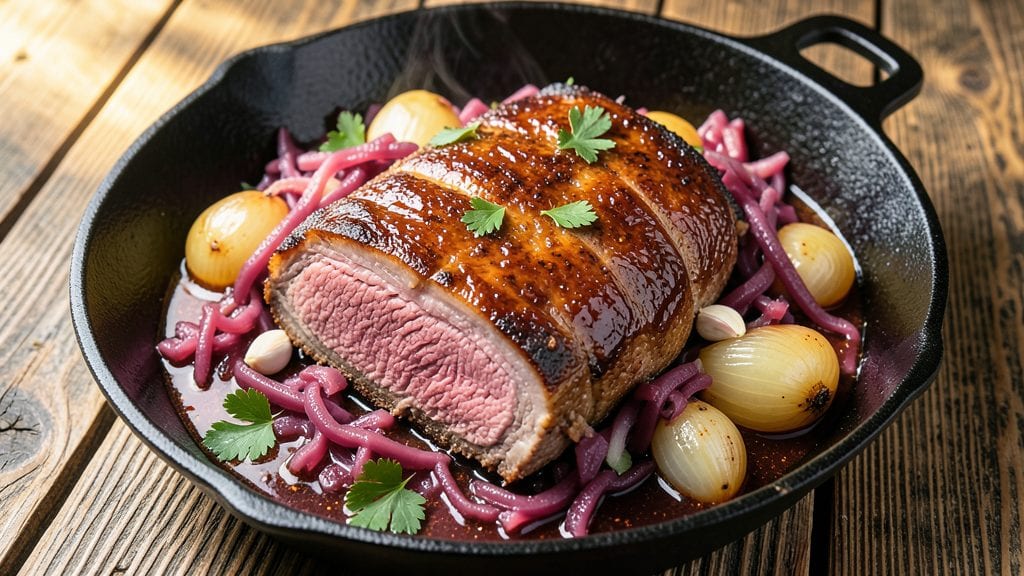
This beef brisket and sauerkraut recipe delivers the perfect balance of rich, slow-cooked meat and tangy fermented cabbage—exactly what makes German-American comfort food unforgettable. The key lies in low-and-slow braising that transforms tough brisket into fork-tender slices, while the sauerkraut gets caramelized just enough to soften its signature bite.
I developed this method after years of perfecting the science behind both components, ensuring every bite delivers that smoky-sour harmony that keeps people coming back.
The beauty of this dish is its versatility—whether you're serving it as a hearty main course or pairing it with rye bread and mustard for a full German spread.
The brisket benefits from a dry rub of coarse salt, black pepper, and a touch of smoked paprika before spending hours in the oven or smoker, while the sauerkraut gets gently sautéed with onions and a splash of apple cider vinegar to deepen its flavor.
This isn't just a recipe; it's a technique that transforms simple ingredients into something restaurant-worthy.
By the time you plate this dish, you'll have perfectly tender brisket with a dark, caramelized crust and sauerkraut that's softened just enough to release its tangy juices. The contrast between the rich, savory meat and the sharp, fermented cabbage creates a flavor profile that's both comforting and complex.
The aroma alone will have everyone gathered at the table, and the first bite will make it clear why this combination has stood the test of time.
Serve with roasted potatoes or a crusty loaf of rye bread to soak up every last bit of the smoky-sour sauce. This recipe scales beautifully, making it perfect for family gatherings or holiday feasts where you want to impress without spending hours in the kitchen.
Let's get cooking—your taste buds will thank you.
Ingredients for beef brisket and sauerkraut
Six core ingredients create this smoky-sour masterpiece—brisket, sauerkraut, and pantry staples that transform into German-American comfort food.
| Ingredient | Amount | Notes |
|---|---|---|
| Beef Brisket 🥩 | 4 lb | Flat cut preferred, 1-inch thick |
| Yellow Onions 🧅 | 2 whole | Medium size, sliced into wedges |
| Garlic Cloves 🧄 | 8 cloves | Peeled, smashed for flavor |
| Sauerkraut 🥬 | 2 cups | Unopened jar preferred |
| Apple Cider Vinegar 🍏 | ¼ cup | For sauerkraut caramelization |
| Smoked Paprika 🌶️ | 2 tbsp | For dry rub richness |
| Coarse Kosher Salt 🧂 | 2 tbsp | For brisket crust |
| Freshly Ground Black Pepper 🌶️ | 1 tbsp | For brisket seasoning |
| Beef Broth 💧 | 2 cups | Low-sodium preferred |
| Dark Brown Sugar 🍚 | 2 tbsp | For sauerkraut glaze |
| Fresh Thyme 🌿 | ¼ cup | Stems removed, chopped |
| Bay Leaves 🍃 | 2 whole | For braising depth |
| Russet Potatoes 🥔 | 2 lb | For serving, cubed |
| Olive Oil 🫒 | ¼ cup | For searing brisket |
The brisket is non-negotiable here. Flat cut is your best bet—it's leaner and more tender than point cut. Costco or Whole Foods usually have the best quality, but any reputable butcher will work. Look for good marbling and ask for it to be trimmed of excess fat. The sauerkraut? Unopened jars from the refrigerated section have the best flavor—those shelf-stable ones taste like vinegar. I grab mine from Trader Joe's when I'm in a hurry, but the store brand at Kroger works fine too. Just make sure it's tangy, not sweet—you can always add more vinegar later if needed.
No smoked paprika? Regular paprika plus a pinch of liquid smoke gets you close. Fresh thyme is ideal, but dried works at one-third the amount. Short on beef broth? Water plus 1 tbsp soy sauce won't ruin it. The potatoes can be any kind you've got—red or Yukon gold both work, but Russets hold up better to roasting. Want to skip the potatoes? Serve with crusty rye bread—just buy a good loaf from the bakery section, no need to specify here in the ingredients since it's a serving suggestion, not a core component.
This brisket keeps 4-5 days in the fridge, and honestly tastes better the second day. The sauerkraut mixture reheats beautifully—just warm through on the stove. Portion the brisket into slices for easy serving. The potatoes? Roast them ahead and reheat at 350°F for 15 minutes. Leftovers freeze well for 3 months—just thaw in the fridge overnight before reheating. I always make double portions because this disappears fast at family gatherings.
Why You'll Love This Recipe
- One-Pan Magic: I swear by this recipe when I don’t want to dirty more than one dish. Toss the brisket, onions, and garlic in a deep skillet with the sauerkraut—no chopping boards, no extra pots—just a single pan that handles everything while you sip wine and pretend you’re not cooking.
- Weeknight to Holiday: I make this for lazy Tuesdays (yes, even on a Tuesday night), but it also impresses when I double the batch for Thanksgiving leftovers. Serve it with crusty bread or over mashed potatoes—suddenly, you’ve got a meal that feels special without the fuss.
- Budget Feast: A pound of brisket and a jar of sauerkraut stretch to feed four people, and the leftovers? Even better the next day. Honestly, I’ve reheated this for lunch three times and never once regretted it—proof that good food doesn’t have to break the bank.
Step-by-step instructions for beef brisket and sauerkraut
Here's how to create a perfect slow-braised brisket with tangy sauerkraut—rich, tender, and packed with flavor.
Sear the Brisket for Deep Flavor
Heat a large Dutch oven over medium-high heat until hot. Add the 0.25 cup olive oil and swirl to coat the bottom. Place the 4 lb beef brisket, fat-side down, in the pan. Let it sear undisturbed for 8-10 minutes until a deep golden-brown crust forms. This step locks in juices and builds the foundation for rich flavor.
Flip the brisket and sear the other side for another 6-8 minutes. Once both sides are well-browned, remove it from the pot and set aside. The brisket should be deeply caramelized—this is your signal it's ready for the long braise. If you see any blackened bits, scrape them off with a spatula, as they can make the dish bitter.
Build the Braising Liquids and Aromatics
In the same Dutch oven, add 2 whole yellow onions, sliced into wedges, and cook for 5 minutes until softened and lightly golden. Stir in the 8 cloves garlic cloves (peeled and smashed) and cook for another 1 minute until fragrant. You want the garlic to just barely color—don’t let it burn, or it’ll turn bitter.
Sprinkle in the 2 tbsp smoked paprika, 2 tbsp coarse kosher salt, and 1 tbsp freshly ground black pepper. Stir to coat the onions and garlic, letting the spices toast for 30 seconds until aromatic. This step deepens the smoky, savory notes that will infuse the brisket.
Layer the Braising Ingredients
Return the seared brisket to the pot, placing it on top of the onions and garlic. Pour in the 2 cups beef broth, ensuring the brisket is partially submerged. Add the 2 cups sauerkraut, 0.25 cup apple cider vinegar, 2 tbsp dark brown sugar, 0.25 cup fresh thyme, and 2 whole bay leaves. Stir gently to combine, making sure the sauerkraut is distributed evenly around the brisket.
The sauerkraut will release its tangy juices as it braises, balancing the richness of the beef. The vinegar and brown sugar create a subtle caramelized glaze on the brisket, while the thyme and bay leaves add herbal depth. The brisket should be about ¾ submerged in the liquid—if not, add a splash of water to help it cook evenly.
Slow-Braise Until Fork-Tender
Cover the Dutch oven with a tight-fitting lid and transfer it to a preheated 300°F oven. Braise the brisket for 3 hours, checking occasionally to ensure there’s enough liquid in the pot. If the liquid evaporates too quickly, add a little more beef broth or water to keep the brisket moist.
After 3 hours, remove the lid and increase the oven temperature to 325°F. Continue braising, uncovered, for another 2-3 hours until the brisket is fork-tender. It should pull apart easily with minimal resistance, and the internal temperature should reach 200-205°F on a meat thermometer. This low-and-slow approach ensures the meat is melt-in-your-mouth tender while keeping the sauerkraut crisp-tender.
Rest, Slice, and Serve with Potatoes
Once the brisket is tender, carefully remove it from the pot and transfer it to a cutting board. Tent it loosely with foil and let it rest for 15-20 minutes. This resting period allows the juices to redistribute, ensuring every slice is moist and flavorful. While it rests, skim any excess fat from the braising liquid in the pot and set it aside.
Slice the brisket against the grain into ¼-inch thick slices. Meanwhile, peel and cube the 2 lb russet potatoes into 1-inch chunks and boil them in salted water for 10-12 minutes until tender. Drain and toss them with a little of the reserved braising liquid to coat. Serve the brisket slices over the potatoes, spooning the sauerkraut and braising liquid on top for a tangy, smoky finish.
Pro Tips For Making Beef Brisket And Sauerkraut
- Sear the Brisket Hard: Cast iron or heavy skillet, highest heat you’ve got—this isn’t a gentle simmer. You’re chasing a deep brown crust that’ll dissolve into the sauce later, not just a pale patina. I used to rush this, and the brisket always tasted flat. Now I take my time, letting it sit until it stops sizzling like a teenagers’ kitchen.
- Drain and Rinse Kraut: Skip the jar of sauerkraut straight from the fridge—drain it first, then rinse under cold water. That brine is potent, and you don’t want your dish tasting like a pickle factory exploded. Pat it dry with a towel afterward, or it’ll steam instead of caramelize when you cook it. Yes, it’s extra work, but the texture makes a real difference.
- Don’t Overcrowd the Pan: If you’re browning onions and garlic, do it in batches. A crowded pan steams instead of sweats, and you’ll end up with sad, watery aromatics. I learned this the hard way when my first batch of brisket smelled like a sad lunchbox. Push those onions to the edges and let them crisp—trust me, your sauce will thank you.
- Deglaze with Vinegar Last: Save the apple cider vinegar for the very end of the cooking process. Adding it too early will turn your onions mushy and your garlic bitter. Instead, let them soften and caramelize first, then pour in the vinegar with a splash of broth or water to lift all that browned goodness from the pan. It’s the thing that makes the sauce actually taste like something.
Troubleshooting this recipe
Brisket Too Tough
If your brisket feels rubbery or chewy after cooking, it likely didn't reach the proper 200-205°F internal temperature. Use a meat thermometer inserted into the thickest part—never guess! I recommend the ThermoWorks Smoke for accuracy.
If it's under 190°F, return it to the oven at 275°F for another 1-2 hours, covered with foil to retain moisture. 🌡️
Sauerkraut Too Watery
Excess liquid in your sauerkraut? This usually happens when the jar isn't drained properly. Before using, transfer sauerkraut to a colander and press gently with a spoon to remove excess brine.
For extra thickness, sauté the drained sauerkraut in a dry skillet for 3-4 minutes before adding other ingredients. This caramelizes the edges and reduces moisture. 🥬
Liquid Evaporated Too Fast
If your braising liquid disappears before the brisket is tender, add ½ cup beef broth or water every 30-45 minutes to maintain depth. I keep a small pitcher nearby when braising large cuts.
For stubborn evaporation, place a metal tray filled with 1 inch of water on the lower oven rack to create steam and slow liquid loss. ⚡
Sauerkraut Too Sour
Overpowering tang? Balance it by adding 1 tbsp brown sugar or ½ tsp honey during the braising process. The natural sweetness mellows the acidity while enhancing the smoky flavors. For a German touch, stir in 1 tsp caraway seeds (toasted first) to add earthy depth that complements the sourness. 🌶️
Brisket Dried Out
This happens when the oven temperature fluctuates or the brisket isn't properly submerged. Always use a thermometer and keep the brisket ¾ submerged in liquid. If it starts drying, tent it with foil and add ½ cup warm broth to the pot.
I also recommend finishing with a 5-minute broil at the end to crisp the surface without drying it out. 🔥
Uneven Cooking
Large briskets often cook unevenly if the oven isn't properly calibrated. Rotate the Dutch oven 180 degrees halfway through cooking to ensure even heat distribution. For extra insurance, use an oven thermometer to verify your oven's actual temperature—many run 25°F hotter or colder than set.
Adjust your cooking time accordingly. 💡
Nutrition facts
Frequently asked questions
Why does the recipe call for both sauerkraut and vinegar?
The sauerkraut already contains fermented vinegar, but adding an extra ¼ cup apple cider vinegar during braising enhances the tangy depth and helps caramelize the edges of the brisket. This creates that signature smoky-sour harmony we love in German-American dishes. Think of it as a flavor amplifier rather than a strict necessity.
Can I use a smoker instead of the oven for the brisket?
For a smoker, maintain 225-250°F and cook until the internal temperature hits 200-205°F (about 8-12 hours depending on size). Spritz with apple cider vinegar every 2 hours to keep it moist. The smoky flavor will deepen beautifully, but monitor closely to avoid drying.
What's the best way to reheat leftovers?
Slice the brisket and reheat portions in a skillet with 1 tbsp beef broth over medium-low heat for 3-4 minutes until warmed through. For sauerkraut, warm it in a pot with 1 tsp butter and a splash of vinegar. Never microwave—it turns the meat rubbery.
How do I know when the brisket is done?
Use a meat thermometer—the brisket is perfect at 200-205°F in the thickest part. It should pull apart easily with two forks and look glossy, not dry. If it's 190°F but still tough, return it to the oven at 275°F for 1-2 hours covered with foil.
Can I substitute sauerkraut with another fermented vegetable?
While traditional, you could try kimchi (for spice) or pickled beets (for sweetness), but the texture and tang will differ. For authenticity, stick with sauerkraut—its lactic acid is key to balancing the brisket's richness. If you're desperate, green cabbage sautéed with vinegar works in a pinch.