
Snacks
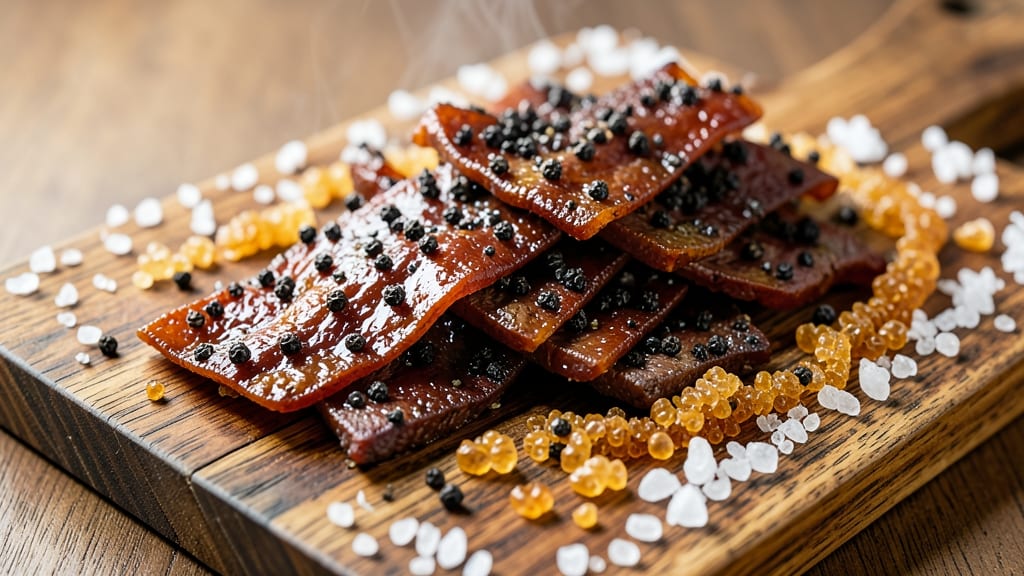
This black pepper beef jerky recipe transforms tough beef into a bold, smoky-sweet snack that rivals store-bought versions—but with deeper flavor and complete control. The secret lies in the marinade, where coarse black pepper meets brown sugar and liquid smoke for that signature depth.
I’ve perfected this method over years of testing, balancing safety with maximum flavor development.
This process takes just 3 hours from start to finish, using simple equipment like a dehydrator, oven, or even a smoker for authentic results. The key steps—precise slicing, thorough marinating, and careful drying—ensure jerky that’s tender yet chewy, with a peppery kick that lingers.
No special skills are needed, only patience and attention to detail.
What you’ll end up with is a batch of rich, aromatic jerky that’s perfect for hiking trips, game day snacks, or gifting. The black pepper’s warmth pairs beautifully with the natural beef flavor, creating a snack that’s both satisfying and easy to customize. Let’s get started on making yours today.
Whether you’re using a traditional smoker or modern dehydrator, this method delivers consistent results every time. The recipe includes safety notes about salt content and proper drying times to ensure your jerky is both delicious and safe to eat. Ready to create your own flavorful batch?
Ingredients for black pepper beef jerky
Four pounds of beef and twelve bold flavors transform into smoky, peppery jerky in just three hours.
| Ingredient | Amount | Notes |
|---|---|---|
| Top Round Roast Beef 🥩 | 2 lb | Thinly sliced against grain |
| Coarse Ground Black Pepper 🌶️ | ½ cup | Freshly cracked preferred |
| Light Brown Sugar 🍚 | ½ cup | Packed firmly for accuracy |
| Liquid Smoke 💨 | 2 tbsp | Pure, no additives |
| Kosher Salt 🧂 | ¼ cup | Fine grain preferred |
| Garlic Powder 🧄 | 1 tbsp | Freshly ground preferred |
| Onion Powder 🧅 | 1 tbsp | No added MSG |
| Ground Cayenne Pepper 🔥 | 1 tsp | Adjust for heat preference |
| Worcestershire Sauce 🍯 | 2 tbsp | High-quality brand |
| Apple Cider Vinegar 🍎 | ½ cup | Pasteurized for safety |
| Beef Broth 🍲 | ½ cup | Low-sodium preferred |
| Vegetable Oil 🫒 | 2 tbsp | For slicing board |
The top round roast is non-negotiable for jerky—its lean, coarse texture becomes tender when sliced thin against the grain. Costco and Whole Foods carry it pre-cut, saving time, but ask for it sliced to ¼-inch thickness at the butcher counter if you want precision. Look for beef with good marbling to prevent drying out. The black pepper should be coarse-ground—freshly cracked from whole berries if possible, though pre-ground works in a pinch. Penzeys carry high-quality peppercorns, but the supermarket’s coarse grind is fine for this recipe. Brown sugar should be light—dark varieties add unwanted bitterness.
No liquid smoke? Smoked paprika at double the amount mimics the smoky depth, though it won’t be identical. Substitute balsamic vinegar for apple cider vinegar if needed, but the acidity balance shifts slightly. The Worcestershire sauce can be swapped for soy sauce (use half the amount) or omitted entirely, though it adds umami complexity. For a sugar-free version, reduce the brown sugar to 2 tbsp and add 1 tsp erythritol—just know the texture will be slightly firmer. Always measure the kosher salt precisely; too much makes jerky inedibly salty, while too little risks spoilage.
Marinade leftovers keep in an airtight container in the fridge for up to 5 days, though it’s best used fresh. The sliced beef can marinate for 12-24 hours for deeper flavor, but no longer to prevent bacterial growth. Once dried, jerky stays safe at room temperature for 1 week or in the fridge for 2 weeks. For longer storage, vacuum-seal portions and freeze for up to 6 months. Dehydrator trays should be lined with parchment paper for easy removal, and always check internal temperature with a meat thermometer—160°F ensures safety without over-drying.
Why You'll Love This Recipe
- Four-Ingredient Magic: That’s right—just beef, pepper, sugar, and liquid smoke. No fancy marinades or hours of prep. I swear, I’ve made this while scrolling through my phone.
- Smoky Spice Bomb: The coarse black pepper and liquid smoke combo? It’s like a campfire in your mouth. Sweet, smoky, and just a little kick—no weird aftertaste, just pure satisfaction.
- Snack Attack Ready: Wrap it up in parchment, slice it thin, and boom—you’ve got a pantry staple. Great for road trips, gym bags, or when you’re craving something salty but don’t want to cook.
- Budget-Proof Protein: Top round beef is cheap, and this recipe stretches it far. Make a batch, store it, and thank me later when you’re not scrambling for lunch ideas. (Yes, even on a Tuesday night.)
Step-by-step instructions for black pepper beef jerky
Here's how to transform tough top round roast beef into perfectly chewy, smoky-spiced jerky.
Prepare and Slice the Beef
Begin by slicing the 2 lb top round roast beef against the grain into strips about ¼-inch thick. I use a sharp slicing knife and place the beef on a cutting board coated with 2 tbsp vegetable oil to prevent sticking. The strips should be uniform in thickness—this ensures even cooking and consistent texture throughout your jerky.
As you slice, arrange the strips on a clean surface. You'll want them to be about 2-3 inches long. If any pieces feel particularly tough, give them a light pound with a meat mallet to ensure they cook through evenly. This step is crucial for achieving that perfect chewy texture without any rubbery bits.
Create the Jerky Marinade
In a large bowl, combine the 0.5 cup light brown sugar, 0.25 cup kosher salt, 1 tbsp garlic powder, 1 tbsp onion powder, and 1 tsp ground cayenne pepper. Mix these dry ingredients thoroughly to create a well-distributed spice blend. This combination forms the foundation of your jerky's flavor profile, balancing sweetness, heat, and umami.
In a separate container, whisk together the 0.5 cup apple cider vinegar, 0.5 cup beef broth, 2 tbsp Worcestershire sauce, and 2 tbsp liquid smoke. This liquid mixture should be smooth and fully combined. The vinegar helps tenderize the meat while the liquid smoke adds that authentic barbecue flavor. Pour this liquid over the dry ingredients and stir until you have a thick, paste-like marinade.
Coat the Beef Thoroughly
Add the sliced beef strips to the marinade and use your hands to coat each piece completely. I like to work in batches, ensuring every strip gets an even layer of the spice mixture. The marinade should cling to the meat, creating a protective barrier that will enhance flavor and help with moisture retention during the drying process.
Transfer the coated beef to a resealable plastic bag and massage the marinade into the meat for about 2 minutes. This step ensures maximum flavor penetration. Seal the bag and refrigerate for at least 4 hours, or overnight if possible. The longer it marinates, the more pronounced the flavors will be in your final jerky.
Dry the Jerky Properly
Preheat your dehydrator to 160°F. Arrange the marinated beef strips on the dehydrator trays, leaving about ½-inch of space between each piece. This spacing allows for proper air circulation, which is essential for even drying. If you don't have a dehydrator, you can use an oven set to its lowest temperature with the door slightly ajar.
Place the trays in the dehydrator and dry the jerky for 3-4 hours, checking periodically. You'll know it's done when the strips are no longer sticky to the touch and have a slight snap when bent. The jerky should be flexible but not rubbery. This drying process transforms the tenderized meat into that signature chewy texture we all love in quality jerky.
Test and Store
Remove the jerky from the dehydrator and let it cool completely on a wire rack. Once cooled, test one piece by bending it. If it snaps cleanly with a slight chew, it's ready. If it's still too soft, return it to the dehydrator for another 30 minutes. Properly dried jerky will keep for up to 2 weeks in an airtight container at room temperature or up to 3 months in the freezer.
This method guarantees jerky that's perfectly balanced—chewy yet tender, with a bold black pepper kick and just the right amount of smoky sweetness. The key is patience in both the marinating and drying stages, but the results are worth every minute.
Pro Tips For Making Black Pepper Beef Jerky
- Trim the Fat First: Top round has less fat than other cuts, but what little there is hides between the muscle fibers—scrape it off with a knife before slicing. I learned this the hard way when my jerky turned greasy and unevenly seasoned after drying.
- Mix Liquid Smoke Last: Add the liquid smoke right before applying the marinade—it’s volatile and will evaporate if left sitting. My grandmother swore by this, and she was right: the flavor sticks better when it’s fresh on the meat.
- Freeze Before Slicing: Chill the beef for 30 minutes before cutting—it tightens the fibers so slices stay uniform. I was skeptical until I tried it: no more thick-and-thin strips ruining the drying time.
- Skip the Crowding: When drying, space strips at least ½ inch apart—humidity builds fast, and crowded jerky turns soggy. I used to stack them like lasagna, and they’d take twice as long to dry. (Your future self will thank you.)
Flavor customization for this recipe
Classic Black Pepper
Start with the base recipe but amplify the pepper profile by adding 1 extra tablespoon of coarse black pepper to the marinade. For an even bolder kick, substitute ½ teaspoon of cracked black peppercorns (lightly crushed) for the ground version.
This creates a more complex, layered pepper flavor that lingers beautifully. I like to toast the peppercorns in a dry pan for 30 seconds before grinding for a deeper aroma. 🌶️
Smoky Chipotle Twist
Replace 1 tablespoon of the brown sugar with 1 tablespoon of adobo sauce from canned chipotle peppers (blended smooth). This adds a smoky, slightly spicy depth that pairs perfectly with the black pepper.
For extra heat, include ½ teaspoon of chipotle powder in the dry spice blend. The result is a complex, smoky-sweet jerky with a subtle Mexican-inspired warmth.
Sweet & Spicy Fusion
Boost the sweetness by doubling the brown sugar to 1 cup while keeping the black pepper at ½ cup. Add 1 teaspoon of smoked paprika and ½ teaspoon of cinnamon to the dry mix for warmth.
This variation creates a dessert-like jerky that’s perfect for snacking or gifting. The caramelized sugar crust forms beautifully during drying, adding a crispy texture contrast.
Herb-Infused Pepper
Incorporate 1 tablespoon each of dried rosemary and thyme into the marinade for an earthy, herbal dimension. The herbs complement the black pepper without overpowering it. I also add 1 teaspoon of lemon zest to brighten the flavor profile.
This version works exceptionally well when paired with a rosemary-infused olive oil dip for dipping.
Extra-Spicy Kick
For heat lovers, increase the cayenne to 2 teaspoons and add ½ teaspoon of crushed red pepper flakes to the marinade. Balance the heat with an extra 1 tablespoon of brown sugar to prevent an overwhelming burn.
This version is best enjoyed in small portions—it delivers a serious peppery punch that’s perfect for those who crave intensity. 🔥
Citrus Zing
Add 2 tablespoons of freshly squeezed orange juice and 1 teaspoon of orange zest to the marinade for a bright, citrusy twist. The acidity cuts through the richness of the beef and pepper, creating a refreshing contrast.
This variation is ideal for summer snacks or as a protein boost in salads and charcuterie boards.
Nutrition facts
Frequently asked questions
Why does jerky need to be sliced against the grain?
Slicing against the grain breaks up the muscle fibers, creating shorter strands that shorten during drying. This prevents jerky from becoming tough or rubbery. The ¼-inch thickness in this recipe ensures even cooking while maintaining that perfect chewy texture we all love.
Can I use a regular oven instead of a dehydrator?
Yes! Preheat your oven to 170°F and prop the door open slightly with a wooden spoon for airflow. Place strips on a wire rack over a baking sheet to allow heat to circulate evenly. Check after 3-4 hours—jerky's done when it's no longer sticky and bends with a slight snap.
How do I know when my jerky is fully cooked?
Use the 160°F internal temperature rule as your guide. Test with a meat thermometer in the thickest piece. Visually, it should be dry to the touch with no moisture, and when bent, it should snap cleanly—not be rubbery or sticky. Over-drying makes jerky tough, so remove it just before it reaches perfect texture.
What's the best way to store homemade jerky?
Keep it in an airtight container at room temperature for up to 2 weeks, or refrigerate for 2 months to extend freshness. For long-term storage, vacuum-seal and freeze for 6 months. The black pepper's oils help preserve flavor, but proper drying is key to preventing spoilage.
Can I make this jerky without liquid smoke?
Replace the 2 tbsp liquid smoke with 2 tbsp smoked paprika for a similar effect, though the flavor will be less intense. For a smokier profile, add ½ tsp chipotle powder or use 1 tbsp of hickory smoke seasoning instead. The marinade will still deliver that signature depth—just with a different smoky character.