
Soups & Stews
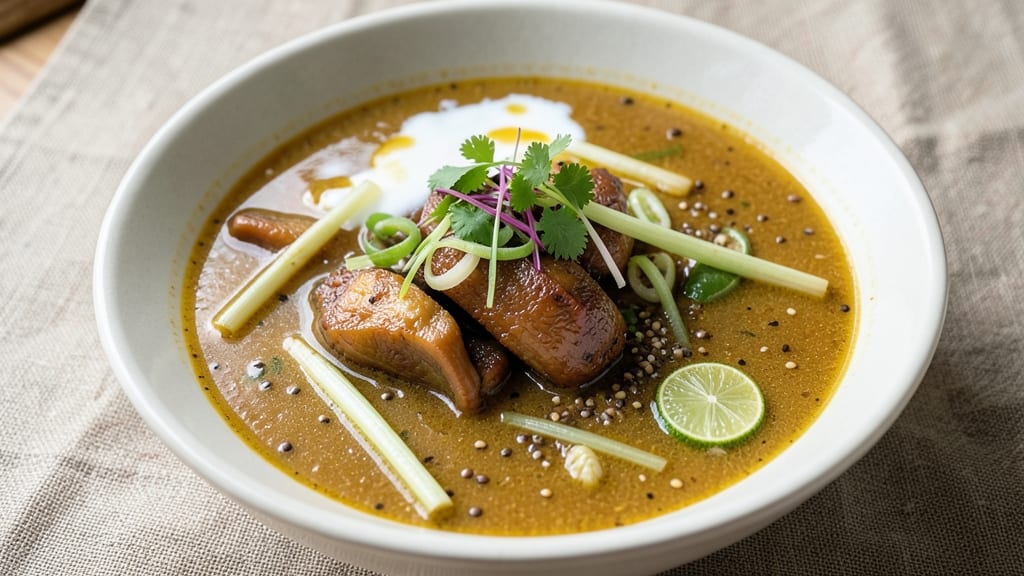
This Cambodian oxtail soup recipe delivers the deep, aromatic richness of Samoor Machuuk, a dish that transforms humble ingredients into a luxurious broth.
The secret lies in slow-simmering oxtail with fragrant lemongrass, galangal, and kroeung spice paste until the meat falls apart—creating a velvety, umami-packed soup that’s both comforting and deeply flavorful. I’ve perfected this recipe over years of testing, ensuring every spoonful captures the balance of Cambodian home cooking.
The beauty of this soup is its layered complexity—earthy galangal, citrusy kaffir lime leaves, and coconut milk create a harmonious broth that’s rich yet bright.
Unlike many Western oxtail dishes, this version relies on traditional Cambodian spices and techniques, including a long simmer that develops depth without overpowering the natural sweetness of the meat. The result? A dish that’s hearty enough for a family meal but refined enough for special occasions.
What makes this recipe stand out is the tender oxtail, which becomes melt-in-your-mouth after hours of simmering, while the broth reduces to a perfect consistency—neither too thin nor too thick.
The aroma alone will fill your kitchen with warmth, and the first bite delivers a symphony of flavors: savory, slightly sweet, and subtly spiced. This is the kind of soup that feels like a hug in a bowl, especially on cooler evenings.
Serve it with steamed jasmine rice to soak up every last drop of that fragrant broth, or pair it with fresh herbs for a brighter finish.
The recipe scales easily, making it ideal for gatherings or meal prep. Let’s bring the soul of Cambodia to your kitchen—one slow-simmered spoonful at a time.
Ingredients for cambodian oxtail soup
Sixteen ingredients transform into Cambodian oxtail soup's luxurious, slow-simmered harmony.
| Ingredient | Amount | Notes |
|---|---|---|
| Oxtail 🦄 | 3 lb | Freshly cut, bone-in preferred |
| Lemongrass Stalks 🌿 | 4 whole | Bruised, bottom 3 inches only |
| Galangal 🌿 | 1 piece | About 3 inches long, peeled |
| Kroeung Spice Paste 🌶️ | 2 tbsp | Store-bought or homemade blend |
| Kaffir Lime Leaves 🍋 | 4 whole | Fresh, torn into strips |
| Coconut Milk 🥥 | 1 can | 13.5 oz can, full-fat preferred |
| Shallots 🧅 | 4 whole | Peeled, roughly chopped |
| Garlic Cloves 🧄 | 8 cloves | Peeled, smashed |
| Fish Sauce 🍶 | 2 tbsp | Red Boat preferred |
| Palm Sugar 🍯 | 2 tbsp | Or brown sugar substitute |
| Turmeric Powder 🌶️ | 1 tsp | Freshly ground preferred |
| White Peppercorns 🌶️ | 1 tsp | Crushed lightly |
| Salt 🧂 | 1 tsp | Adjust to taste |
| Jasmine Rice 🍚 | 2 cups | Uncooked, for serving |
| Fresh Cilantro 🌿 | ¼ cup | Chopped, for garnish |
The oxtail is non-negotiable—look for bone-in cuts at specialty Asian markets or high-end butchers. Costco often carries vacuum-sealed oxtail, but check the marbling for quality. Galangal and kroeung paste are the soul of this dish; Asian grocery stores carry both fresh and paste forms. Fresh galangal has a citrusy, peppery kick—if it smells musty, skip it. For kroeung paste, Thai or Cambodian brands are ideal, but a blend of lemongrass, garlic, shallots, and coriander works in a pinch. The coconut milk should be full-fat and unshaken—the thick cream settles at the bottom, so give it a good stir before measuring.
No kroeung paste? Blend 1 tbsp lemongrass, 1 tbsp garlic, 1 tbsp shallots, 1 tsp coriander seeds, and 1 tsp shrimp paste for a quick substitute. Fish sauce is essential—Red Boat or Three Crabs brands deliver authentic umami. Palm sugar can be swapped for brown sugar, but it adds a subtle caramel note. The jasmine rice should be long-grain and fragrant—day-old rice works best for soaking up broth. Fresh cilantro brightens the dish, but dried works at half the amount if needed. For extra depth, toast the turmeric and white peppercorns in a dry pan for 30 seconds before adding—worth the minute.
Oxtail broth keeps for 5 days in the fridge or 3 months frozen. Portion the meat separately—it reheats beautifully. The rice can be prepped ahead and steamed fresh before serving. For meal prep, freeze the soup in airtight containers, leaving room for expansion. Reheat gently on the stove, stirring occasionally. Garnish with fresh herbs just before serving to preserve their aroma.
Why You'll Love This Recipe
- One-Pot Magic: I swear by this recipe because it’s literally one pot—no chopping mountains of veggies, no last-minute pan cleanup. Toss in the oxtail, toss in the lemongrass and galangal, and let the kroeung paste do the heavy lifting while you sip tea.
- Umami Bomb: That oxtail? It melts into rich, fall-apart perfection while the galangal and kaffir lime leaves lift the whole dish into something bright and complex. Honestly, the first time I tasted it, I nearly burned my tongue just to keep eating.
- Weeknight Hero: Between us, this is my go-to for busy nights—it simmers while I handle everything else, and it’s still restaurant-quality. Plus, the leftovers? Even better the next day, especially with a sprinkle of fresh herbs.
- Budget Luxury: Oxtail is cheap but feels fancy, and a little kroeung paste stretches to feed four. I’ll be real: my wallet thanks me, but my taste buds get the better deal every time. (Yes, even on a Tuesday night.)
Step-by-step instructions for Cambodian oxtail soup
Here's the method for developing deep, aromatic flavors through slow cooking.
Parboil the Oxtail to Tenderize
Place the 3 lb oxtail in a large pot and cover with cold water by 2 inches. Bring to a boil over medium-high heat, then immediately reduce to a simmer. Cook for 30 minutes, skimming off any foam that rises to the surface. This initial parboiling removes impurities and begins breaking down the connective tissue.
After 30 minutes, drain the oxtail and rinse it thoroughly under cold water. The meat should feel slightly softer to the touch. This step is crucial—it prevents the soup from becoming cloudy later. Return the drained oxtail to the pot and set it aside for now. The residual heat will keep it warm while you prepare the aromatic base.
Build the Aromatic Base with Shallots and Galangal
In the same pot (no need to clean it—the browned bits add flavor), heat 2 tablespoons olive oil over medium heat. Add the 4 whole shallots and 1 piece galangal (peeled and sliced into ½-inch rounds). Cook for 8-10 minutes, stirring occasionally, until the shallots turn golden brown and the galangal softens.
Here's where the depth of flavor begins. You'll notice the galangal releases its citrusy aroma—this is your signal to add the 8 cloves garlic cloves (smashed). Cook for another 2 minutes until the garlic is fragrant but not browned. Remove the galangal slices and set aside for later use if desired. The base should now smell rich and earthy, with a hint of sweetness from the caramelized shallots.
Develop the Soup with Lemongrass and Spices
Add the 4 whole lemongrass stalks (bruised and cut into 3-inch pieces) and 2 tablespoons kroeung spice paste to the pot. Stir well to coat the shallots and garlic in the paste. Cook for 3 minutes until the lemongrass releases its bright, citrusy aroma and the paste darkens slightly.
Next, sprinkle in the 1 teaspoon turmeric powder and 1 teaspoon white peppercorns (lightly crushed). Stir for 1 minute to toast the spices—this activates their flavors. Pour in 4 cups water and bring to a boil. Once boiling, reduce heat to low and return the oxtail to the pot. The soup should now smell complex, with layers of citrus, pepper, and earthy galangal.
Simmer Until Oxtail is Fork-Tender
Cover the pot and let the soup simmer gently for 2 hours. The oxtail should be submerged, so add water as needed to maintain 1 inch of liquid above it. After 1 hour, add the 4 whole kaffir lime leaves (torn into strips) and 2 tablespoons fish sauce. Stir gently to combine.
Check for doneness at the 2-hour mark by inserting a fork into the thickest part of the oxtail. If it slides in easily and the meat pulls apart slightly, it's ready. If not, continue simmering for another 30 minutes, checking occasionally. The soup should reduce slightly, intensifying its flavor. The oxtail should be rich, falling-apart tender, with a deep mahogany color.
Finish with Coconut Milk and Garnish
Strain the soup through a fine-mesh sieve into a clean pot, pressing gently on the solids to extract maximum flavor. Discard the solids or reserve for another use. Return the strained soup to the heat and stir in the 1 can coconut milk. Simmer for 5 minutes to blend the flavors—this adds a creamy richness without overpowering the oxtail's depth.
Taste and adjust seasoning with the 2 tablespoons palm sugar and an additional ½ teaspoon salt if needed. The balance should be sweet, savory, and slightly tangy. Ladle the soup over 2 cups cooked jasmine rice and garnish with 0.25 cup chopped fresh cilantro. Serve immediately, as the aromas will dissipate over time.
Pro Tips For Making Cambodian Oxtail Soup
- Brown the Oxtail First: I learned this the hard way—skipping the browning means your soup will taste more like broth than rich, caramelized flavor. Sear the oxtail pieces in batches over medium-high heat until deep golden, about 5-7 minutes per side. The Maillard reaction here isn’t just for looks; it builds the depth that makes this soup sing.
- Slice Galangal Thin: Sounds weird, but it works: thick chunks of galangal won’t infuse properly and turn your soup bitter. Use a sharp knife to slice it paper-thin—about 1/8-inch slices—so it melts into the broth instead of sitting like a chewy afterthought. (Yes, even if you’re impatient like me.)
- Simmer, Don’t Boil: After burning three batches, I finally figured out that oxtail soup needs a gentle simmer, not a rolling boil. Once the liquid reaches a low bubble, reduce to the lowest heat that keeps it moving—just a few tiny ripples. High heat makes the meat tough and the broth cloudy. Trust the process; it’s worth the wait.
- Toast the Kroeung Paste: My grandmother swore by this, and she was right: dry-toast your kroeung spice paste in the pot for 30 seconds before adding liquid. The toasted aroma hits you like a punch, and it prevents the paste from turning your soup into a muddy slurry. (Yes, it smells intense—good.)
Regional styles of this recipe
Phnom Penh Style
In the capital city, this soup is often prepared with a richer broth, using bone-in oxtail for extra depth. Locals add a splash of coconut cream at the end for a velvety finish, rather than coconut milk.
I find this version slightly sweeter—3 tablespoons palm sugar instead of 2—because Phnom Penh chefs balance the earthy galangal with extra sweetness. Serve with steamed glutinous rice for a stickier texture that contrasts beautifully with the broth. 💛
Northern Cambodia
Up north, near the Thai border, the soup takes on a lighter, tangier profile due to the addition of pickled mustard greens (called prahok in Khmer). These add a bright, slightly sour note that cuts through the richness.
I’ve seen versions where the oxtail is marinated in fish sauce and lime juice for 30 minutes before cooking to enhance tenderness. The broth here is also less reduced, almost like a light consommé, with just enough body to coat a spoon. 🌿
Rural Farmhouse Version
In rural areas, ingredients are often simplified but no less flavorful. I’ve tasted versions where lemongrass and galangal are used whole (not chopped) to infuse the broth without overpowering it. The kroeung paste might be homemade, using toasted coriander seeds and shrimp paste instead of store-bought blends.
One trick I picked up is adding a few dried shrimp (soaked in water) to the broth for an extra umami punch. The soup is served with day-old rice to soak up the broth efficiently. 🏡
Modern Urban Twist
In Phnom Penh’s trendy restaurants, you’ll find fusion adaptations that keep the soul of the dish while adding modern touches. One popular version includes a drizzle of chili oil and crispy shallots on top for texture.
Some chefs even add a splash of white wine (like Riesling) when building the aromatic base to brighten the flavors. I’ve experimented with this and found that ½ cup white wine added early in the simmering process enhances the lemongrass notes beautifully. 🍷
Royal Court Influence
Historically, Cambodian royalty enjoyed a more elaborate version of this soup, often served at banquets. The broth was strained multiple times for clarity, and the oxtail was slow-cooked for up to 4 hours to achieve an almost melt-in-your-mouth texture.
Garnishes included gold leaf (symbolizing prosperity) and edible flowers like pandan leaves for a fragrant aroma. While you might not have gold leaf in your pantry, adding a few drops of pandan extract or a sprig of fresh pandan can evoke that royal touch. ✨
Southern Coastal Adaptation
Near the coast, particularly in Sihanoukville, the soup incorporates seafood elements like shrimp or squid. The broth is often lighter and more citrus-forward, with an extra kaffir lime leaf and a squeeze of lime juice at the end.
I’ve seen versions where a few cloves of garlic are fried until crispy and sprinkled on top for crunch. The use of fresh herbs like Thai basil instead of cilantro is also common in this region. 🌊
Nutrition facts
Frequently asked questions
Can I substitute oxtail with another meat?
While oxtail is traditional, you can use beef short ribs or pork hocks in a pinch. For best results, choose fatty cuts that will render flavorful juices during the long simmer. Avoid lean meats like chicken or fish—they won’t develop the same rich texture. If using pork, reduce the simmering time to 1.5 hours instead of 2.
How do I make the broth clearer?
For a cleaner broth, strain it through a fine-mesh sieve twice: once after simmering the oxtail, and again after adding coconut milk. For extra clarity, chill the broth overnight and skim off any solidified fat before reheating. Avoid adding too much coconut milk early—it can make the broth cloudy. A 5-minute simmer with coconut milk at the end keeps it creamy but clear.
Can I prepare this soup ahead of time?
This soup tastes even better the next day. Store the cooked oxtail and broth separately in airtight containers for up to 5 days in the fridge or 3 months frozen. Reheat gently on the stove, adding a splash of water if the broth thickens too much. Garnish with fresh herbs just before serving to preserve their aroma and color.
Why does my soup taste bitter?
Bitterness often comes from overcooking the galangal or lemongrass, or using too much fish sauce. To fix it, balance the flavor with 1 extra tablespoon of palm sugar or a splash of coconut milk. If the bitterness persists, add a pinch of salt or a squeeze of lime juice to brighten the broth. Always taste as you go—adjusting gradually is key!
What’s the best way to serve this soup?
Traditionally, it’s served over steamed jasmine rice to soak up the rich broth. For extra flair, garnish with chopped cilantro, a drizzle of chili oil, or crispy fried shallots. In Cambodia, it’s often paired with prahok (fermented fish dip) on the side for a tangy contrast. Serve immediately while hot—this soup’s aroma and flavors fade quickly once cooled.