
Desserts
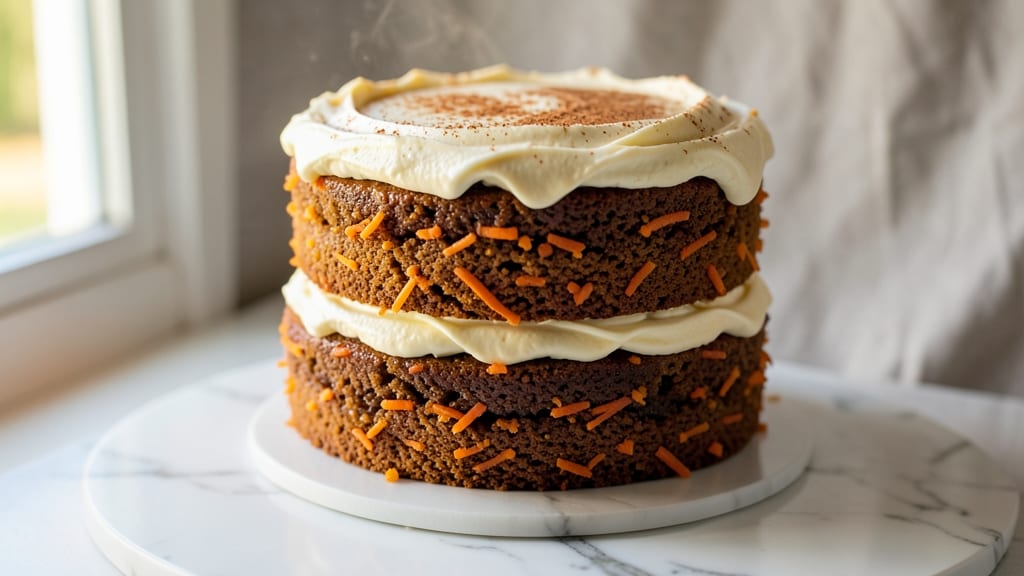
Creating a carrot cake layer cake with perfectly moist spiced layers and velvety cream cheese frosting is an art I’ve perfected over years of baking—each slice delivers that perfect balance of tender crumb and rich sweetness.
The secret lies in precise ingredient ratios and a slow baking process that ensures no dryness, while the cream cheese frosting adds a tangy contrast that makes every bite unforgettable.
This recipe delivers three rich layers of carrot cake, baked just until golden yet still tender, with a cream cheese frosting that’s light enough to spread smoothly yet rich enough to satisfy.
What sets this apart is the careful blend of spices—cinnamon, nutmeg, and ginger—that warm the cake without overpowering the natural sweetness of the carrots and walnuts.
The result is a cake that looks as impressive as it tastes: even layers stacked with precision, a smooth frosting finish, and a texture that’s moist in the center but sturdy enough to slice cleanly.
Whether you’re baking for a celebration or simply craving a classic dessert, this recipe delivers professional-quality results every time.
Ready to bake? We’ll cover everything from mixing the batter to assembling the layers and achieving that perfect frosting finish. Let’s get started!
Ingredients for carrot cake layer cake
Simple pantry staples plus a few specialty touches create this showstopping carrot cake.
| Ingredient | Amount | Notes |
|---|---|---|
| All-Purpose Flour 🌾 | 3 cups | Sifted for lighter texture |
| Granulated Sugar 🍚 | 2 ½ cups | White or light brown |
| Packed Brown Sugar 🍚 | 1 cup | For moisture and depth |
| Vegetable Oil 🫒 | 1 cup | Light or canola preferred |
| Unsalted Butter 🧈 | ½ cup | Softened, room temperature |
| Grated Carrots 🥕 | 3 cups | Finely grated, no pulp |
| Large Eggs 🥚 | 4 whole | Room temperature for mixing |
| Vanilla Extract 🌿 | 2 tsp | Pure, high-quality preferred |
| Ground Cinnamon 🌶️ | 2 tsp | Freshly ground is best |
| Ground Nutmeg 🌿 | ½ tsp | Freshly grated nutmeg works too |
| Ground Ginger 🌿 | 1 tsp | Freshly grated preferred |
| Baking Soda 🧪 | 1 ½ tsp | Not baking powder |
| Salt 🧂 | ½ tsp | Fine sea salt preferred |
| Chopped Walnuts 🥜 | 1 ½ cups | Toasted for extra flavor |
| Cream Cheese 🧀 | 16 oz | Full-fat, room temperature |
| Powdered Sugar 🍚 | 4 cups | Sifted for smooth frosting |
| Heavy Whipping Cream 🥛 | 1 cup | Cold for whipping |
| Lemon Juice 🍋 | 1 tbsp | Freshly squeezed |
The carrots are non-negotiable—use fresh, bright orange ones and grate them yourself. Trader Joe's or Whole Foods usually have the sweetest varieties. Walnuts add crunch, so toast them in a dry pan for 3-4 minutes until fragrant. For the cream cheese, Philadelphia brand is my go-to—it whips up smoother than store brands. The spices? Penzeys or bulk bins for the freshest cinnamon and nutmeg—pre-ground stuff gets stale fast.
No fresh carrots? Baby carrots work in a pinch, but they’ll add more moisture. Subbing walnuts? Pecans or candied pineapple both work, though texture changes. For the frosting, sour cream can replace half the cream cheese if you’re watching fat. The powdered sugar matters—Domino or C&H brands dissolve best. And if you’re baking in a dry climate, add 1 tbsp milk to the batter to keep it moist.
This cake keeps for 4-5 days in an airtight container, but the frosting stays best for 3 days. For make-ahead baking, assemble the layers 24 hours ahead—the flavors meld beautifully. Freeze unfrosted layers for up to 3 months—just thaw at room temp before frosting. Store frosting separately in the fridge, then whip back to fluffiness with a quick hand mixer.
Why You'll Love This Recipe
- No Mixer Needed: I swear by this recipe because it’s all about the creaming method—just butter, sugar, and a little elbow grease. No electric mixer, no fuss, and the texture comes out light as a cloud every single time. Honestly, my stand mixer sits unused for this one.
- Spice-Perfect Balance: That combo of brown sugar and vegetable oil? Magic. The brown sugar caramelizes just enough to give it depth, while the oil keeps it moist without tasting greasy. And the cinnamon? It’s not overpowering—just enough to make you want to lick the bowl.
- Party-Ready in 3 Layers: Slice it for a brunch spread, stack it for a birthday cake, or serve it as muffins for a potluck. The layers stay shockingly sturdy when frosted, and the carrot cake flavor actually elevates in smaller portions—no one will guess it’s not a fancy bakery buy.
- Pantry Staples Only: Between us, this recipe uses stuff you already have: flour, sugar, butter, and a few spices. No specialty ingredients, no last-minute grocery runs. And leftovers? They’re even better the next day—moist, not dry, and perfect for a quick breakfast toast.
Step-by-step instructions for carrot cake layer cake recipe
Here's how to bake layers that stay moist and rich, topped with velvety cream cheese frosting.
Mix the Wet Ingredients Until Smooth
In a large mixing bowl, combine the 1 cup vegetable oil and 0.5 cup unsalted butter (softened). Whisk until fully blended, then gradually add the 2.5 cups granulated sugar and 1 cup packed brown sugar. Mix until the sugars dissolve completely.
Next, add the 4 whole large eggs one at a time, mixing well after each addition. Stir in the 2 tsp vanilla extract and 1 tbsp lemon juice. This mixture should be smooth and slightly thick—like a thick batter. If it looks too stiff, add 1 tablespoon of water to loosen it. The lemon juice brightens the carrot flavor while balancing the sweetness.
Combine Dry Ingredients and Fold in Carrots and Walnuts
In a separate bowl, sift together the 3 cups all-purpose flour, 1.5 tsp baking soda, 0.5 tsp salt, 2 tsp ground cinnamon, 0.5 tsp ground nutmeg, and 1 tsp ground ginger. Whisk gently to avoid developing too much gluten.
Gradually add the dry ingredients to the wet mixture, mixing on low speed with a hand mixer or electric mixer until just combined. Avoid overmixing—you should still see small flour streaks. Then, fold in the 3 cups grated carrots and 1.5 cups chopped walnuts by hand using a spatula. The batter will be thick and slightly sticky, but that's perfect for moist layers. Don't worry if it looks uneven—the carrots add natural sweetness and moisture.
Bake the Layers for Perfect Moisture
Preheat your oven to 350°F. Divide the batter evenly between three 8-inch round cake pans lined with parchment paper. Bake one layer at a time for 25-30 minutes, or until a toothpick inserted into the center comes out clean. Rotate the pans halfway through baking for even browning.
The layers should be golden on top but still slightly springy to the touch. If the tops brown too quickly, tent them loosely with foil. Let each layer cool in the pan for 10 minutes before transferring to a wire rack. This prevents them from cracking as they cool completely. Warm pans help create a tender crumb, but don't let them cool too long before frosting.
Prepare the Cream Cheese Frosting
In a large mixing bowl, beat the 16 oz cream cheese and 4 cups powdered sugar together until smooth and creamy. Add the 1 cup cold heavy whipping cream and 1 tbsp lemon juice, mixing on medium speed until light and fluffy. The frosting should hold soft peaks when you lift the beaters—this ensures it's stable enough to spread but still smooth.
If the frosting looks too thick, add 1-2 tablespoons of milk to loosen it slightly. For extra flavor, you can add a pinch of cinnamon or a splash of vanilla, but keep it simple to let the carrot cake shine. Let the frosting sit at room temperature for 10 minutes before spreading to make it easier to work with.
Assemble and Chill for Maximum Moisture
Level the tops of the cooled cake layers if needed, then place one layer on a cake stand or plate. Spread a generous layer of frosting on top, then add the second layer. Repeat with the third layer, frosting the top and sides completely. For a polished look, use a spatula to smooth the sides and create clean edges.
Refrigerate the cake for at least 2 hours before slicing. This chilling time lets the frosting set and keeps the layers moist longer. Serve at room temperature for the best texture—warm layers pair perfectly with the cool, creamy frosting. Slice with a warm knife for cleaner cuts, and enjoy within 3-4 days for peak freshness.
Pro Tips For Making Carrot Cake Layer Cake
- MIX DRY INGREDIENTS FIRST: I learned this the hard way—adding wet ingredients to flour before sifting creates lumps that ruin texture. Use a whisk to blend flour, sugar, spices, and baking soda before cutting in the butter/oil. This keeps your crumb light and even, not dense and gummy.
- GRATE CARROTS FINE: Skip the food processor—grated carrots should be tiny, almost like wet sand. Big chunks make the cake soggy and uneven. Use a box grater and press firmly; you’ll need about 2 cups packed for a standard recipe. (Yes, even if you’re impatient like me.)
- TEST OVEN TEMPERATURE: Carrot cake needs to bake until a toothpick comes out clean, not crumbly. My oven runs hot, so I test it with a thermometer—aim for 350°F exactly. If yours lies, adjust by 10°F. Underbaked layers taste raw; overbaked ones dry out.
- SWAP OIL FOR BUTTER: Vegetable oil keeps this cake moist, but a 1:1 swap of melted butter (same weight) adds richness and a subtle caramel note. Just don’t overmix—fold it in gently after combining wet ingredients. (Your future self will notice the difference.)
Storing and reheating this dish
Refrigerator Storage
Store your fully assembled carrot cake in an airtight container or wrap it tightly with plastic wrap to preserve moisture. Keep it in the fridge at 40°F or below for up to 4-5 days—the frosting stays freshest within this window.
I like using glass cake carriers because they don’t absorb odors like plastic. For individual slices, wrap them separately with parchment paper before storing to maintain clean cuts. 🥄
Freezing Unfrosted Layers
Freeze unfrosted cake layers for up to 3 months to extend shelf life. Wrap each layer individually in plastic wrap, then place them in a freezer bag with all air removed.
Thaw at room temperature for 2-3 hours before frosting—never microwave, as it can make the cake gummy. I recommend labeling the bag with the date to track freshness. 🧊
Frosting Refresh
If your frosting loses its fluffiness after refrigeration, whip it again with a hand mixer for 1-2 minutes. Add 1-2 tablespoons of cold heavy cream if it’s too stiff. For extra shine, brush the top with a few drops of vanilla extract before serving.
Store frosting separately in an airtight container for up to 3 days—it’s easier to revive than the cake itself. ✨
Reheating Slices
For a warm slice, microwave individual portions on 50% power for 10-15 seconds. Cover with a damp paper towel to prevent drying. Alternatively, warm slices at 300°F for 5-7 minutes in the oven for a gentler heat. Avoid reheating fully assembled cake—it can make the frosting melt unevenly. 🔥
Make-Ahead Assembly
Assemble the cake 24 hours ahead of serving for deeper flavor development. Store it in the fridge, then bring to room temperature before slicing. The frosting will soften slightly, making it easier to spread.
For a holiday centerpiece, assemble the cake 48 hours ahead—the flavors meld beautifully over time. 🎄
Serving Tips
Slice with a warm, wet knife (dip in hot water, then wipe dry) for cleaner cuts. Serve at room temperature for the best texture contrast between the warm cake and cool frosting. Garnish with toasted walnuts or cinnamon sprinkles just before serving to add freshness. 🍽️
Nutrition facts
Frequently asked questions
Why does my carrot cake turn out dry?
Overbaking or using too much flour are the most common culprits. Bake layers until a toothpick comes out clean but still slightly springy—25-30 minutes at 350°F is ideal. Also, don't overmix the batter (just combine dry ingredients until no flour streaks remain). For extra moisture, add 1 tbsp of water or orange juice if the batter seems too thick.
Can I substitute walnuts in this recipe?
Swap walnuts for pecans, candied pineapple, or even chopped dried fruit like apricots. Toast nuts for 3-4 minutes to enhance flavor. If using pineapple, drain well and pat dry to avoid excess moisture in the batter.
How do I make this cake gluten-free?
Replace the 3 cups all-purpose flour with a 1:1 gluten-free baking flour blend (like Bob's Red Mill or King Arthur). Add 1 tsp xanthan gum to improve structure. For cream cheese frosting, use a certified gluten-free brand. Test bake one layer first—gluten-free batters often need 1-2 extra minutes in the oven.
What's the best way to level cake layers?
Use a serrated knife or cake leveler to trim domed tops. Place a long ruler on the cake and carefully slice just above it. For a smoother finish, use a hot knife (dip in hot water, wipe dry) to create clean edges. Leveling ensures even frosting distribution and a polished look.
Can I make this cake in a different pan size?
Yes! For a 9-inch pan, reduce batter by 25% and bake 20-25 minutes. For a 6-inch pan, use 50% of the batter and bake 15-20 minutes. Adjust baking time based on toothpick test. Always use parchment paper to prevent sticking.