
Desserts
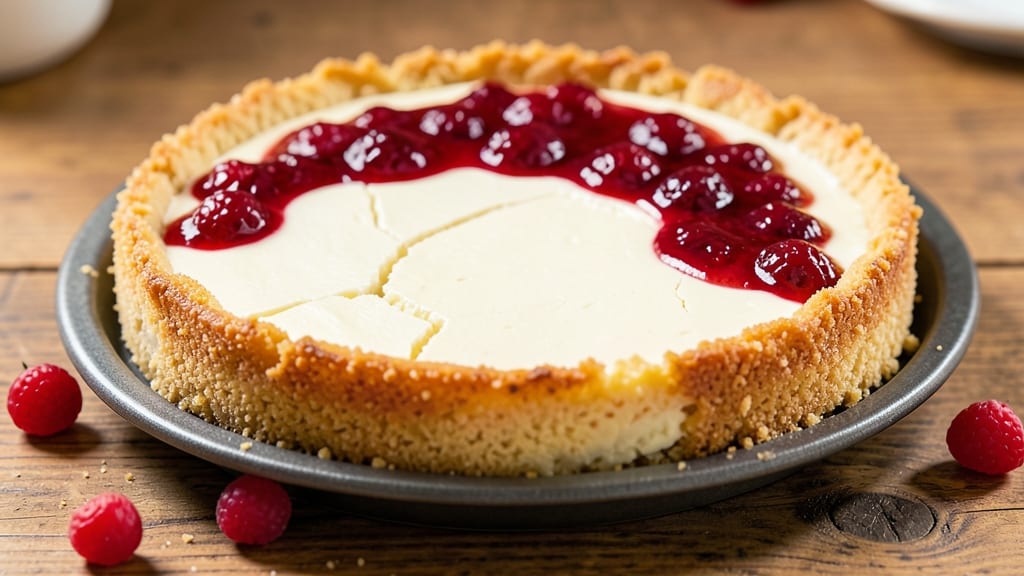
Creating a cheesecake recipe without sour cream or heavy cream that still delivers that signature silky texture requires a precise balance of ingredients and technique. This version relies on egg yolks and Greek yogurt to achieve the same creamy, velvety result while keeping the process straightforward.
After years of testing variations, I've perfected a method that delivers a dense, rich filling without the traditional dairy shortcuts.
The foundation of this cheesecake is a simple graham cracker crust that provides the perfect sturdy base, while the filling combines Greek yogurt for tang and moisture with egg yolks for richness.
Baking at a precise temperature ensures the center sets smoothly without cracking, and a water bath guarantees even cooking. This approach eliminates the need for heavy cream while maintaining that classic cheesecake mouthfeel.
What you’ll end up with is a cheesecake that’s silky smooth and dense, with a clean finish that lets the flavors shine—no graininess or aftertaste. The Greek yogurt adds subtle tang, while the egg yolks contribute natural sweetness and structure.
It’s the kind of dessert that feels indulgent yet lighter than traditional recipes, making it perfect for special occasions or when you want to impress without the heavy cream.
Whether you serve it with fresh berries, a drizzle of caramel, or a dusting of cocoa, this cheesecake delivers restaurant-quality results at home. Let’s get started with the full recipe—every step is designed to ensure success.
Ingredients for cheesecake recipe no sour cream or heavy cream
Eight essential ingredients transform into a velvety cheesecake without traditional dairy shortcuts.
| Ingredient | Amount | Notes |
|---|---|---|
| Graham Crackers 🍪 | 2 cups | Finely crushed for crust texture |
| Unsalted Butter 🧈 | ½ cup | Cold and cubed for crust |
| Granulated Sugar 🍚 | ¼ cup | For crust sweetness balance |
| Large Eggs 🥚 | 6 whole | Room temperature for even blending |
| Egg Yolks 🥚 | 4 whole | Separated from whites for filling |
| Plain Greek Yogurt 🥛 | 1 ½ cups | Full-fat, 2% minimum |
| Cream Cheese 🧀 | 16 oz | Room temperature, full-fat |
| Granulated Sugar 🍚 | 1 ½ cups | For filling sweetness |
| Lemon Juice 🍋 | 2 tbsp | Freshly squeezed, strained |
| Vanilla Extract 🌿 | 2 tsp | Pure Madagascar preferred |
| Diamond Crystal Kosher Salt 🧂 | ½ tsp | Fine grain for delicate seasoning |
| Cornstarch 🌾 | 2 tbsp | For silky texture stability |
| Whole Milk 🥛 | ½ cup | Warmed for smooth blending |
The Greek yogurt and cream cheese combination forms the foundation of this recipe's signature texture. Opt for full-fat Greek yogurt—the higher protein content prevents graininess during baking. For the cream cheese, Philadelphia brand remains the gold standard, though any full-fat block-style cheese works if brought to room temperature. The egg yolks are critical for structure, so ensure they're separated from the whites and at room temperature to blend seamlessly. Diamond Crystal kosher salt is specified for its fine grain, which dissolves completely without altering the delicate balance of flavors. For the crust, Honey Maid graham crackers provide the ideal crumb texture, but any sturdy graham-style cracker suffices if crushed to a fine powder.
Substitutions require careful consideration to maintain the recipe's delicate equilibrium. Sour cream can be replaced with an equal amount of Greek yogurt, though the texture will be slightly less stable. For those avoiding dairy entirely, cashew cream (blended soaked cashews) works but requires additional cornstarch (3 tbsp) to compensate for the lack of fat. The lemon juice can be substituted with white vinegar at half the amount, though fresh lemon provides superior acidity balance. Vanilla bean paste offers enhanced flavor complexity if preferred over extract. When measuring the granulated sugar, use the spoon-and-level method for precise volume—this recipe's sweetness is intentionally balanced to complement the tangy Greek yogurt without overpowering it.
Proper ingredient preparation ensures optimal results. The cream cheese and Greek yogurt should be blended until completely smooth before incorporating other ingredients, eliminating any lumps that could affect the final texture. Store the egg yolks in their shells at room temperature for 30 minutes prior to separating to facilitate easier blending. The crust mixture should be pressed firmly into the pan and chilled for 15 minutes before baking to prevent spreading. Once baked, this cheesecake maintains its texture for 4-5 days when refrigerated in an airtight container with parchment paper between layers. For longer storage, individual portions can be frozen for up to 3 months—simply thaw overnight in the refrigerator before serving.
Why You'll Love This Recipe
- No Fuss Crust: I crush graham crackers in a food processor—five seconds—then mix in melted butter until it’s like wet sand. No rolling, no stress, just press and bake. The crust stays crisp even when the filling’s still warm.
- Eggs Do the Magic: Between us, those extra yolks make this cheesecake ridiculously rich without a drop of cream. The texture? Silky-smooth with that perfect jiggle—no graininess, no cracking. Just pure, velvety satisfaction.
- Leftovers? More Like Leftovers: This recipe actually begs for seconds. I’ve made it twice in one weekend (yes, even on a Tuesday night) because it’s the kind of dessert that disappears faster than my willpower. Slice it, wrap it, and it keeps for days—no freezer burn in sight.
- Budget-Friendly Luxury: Graham crackers, butter, sugar, eggs—what you’re basically paying for is time saved. No specialty ingredients, no fancy equipment. Honestly, it’s the closest thing to a gourmet cheesecake I’ve ever made without breaking the bank.
Step-by-step instructions for cheesecake without sour cream or heavy cream
Mastering this technique delivers a velvety texture without traditional dairy substitutes.
Prepare the Crust with Precision
Preheat your oven to 350°F and line the bottom of a 9-inch springform pan with parchment paper. In a food processor, pulse the 2 cups graham crackers until you achieve a fine, sand-like texture—this ensures an even, crisp base. Add the 0.5 cup unsalted butter, 0.25 cup granulated sugar, and 0.5 tsp diamond crystal kosher salt, then pulse until the mixture resembles wet sand with pea-sized butter clumps remaining.
Press the crust mixture firmly and evenly into the bottom of the prepared pan, creating an even layer. Use the back of a measuring cup to compact it thoroughly. Bake for 10 minutes, then remove from the oven and let it cool while you prepare the filling. This pre-baking step prevents a soggy crust later.
Create the Silky Filling Foundation
In a medium bowl, whisk together the 4 whole egg yolks, 1.5 cups granulated sugar, 2 tbsp lemon juice, and 2 tsp vanilla extract until the mixture is pale yellow and slightly thickened—this takes about 3-4 minutes of vigorous whisking. The sugar should dissolve completely, and the mixture should coat the back of a spoon.
In a separate large bowl, beat the 16 oz cream cheese until completely smooth, then add the 1.5 cups plain Greek yogurt and mix until fully incorporated. Gradually pour in the egg yolk mixture while continuing to mix on low speed. This gradual incorporation prevents curdling and ensures a uniform texture. Add the 2 tbsp cornstarch and mix briefly to distribute evenly.
Incorporate Eggs and Milk for Stability
In a separate bowl, whisk the 6 whole large eggs until frothy but not completely blended. Slowly pour the egg mixture into the cream cheese mixture while mixing on low speed. This step is critical—add the eggs gradually to maintain stability and prevent separation. Once fully incorporated, add the 0.5 cup warmed whole milk and mix until just combined.
Strain the batter through a fine-mesh sieve directly into the prepared springform pan to remove any potential lumps. Tap the pan gently on the counter to release any air bubbles that may have formed. This step guarantees a smooth, lump-free filling that sets perfectly.
Bake with Precision Temperature Control
Place the springform pan on a baking sheet lined with parchment paper to catch any potential spills. Bake at 325°F for 50-55 minutes. The cheesecake is done when the edges are set but the center still has a slight wobble—this indicates it's fully baked but not overdone. Avoid opening the oven door during baking to prevent temperature fluctuations that could cause cracking.
Once removed from the oven, let the cheesecake cool in the oven with the door slightly ajar for 15 minutes. Then transfer it to a wire rack and cool completely at room temperature for at least 2 hours. This gradual cooling process prevents sudden temperature changes that could lead to cracks in the surface.
Chill and Serve for Optimal Texture
After the cheesecake has cooled completely, cover it with plastic wrap and refrigerate for at least 4 hours, preferably overnight. This chilling period allows the flavors to meld and the texture to become perfectly silky. When ready to serve, run a thin knife around the edge of the springform pan to loosen it, then release the sides gently.
Slice with a warm, damp knife for clean cuts and serve at room temperature. The final result should be a cheesecake with a crisp, buttery crust and a light, airy filling that melts in your mouth. The Greek yogurt and egg yolk combination creates a texture that rivals traditional recipes without the need for sour cream or heavy cream.
Pro Tips For Making Cheesecake Recipe No Sour Cream Or Heavy Cream
- Prep Crumbs First: Pulse graham crackers in the food processor until they’re fine but not powder—think sand, not flour. I used to skip this, and the crust always ended up clumpy. A quick 10-second pulse fixes that.
- Whip Eggs Cold: Chill the egg mixture in the bowl for 10 minutes before baking—yes, even if you’re eager. Cold eggs whip better and set more evenly. I learned this after a batch that looked underdone but was actually overbaked.
- Water Bath Non-Negotiable: Wrap the pan in foil before adding the water bath—it traps heat better. And don’t skimp on the water: fill the pan halfway up the springform. I’ve seen too many cheesecakes crack because the bath wasn’t deep enough.
- Cool Slowly: Let the cheesecake sit in the oven for 30 minutes after turning it off, door ajar. This prevents sudden temperature shifts that cause cracks. (Your future self will curse you if you rush this.)
Pro cooking tips for great cheesecake recipe no sour cream or heavy cream
Temperature Control Secrets
The key to avoiding cracks lies in precise temperature management. Bake your cheesecake at a steady 325°F—never exceeding 350°F—for 50-55 minutes. I use an oven thermometer to verify accuracy, as home ovens often run 25°F hotter than set.
Place the springform pan on a baking sheet to catch drips, and avoid opening the oven door during baking to prevent temperature drops that trigger cracks. 🌡️
Gradual Egg Addition
Adding eggs too quickly causes curdling, which ruins the silky texture. Whisk the 6 whole eggs separately until frothy, then pour them into the cream cheese mixture slowly while mixing on low speed.
This gradual incorporation prevents separation and maintains stability. I use a hand mixer on speed 2 for this step to ensure even distribution without overmixing.
Water Bath Technique
For an extra layer of protection against cracks, place your springform pan inside a larger roasting pan filled with 1 inch of hot water. The steam creates a humid environment that helps the cheesecake set evenly.
I always use this method for my cheesecakes—it eliminates the dreaded "cracked top" scenario while ensuring a smooth finish. The water should be hot but not boiling when you add the pan.
Room Temperature Ingredients
Cold ingredients cause uneven baking and potential separation. Take your cream cheese, Greek yogurt, and eggs out of the refrigerator 1 hour before mixing. I place them in a bowl of warm water for 10 minutes to accelerate the process.
Room-temperature ingredients blend more smoothly and bake uniformly, resulting in that perfect creamy texture we're aiming for.
Gradual Cooling Process
Sudden temperature changes are the enemy of cheesecake stability. After baking, let your cheesecake cool in the oven with the door slightly ajar for 15 minutes, then transfer it to a wire rack to cool completely at room temperature for 2 hours.
This gradual process prevents cracks and allows the filling to set properly. I find that patience at this stage makes all the difference in the final texture. ✨
Knife Tricks for Serving
Warm your knife by running it under hot water, then wipe it dry before slicing. This prevents the cheesecake from tearing and gives you clean, professional-looking pieces. I also dip the knife in hot water between each slice to maintain sharpness.
Serve at room temperature for the best texture—cold cheesecake can feel dense and unappetizing. 💡
Nutrition facts
Frequently asked questions
Why does this recipe use Greek yogurt instead of sour cream?
Greek yogurt provides the same tangy richness without the heavy texture of sour cream. It's lighter yet maintains the moisture and creaminess essential for a smooth cheesecake. The higher protein content also prevents graininess during baking. Plus, it reduces fat content while keeping that signature velvety finish!
Can I make this cheesecake without cream cheese?
While cream cheese is ideal for structure, you can substitute with 16 oz mascarpone cheese or 14 oz ricotta cheese (drained). For ricotta, add 1 extra egg yolk to compensate for lower fat content. The texture will be slightly denser but still delicious. The Greek yogurt base will still provide the tangy element.
How do I prevent cracks in the cheesecake?
Use a water bath (place pan in roasting pan with 1 inch hot water), avoid opening the oven during baking, and cool gradually. Bake at 325°F (not higher) for 50-55 minutes until edges are set but center has slight wobble. Let it cool in oven with door slightly open for 15 minutes before transferring to rack.
Can I use this recipe for a no-bake cheesecake?
This recipe requires baking to achieve the proper texture, but you can adapt it for a no-bake version by replacing the egg yolks with 1 cup whipped cream cheese and 1 cup sweetened condensed milk. Chill for 6+ hours in the fridge. The texture will be softer but still creamy—great for summer desserts!
What's the best way to store leftovers?
Cover tightly with plastic wrap and refrigerate for up to 5 days. For longer storage, wrap individual slices in plastic and freeze for up to 3 months. Thaw overnight in the fridge before serving. The texture remains excellent when properly stored—just avoid freezing the crust separately.