
Main Courses
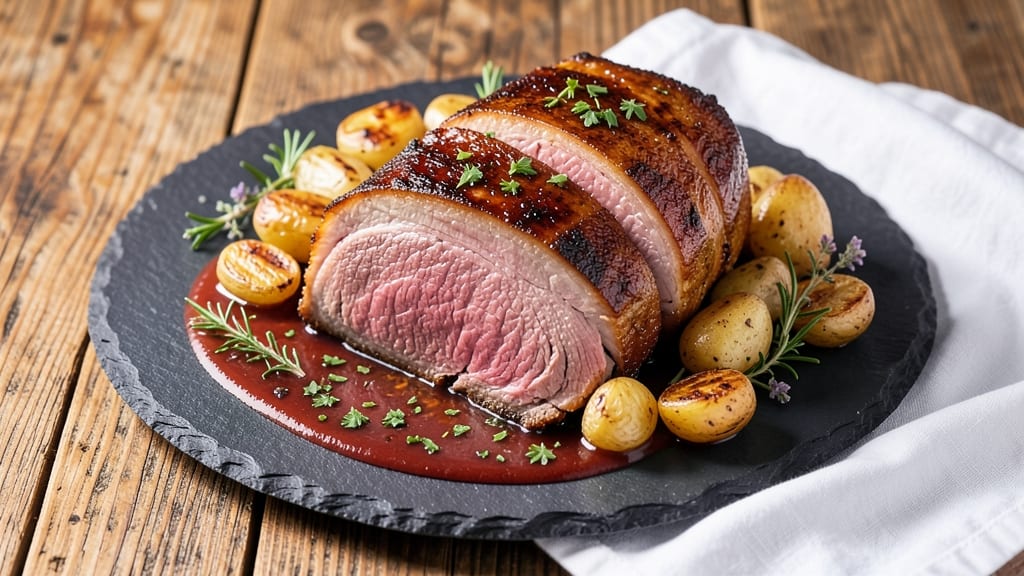
This classic roast prime rib au jus recipe delivers showstopping results with a perfectly seasoned herb-crusted crown roast and rich, velvety au jus that transforms simple pan drippings into restaurant-quality gravy.
The secret lies in precise timing and temperature control—roasting the meat low and slow until it reaches 120°F before finishing with a high-heat sear for that signature crust. I’ve perfected this method after years of holiday feasts, ensuring tender, juicy beef every time without drying it out.
The herb crust isn’t just decorative—it locks in moisture while adding aromatic depth, and the au jus reduction transforms ordinary drippings into a silky, flavor-packed sauce that elevates the entire dish.
What makes this recipe truly foolproof is the reverse searing technique, which guarantees a perfect medium-rare center with a caramelized exterior. This isn’t your average holiday centerpiece; it’s a dish that commands attention and delivers on every bite.
By the time you plate this, you’ll have a golden, herb-encrusted crown roast resting on a bed of glossy au jus, its rich aroma filling the room.
The crust will be crisp yet tender, the meat so juicy it practically melts, and the gravy so velvety it clings to every forkful. This is the kind of dish that turns a family dinner into a memorable event—without requiring advanced skills or hours in the kitchen.
Pair it with roasted garlic mashed potatoes and glazed carrots for a complete meal that feels both elegant and approachable. The key to success? Confidence in the technique and patience during the sear. Let’s get started—your holiday table (or Sunday supper) will thank you.
Ingredients for classic roast prime rib au jus
Six ingredients make this herb crust unforgettable. Everything else transforms ordinary beef into showstopping centerpiece.
| Ingredient | Amount | Notes |
|---|---|---|
| Prime Rib Roast (Crown Roast) 🥩 | 4 lb | Bone-in, center-cut preferred |
| Extra-Virgin Olive Oil 🫒 | ¼ cup | For crust and searing |
| Fresh Rosemary 🌿 | ¼ cup | Finely chopped, stems removed |
| Fresh Thyme 🌿 | ¼ cup | Leaves only, stems removed |
| Fresh Parsley 🌿 | ¼ cup | Finely chopped, flat-leaf preferred |
| Garlic Cloves 🧄 | 8 cloves | Minced, skin-on preferred |
| Diamond Crystal Kosher Salt 🧂 | 2 tbsp | Coarse grain for crust |
| Freshly Ground Black Pepper 🌶️ | 1 tbsp | Cracked peppercorns preferred |
| Unsalted Butter 🧈 | ½ cup | Cold, cubed for crust |
| Yellow Onion 🧅 | 1 whole | Chopped, for au jus |
| Carrots 🥕 | 2 medium | Peeled, sliced for au jus |
| Red Wine 🍷 | 1 cup | Dry cabernet preferred |
| Beef Bone Broth 💧 | 2 cups | Homemade or quality store-bought |
| Cornstarch 🌾 | 2 tbsp | For gravy thickening |
| Fresh Beef Fat (Suet) 🧈 | ½ cup | Optional, for extra richness |
The prime rib is non-negotiable—center-cut crown roast with the bone intact for flavor. Costco or Whole Foods carry the best cuts, but check your local butcher for dry-aged options. Look for vibrant color and good marbling; 4 pounds serves 6 generously. Fresh herbs are key here—farmers market bundles stay vibrant longer than grocery store containers. If you can't find fresh, dried thyme at one-third the amount works in a pinch, but fresh parsley adds that bright finish. The garlic? Skin-on cloves roast beautifully in the crust.
No red wine? Substitute beef broth with 1 tbsp balsamic vinegar—it adds depth without alcohol. Short on carrots? Celery or mushrooms work equally well in the au jus. The beef fat is optional but worth it for that restaurant-quality richness. If you're feeling fancy, truffle oil in the crust elevates everything. For the cornstarch, arrowroot powder works too, but cornstarch gives that classic velvety texture. The butter must be cold—take it out of the fridge 30 minutes before mixing.
This roast reheats beautifully—low oven (275°F) for 30 minutes keeps it juicy. The au jus freezes perfectly for up to 3 months—just thaw and reheat gently. I always make extra gravy; it's great over mashed potatoes or eggs the next day. Store the roast in its juices in the fridge for up to 3 days, but honestly, it tastes better the second day. For the crust ingredients, keep them in the fridge until ready to use—herbs wilt fast, so chop them last.
Why You'll Love This Recipe
- One-Pan Magic: I swear by this recipe because it’s literally one pan, one roast, and zero cleanup battles. Just sear the crown roast in olive oil, nestle it in herbs, and let the oven do the heavy lifting—no basting, no fuss, just pure, hands-off satisfaction.
- Herb-Packed Perfection: That rosemary-thyme-parsley trio? It’s the secret weapon. The rosemary clings to the crust like a hug, the thyme adds earthy depth, and the parsley brightens every bite—like a flavor symphony where the beef is the star, but the herbs steal the show.
- Sunday Dinner Hero: Between us, this is my go-to for holidays, birthdays, or just because. It feeds a crowd without breaking the bank (prime rib stretches further than you’d think), and the au jus turns leftovers into next-day sandwiches that’ll have everyone begging for seconds.
- Leftovers That Don’t Suck: Honestly, the au jus makes this recipe better the second day. Thinly sliced over mashed potatoes? Wrapped in toast with horseradish? I’ve repurposed it into tacos, pasta, and even breakfast hash—because nothing says “I nailed dinner” like effortless leftovers that still taste like a celebration.
Step-by-step instructions for classic roast prime rib au jus
Here's how to nail that perfect herb-crusted crown roast with rich, velvety au jus every time.
Prepare the Herb Crust and Season the Roast
In a food processor, combine the 0.25 cup fresh rosemary, 0.25 cup fresh thyme, 0.25 cup fresh parsley, 8 cloves garlic, 2 tbsp diamond crystal kosher salt, and 1 tbsp freshly ground black pepper. Pulse until finely chopped but not pasty. Add the 0.5 cup unsalted butter and 0.25 cup extra-virgin olive oil, then pulse until the mixture resembles coarse sand.
Remove the 4 lb prime rib roast (crown roast) from the refrigerator and pat it completely dry with paper towels. This is critical—any moisture will prevent that perfect crust from forming. Spread the herb butter mixture evenly over the entire surface of the roast, pressing it gently into the meat. Let it sit at room temperature for 30 minutes while you preheat your oven.
Sear the Roast for Maximum Flavor
Preheat your oven to 450°F. Place the roast fat-side up on a rack in a roasting pan. The rack elevates the meat, allowing hot air to circulate underneath and create that beautiful crust on all sides. Let the roast sit in the oven for 15 minutes to come up to temperature.
While it's heating, heat 0.5 cup fresh beef fat (suet) in a large oven-safe skillet over medium-high heat until it melts and begins to sizzle. Carefully remove the roast from the oven and place it fat-side down in the skillet. Sear for 4-5 minutes until the fat is deeply golden brown. Flip the roast and sear the other side for another 4-5 minutes. This step develops incredible depth of flavor that carries through to the au jus.
Roast to Perfect Medium-Rare
Return the seared roast to the oven and reduce the temperature to 325°F. Roast for 2-2.5 hours, or until the internal temperature reaches 120-125°F for medium-rare. This is where patience pays off—don't rush it. The meat will continue cooking as it rests, so pull it out when it's just shy of your target doneness.
About 30 minutes before the roast is done, place the 1 whole yellow onion and 2 medium carrots (both chopped) in a small saucepan. Add the 1 cup red wine and 2 cups beef bone broth, then simmer gently. This will form the base for your au jus. Keep it warm until needed.
Rest and Carve the Prime Rib
Remove the roast from the oven and transfer it to a cutting board. Tent loosely with aluminum foil and let it rest for 20-30 minutes. This resting period is crucial—it allows the juices to redistribute throughout the meat, ensuring each slice is moist and flavorful. The internal temperature will rise about 5°F during resting, reaching 125-130°F for perfect medium-rare.
While the roast rests, carefully pour the contents of the roasting pan into a fat separator or large measuring cup. Skim off most of the fat, leaving about 1 cup in the pan. Place the pan on the stove over medium heat and bring the remaining liquid to a gentle simmer. This will be the foundation of your au jus.
Make the Classic Au Jus
In a small bowl, whisk together the 2 tbsp cornstarch with 2 tablespoons of cold water to make a slurry. Slowly pour this into the simmering pan while stirring constantly with a wooden spoon. The sauce will begin to thicken immediately. Cook for 2-3 minutes until it reaches a glossy, velvety consistency that coats the back of a spoon.
Strain the au jus through a fine-mesh sieve into a clean saucepan and return it to low heat. Stir in the reserved onion-carrot mixture from earlier. Taste and adjust the seasoning with additional diamond crystal kosher salt and freshly ground black pepper as needed. The au jus should be rich, slightly tangy, and perfectly balanced.
Slice the prime rib against the grain into ½-inch thick portions and serve immediately with the warm au jus spooned generously over the top. The combination of the herb-crusted meat and velvety sauce is what makes this classic roast truly special.
Pro Tips For Making Classic Roast Prime Rib Au Jus
- SEAR IN BATCHES: Don’t crowd the pan—work in 2-3 batches if needed. I learned this the hard way when my first crown roast turned out greasy instead of golden. A hot, empty pan is your friend here; it’s the only way to get that crust that holds up under the au jus.
- BRINE THE ROAST: Toss the prime rib in a wet brine (1 cup kosher salt per gallon of water) for 4–12 hours before roasting. Yes, it’s extra work, but it keeps the meat juicy even when you’re tempted to overcook it for guests who ask, “Is it done yet?” (They always do.)
- SKIP THE PARSLEY GARNISH: Fresh parsley looks pretty, but it’s the last thing you want in your au jus—it turns bitter when simmered. Save it for plating the meat instead. My grandmother swore by this, and she was right: the sauce tastes cleaner without it.
- REST UNDER FOIL: After pulling the meat, tent it loosely with foil and let it rest for 15–20 minutes. I know, I know—you’re eager to carve—but skipping this step means juices running all over your board instead of staying inside where they belong. (Your future self will thank you.)
Troubleshooting perfect results
Uneven Cooking
If your prime rib has cold spots or uneven doneness, the issue is usually uneven heat distribution. I’ve found that not using a rack in your roasting pan traps steam and prevents proper browning. Always place the roast on a wire rack inside the pan to allow air circulation.
For extra insurance, rotate the pan halfway through cooking—this ensures even exposure to heat. A meat thermometer is non-negotiable here; insert it in the thickest part, avoiding fat or bone. 🌡️
Dry or Tough Meat
Overcooking is the #1 culprit for dry prime rib. The secret is patience—pull the roast when it hits 120-125°F internal temperature (medium-rare), not 145°F.
If you’re nervous, use the reverse sear method: Roast at 250°F until 110°F internal, then sear in a 450°F oven for 10-15 minutes. This keeps the meat juicy while building a crust. Never skip the 20-30 minute rest—this redistributes juices and prevents dry slices.
Pale or Bland Au Jus
A weak au jus usually means not enough flavor extraction. Always deglaze the roasting pan immediately after removing the meat with 1 cup red wine (or beef broth). Scrape up every last bit of fond from the bottom—this is where the magic happens.
For extra depth, add 1 tsp beef bouillon powder or a splash of balsamic vinegar to the strained sauce. If it’s too thin, whisk in 1 more tsp cornstarch slurry; if too thick, thin with 1 tbsp warm beef broth.
Taste and adjust seasoning—salt and pepper are your friends here. 🍷
Crust Falls Off
A fragile crust happens when the herb butter isn’t cold enough or the roast isn’t dry. Chill the herb butter mixture for 30 minutes before applying it to the meat, and pat the roast completely dry with paper towels—no moisture allowed.
For extra adhesion, press the crust firmly into the meat and let the roast sit at room temperature for 30 minutes before searing. If the crust still detaches, try adding 1 tbsp Dijon mustard to the herb butter for better grip. 🧈
Overly Greasy Gravy
Too much fat in your au jus means you didn’t skim enough. Use a fat separator or let the drippings sit in the fridge for 10 minutes—the fat will solidify on top, making it easy to spoon off.
For a cleaner sauce, strain the au jus through a fine-mesh sieve lined with cheesecloth. If the gravy still looks oily, whisk in 1 egg yolk (tempered with a splash of warm broth) for a silky, stable finish. This trick works like a charm for restaurant-quality results. ✨
Roast Sticks to Pan
This usually happens when the pan isn’t hot enough or the roast isn’t seared properly. Always preheat your roasting pan in the oven for 15 minutes before adding the meat.
For extra insurance, sear the roast in a cold pan over medium heat until it releases naturally, then increase heat to medium-high for browning. If it still sticks, add 1 tbsp vegetable oil to the pan before searing. Never force the roast—patience here prevents tears in the meat. 🔥
Nutrition facts
Frequently asked questions
How do I know when my prime rib is perfectly cooked?
Use a meat thermometer for accuracy—pull the roast when it reaches 120-125°F internal temperature for medium-rare. The resting period will raise it to 125-130°F. For a 4 lb roast, this typically takes 2-2.5 hours at 325°F. Never rely on time alone; the thermometer is your best friend here!
Can I make this recipe ahead of time?
The prime rib reheats beautifully—wrap it in foil with its juices and reheat at 275°F for 30 minutes. The au jus can be made 1 day ahead and reheated gently on the stove. For the crust, assemble it fresh day-of to maintain crispness, but you can prep the herb butter mixture up to 24 hours ahead and store it chilled.
What's the best way to serve prime rib with au jus?
Slice the roast against the grain into ½-inch thick portions and arrange on a platter. Spoon the warm au jus generously over the top, letting it pool slightly. Serve with classic sides like roasted garlic mashed potatoes, glazed carrots, or Yorkshire pudding. For presentation, garnish with fresh parsley and a sprinkle of flaky sea salt.
Why does my au jus turn out thin or watery?
Thin au jus usually means not enough fat was left in the pan during reduction. Always leave 1 cup of fat when skimming drippings. For extra thickness, whisk in 1 more tsp cornstarch slurry (1 tbsp cornstarch + 1 tbsp water). If it's still too thin, reduce it longer over medium-low heat until syrupy. Taste and adjust seasoning—sometimes a pinch of beef bouillon powder adds depth.
How do I store leftovers?
Store the prime rib in its juices in an airtight container in the fridge for up to 3 days. The au jus freezes beautifully for up to 3 months—thaw overnight in the fridge. Reheat leftovers gently in a skillet with a splash of beef broth to restore moisture. For reheating, bring to 165°F to ensure safety.