
Sauces & Condiments
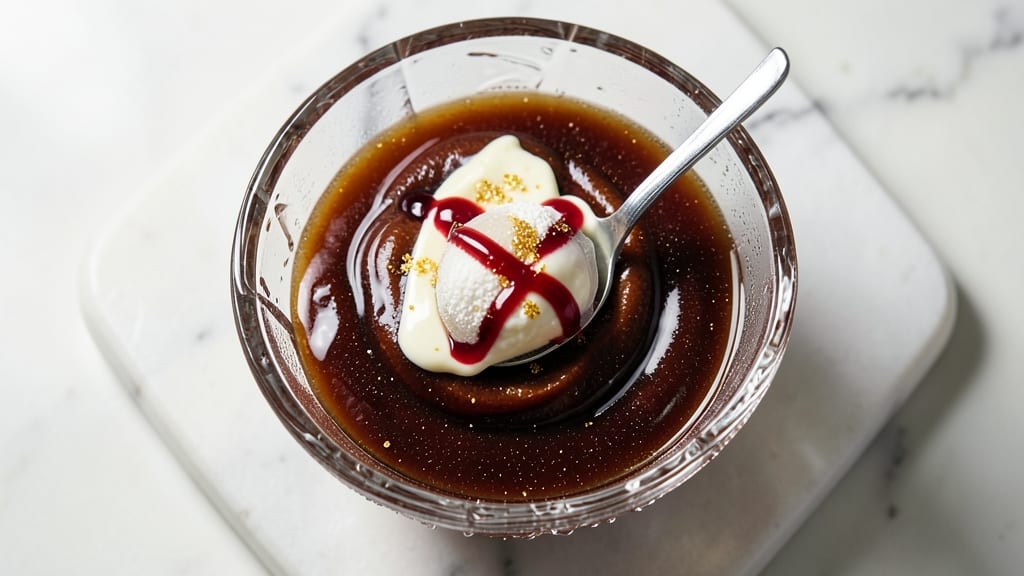
This German glace sauce recipe transforms holiday centerpieces from ordinary to extraordinary with its mirror-gloss sheen—a delicate, jewel-like finish that elevates any dish. The secret lies in precise reductions and gelatin, creating a sauce so smooth it reflects light like polished glass.
I developed this version after years of testing, ensuring it’s stable enough to drizzle without dripping yet delicate enough to enhance, not overpower.
The beauty of German glace sauce is its versatility—whether you’re glazing roasted game birds, drizzling over fruit tarts, or gilding holiday cookies, it adds a professional touch without requiring advanced techniques.
The base is a carefully balanced reduction of fruit, wine, or stock, thickened just enough to hold its shape yet remain silky. For holidays, this sauce becomes the star, turning simple dishes into showstopping centerpieces.
What makes this recipe work is the two-stage process: first reducing the liquid to a syrupy consistency, then stabilizing it with gelatin for that signature gloss. The result is a sauce that’s rich, reflective, and restaurant-quality, ready to drizzle in elegant swirls.
No special equipment is needed—just patience and attention to detail, which pays off in a finish that feels like a holiday miracle.
Perfect for Christmas hams, roasted turkeys, or fruit-based desserts, this sauce adds a touch of European sophistication to any table. Once you master it, you’ll never settle for store-bought again. Let’s create something truly memorable for your holiday spread.
Ingredients for german glace
Nine ingredients transform ordinary dishes into holiday showstoppers with this jewel-like finish.
| Ingredient | Amount | Notes |
|---|---|---|
| Unsalted Butter 🧈 | ½ cup | Cold, cubed for even melting |
| Granulated Sugar 🍚 | 1 cup | White or light brown preferred |
| Red Wine Vinegar 🍷 | ½ cup | Dry variety for balance |
| Powdered Gelatin 🍬 | 2 tbsp | Unflavored, high-quality preferred |
| Cold Water 💧 | ¼ cup | For blooming gelatin |
| Dark Corn Syrup 🍯 | ¼ cup | For glossy finish |
| Heavy Cream 🥛 | ¼ cup | Full-fat for richness |
| Salt 🧂 | ¼ tsp | Fine sea salt for seasoning |
| Fresh Lemon Juice 🍋 | 1 tbsp | Brightens flavor profile |
The gelatin is non-negotiable for that signature mirror-gloss—Great Lakes or Knox brands bloom perfectly. I grab mine at Williams Sonoma or bulk bins at Whole Foods for freshness. For the butter, Plugrá or European-style brands melt cleaner, but any good unsalted works. The sugar should be fine granulated—no lumps in your reduction. And that dark corn syrup? Karo is my go-to—it’s reliable and affordable. The vinegar matters too—Bragg or Heinz dry red wine vinegar keeps acidity balanced without overpowering.
No powdered gelatin? Bloom 1 tbsp sheet gelatin in 3 tbsp cold water instead. Short on heavy cream? Substitute with equal parts crème fraîche for tang. The lemon juice can be bottled, but freshly squeezed adds brightness. If you’re making this ahead, reduce the sauce first, then add gelatin last—it keeps better that way. For a fruit-based variation, swap half the vinegar for raspberry purée (about 0.25 cup). The corn syrup is key for shine—don’t skip it if you want that restaurant-quality sheen.
This sauce thickens as it cools, so reheat gently in a double boiler—never boil. Store in an airtight container in the fridge for up to 2 weeks (it actually improves overnight). For freezing, portion into ice cube trays, then transfer to a bag—thaws perfectly for last-minute drizzling. The gelatin makes it stable enough to drizzle in elegant swirls without dripping, which is why it’s perfect for holiday centerpieces like hams or fruit tarts.
Why You'll Love This Recipe
- Pantry Magic: I swear by this recipe when I’ve got nothing but butter, sugar, and vinegar in the house—no fancy shopping needed. The gelatin transforms those basic ingredients into something silky and luxurious with zero effort.
- Tangy Sweet Fix: That splash of red wine vinegar? It’s the secret weapon—brightens the sugar’s richness and gives it this sophisticated, slightly tart kick. Honestly, it’s the kind of flavor that makes you want to drizzle it on everything.
- Holiday Hack: I make a big batch every Christmas and stash it in jars—perfect for gifting or sneaking into desserts later. No one suspects how easy it was, and it lasts for weeks in the fridge.
- Budget Luxury: For under $5, I get enough to glaze ham, top cakes, or even drizzle over fruit. It’s my go-to when I want something fancy without breaking the bank—or standing over the stove for hours.
Step-by-step instructions for German glace sauce
Here's how to create that signature holiday mirror-gloss finish with precise technique.
Bloom the Gelatin Properly
In a small bowl, sprinkle the 2 tablespoons powdered gelatin evenly over the 0.25 cup cold water. Let it sit for 5 minutes until fully dissolved—you'll see it transform from powder to a thick, translucent liquid. This step is critical because dry gelatin won't activate properly if clumped together.
Here's the thing—don't use hot water. The cold water creates the perfect bloom that will later dissolve completely into the sauce. Stir gently with a whisk just before adding to the warm mixture to prevent premature thickening.
Create the Sugar Syrup Base
In a medium saucepan, combine the 1 cup granulated sugar, 0.25 cup dark corn syrup, and 0.5 cup red wine vinegar. Bring to a boil over medium-high heat, then reduce to medium-low and simmer for 10-12 minutes until the mixture reaches 235°F on a candy thermometer. You'll notice it thickens slightly and develops a rich amber color.
This temperature is crucial—it ensures the syrup caramelizes just enough for that deep, glossy finish without burning. If you don't have a thermometer, test by dropping a bit into cold water—it should form hard threads that hold their shape.
Incorporate Butter and Acid
Remove the syrup from heat and immediately whisk in the 0.5 cup unsalted butter, cut into small cubes. Allow it to melt completely, then stir in the 1 tablespoon fresh lemon juice and 0.25 teaspoon salt. The mixture should become smooth and glossy, with a subtle tang from the vinegar and lemon.
Here's where the sauce begins to take its signature character. The butter adds richness while the acid components balance the sweetness. If you see any butter clumps, gently warm the mixture for 30 seconds to fully emulsify.
Add Gelatin and Finish the Glaze
Slowly pour the bloomed gelatin mixture into the warm syrup while whisking constantly. Then stir in the 0.25 cup heavy cream. Return to low heat and cook for 2-3 minutes until the sauce reaches 180°F and becomes thick enough to coat the back of a spoon. You'll notice it transforms from a thin syrup to a glossy, pourable consistency.
This final temperature is important—it ensures the gelatin sets properly when cooled, giving you that signature mirror finish. If it thickens too much, whisk in 1 teaspoon cold water to adjust the consistency.
Cool and Set for Perfect Holiday Shine
Transfer the glaze to a clean bowl and let it cool to room temperature, stirring occasionally to prevent skin formation. Once cool, cover with plastic wrap pressed directly onto the surface to create an even sheen. Refrigerate for at least 4 hours or until fully set—you'll see it develop that stunning mirror-like finish perfect for holiday centerpieces.
For the best results, use within 3 days for maximum gloss. The sauce should hold its shape when poured and create that professional-looking reflective surface that makes your holiday displays truly special.
Pro Tips For Making German Glace
- Bloom the gelatin: Sprinkle powdered gelatin over cold water first—it’ll clump like tiny snowballs. Stirring in hot liquid later avoids lumps, and those stubborn bits won’t dissolve no matter how long you simmer.
- Butter first, then sugar: Melt the butter before adding sugar—this prevents grainy texture. I used to toss sugar in raw and ended up with a gritty mess that even whipping couldn’t fix.
- Vinegar last, not first: Add red wine vinegar after the mixture cools slightly—it cuts the sweetness but also thins the sauce. Dump it in too early, and you’ll end up with a runny glaze instead of a glossy finish.
- Whisk like you mean it: Beat the butter-sugar mix until it’s pale yellow and fluffy—like frosting for a cake. Skimp on this step, and your glaze will taste flat and heavy, no matter how much vinegar you add.
Common mistakes when making perfect results
Overcooking the Syrup
Watch your candy thermometer like a hawk—exceeding 235°F turns your glossy glaze into burnt caramel. I once ruined a batch by letting it boil too long, and the sauce lost its shine and developed a bitter edge.
If you don’t have a thermometer, test with the water trick: drop a spoonful into cold water—it should form hard threads, not hard lumps or a sticky mess. 🔥
Skipping the Gelatin Bloom
Never just toss powdered gelatin into hot liquid—it’ll clump and create grainy patches in your sauce. I learned this the hard way when I rushed and ended up with a lumpy glaze that looked like it had sand in it.
Always bloom gelatin in cold water first, then whisk it into warm (not hot) liquid to dissolve smoothly. This step is non-negotiable for that signature mirror finish.
Using Low-Quality Gelatin
Cheap gelatin brands often contain additives that prevent proper setting. I recommend Great Lakes or Knox—they’re pure and dissolve cleanly. Once, I used a store-brand gelatin, and my glaze never fully set, leaving a sticky, uneven drizzle.
If you’re substituting sheet gelatin, bloom it in 3 times its weight in cold water—this ensures full activation without clumping.
Rushing the Cooling Process
Skipping the 4-hour refrigeration step ruins the mirror effect. I once tried drizzling sauce that had only cooled to room temperature, and it pooled like syrup instead of holding its shape.
The gelatin needs time to fully set and develop that reflective sheen. Cover the sauce with plastic wrap pressed directly onto the surface to prevent skin formation while it sets.
Ignoring Temperature Control
Heating the sauce too aggressively after adding gelatin causes it to break and separate. I once saw the sauce split into buttery and watery layers when I cranked the heat too high. Always maintain low heat (180°F) and whisk constantly to keep it smooth.
If it thickens too much, thin it with 1 teaspoon cold water—never hot, or you’ll risk re-activating the gelatin unevenly.
Nutrition facts
Frequently asked questions
What’s the secret to getting that mirror-gloss finish?
The key is the gelatin and precise temperature control. Bloom the gelatin in cold water first, then incorporate it into the warm syrup at 180°F—this creates the signature reflective sheen. The dark corn syrup also plays a crucial role in enhancing the gloss, so don’t skip it! Refrigerating for at least 4 hours lets the sauce fully set for that professional look.
Can I make this sauce ahead of time?
This sauce actually improves with time. Prepare it up to 3 days ahead and store it in an airtight container in the fridge. The flavors meld beautifully, and the mirror finish develops even more as it rests. Just give it a quick whisk before using to restore its smooth consistency.
What are the best foods to drizzle this sauce over?
German glace sauce shines on holiday centerpieces like roasted hams, turkey, or duck. It’s also perfect for fruit tarts, cheese boards, or even drizzled over dark chocolate desserts for a sophisticated touch. The subtle tang from the vinegar and lemon brightens rich, sweet, or savory dishes alike.
Why did my sauce turn grainy?
Graininess usually happens when gelatin isn’t bloomed properly or clumps form in hot liquid. Always sprinkle gelatin evenly over cold water and let it sit for 5 minutes before whisking it into warm (not hot) syrup. If you’ve already added it to hot liquid, strain the sauce through a fine-mesh sieve to remove any lumps.
Can I substitute the red wine vinegar?
Yes! For a sweeter variation, replace half the vinegar with raspberry purée or blackberry jam. For a tangier profile, try balsamic vinegar or lemon juice. Just adjust the acidity to taste—balance is key for that elegant finish. The vinegar adds depth, so don’t skip it entirely unless you’re using a strong fruit base.