
Beverages
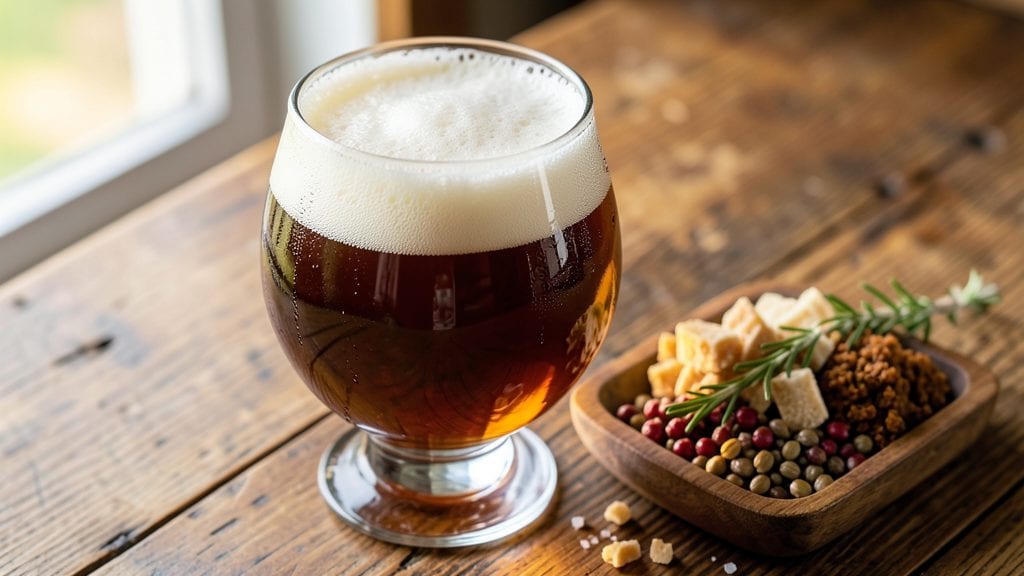
Crafting an authentic Irish red ale at home delivers the rich maltiness and balanced bitterness that make this style legendary. This recipe captures the essence of traditional Irish brewing with a precise blend of roasted malts and aromatic hops.
I've refined this over years of experimentation, ensuring every sip transports you to a cozy pub in Dublin.
The foundation of this ale lies in its malty backbone—caramel and crystal malts create that signature deep red color and complex sweetness. American two-row malt provides the base, while roasted barley adds subtle coffee notes that deepen the flavor profile.
The hop schedule is carefully timed to balance bitterness without overpowering the malt sweetness.
After a clean fermentation at 68°F for 10 days, the ale develops a smooth, velvety texture with just the right carbonation. The result is a glass of rich, ruby-colored ale with layers of caramel, toasted malt, and a crisp, refreshing finish.
This is the kind of brew that pairs perfectly with hearty Irish stews or smoked salmon.
For best results, bottle condition for 2-3 weeks before serving to develop proper carbonation. The patience pays off with each effervescent sip. Whether you're brewing for the first time or perfecting your technique, this recipe delivers professional-quality results at home.
Ingredients for irish red ale
Grain bill, hops, yeast—just these essentials transform your kitchen into an Irish pub.
| Ingredient | Amount | Notes |
|---|---|---|
| American Two-Row Malt 🌾 | 8 lb | Base malt for light body |
| Caramel Malt (60L) 🍯 | 1 ½ lb | For deep red color |
| Crystal Malt (40L) 🍯 | 1 lb | Adds sweetness and body |
| Roasted Barley 🌾 | ½ lb | Coffee notes depth |
| Yeast (Irish Ale Yeast) 🍺 | ½ oz | Wyeast 1056 or Safale S-04 |
| Hallertau Mittelfrüh Hops 🌿 | ½ oz | 60 min bittering |
| Cascade Hops 🌿 | ¼ oz | 15 min aroma addition |
| Fuggles Hops 🌿 | ¼ oz | 15 min aroma addition |
| Gypsum Water Treatment 💧 | 1 tsp | For clarity and head |
| Priming Sugar 🍚 | ¾ cup | For carbonation |
| Irish Moss 🌿 | ¼ tsp | For head retention |
The malt bill is non-negotiable. Briess Malt or Weiss Malt deliver consistent quality—both are available online or at homebrew shops. Roasted barley is the secret weapon here; avoid the cheap stuff that tastes like burnt toast. Brewers Best or Northern Brewer carry excellent options. For the hops, freshness matters—buy from Hopville or Cascade Brewing Supply if you're serious about authenticity. The yeast? Wyeast 1056 is the gold standard, but Safale S-04 works perfectly too.
No roasted barley? Black malt at half the amount gets you close, though the flavor won't be identical. Short on crystal malt? Caramel 80L adds depth but leans sweeter. Hop shortages? Magnum or Amarillo can stand in for Cascade, though the aroma will differ slightly. The gypsum is critical—skip it, and your ale might lack clarity. For priming, corn sugar works, but dextrose ensures cleaner carbonation. And if Irish moss is unavailable, extra priming sugar helps with head retention.
Store your grains in airtight containers in a cool, dark place—they'll keep for 6-12 months. Yeast can be refrigerated for 3-6 months or frozen indefinitely. Hops lose potency fast; freeze them in small portions for up to 6 months. Once brewed, bottle condition your ale at 68°F for 2-3 weeks. The wait is worth it—each effervescent sip delivers that pub-quality experience you're after.
Why You'll Love This Recipe
- No Grain Bill Stress: I use the same five ingredients—American Two-Row, Caramel 60L, Crystal 40L, roasted barley, and that Irish Ale yeast—and it’s always spot-on. No second-guessing, no overthinking. The roasted barley adds depth without extra steps, and the yeast does all the work for you.
- Toasty, Caramel Hug: That Caramel 60L and Crystal 40L combo? It’s like drinking liquid warmth—sweet but balanced, with just enough bite from the roasted barley to keep it interesting. The Irish Ale yeast rounds it out so it’s never cloying, just ridiculously drinkable.
- Weekend Project, Weeknight Fix: Between us, this brew is my go-to for lazy Sundays and when I need to impress friends. Pour it straight from the fermenter into bottles, and boom—you’ve got a giftable beer in two weeks. No fancy equipment needed, just patience.
Step-by-step instructions for crafting an Irish red ale
Here's how to brew a rich, balanced Irish red ale with deep malty character and bright hoppy finish.
Prepare Your Mash and Infuse the Water
Start by heating 8 gallons of water to 170°F in your brew kettle. Add the 1 tsp gypsum water treatment and stir well to dissolve completely. This adjustment ensures clarity and a crisp head in your final ale. While the water heats, crush the 8 lb American two-row malt, 1.5 lb caramel malt (60L), 1 lb crystal malt (40L), and 0.5 lb roasted barley to a medium crush—about the size of cornmeal. This balance of malts gives your ale its signature deep red hue and malty backbone.
Once your water reaches temperature, add the crushed grains to your mash tun and stir gently to combine. Maintain a mash temperature of 152-154°F for 60 minutes. You'll see the grains absorb the water and create a thick, porridge-like mixture. This step develops the enzymes needed to convert starches into fermentable sugars, which will later feed your yeast and create alcohol. After 60 minutes, slowly raise the temperature to 168°F for a 10-minute mash-out. This final step ensures all starches are converted, maximizing your alcohol potential.
Sparge and Boil with Hop Additions
After the mash-out, transfer the grain mixture to your lauter tun and begin sparging with 170°F water. Run-off until you collect 6.5 gallons of wort, which should have a light amber color with a slightly sweet aroma. The run-off should be clear, indicating all fermentable sugars have been extracted. If it's still cloudy, continue sparging until you reach your target volume.
Once you have your wort, transfer it to your brew kettle and bring it to a rolling boil. Add the 0.5 oz Hallertau Mittelfrüh hops at the start of the boil for 60 minutes of bittering. This hop variety provides a balanced bitterness that complements the rich malt profile. After 60 minutes, reduce the heat slightly and add the 0.25 oz Cascade hops and 0.25 oz Fuggles hops with 15 minutes remaining in the boil. These hops contribute bright, floral, and earthy aromas that will shine in your finished ale. Keep an eye on the boil to prevent it from boiling over, and aim to reduce the volume to 5.5 gallons by the end.
Cool, Oxygenate, and Pitch the Yeast
After the boil, immediately transfer the wort to your sanitized fermenter using a wort chiller to rapidly cool it to 68°F. This temperature is critical for healthy yeast activity and prevents contamination. Once cooled, oxygenate the wort by either shaking the fermenter vigorously for 2 minutes or using an oxygen stone for 10 minutes. Oxygenation ensures your yeast has the energy it needs to ferment efficiently and produce a clean, vibrant ale.
Rehydrate the 0.5 oz Irish ale yeast in a small amount of 80°F water for 15 minutes to activate it. Then, pitch the yeast into the fermenter and add the 0.25 tsp Irish moss, which you've already steeped in a small amount of hot water for 10 minutes and cooled. The Irish moss helps clarify your ale by settling out proteins and tannins, resulting in a cleaner, brighter final product. Seal the fermenter and place it in a dark, temperature-controlled space where it can maintain 68°F for the next 7-10 days. You'll notice vigorous fermentation within the first 24-48 hours, indicated by a steady stream of bubbles in your airlock.
Ferment, Condition, and Prime for Carbonation
Allow the primary fermentation to continue until the specific gravity drops to 1.010, which typically takes 7-10 days. Once fermentation slows, transfer the ale to a secondary fermenter or sanitized carboy, leaving behind the sediment. This step, called racking, helps clarify your ale and removes any remaining yeast and trub. Add the 0.75 cup priming sugar to the secondary fermenter and mix thoroughly to dissolve. This sugar will be fermented by any remaining yeast to create natural carbonation during conditioning.
Condition the ale at 68°F for 2-4 weeks, burping the carboy every few days to release excess pressure and prevent over-carbonation. You'll know your ale is ready when it's clear and has a crisp, clean aroma. Taste a small sample to check the carbonation level—it should have a gentle fizz, similar to a well-carbonated commercial ale. Once you're satisfied, bottle or keg your Irish red ale and let it carbonate for another 2-3 weeks at room temperature. Serve chilled to enjoy the full depth of its malty richness and hoppy brightness.
Pro Tips For Making Irish Red Ale
- Mash at 152°F: DESCRIPTION: Irish red ales need a clean, efficient mash—don’t creep below 150°F or you’ll risk stuck sparge and a thin body. Use a firm mash schedule (60-70 minutes) and resist the urge to stir constantly; let the grains settle and draw out the sugars naturally. I learned this the hard way after a batch turned out watery and underwhelming.
- Toast Roasted Barley: DESCRIPTION: That roasted barley isn’t just flavor—it’s the backbone of the color and dryness. Toast it separately in a dry pan (3-4 minutes) until it smells like toasted coffee beans before adding it to the grist. Skipping this step means your ale will lack depth and might taste bitter instead of balanced.
- Pitch Yeast Cold: DESCRIPTION: Irish ale yeast is temperamental—don’t pitch it into warm wort. Chill your yeast starter to 50-55°F and your wort to 68°F before adding it. I was skeptical until I tried it; now my fermentations start strong and finish clean, avoiding the dreaded sluggish lag phase.
- Sparge with 170°F Water: DESCRIPTION: Rushing the sparge with boiling water extracts tannins and ruins your malt profile. Use 170°F water in batches, letting it run through slowly (1-2 gallons per minute). This isn’t the prettiest method, but it guarantees a smooth, flavorful wort—no astringent aftertaste here.
Storing and reheating your irish red ale
Bottled Ale Storage
Store your bottled Irish red ale in a cool, dark place at 55-60°F for up to 6 months to preserve freshness. Avoid direct sunlight or temperature fluctuations—this prevents flavor degradation and premature carbonation loss.
I keep mine in a glass bottle storage box (like the BrewBelly Bottle Storage Box) to maintain consistency. If you notice excessive fizz after opening, refrigerate immediately to slow carbonation breakdown. 💧
Refrigeration for Freshness
Once opened, refrigerate your Irish red ale to extend its shelf life to 7-10 days. The cold temperature slows yeast activity, keeping it crisp and preventing over-carbonation. Pour into airtight glass bottles (like Ball Mason Jars) or beer growlers for maximum freshness.
If you plan to drink within 24 hours, leave it at room temperature for optimal flavor—cold temperatures can mute the malty depth. 🥤
Reheating for Serving
Irish red ale is best served chilled at 45-50°F, but if you prefer it slightly warmer (like a pub-style pour), gently heat it in a microwave-safe mug for 15-20 seconds on low power. Avoid boiling—this kills the delicate hop and malt aromas.
For a more traditional approach, place the bottle in a warm water bath (never hotter than 70°F) for 5 minutes to gently warm without overcooking. 🔥
Freezing for Longevity
Freezing isn’t ideal for ales, but you can extend storage to 3 months by pouring into freezer-safe glass bottles, leaving 1 inch headspace to prevent pressure buildup. Thaw in the refrigerator overnight—never microwave frozen ale, as this disrupts texture and flavor.
Once thawed, consume within 3 days for best quality. I’ve found this works best for small batches (12 oz or less) to avoid ice crystal formation. ❄️
Carbonation Refresh
If your ale loses fizz over time, revive it by adding ½ tsp priming sugar per 12 oz of ale, then storing it in a warm (70°F) place for 24 hours. This reactivates residual yeast for natural carbonation.
For a quicker fix, use a CO2 dropper kit (like the BrewBubble) to inject carbonation without waiting. Just remember—this method won’t restore lost flavor, so prioritize proper storage first. 💡
Garnish Preservation
Store garnishes like orange slices or rosemary sprigs separately in an airtight container with a paper towel to absorb moisture. Keep them refrigerated until ready to use—adding them just before serving preserves their freshness.
For dried garnishes (like toasted malt flakes), store in a cool, dark cabinet in a sealed jar for up to 2 weeks. 🌿
Nutrition facts
Frequently asked questions
Can I substitute any of the malts in this Irish red ale recipe?
For the caramel malt (60L), you can use crystal malt (80L) for a sweeter profile, though the color will be lighter. Replace roasted barley with black malt at half the amount if unavailable—just expect slightly less coffee depth. The American two-row malt is non-negotiable for body, but Pilsner malt works in a pinch. Always adjust ratios to maintain balance.
How do I know when fermentation is complete?
Fermentation is done when the specific gravity drops to 1.010 and your airlock stops bubbling for 24 hours. Also check for clarity—when the ale looks clean and has a crisp aroma, it's ready for secondary fermentation. Taste a small sample: if it's still sweet, fermentation isn't finished. Patience here prevents off-flavors.
Why did my Irish red ale turn cloudy?
Cloudiness usually means incomplete fermentation, yeast haze, or protein instability. If it's early in the process, give it more time—2-4 weeks of conditioning often clears things up. For persistent cloudiness, try adding 0.25 tsp Irish moss during primary fermentation or use gelatin finings before bottling. Avoid cold crashes unless you're experienced—this can create permanent haze.
Can I brew this in a smaller batch?
Yes! Scale down all ingredients proportionally—use a 1.5-gallon batch for testing. Maintain the same ratios (e.g., 0.25 lb caramel malt per 1 gallon) to preserve flavor balance. Small batches ferment faster, so monitor closely. Just ensure your fermenter has enough headspace—1 gallon needs at least 12 oz of clearance.
What's the best way to serve this ale?
Pour into a pint glass at 45-50°F with a ½-inch head. Garnish with an orange peel twist or toasted malt flakes for aroma. For a pub-style experience, serve slightly warmer (55°F) in a tulip glass. Pair with Irish cheddar, smoked salmon, or dark chocolate to highlight its malty depth.