
Appetizers
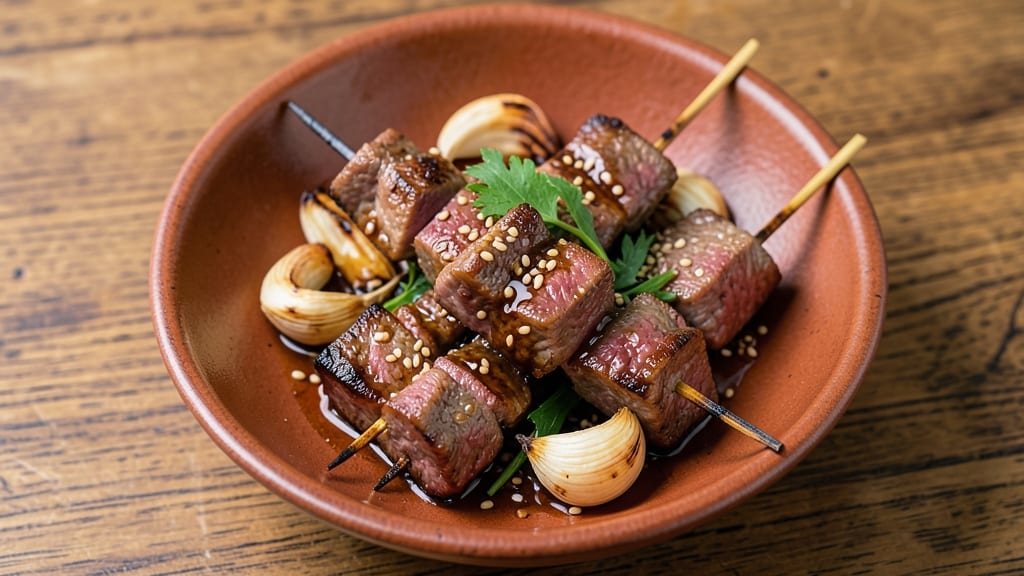
Mastering Japanese beef skewers transforms simple ingredients into restaurant-quality yakitori-style bites that deliver perfect char and umami in every bite. The secret lies in a marinade that balances sweet, salty, and savory flavors while tenderizing the beef for that signature melt-in-your-mouth texture.
I've perfected this recipe through countless grill sessions, ensuring you achieve crispy edges and juicy centers without overcomplicating the process.
This recipe builds on traditional yakitori techniques while offering flexibility for modern tastes—whether you prefer classic soy-mirin marinades or bold teriyaki glazes. With just 15 minutes of prep and 10 minutes of cooking, you'll have skewers ready to impress at any gathering.
The marinade works its magic overnight, allowing flavors to deeply penetrate the beef while keeping the process hands-off.
What you'll end up with is skewered beef that's perfectly seared on the outside with tender, flavorful meat inside—each bite bursting with caramelized notes from the grill. The skewers hold their shape beautifully, making them easy to serve and eat.
Serve with a side of steamed rice and quick-pickled vegetables for a complete meal that feels both elegant and approachable.
Whether you're grilling outdoors or using your broiler, this method delivers consistent results. The recipe scales effortlessly for parties or family dinners, and the marinade can be doubled for future meals. Let's get started on creating skewers that taste like they came straight from a Tokyo street market.
Ingredients for japanese beef skewers
Fifteen minutes prep, ten minutes grill—simple ingredients transform into Tokyo-style skewers bursting with umami and caramelized edges.
| Ingredient | Amount | Notes |
|---|---|---|
| Boneless Beef Tenderloin 🥩 | 1 ½ lb | Cut into 1-inch cubes |
| Soy Sauce 🥢 | ½ cup | Japanese-style preferred |
| Mirin 🍶 | ¼ cup | Sweet cooking wine |
| Sake 🍶 | ¼ cup | Dry variety preferred |
| Sesame Oil 🫒 | 1 tbsp | Toasted for aroma |
| Minced Garlic 🧄 | 4 cloves | Freshly minced |
| Fresh Ginger 🌿 | 1 tbsp | Grated, finely |
| Brown Sugar 🍯 | 2 tbsp | Light or dark |
| Vegetable Oil 🫒 | 2 tbsp | High smoke point |
| Wooden Skewers 🪵 | 12 whole | Soaked in water |
| Toasted Sesame Seeds 🌾 | 1 tbsp | For garnish |
| Diamond Crystal Kosher Salt 🧂 | ½ tsp | For seasoning |
| Freshly Ground Black Pepper 🌶️ | ¼ tsp | Light hand |
| Rice Vinegar 🍶 | 1 tbsp | For balance |
| Green Onions 🧅 | 4 whole | Cut into 2-inch pieces |
The beef makes all the difference—tenderloin stays tender while delivering that melt-in-your-mouth texture. Costco or Whole Foods carry great cuts, but even your grocery store's butcher section will have it. Look for pieces with good marbling—they'll stay juicier during grilling. If you can't find tenderloin, sirloin works in a pinch, but trim excess fat for cleaner bites. The cubes should be uniform (about 1-inch) so they cook evenly. I double-check mine with a ruler—no one likes unevenly cooked skewers. For the marinade ingredients, Japanese grocery stores have the best selection, but Trader Joe's carries decent mirin and soy sauce if you're short on time.
No mirin? Substitute 1 tbsp honey plus 1 tbsp water—it won't be identical, but close enough. Sake missing? Dry white wine works, though the flavor profile shifts slightly. The sesame oil is non-negotiable for that nutty aroma, but if you're avoiding it, toasted sesame paste thinned with water gets you 80% there. For the green onions, use the white and green parts—no need to peel. The rice vinegar might seem odd, but it cuts through the richness beautifully. Pro tip: Marinate the beef overnight for maximum tenderness, but even 2 hours makes a difference. If you're prepping ahead, store the marinated beef (not skewered yet) in a sealed container in the fridge for up to 2 days.
Skewers are best served fresh off the grill, but they reheat surprisingly well. Wrap them in foil and warm in a 350°F oven for 5-7 minutes to revive the crispiness. Store leftovers in the fridge for 3 days—the flavors actually deepen overnight. For freezing, skewer the beef, freeze on a tray, then transfer to a bag. Thaw in the fridge before reheating. The marinade itself keeps for 1 month in the fridge, so make extra for future meals. Garnish with sesame seeds right before serving—it adds that final professional touch that makes these skewers look like they came from a Tokyo izakaya.
Why You'll Love This Recipe
- Minimal Prep, Maximum Payoff: I swear by this recipe because it’s the kind of meal where the hardest part is slicing the beef—and even that’s just cutting it thin. No marinating overnight, no fancy techniques; just a quick toss in soy, mirin, and sake while you prep the grill or fire up the pan.
- Umami Bomb Every Bite: That combo of mirin and sake? It’s like a flavor superpower. The beef soaks up the sweet-savory punch while the sesame oil adds a nutty finish that sticks with you. Honestly, the first time I made it, I nearly burned the house down trying to eat it fast enough.
- Weeknight or Weekend Star: These skewers work just as well for a lazy Tuesday as they do for a summer BBQ. Double the batch, stick half in the fridge for later, or even freeze them—thaw and grill when you’re in a rush. (Yes, even on a Tuesday night.)
- Budget-Friendly Luxury: Tenderloin might sound fancy, but it stretches further than you’d think when sliced thin. A single pound feeds four easily, and the sauce costs pennies per serving. It’s the kind of dish that makes you feel like you’re splurging without actually breaking the bank.
Step-by-step instructions for Japanese beef skewers
Here's how to transform tender beef into restaurant-quality yakitori-style skewers with perfect char and balanced umami.
Marinate the Beef for Maximum Flavor
Cut the 1.5 lb boneless beef tenderloin into 1-inch cubes, removing any remaining fat. In a large bowl, whisk together the 0.5 cup soy sauce, 0.25 cup mirin, 0.25 cup sake, 1 tbsp sesame oil, 2 tbsp brown sugar, 4 cloves minced garlic, 1 tbsp fresh ginger, 0.5 tsp diamond crystal kosher salt, and 0.25 tsp freshly ground black pepper until fully combined.
Add the beef cubes to the marinade, ensuring each piece is fully coated. Cover the bowl and refrigerate for at least 4 hours, or preferably overnight. This extended marinating time allows the flavors to deeply penetrate the beef, creating that signature tender yet flavorful bite. The acidity from the mirin and sake will begin breaking down the beef fibers, while the soy sauce and sugar create a perfect balance of umami and sweetness.
Prepare the Skewers and Preheat for Grilling
Soak the 12 wooden skewers in water for at least 30 minutes to prevent burning during grilling. After marinating, thread the beef cubes onto the skewers, using 2-3 cubes per skewer depending on their size. Arrange them evenly to ensure consistent cooking.
Preheat your grill to medium-high heat, around 400°F. You'll want to see those grill grates nice and hot before you start cooking - this high heat is crucial for developing that beautiful charred exterior we're after. If you're using a gas grill, clean the grates thoroughly first to prevent sticking. For charcoal grills, arrange the coals to create two heat zones: one for direct grilling and one for indirect heat if needed.
Grill to Perfect Doneness with Charred Crust
Place the skewers on the grill and cook for 3-4 minutes per side, until the beef reaches an internal temperature of 135°F for medium-rare. You'll know they're ready when you see those beautiful grill marks forming and the edges begin to caramelize. The marinade will bubble and sizzle as it cooks off, intensifying the flavors.
Here's the thing - don't move them around constantly. Let them develop those deep grill marks and charred crust in one spot before rotating. This creates that perfect contrast between the tender interior and crispy exterior that defines yakitori. For the final 30 seconds of cooking, you can move the skewers to the cooler side of the grill to prevent overcooking while maintaining that perfect sear.
Finish with Garnish and Serving Suggestions
Once cooked, transfer the skewers to a plate and immediately drizzle with the remaining marinade from the bowl. Sprinkle generously with the 1 tbsp toasted sesame seeds and the 4 whole green onions cut into 2-inch pieces. The sesame seeds add a nutty crunch while the green onions provide a fresh contrast to the rich beef.
For an extra touch, I like to add a final drizzle of the 1 tbsp rice vinegar mixed with a pinch of the remaining diamond crystal kosher salt. This balances the sweetness of the marinade and adds a bright acidity that cuts through the richness. Serve immediately while the skewers are still sizzling hot, with steamed rice and a side of quick-pickled vegetables to complement the rich beef flavors.
Pro Tips For Making Japanese Beef Skewers
- Cut Even Strips: Use a sharp knife and slice the beef against the grain into 1-inch-wide strips—this makes them tender every time. I used to fight the knife, but a proper cut means less chewing and more flavor.
- Marinate Overnight: The soy-mirin-sake mix needs at least 8 hours, ideally overnight, to penetrate the beef. I learned this after skipping it and ending up with bland, dry skewers—don’t rush it.
- Skewer Lightly: Thread the beef loosely onto skewers—overcrowding steams the meat instead of searing it. Leave a little space so the sauce can caramelize properly.
- Finish with Sesame Oil: Toss the cooked skewers in sesame oil right after they come off the heat—it adds aroma and coats the beef instantly. Drizzle it on the plate too for extra flair.
Troubleshooting great japanese beef skewers
Uneven Cooking Fix
If your skewers cook unevenly, it's usually because the beef cubes aren't uniform in size. I recommend cutting all pieces to exactly 1-inch cubes using a sharp knife and a ruler for precision.
Also, arrange them evenly on each skewer—no overcrowding! For thicker cuts, grill an extra 30 seconds per side to ensure doneness. A meat thermometer helps verify 135°F internal temperature for medium-rare. 🔥
Preventing Skewers from Falling Apart
Wooden skewers can break or fall apart if they're not properly soaked. Soak them in water for at least 30 minutes before using, but I prefer 1 hour for extra durability.
For added security, thread a green onion piece through each skewer before adding the beef—it acts as a natural stabilizer. If using metal skewers, ensure they're food-safe and sturdy to handle the heat. 🪵
Overly Dry Beef Solutions
If your beef turns out dry, the issue is likely overcooking or insufficient marinating time. For future batches, marinate for at least 4 hours (overnight is ideal). When grilling, remove skewers from heat when they reach 130°F internal temperature—they'll rise to 135°F while resting.
Let them rest for 5 minutes before serving to redistribute juices. A quick fix for dry skewers is to brush with a mix of 1 tbsp mirin and 1 tsp soy sauce right before serving. 💡
Stuck-on Marinade Problems
If the marinade burns before the beef cooks through, reduce the sugar in your marinade by 1 tbsp or use honey instead of brown sugar—it caramelizes more gently. For stubborn residue, clean grill grates with a ball of aluminum foil while hot, then scrub with a grill brush.
If using a broiler, place skewers on a wire rack over a baking sheet to allow heat to circulate evenly. 🌡️
Charred but Raw Centers
This happens when you prioritize char over doneness. Use a two-zone fire on your grill: sear the skewers over direct heat for 2 minutes per side, then move them to indirect heat to finish cooking to 135°F.
For broilers, keep the oven door slightly ajar to prevent excessive heat buildup. A meat thermometer is non-negotiable—never guess! 🔥
Skewers Sticking to Grill
Grease your grill grates thoroughly with high-smoke-point oil (like avocado or vegetable oil) before grilling. For extra insurance, brush the skewers themselves lightly with oil before placing them on the grill.
If using a gas grill, preheat it for 10-15 minutes to ensure the grates are hot enough to sear properly. Charcoal grills benefit from a chimney starter to reach optimal temperature faster. 🚫
Nutrition facts
Frequently asked questions
Can I use chicken or pork instead of beef for these skewers?
While beef delivers the best texture, you can adapt this recipe for chicken or pork! For chicken, use bone-in thighs (cut into 1-inch pieces) and marinate for 2-4 hours—they cook faster. Pork tenderloin works too, but reduce marinating time to 3 hours to avoid over-tenderizing. Adjust grill time to 2-3 minutes per side for poultry and 3-4 minutes for pork to reach 165°F internal temp.
How do I make these skewers on an indoor grill or stovetop?
For stovetop skewers, use a cast-iron skillet or griddle on medium-high heat. Heat 1 tbsp vegetable oil first to mimic grill sear. Cook skewers 2-3 minutes per side until charred. For an indoor grill pan, preheat for 5 minutes and cook similarly. Broilers work too: place skewers on a wire rack 4 inches from heat, broiling 3-4 minutes per side for medium-rare. Watch closely to avoid burning!
What's the best way to store leftover skewers?
Store cooked skewers in an airtight container in the fridge for up to 3 days, separated by parchment paper to prevent sticking. Reheat in a 350°F oven for 5-7 minutes with foil, then broil 1 minute to restore crispiness. For freezing, skewer the beef, freeze on a tray, then transfer to a bag. Thaw overnight in the fridge before reheating. The marinade keeps separately for 1 month—perfect for future batches!
Can I make these skewers gluten-free?
Replace regular soy sauce with tamari or coconut aminos (use 0.5 cup total). Check mirin labels—some contain wheat. For gluten-free skewers, use bamboo or metal skewers instead of wooden ones (which may be processed with gluten). The recipe remains otherwise identical, delivering the same umami-packed flavor without gluten.
Why do my skewers sometimes fall apart when grilling?
This usually happens from two issues: unsoaked wooden skewers or overcrowding on each skewer. Always soak skewers in water for 30+ minutes before use. Thread 2-3 beef cubes max per skewer with a green onion piece as a stabilizer. If using metal skewers, ensure they're food-safe and thick enough to handle the heat. For extra security, chill the skewers for 15 minutes after threading to help them hold shape.