
Desserts
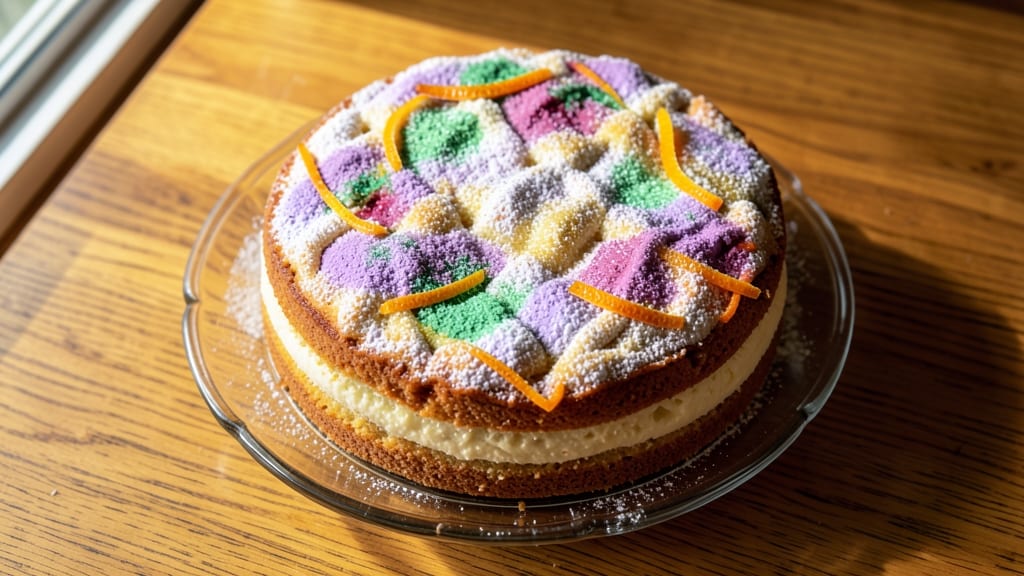
This Mardi Gras pound cake recipe brings the vibrant spirit of New Orleans to your kitchen with its signature purple hue and citrus-infused richness. The secret lies in a precise blend of food coloring, rum extract, and orange zest that transforms ordinary pound cake into a festive centerpiece.
I first perfected this recipe during a pre-Lenten celebration, where the cake’s bold color and moist texture became the talk of the party.
The cake’s magic comes from its layers—each one infused with citrus zest and rum for depth, then baked to a tender, golden perfection. Traditional Mardi Gras colors (purple, green, and gold) can be incorporated through food coloring or edible glitter for that extra celebratory touch.
The recipe balances simplicity with festive flair, making it ideal for both casual gatherings and grand celebrations.
By the time it emerges from the oven, you’ll have a cake that’s moist, flavorful, and dripping with holiday charm—perfectly paired with coffee, cocktails, or fresh berries.
The citrus notes brighten every bite, while the purple hue makes it impossible not to celebrate. This isn’t just dessert; it’s a tradition in every slice.
For added flair, dust with powdered sugar or top with edible glitter to match Mardi Gras colors. Serve warm or at room temperature, and watch it disappear as quickly as the confetti on Fat Tuesday. Let’s bring the party to your kitchen!
Ingredients for mardi gras pound cake
Pantry staples meet festive flair—this purple pound cake is all about citrus, rum, and bold color.
| Ingredient | Amount | Notes |
|---|---|---|
| All-Purpose Flour 🌾 | 4 cups | Sifted for even texture |
| Granulated Sugar 🍚 | 2 cups | White or light brown |
| Light Brown Sugar 🍚 | ½ cup | Packed firmly |
| Unsalted Butter 🧈 | 1 cup | Room temperature, cubed |
| Large Eggs 🥚 | 4 whole | Room temperature |
| Orange Zest 🍊 | 2 tbsp | Freshly grated, vibrant |
| Orange Juice 🍊 | ½ cup | Freshly squeezed |
| Rum Extract 🍹 | 1 tsp | For depth of flavor |
| Vanilla Extract 🌸 | 1 tbsp | Pure Madagascar preferred |
| Purple Gel Food Coloring 🎨 | ½ tsp | Vibrant, not liquid |
| Baking Powder 🍞 | 2 tsp | Aluminum-free preferred |
| Salt 🧂 | ½ tsp | Fine sea salt |
| Powdered Sugar 🍚 | 1 cup | For dusting |
| Edible Glitter ✨ | 1 tbsp | Optional, gold or purple |
The orange zest is non-negotiable here—it’s what gives this cake that bright, cheerful flavor. Grab fresh oranges from the produce section (the thicker-skinned varieties like Valencia hold zest best), and don’t skimp. If you can’t find fresh, bottled zest works in a pinch, but it’s not the same. The rum extract adds depth without the alcohol—Goya or McCormick brands are my go-tos, but any good-quality extract will do. For the purple food coloring, I always reach for Wilton or Americolor—they’re vibrant and don’t alter the texture. If you’re feeling extra festive, grab edible glitter in gold or purple for that Mardi Gras sparkle.
No rum extract? Almond extract at half the amount works, or even a splash of orange liqueur like Cointreau. Running low on orange zest? Lemon zest is a decent swap, but the flavor won’t be as rich. For the butter, if you’ve got European-style (like Plugrá), it’ll give the cake extra tenderness. The powdered sugar for dusting? Domino or any store-brand will do—just make sure it’s fine and sifted. And if you’re baking for a crowd, double the batter and bake in two pans—trust me, it’ll disappear fast.
This cake stays moist for 3 days at room temperature, wrapped tightly in plastic. For longer storage, freeze slices between parchment paper for up to 3 months—they thaw in 10 minutes at room temp. I always bake an extra pan because it’s perfect for breakfast toast the next morning. And if you’re prepping ahead, make the batter a day in advance and refrigerate it—it’ll be even more flavorful when you bake it.
Why You'll Love This Recipe
- Pantry Staples Only: This cake uses what’s already in your cupboards—flour, sugar, butter, eggs. No specialty ingredients, no last-minute grocery runs. Honestly, I’ve made it three times in a row when I forgot to shop, and it never let me down.
- Rich Butter Love: That creamy, tender crumb? All thanks to the butter—real unsalted butter, not margarine. The brown sugar adds a deep caramel note that makes every bite feel like a little celebration. Between us, the first slice disappears faster than I can say “Mardi Gras.”
- Slice It Any Way: Serve it warm with coffee for breakfast, cut into squares for a dessert buffet, or stack it with fresh berries for a brunch showstopper. I’ve even used leftover pieces to make French toast—yes, even on a Tuesday night.
- Make-Ahead Magic: Bake it once, enjoy it three times. This cake stays moist for days (seriously, I’ve had it last a week in the fridge). Wrap slices in foil, and you’ve got the perfect picnic dessert or office treat—no last-minute stress.
Step-by-step instructions for Mardi Gras pound cake
Here's how to make this vibrant, citrus-kissed cake that's perfect for celebrations.
Cream Butter and Sugars Together
In a large mixing bowl, combine the 1 cup unsalted butter and 2 cups granulated sugar with the 0.5 cup light brown sugar. Beat with an electric mixer on medium speed for about 3-4 minutes until the mixture is light and fluffy. You'll see it nearly double in volume and turn pale in color—this is how you know you've incorporated enough air for that classic pound cake texture.
Here's the thing—don't rush this step. The creaming process is what gives pound cake its tender crumb. If you skip this or do it too quickly, you'll end up with a dense cake instead of that light, moist texture we're after. The butter should look almost like whipped cream by the time you're done.
Add Eggs and Flavorings
Add the 4 whole large eggs, one at a time, mixing well after each addition until fully incorporated. Then stir in the 1 tbsp vanilla extract, 1 tsp rum extract, 2 tbsp orange zest, and 0.5 cup orange juice. Mix just until combined—you don't want to overmix here, or you'll develop too much gluten in the flour later.
This is where the magic happens with the citrus flavors. The orange zest and juice bring that bright, festive flavor that's perfect for Mardi Gras. The rum extract adds depth without overpowering, and the vanilla rounds out all the flavors beautifully. Mix gently so you don't create air bubbles that might affect the cake's texture.
Combine Dry Ingredients
In a separate bowl, whisk together the 4 cups all-purpose flour (be sure it's sifted for even texture), 2 tsp baking powder, 0.5 tsp salt, and 0.5 tsp purple gel food coloring. The food coloring should be vibrant purple—this is what gives your cake that signature Mardi Gras look. Mix just until the color is evenly distributed throughout the flour.
With the mixer on low speed, gradually add the dry ingredients to the wet mixture. Mix just until combined—again, we're aiming for a smooth batter without overmixing. The moment you see a few flour streaks disappear is when you stop. Overmixing develops gluten, which makes for a tough cake. You want that tender, moist crumb that pound cake is famous for.
Fold in Powdered Sugar and Glitter
Remove the bowl from the mixer and gently fold in the 1 cup powdered sugar and 1 tbsp edible glitter using a silicone spatula. The powdered sugar helps create that signature dusting on top of the cake, and the edible glitter gives it that extra festive touch. Be careful not to overmix—just fold until everything is evenly distributed throughout the batter.
This is the moment that matters: the batter should be smooth, vibrant purple, and just thick enough to hold its shape when dropped from a spoon. If it's too thin, your cake might be dense. If it's too thick, it might not rise properly. The batter should be like a thick cake batter—somewhere between that sweet spot.
Bake to Golden Perfection
Pour the batter into two greased and floured 9-inch round cake pans. Smooth the tops with a spatula. Bake in a preheated 350°F oven for 50-55 minutes, or until a toothpick inserted into the center comes out clean. The cakes should be golden brown on top and spring back slightly when touched.
Don't open the oven door during the first 30 minutes of baking—this helps the cakes rise properly. Your oven might run hot, so start checking at the 45-minute mark. The cakes are done when they've pulled away from the sides of the pan and have a slight golden color on top. Let them cool in the pans for 10 minutes before transferring to a wire rack to cool completely.
Pro Tips For Making Mardi Gras Pound Cake
- Cream Butter Slowly: I learned this the hard way—dumping cold butter into sugar at once just makes a greasy mess. Instead, cut the butter into small cubes and add them gradually while mixing. The goal is to get that butter fully incorporated without turning your batter into soup.
- Pack Brown Sugar: Light brown sugar has moisture, and packing it means denser cake. Use a spoon to press it firmly into the measuring cup—no shaking. This isn’t just about weight; it’s about flavor and texture. Skip this, and your cake might taste underwhelming.
- Room-Temp Eggs Matter: Cold eggs from the fridge can curdle your batter, especially in a rich recipe like this. Let them sit in warm water for 10 minutes before cracking them in. Yes, it’s an extra step, but your cake’s structure will thank you—no weird lumps or grainy texture.
- Bake Until Springy: The second you pull this cake from the oven, press the center with your finger—it should spring back slowly, not immediately. If it’s jiggly or sinks back fast, it’s overdone. Underbaked? It’ll stay gummy. This is the non-negotiable moment where patience pays off.
Troubleshooting this recipe
Cake Too Dense
If your pound cake turns out dense instead of tender, the issue is likely overmixing the batter. I’ve found that overmixing develops gluten, which creates a tough, dense texture.
To fix this, mix the dry ingredients into the wet mixture only until combined—stop as soon as the flour disappears. Also, ensure your butter is at room temperature (not melted) and that you’re creaming it with the sugars for at least 3-4 minutes to incorporate air. 💡
Uneven Baking
Uneven baking often happens when the oven isn’t preheated properly or the cake pans aren’t placed correctly. Always preheat your oven to 350°F for at least 15 minutes before baking. Place the pans on the middle rack and avoid opening the oven door for the first 30 minutes.
If your oven runs hot, reduce the temperature to 325°F and bake for 55-60 minutes. Rotate the pans halfway if needed for even browning. ⚡
Purple Streaks
Purple streaks in your cake usually mean the food coloring wasn’t fully incorporated into the dry ingredients. To prevent this, whisk the purple gel coloring into the flour until it’s completely distributed before mixing it into the wet batter.
If you’re using liquid coloring, dilute it in 1-2 tablespoons of the orange juice first to help it blend smoothly. For extra vibrancy, sift the flour after adding the coloring. 🎨
Cake Sticks Together
If your cake layers stick together or crumble when slicing, it’s likely due to overmixing the batter or not cooling properly. Let the cakes cool in the pans for 10 minutes before transferring to a wire rack.
Once fully cooled, wrap them tightly in plastic wrap and refrigerate for 1 hour before slicing. This helps the layers set. For extra insurance, dust the layers with powdered sugar before assembling. ✨
Bitter Aftertaste
A bitter taste often comes from overbaking or using too much rum extract. If your cake tastes bitter, check the baking time—50-55 minutes at 350°F is ideal. For the rum extract, stick to 1 teaspoon (not tablespoons).
If you’re using fresh orange juice, ensure it’s freshly squeezed and not overly acidic. A pinch of lemon zest can balance the flavors if needed. 🍊
Glitter Not Adhering
If your edible glitter isn’t sticking to the cake, it’s likely because the batter was too wet or the glitter was added too late. Fold in the 1 tablespoon of edible glitter gently but thoroughly right after adding the powdered sugar.
For extra hold, lightly spray the top of the baked cake with water or simple syrup before dusting with powdered sugar—this creates a sticky surface for the glitter to cling to. 💫
Nutrition facts
Frequently asked questions
Why does this Mardi Gras cake have a purple hue?
The vibrant purple color comes from purple gel food coloring mixed into the dry ingredients. This matches Mardi Gras traditions where purple represents justice. The citrus flavors keep it bright and festive while the color makes it instantly recognizable as a celebration cake.
Can I make this cake without rum extract?
Yes! Use ½ teaspoon almond extract or 1 tablespoon orange liqueur like Cointreau instead. The rum extract adds depth, but these alternatives work well for a similar flavor profile. Just reduce the amount slightly to avoid overpowering the citrus notes.
How do I prevent the cake layers from sticking together?
Let the cakes cool in the pans for 10 minutes before transferring to a wire rack. Once fully cooled, wrap them tightly in plastic wrap and refrigerate for 1 hour before slicing. Dusting layers with powdered sugar before assembling also helps create a barrier.
What's the best way to serve this cake?
This cake pairs perfectly with hot coffee, espresso martinis, or fresh berries. For a true Mardi Gras experience, dust with powdered sugar and serve with a side of beignets or creole coffee. The citrus flavors also complement citrus-infused cocktails beautifully.
Can I make this cake in a different shape?
While the recipe calls for 9-inch round pans, you can use square pans or even a tube pan for a different presentation. Just adjust baking times slightly—square pans may need 5-10 extra minutes. For a festive touch, consider using Mardi Gras-themed cake molds or cutting into triangles.