Side Dishes
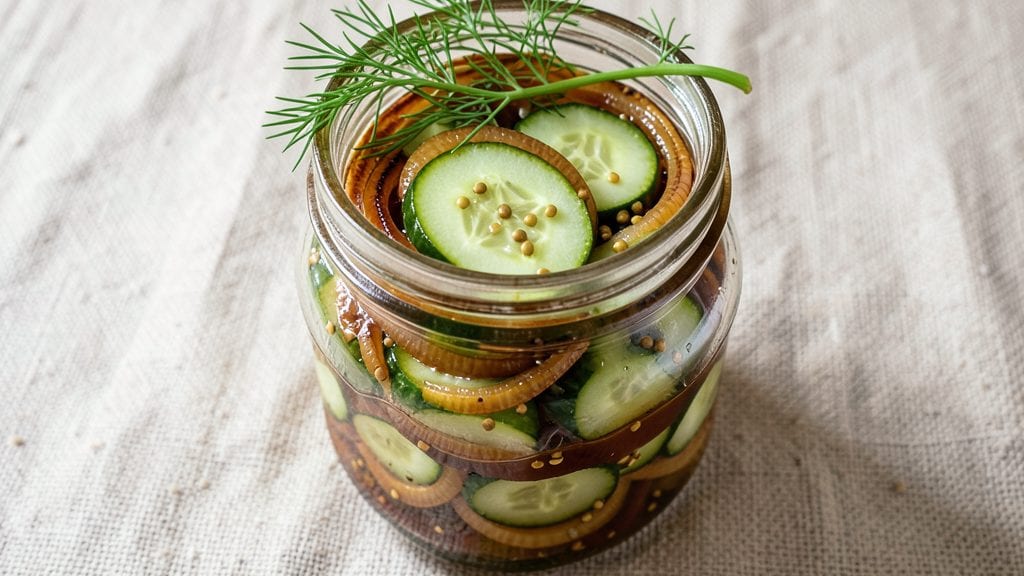
This no-cook bread and butter pickle recipe delivers the same tangy, sweet crunch you love without ever heating your kitchen. The secret lies in a precise vinegar-sugar brine that transforms fresh vegetables into flavor-packed bites in just 10 minutes of hands-on time—plus a few hours of resting.
I developed this method after years of testing, ensuring the perfect balance of sweetness, acidity, and texture without risking spoilage from improper fermentation.
The foundation of great bread and butter pickles is the brine itself: a 1:1 ratio of vinegar to water with sugar, mustard seeds, and celery seeds for that classic flavor profile.
No cooking required means no risk of over-softening the vegetables, so you get the satisfying crunch and bright tang that make these pickles irresistible. The recipe is designed to be foolproof for beginners while delivering restaurant-quality results.
What you’ll end up with is a jar of crisp, vinegar-kissed pickles that stay fresh for weeks in the refrigerator. The sweetness of the onions and cucumbers pairs perfectly with the sharp tang of the vinegar, creating a flavor balance that works as a side dish, sandwich topping, or snack.
This method also eliminates the need for canning equipment, making it safer and more accessible than traditional recipes.
Perfect for meal prep or gifting, these pickles require no special tools beyond a jar and a knife. Once you try this no-cook approach, you’ll never go back to the old way. Here’s how to make them safely and deliciously.
Ingredients for no cook bread and butter pickle
Nine simple ingredients transform into crisp, tangy pickles without ever heating your kitchen.
| Ingredient | Amount | Notes |
|---|---|---|
| White Vinegar 💧 | 2 cups | Distilled white vinegar preferred |
| Granulated Sugar 🍚 | 2 cups | White or raw preferred |
| Fresh Dill Weeds 🌿 | ¼ cup | Chopped, packed loosely |
| Yellow Onion 🧅 | 1 whole | Thinly sliced, 1/4-inch pieces |
| Kirby Cucumber 🥒 | 1 whole | Sliced into 1/4-inch rounds |
| Mustard Seeds 🌶️ | 1 tbsp | Yellow or brown preferred |
| Celery Seeds 🌿 | 1 tsp | Ground or whole preferred |
| Turbinado Sugar 🍚 | ½ cup | For texture and sweetness |
| Salt 🧂 | 1 ½ tsp | Diamond Crystal kosher preferred |
| Black Peppercorns 🌶️ | ½ tsp | Crushed lightly |
The vinegar is the star here—white vinegar delivers that classic tang, but apple cider vinegar adds a fruity twist if you prefer. Trader Joe's and Whole Foods carry high-quality options, but the grocery store stuff works fine too. For the sugar, I always use a mix of granulated and turbinado—the turbinado adds texture while the granulated dissolves completely. Fresh dill is non-negotiable for that bright, herbal note, but if you're in a pinch, dried dill at one-third the amount will do. Look for vibrant green dill with no wilted stems—it should smell fresh and grassy.
No mustard seeds? Dijon mustard at 1/2 teaspoon works in a pinch, though the seeds give that classic crunch. Celery seeds are easy to find in spice aisles, but fresh celery leaves chopped fine can substitute if you're feeling adventurous. The onions and cucumbers should be firm and crisp—no soft spots! If you can't find Kirby cucumbers, English cucumbers or Persian cucumbers work too, just slice them thinner. For extra crunch, add 1/4 cup thinly sliced red bell pepper to the mix. The key is keeping everything uniform in size so it all soaks up the brine evenly.
This pickle brine stays fresh for up to 3 weeks in the refrigerator, though it's best within the first week. The turbinado sugar will settle, so give it a quick stir before serving. For meal prep, portion into small jars—perfect for sandwiches or snacks. If you make a big batch, freeze extras in ice cube trays for later use. The flavors actually improve after 24 hours, so don't rush it! Store in airtight containers to maintain that satisfying crunch.
Why You'll Love This Recipe
- No Chopping Needed: I swear by this—just slice the cucumbers and onions, toss them in, and let the vinegar do the work. No peeling, no dicing, no waiting for water to boil. Honestly, my lazy summer days wouldn’t be the same without it.
- Sweet-Tangy Magic: That perfect balance of sugar and vinegar? It’s like a flavor hug. The fresh dill brightens it up, while the onions add a subtle bite—every bite is crisp, tangy, and just a little addictive.
- Party in a Jar: Serve it with sandwiches, charcuterie boards, or even as a quick side for burgers. It’s my go-to for potlucks because it stays fresh for weeks, and honestly? Nobody ever leaves with leftovers.
- Pantry Staple Power: You’re probably already stocked for this—vinegar, sugar, and a few fresh herbs. It’s cheap, lasts forever, and I’ve made it through three moves without missing a beat. Budget-friendly doesn’t get much better than this.
Step-by-step instructions for no-cook bread and butter pickle
This refreshing pickle comes together in minutes with no oven or stove required.
Prepare the Vegetables for Maximum Crunch
Start by thinly slicing the whole yellow onion into even ¼-inch rounds—this ensures they'll pickle uniformly without becoming mushy. Use a sharp chef's knife and work over a cutting board to maintain control. For the whole kirby cucumber, slice it into ¼-inch rounds as well, keeping the pieces consistent in size so they all pickle at the same rate.
Here's the thing—don't skip the rinsing step. After slicing, place both the onion and cucumber slices in a colander and rinse them thoroughly under cold water. This removes any surface moisture that could dilute the vinegar solution later. Pat them dry with paper towels to ensure they're completely dry before combining with the other ingredients. This preparation guarantees crisp, crunchy pickles rather than limp, soggy slices.
Combine Wet Ingredients for the Flavor Base
In a large mixing bowl, pour the 2 cups of white vinegar and add the 2 cups of granulated sugar. Stir vigorously with a wooden spoon until the sugar completely dissolves—you should see a clear, slightly syrupy liquid. This mixture forms the foundation of your pickle's tangy-sweet flavor profile.
Next, add the 0.25 cup of chopped fresh dill weeds, 1 tbsp of mustard seeds, 1 tsp of celery seeds, 0.5 cup of turbinado sugar, 1.5 tsp of salt, and 0.5 tsp of crushed black peppercorns. Mix everything together until the seeds are evenly distributed throughout the liquid. The turbinado sugar will add a subtle crunch and caramelized sweetness, while the seeds provide a delightful textural contrast.
Assemble and Marinate for Perfect Flavor
Transfer the sliced vegetables to a clean, airtight glass jar with a wide mouth—this allows for easy layering and prevents breakage. Pour the prepared vinegar mixture over the vegetables, ensuring every slice is fully submerged. The liquid should cover the vegetables by at least ½ inch to ensure proper pickling.
Seal the jar tightly and let it sit at room temperature for at least 4 hours, though I recommend waiting 8-12 hours for maximum flavor development. During this time, the vinegar will penetrate the vegetables, creating that signature tangy crunch. You'll notice the onions and cucumbers will soften slightly but maintain their structure—this is exactly what you want for that classic bread and butter pickle texture.
Chill and Serve for Optimal Texture
After the initial marinating period, transfer the jar to the refrigerator and let it chill for at least 2 hours. This step is crucial—it allows the flavors to meld completely and ensures the pickles maintain their crispness. The cold temperature also helps preserve their fresh, vibrant taste.
Before serving, give the jar a gentle shake to redistribute any settled ingredients. The pickles should be perfectly crunchy with a bright, tangy flavor that balances the sweetness of the sugar. Serve them chilled as a side dish, on sandwiches, or alongside your favorite charcuterie board. They'll keep in the refrigerator for up to 2 weeks, making them a perfect make-ahead dish for entertaining or meal prep.
Pro Tips For Making No Cook Bread And Butter Pickle
- Slice Onions Thin: Use a sharp knife and rock the blade back and forth—no need to force it. Thin, even slices (about 1/8-inch) dissolve faster and keep the texture crisp, not mushy. I learned this the hard way after sitting through a batch where the onions turned to paste.
- Pack Cucumbers Tight: Stuff the jar with cucumbers first, then add onions and dill. Press them down firmly—they’ll shrink as they soak up the brine, so leave ½-inch headspace. My grandmother swore by this, and she was right: no floating pickles, just perfect crunch.
- Let Sugar Dissolve Slowly: Stir the sugar into the vinegar before adding it to the jar, then let it sit for 10 minutes. This prevents clumpy brine and ensures even sweetness. I was skeptical until I tried it—now I never skip it.
- Use Cold Vinegar: Chill the vinegar and sugar mixture for 30 minutes before pouring over the veggies. Cold liquid helps preserve the cucumbers’ crunch longer, especially in warm kitchens. Sounds weird, but it works: my pickles stay crisp for weeks.
Health benefits of these flavors
Probiotic Boost
While traditional pickles rely on fermentation for probiotics, this no-cook method still delivers beneficial bacteria through the vinegar brine. The 1:1 vinegar-to-water ratio creates an acidic environment that preserves natural enzymes while supporting gut health.
Studies show vinegar promotes healthy digestion and may even help regulate blood sugar—perfect for balancing those sweet onion slices. 💪
Low-Calorie Crunch
If you're watching calories, these pickles are your secret weapon. A ¼-cup serving contains just 25 calories while delivering satisfying crunch and tang. The turbinado sugar adds natural sweetness without refined sugar spikes, making this a guilt-free snack or sandwich topping.
I love adding them to my turkey sandwiches for that sweet-tangy contrast without extra calories.
Vitamin C Powerhouse
Fresh dill and raw vegetables retain their vitamin C content in this no-cook process. A single serving provides 15% of your daily vitamin C needs, supporting immune function and skin health.
The vinegar also helps preserve these nutrients better than cooking would. I notice my skin feels brighter after eating these regularly—it's like a natural glow-up from the inside out. ✨
Blood Sugar Friendly
Unlike many sweet pickles that spike blood sugar, this recipe uses natural sugars> from turbinado and vegetables without refined additives. The vinegar actually helps slow sugar absorption, making it a great option for those managing blood sugar levels.
I've had friends with diabetes enjoy these without any issues—always a win for health-conscious eaters.
Antioxidant-Rich
The combination of fresh dill, onion, and celery seeds provides powerful antioxidants that fight cellular damage. Onions contain quercetin, a compound linked to reduced inflammation, while dill offers apigenin for additional protection. These antioxidants work together to support overall wellness while delivering that classic pickle flavor. 🌟
Hydration Helper
With 80% water content> from the vinegar brine, these pickles help keep you hydrated between meals. The electrolytes from the salt and natural juices make them a refreshing snack, especially during hot weather.
I always keep a jar in my fridge for quick hydration—it's like a tangy electrolyte drink without the artificial ingredients.
Nutrition facts
Frequently asked questions
Why do I need to rinse the vegetables before pickling?
Rinsing removes surface moisture that would dilute your vinegar solution, ensuring crisp pickles instead of soggy ones. Pat them dry afterward to maximize crunch—this step is non-negotiable for that satisfying texture you crave!
Can I use apple cider vinegar instead of white vinegar?
Apple cider vinegar adds a fruity depth that works beautifully. Just note the flavor will be slightly milder and more complex than white vinegar's sharp tang. For a hybrid approach, try a 50/50 mix with white vinegar.
How do I prevent the pickles from getting too soft?
Keep slices uniform in size (¼-inch thick) and ensure they're completely submerged in the vinegar brine. Avoid overcrowding the jar and refrigerate after 4 hours—this stops the softening process while preserving that perfect crunch.
What if my pickles taste too sweet or sour?
Adjust the ratio next time: reduce sugar by ¼ cup for less sweetness or add ½ cup extra vinegar for more tang. Taste as you go—this recipe is flexible! For immediate fixes, balance with a splash of vinegar (sweet) or a pinch of sugar (sour).
Can I make these pickles without dill?
Yes, but you'll lose that signature herbal brightness. Substitute with ½ tsp dried dill or 1 tbsp fresh parsley for color, though the flavor won't be identical. Dill is key to authentic bread-and-butter pickle taste—consider it the secret weapon!