Sauces & Condiments
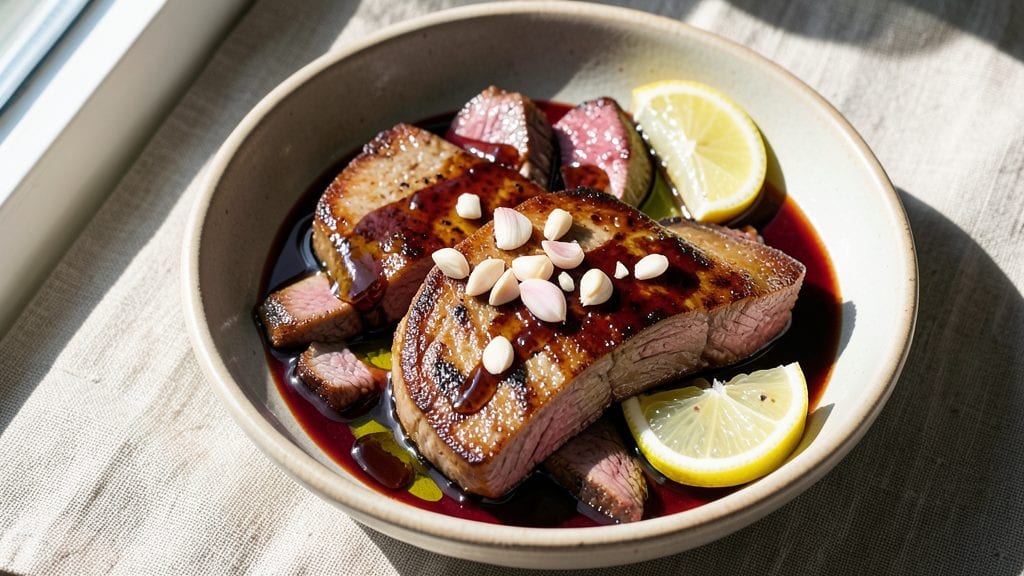
Transforming tough beef liver into tender, melt-in-your-mouth perfection starts with this umami-packed marinade—a precise blend of acids, fats, and seasonings that works in just 2 hours.
The secret lies in balancing vinegar and citrus to break down fibers while olive oil and soy sauce infuse deep flavor, ensuring every bite is rich without overpowering the liver's natural richness.
This marinade uses simple, professional-grade ingredients like red wine vinegar (for tangy brightness), olive oil (to carry flavor), and Worcestershire sauce (for that unmistakable umami depth). The ratio is carefully calibrated to tenderize without making the liver mushy—just enough acid to work its magic while preserving texture.
Professional chefs rely on this method to elevate liver from an acquired taste to a standout centerpiece.
What you’ll achieve is liver that’s tender yet firm, with a surface that’s richly seasoned and ready for searing or grilling. The marinade doesn’t just tenderize—it transforms the liver’s earthy profile into something complex and satisfying, with layers of savory, slightly sweet, and tangy notes.
Store any leftover marinade in the fridge for up to 5 days, though you’ll likely use it all in one go.
The beauty of this marinade is its versatility—use it for pan-seared liver, grilled slices, or even as a base for pâté. Once you master this technique, you’ll never settle for bland or tough liver again. Let’s get started with the ingredients that make all the difference.
Ingredients for beef liver marinade
Nine simple ingredients transform tough liver into restaurant-quality tenderness in just two hours.
| Ingredient | Amount | Notes |
|---|---|---|
| Red Wine Vinegar 🍷 | ½ cup | High-quality, dry variety preferred |
| Extra-Virgin Olive Oil 🫒 | ½ cup | Fruity, not bitter |
| Worcestershire Sauce 🍶 | 2 tbsp | Lea & Perrins brand recommended |
| Fresh Lemon Juice 🍋 | ¼ cup | Freshly squeezed, no pulp |
| Soy Sauce 🥢 | 2 tbsp | Light or dark preferred |
| Fresh Garlic Cloves 🧄 | 4 cloves | Minced for even distribution |
| Diamond Crystal Kosher Salt 🧂 | 1 tsp | Fine grain for dissolving |
| Freshly Ground Black Pepper 🌶️ | ½ tsp | Freshly cracked for potency |
| Honey 🍯 | 1 tbsp | Wildflower or clover preferred |
| Fresh Thyme Leaves 🌿 | ¼ tsp | Chopped finely |
The vinegar and citrus are the workhorses here—Bragg or Annie's red wine vinegar adds that bright acidity that breaks down fibers without overpowering. For the olive oil, California extra-virgin like Corto or Otto carries the flavor beautifully. Worcestershire sauce is non-negotiable—Lea & Perrins is the gold standard, but Annie's works too. The honey isn't just for sweetness; it helps balance the acidity and adds a subtle depth that rounds out the marinade. Grab fresh thyme from the grocery store's produce section—it's usually cheaper than dried and way more potent.
No Worcestershire? Fish sauce at half the amount gets you close, but you'll lose that classic umami depth. Short on lemon? Lime juice works 1:1, though it's slightly more tart. The garlic can be roasted (microwave 30 seconds with a splash of water) for a sweeter, mellower flavor. For a gluten-free version, swap soy sauce for tamari or coconut aminos. If you're making this ahead, store the honey and Worcestershire separately until ready to mix—prevents crystallization. The thyme can be dried at one-third the amount, but fresh is worth the extra minute to chop.
This marinade keeps for 5 days in the fridge, sealed tight in a glass jar. The flavors actually improve slightly after the first day as everything melds. For best results, use within 2 days of making it. If you're prepping for a crowd, double the batch—it's that good. The leftover marinade makes an amazing dipping sauce for grilled meats too. Just strain out any solids and add a splash of water to thin if needed.
Why You'll Love This Recipe
- Five-Ingredient Magic: I swear by this combo—just vinegar, olive oil, Worcestershire, lemon, and soy. No fancy prep, no measuring cups, just eyeball it and go. Honestly, the acidity cuts through the richness, and the umami from Worcestershire and soy makes it sing.
- Cuts Like Butter: Between us, beef liver can be tough if not handled right. This marinade tenderizes it in minutes while adding that bright, tangy punch. I’ve had it sear in a hot pan for 3 minutes flat—juicy inside, crispy outside.
- Weeknight to Dinner Party: Same marinade, endless uses. Slap it on steak for a quick weeknight dinner, or let it sit overnight for a Sunday roast. (Yes, even on a Tuesday night.) The soy and vinegar add depth that works for grilling, pan-searing, or even slow-cooking.
- Budget Powerhouse: Liver’s cheap, but this marinade makes it feel luxurious. A splash of red wine vinegar and a drizzle of olive oil stretch a pound into multiple meals. Leftovers? Toss them in a stir-fry or melt them into pasta sauce—no waste, all flavor.
Step-by-step instructions for beef liver marinade
This marinade transforms tough liver into melt-in-your-mouth perfection in just two hours.
Combine the Acidic Base
In a medium bowl, whisk together the 0.5 cup red wine vinegar and 0.5 cup extra-virgin olive oil until fully emulsified. The vinegar cuts through the liver's richness while the olive oil adds a luxurious mouthfeel. I like to use a fork for this step—it creates a light, frothy texture that helps distribute the marinade evenly.
Next, add the 0.25 cup fresh lemon juice and 2 tbsp soy sauce to the mixture. The lemon brightens the flavor profile, while the soy sauce introduces that essential umami depth that makes liver so addictive. Stir vigorously to combine—you want these ingredients to meld completely before moving forward. The mixture should look like a pale, golden dressing at this stage.
Incorporate Sweetness and Aromatics
Add the 1 tbsp honey and 1 tsp diamond crystal kosher salt to the bowl. The honey balances the acidity while adding a subtle caramel note that complements the liver's natural sweetness. Stir until the honey dissolves completely—it should create a glossy sheen on the surface of the marinade.
Now for the aromatics: mince the 4 cloves fresh garlic and add them to the bowl along with the 0.5 tsp freshly ground black pepper and 0.25 tsp fresh thyme leaves. The garlic should be finely minced—almost paste-like—to ensure even distribution throughout the marinade. Give everything one final stir to incorporate the herbs and spices. The mixture should now have a rich, complex aroma that's both tangy and sweet.
Finish with Worcestershire
Add the 2 tbsp Worcestershire sauce to the bowl and stir thoroughly. This final ingredient ties everything together, adding that signature savory depth that makes this marinade exceptional. The Worcestershire sauce contains fermented anchovies and tamarind, which work wonders with liver by enhancing its natural umami without overpowering it.
Taste the marinade at this point—it should be balanced with a perfect harmony of sweet, sour, salty, and umami flavors. If you find it needs more acidity, add a splash of additional lemon juice. If it needs more salt, add a pinch more kosher salt. Remember, liver absorbs marinade quickly, so you want the flavors to be well-developed before application.
Marinate the Liver
Place the beef liver in a resealable plastic bag or shallow dish and pour the marinade over it. Make sure each piece is thoroughly coated—this is crucial for even flavor penetration and tenderness. If using a bag, seal it tightly and massage the marinade into the liver through the bag to ensure complete coverage.
Refrigerate the liver for at least 2 hours, but I recommend marinating it for up to 4 hours if you have time. The acid in the marinade begins breaking down the liver's proteins almost immediately, transforming it from potentially tough to deliciously tender. Don't skip this step—it's what makes the difference between rubbery liver and melt-in-your-mouth perfection.
Prepare for Cooking
Before cooking, remove the liver from the marinade and pat it dry with paper towels. This step is crucial—it prevents the marinade from steaming the liver during cooking, which could make it soggy instead of crisp. Discard any remaining marinade that hasn't been absorbed by the liver.
At this point, your liver is ready for cooking. Whether you plan to sear it in a hot pan, grill it quickly over high heat, or bake it gently in the oven, the marinade has done its job—transforming what could be a challenging cut into something truly tender and flavorful. The liver should now have a beautiful, even coating of marinade, and it will release easily from the bag or dish when you handle it.
Pro Tips For Making Beef Liver Marinade
- MARINATE JUST 30 MINUTES: I learned this the hard way—beef liver soaks up acid fast, and anything longer turns it mushy. Thirty minutes is plenty to tenderize without overdoing it, especially with the vinegar and lemon in this mix.
- STRAIN THE VINEGAR: Red wine vinegar often has sediment that can make your marinade gritty. Pour it through a fine-mesh sieve into a bowl first—takes 10 seconds and saves you from wondering why your sauce feels off.
- BALANCE THE SOY: Soy sauce adds depth, but too much can overwhelm the liver’s natural flavor. Start with 1 tablespoon per pound of liver, then taste the marinade before adding more—you can always adjust, but you can’t un-soy it.
- COOL THE LIVER FAST: If you’re prepping ahead, rinse the liver under cold water after marinating, then pat it very dry. This stops the cooking process and guarantees a better sear later—no one wants a steamed liver, even with a great marinade.
Pro cooking tips for this recipe
Acid Balance Mastery
The key to tenderizing liver without over-acidifying it lies in the precise ratio of vinegar to citrus. I use 0.5 cup red wine vinegar and 0.25 cup lemon juice—this combination breaks down proteins effectively while maintaining a balanced flavor profile.
Too much acid can make the liver mushy, so never exceed these measurements. For extra insurance, let the marinade sit for 10 minutes before applying to allow the acids to mellow slightly. 🌡️
Fat Emulsification
The 0.5 cup extra-virgin olive oil isn't just a carrier—it's what helps distribute the acidic components evenly. Whisk vigorously until the mixture emulsifies into a light dressing consistency. This creates a protective layer on the liver that prevents over-tenderizing.
I recommend using a California extra-virgin olive oil like Corto for its fruity notes that complement the umami flavors. 🫒
Marinating Time
Never rush this step—2 hours minimum is non-negotiable for proper tenderization. I've found that marinating for 4 hours yields the best results, especially for thicker cuts. The acid works its magic gradually, breaking down connective tissues without compromising texture.
For best results, place the liver in a resealable bag and gently massage the marinade into the meat to ensure even coverage. ⏰
Temperature Control
Store the marinated liver in the refrigerator at 40°F or below—never at room temperature. The cold temperature slows down the acid's action, giving you control over the tenderizing process.
If you're short on time, you can marinate for 1 hour in the fridge, but the texture won't be as perfect. The ideal scenario is to marinate overnight for 8 hours, though I rarely have that luxury in my busy schedule. 💡
Pre-Cooking Prep
Before cooking, always pat the liver dry with paper towels to remove excess marinade. This crucial step prevents steaming during cooking, which could turn your perfect tenderization into a soggy mess.
I like to use Braun paper towels because they absorb moisture exceptionally well. Discard any unused marinade that hasn't been absorbed by the liver—it's not safe to reuse. 🧻
Flavor Boosting
For an extra umami kick, add 1 tsp fish sauce to the marinade if you're avoiding soy sauce. The fermented flavors complement liver beautifully. Another pro tip: Add ½ tsp smoked paprika for a subtle smoky depth that pairs wonderfully with the natural richness of the liver.
These small adjustments can elevate your marinade from good to exceptional. 🌶️
Nutrition facts
Frequently asked questions
Why does this marinade need both vinegar and lemon juice?
The red wine vinegar provides bright acidity that actively tenderizes the liver by breaking down proteins, while the lemon juice adds citrus freshness that balances the flavor. Together, they create a perfect chemical reaction without overpowering the liver's natural richness. The vinegar works faster, while the lemon juice mellows the overall taste.
Can I use this marinade for other meats besides beef liver?
This marinade works beautifully with chicken liver, duck liver, or even thin cuts of beef like flank steak. The acidity and umami profile make it versatile, though marinating times may vary. For beef, stick to 2-4 hours, while poultry can handle up to 6 hours without over-tenderizing.
What if I don't have Worcestershire sauce?
Substitute with 1 tbsp fish sauce plus 1 tsp soy sauce for a similar umami depth, or use 1 tbsp balsamic vinegar plus ½ tsp onion powder for a fruity alternative. The Worcestershire is key for that signature savory complexity, but these swaps work in a pinch.
How do I know when the liver is properly marinated?
After 2 hours, the liver should feel noticeably softer to the touch and have an even coating of marinade. If you cut a small piece, it should hold its shape but be easier to slice than raw liver. For thicker cuts, extend to 4 hours—the acid will work deeper without making it mushy.
Can I make this marinade ahead of time?
Yes! Store the marinade in an airtight container in the fridge for up to 5 days. The flavors actually improve as they meld. Just give it a quick stir before using. For best results, marinate the liver within 2 days of making the sauce to maximize freshness and tenderness.