
Sauces & Condiments
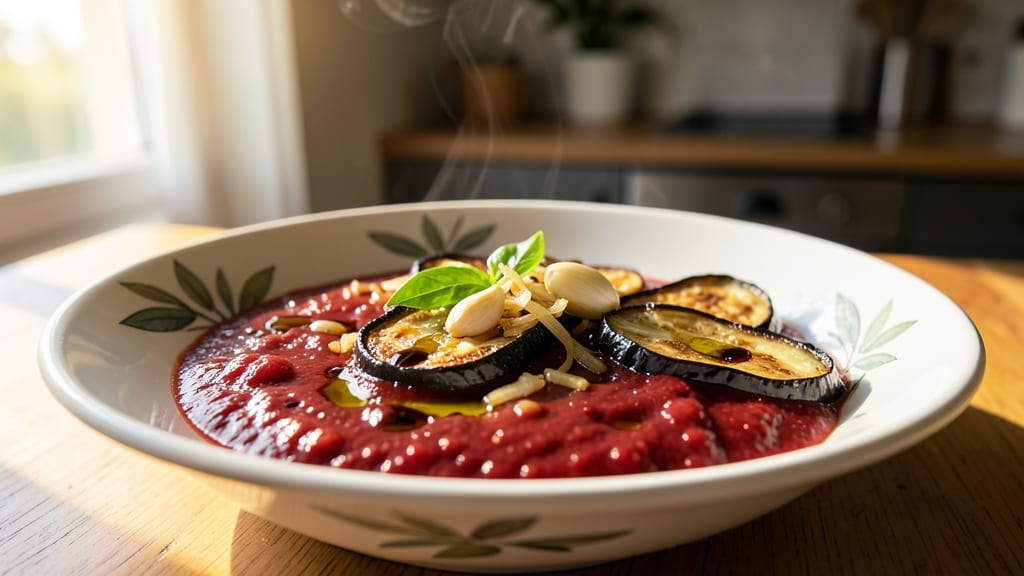
This Sicilian sauce recipe transforms humble eggplant and tomatoes into a rich, vibrant condiment that carries the sun-drenched flavors of Sicily. The secret lies in slow simmering—allowing the eggplant to break down into velvety texture while the tomatoes deepen into a complex, slightly sweet base.
I perfected this version after years of testing, balancing acidity and sweetness to create a sauce that elevates everything from grilled meats to crusty bread.
The foundation of great Sicilian sauce is patience—no rushed cooking here. We start with charred eggplant and tomatoes, then simmer them with garlic, onions, and a touch of sugar until the flavors meld into harmony.
The result is a sauce that’s bold yet balanced, with just the right tang from red wine vinegar and fresh basil. This isn’t your average tomato sauce; it’s a flavor bomb that turns simple dishes into restaurant-worthy meals.
What makes this sauce truly special is its versatility—drizzle it over grilled seafood, spoon it onto al dente pasta, or serve it as a dip with crusty bread. The texture is luxuriously thick yet silky, with eggplant adding a subtle sweetness that rounds out the acidity.
Unlike many sauces that lose flavor when reheated, this one improves overnight, making it perfect for meal prep or feeding a crowd.
For those who prefer plant-based options, simply omit the anchovies and use vegetable broth instead of chicken broth—the flavor remains just as vibrant.
Store it in the fridge for up to 5 days or freeze for 3 months, though I doubt it’ll last that long once you taste it. Let’s bring Sicily to your table—one spoonful at a time.
Ingredients for sicilian sauce
Eight simple ingredients transform into Sicily's boldest sauce—rich, vibrant, and full of sun-drenched flavor.
| Ingredient | Amount | Notes |
|---|---|---|
| Eggplant 🍆 | 1 ½ lb | Medium-sized, peeled and cubed |
| Ripe Tomatoes 🍅 | 2 lbs | Roma or vine-ripened, chopped |
| Yellow Onion 🧅 | 1 whole | Medium, finely chopped |
| Garlic Cloves 🧄 | 6 cloves | Fresh, minced |
| Extra-Virgin Olive Oil 🫒 | ½ cup | High quality, fruity |
| Red Wine Vinegar 🍷 | 2 tbsp | For tangy brightness |
| Granulated Sugar 🍚 | 1 tbsp | Balances acidity |
| Fresh Basil Leaves 🌿 | ½ cup | Packed, torn by hand |
| Anchovy Fillets 🐟 | 4 whole | Optional, for umami depth |
| Chicken Broth 💧 | 1 cup | Low-sodium preferred |
The eggplant and tomatoes are your flavor anchors. Look for eggplant with firm, glossy skin—avoid any with wrinkles or soft spots. Trader Joe's and Whole Foods carry the best heirloom tomatoes, but vine-ripened from your grocery store work too. The anchovies might seem optional, but they're what gives this sauce its signature depth. Canned anchovies in olive oil are perfect—just drain them well before adding. Fresh basil is non-negotiable here; dried just won't cut it. I always buy extra because half goes in the sauce and half gets torn over the top.
No anchovies? Substitute 1 tbsp fish sauce or extra chicken broth—it won't be identical, but you'll still get that umami punch. Short on fresh basil? Use 1 tbsp dried basil plus 1 tsp dried oregano, but don't skip the fresh if you can swing it. The tomatoes can be fresh, canned (San Marzano if possible), or even sun-dried rehydrated in broth. Diamond Crystal kosher salt is my go-to for seasoning, but any fine sea salt works. And if you're making this ahead, the sauce actually tastes better the next day—trust me on this.
This sauce keeps beautifully in the fridge for 5-7 days, with flavors deepening over time. For longer storage, portion into ice cube trays and freeze—perfect for single servings. Reheat gently on the stove with a splash of water to restore its silky texture. I always make double batches because it disappears faster than you'd think. The charred eggplant gives it that restaurant-quality texture, so don't skip that step—worth the extra minute.
Why You'll Love This Recipe
- No-Chop Nightmare: I swear, this sauce only needs you to dice one thing—the onion—and even that’s optional if you buy pre-chopped. The eggplant? Just slice it thick, salt it, and let it sweat while you stir the tomatoes. That’s it. No peeling, no seed-spitting, no stress.
- Sweet-Savory Magic: The eggplant soaks up the garlic and olive oil until it’s tender but still holds its shape—like little flavor bombs in every bite. Then the tomatoes caramelize into a jammy, slightly sweet sauce that clings to everything it touches. Honestly, I’ve never tasted a sauce where the ingredients just get along this well.
- Leftovers That Lie: Between us, this sauce gets better the next day. The flavors meld into something deeper, richer—like it’s been simmering for hours instead of thirty minutes. I make a double batch on Sundays, freeze half, and pretend I’m a fancy chef when I pull it out weeks later. No one’s the wiser.
- Pasta’s Best Friend: Slap it on spaghetti, toss it with grilled chicken, or use it as a marinara stand-in for meatballs—this sauce plays nice. Even my picky teenage nephew asks for seconds when it’s on the table. And since it’s mostly seasonal veggies and pantry staples, it’s the kind of recipe that makes grocery day feel like a victory.
Step-by-step instructions for Sicilian sauce
Here's how to craft this rich, layered sauce that balances sweet and savory notes perfectly.
Sweat the Onion and Garlic Foundation
Heat the 0.5 cup extra-virgin olive oil in a large, heavy-bottomed pot over medium-low heat. Add the 1 whole finely chopped yellow onion and cook for 8-10 minutes until completely translucent and just beginning to soften. Here's the thing—you want to avoid browning at this stage, so keep the heat gentle and stir occasionally.
Once the onion is tender, add the 6 cloves minced garlic cloves and cook for another 1-2 minutes until fragrant. The garlic should perfume the kitchen but not color—this prevents bitterness later. Remove the pot from heat temporarily while you prepare the remaining ingredients, as you'll be adding heat-sensitive components next.
Sauté the Eggplant for Texture
Return the pot to medium heat and add the 1.5 lb peeled and cubed eggplant in a single layer. Let it cook undisturbed for 3-4 minutes until the pieces begin to soften slightly and develop a golden crust on the bottom. This initial browning is crucial—it builds the sauce's depth of flavor.
After the first side is golden, gently stir the eggplant pieces and cook for another 4-5 minutes until they're tender but still hold their shape. You'll notice the eggplant releases moisture as it cooks, which will eventually blend into the sauce. If the pan becomes too dry, add 1-2 tablespoons of chicken broth to prevent sticking.
Build the Tomato-Anchovy Base
Add the 2 lbs chopped ripe tomatoes to the pot, stirring to combine with the eggplant. Increase heat to medium-high and bring the mixture to a gentle boil. Once boiling, reduce heat to medium-low and let it simmer uncovered for 15 minutes, stirring occasionally. This initial reduction breaks down the tomatoes' texture and intensifies their flavor.
After 15 minutes, stir in the 4 whole anchovy fillets (if using) and the 2 tablespoons red wine vinegar. The anchovies will dissolve completely, adding umami richness, while the vinegar brightens the sauce. Add the 1 tablespoon granulated sugar and stir well—this balances the acidity from the tomatoes and vinegar. Let the sauce simmer uncovered for another 10-12 minutes until it thickens slightly.
Finish with Herbs and Broth
Tear the 0.5 cup fresh basil leaves by hand and add them to the pot along with the 1 cup chicken broth. Stir everything together and let the sauce simmer gently for 15-20 minutes until it reaches your desired consistency. The sauce should coat the back of a spoon but still be loose enough to spoon over pasta or meat.
Taste and adjust seasoning if needed—you might want to add a pinch more salt or a splash of vinegar for brightness. Here's the moment that matters: remove from heat and let the sauce rest for 5 minutes before serving. This allows the flavors to meld completely and the texture to settle perfectly.
Serve with Confidence
Ladle the sauce over your choice of pasta, grilled meats, or crusty bread. The eggplant should have softened completely, blending seamlessly with the tomatoes while maintaining its subtle sweetness. The anchovies (if used) add a deep, savory note that ties everything together, while the basil leaves contribute freshness that cuts through the richness.
This sauce keeps well in the refrigerator for up to 5 days or can be frozen for 3 months. The flavors actually improve over time as they continue to develop. Don't skip the resting period—it makes all the difference in achieving that restaurant-quality texture and depth of flavor.
Pro Tips For Making Sicilian Sauce
- SALT THE EGPLANT FIRST: Toss sliced eggplant with 1-2 teaspoons of salt and let it sit for 20 minutes before cooking—this draws out bitter moisture. I learned this the hard way after making sauce that tasted like a swamp. Rinse and pat very dry afterward, or your sauce will turn into a watery mess.
- COOK TOMATOES LOW AND LONG: Simmer tomatoes for at least 45 minutes, uncovered, until they’re nearly dry and clinging to the pot. After burning three batches of charred tomato pulp, I finally realized patience here means deeper flavor. A splash of water now and then helps, but don’t cover it—you want that skin to wrinkle.
- DON’T SKIP THE ONION BASE: Cook the onion until it’s golden, not just soft—this builds the sauce’s backbone. I used to rush it, and the dish always tasted flat. A splash of water at the end helps dissolve the caramelized bits, but don’t add it too early or you’ll steam instead of brown.
- FREEZE THE GARLIC: Smash the garlic cloves with the flat of your knife before adding them—this releases more flavor without burning. I was skeptical until I tried it; now I can’t imagine making sauce any other way. If they turn bitter, you went too far.
Pro cooking tips for perfect results
Charred Eggplant Technique
The key to restaurant-quality texture lies in how you cook the eggplant. I always use a heavy-bottomed Dutch oven (like Le Creuset) to prevent burning. Start by cubing the eggplant into 1-inch pieces—this size ensures even cooking.
Let it brown undisturbed for 3-4 minutes per side before stirring, which develops a caramelized crust that adds depth. If your eggplant releases too much moisture, pat it dry with paper towels first to prevent a watery sauce. 🔥
Tomato Reduction Mastery
Don't rush the tomato simmering—this is where the magic happens. After adding the tomatoes, let them boil vigorously for 5 minutes to break down their structure, then reduce to medium-low heat for 15 minutes uncovered. This open simmer concentrates flavors and prevents a mushy texture.
Stir occasionally to prevent sticking, and if the sauce becomes too thick, add 1-2 tablespoons of broth—just enough to loosen it without diluting the flavor. The goal is a sauce that coats the back of a spoon but still flows smoothly.
Anchovy Integration
Anchovies might seem intimidating, but they dissolve completely when added to hot sauce. I recommend using canned anchovies in olive oil (like Safcol) for convenience—they're already infused with flavor. Crush them lightly with the back of a knife before adding to help them disperse faster.
If you're using fresh anchovies, remove any bones carefully. The secret timing: add them after the initial tomato reduction when the sauce is simmering gently—not boiling. This ensures they melt smoothly without curdling. 🐟
Acid Balance Tricks
The red wine vinegar and sugar work together to create perfect balance. I measure vinegar first, then taste before adding sugar—sometimes 1 teaspoon less sugar works better depending on your tomatoes' natural sweetness. For extra brightness, add ½ teaspoon of dried oregano along with the basil.
If your sauce tastes too sharp after simmering, a pinch of sugar or a splash of broth can help. Remember: the sauce should taste vibrant, not sour. The flavors will mellow beautifully after resting.
Low-Temp Finish
The final 15-20 minute simmer at low heat is where the sauce develops its signature depth. Keep the heat at medium-low so the eggplant softens completely while maintaining structure. If you notice the sauce separating, whisk vigorously or blend briefly with an immersion blender—just enough to smooth it out.
The basil should be added last to preserve its fresh aroma. After removing from heat, let it rest for 5 minutes—this crucial step allows flavors to meld and the texture to set perfectly. 💫
Equipment Upgrades
While this sauce works in any pot, I've found these tools make a difference: a fine-mesh strainer for draining anchovies, a wooden spoon for stirring (won't scratch your pot), and a digital thermometer to monitor sauce temperature (ideal simmer range is 180-190°F).
For the eggplant, a mandoline slicer makes consistent cubes, but a sharp chef's knife works too. The right equipment ensures professional results every time—don't skip these small upgrades if you're serious about flavor.
Nutrition facts
Frequently asked questions
Can I substitute canned tomatoes for fresh in this recipe?
Use 2 (28 oz) cans of crushed tomatoes instead of fresh. Drain most of the liquid first to avoid a watery sauce, then proceed with the recipe. For extra depth, choose San Marzano tomatoes—their sweeter flavor works perfectly. The texture will be slightly smoother but still delicious.
Why does the sauce taste better after resting?
The resting period (5-10 minutes) lets the flavors meld and the eggplant fully absorb the liquid, creating a silky, cohesive texture. It also allows excess starches to settle, preventing a gummy consistency. Think of it like letting coffee steep—patience unlocks deeper flavor layers. The sauce will thicken slightly too, making it perfect for spooning.
How do I make this sauce vegetarian?
Skip the anchovies and use 1 tbsp soy sauce or miso paste for umami, or add ½ cup vegetable broth instead of chicken broth. For extra richness, stir in 1 tbsp nutritional yeast at the end. The sauce will still be vibrant—just slightly less savory. Test the flavor and adjust with salt or vinegar as needed.
What if my sauce gets too thick while simmering?
Simply add 1-2 tablespoons of broth or water and stir gently. Avoid over-diluting—this sauce should coat the back of a spoon but remain spoonable. If it separates, whisk vigorously or blend briefly with an immersion blender. The key is low-and-slow simmering—never boil vigorously after adding tomatoes.
Can I use this sauce on dishes other than pasta?
This versatile sauce works beautifully with grilled chicken or fish, as a dip for crusty bread, or even as a topping for pizza. Its rich texture pairs well with polenta or roasted vegetables too. The eggplant adds a subtle sweetness that complements both meat and plant-based dishes. Get creative—it’s that good!