
Snacks
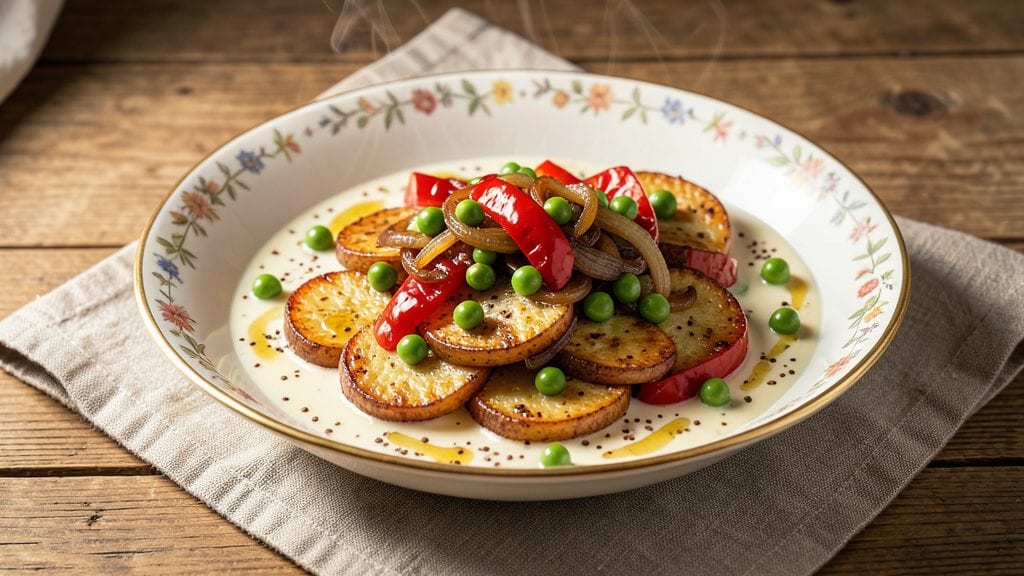
This vegetarian Veg Maharani recipe transforms humble potatoes and peas into a creamy, velvety delight that captures the essence of North Indian comfort food. The secret lies in slow-cooked gravy, where onions caramelize into sweet richness and coconut milk lends its signature creaminess—no dairy required.
I developed this version after years of perfecting the balance between spice and sweetness, ensuring every bite delivers that restaurant-quality texture without the fuss.
The recipe begins with whole spices that bloom in hot oil, releasing their aromatic magic before onions take center stage. Potatoes are added early to cook through gently, while peas join later to retain their bright green color and crisp bite.
A splash of lemon juice at the end brightens the dish, cutting through the richness while preserving that creamy coconut base that makes this dish irresistible.
What you’ll end up with is a luxuriously smooth curry that pairs beautifully with warm rotis, buttery naan, or steamed basmati rice. The potatoes emerge tender yet firm, coated in a sauce that’s perfectly balanced—spiced just enough to warm the palate, sweet enough to satisfy, and creamy enough to linger.
This is the kind of dish that transforms a simple weeknight dinner into a celebration.
For those who love to experiment, you can easily adjust the spice level or swap in other vegetables like cauliflower or carrots. The technique remains the same: patience in cooking and precision in seasoning.
Let’s bring this creamy coconut and peas delight to your table—it’s simpler than you think, but the results are anything but ordinary.
Ingredients for veg maharani
Pantry staples meet North Indian magic for this creamy coconut and peas delight.
| Ingredient | Amount | Notes |
|---|---|---|
| Yellow Onions 🧅 | 2 whole | Finely chopped for caramelization |
| Russet Potatoes 🥔 | 2 lb | Medium-sized, peeled and cubed |
| Fresh Peas 🌱 | 1 ½ cups | Frozen works if fresh unavailable |
| Coconut Milk 🥥 | 1 can | Full-fat for creaminess (13.5 oz) |
| Ginger 🌿 | 1 tbsp | Freshly grated, not powdered |
| Garlic Cloves 🧄 | 6 cloves | Minced for aromatic base |
| Green Chilies 🌶️ | 2 whole | Slit lengthwise for gentle heat |
| Garam Masala Powder 🌶️ | 1 ½ tsp | Freshly ground preferred |
| Turmeric Powder 🌿 | ½ tsp | Bright yellow color |
| Cumin Seeds 🌿 | ½ tbsp | Toasted for deeper flavor |
| Vegetable Oil 🫒 | ½ cup | High smoke point preferred |
| Lemon Juice 🍋 | 1 tbsp | Freshly squeezed |
| Salt 🧂 | 1 tsp | Adjust to taste |
| Fresh Coriander Leaves 🌿 | ¼ cup | Chopped for garnish |
The coconut milk is non-negotiable—full-fat only for that velvety texture. Thai Kitchen or Goya brands work perfectly, but if you're feeling fancy, grab the canned organic version from Whole Foods. The potatoes should be medium-sized—Russets or Yukon Golds hold up best to slow cooking. Fresh peas are ideal, but frozen works in a pinch (just don't overcook them). For the garam masala, MTR Foods or Patanjali are solid choices if you're buying pre-mixed, but freshly ground blends of cinnamon, cardamom, and cloves take it to the next level.
No fresh ginger? Powdered works at half the amount, but you'll lose that bright zing. The green chilies can be swapped for red chilies or cayenne at one-third the amount—just adjust the heat to your taste. Short on garam masala? Mix 1/4 tsp each of cinnamon, cardamom, and cumin as a quick substitute. The cumin seeds? Toast them in the oil first—that's where the magic happens. If you're using frozen peas, add them only at the end to keep them vibrant. And for the love of curry, don't skip the lemon juice—it's what cuts through all that richness.
This reheats beautifully—just add a splash of water or coconut milk to loosen it up. Keeps for 4-5 days in the fridge, 3 months frozen. I always make a double batch because it's one of those dishes that tastes even better the next day. Store in airtight containers with a layer of oil on top to preserve that creamy texture. And if you've got leftovers, it makes an incredible filling for veggie wraps or a quick filling for samosas.
Why You'll Love This Recipe
- One-Pot Magic: I swear by this recipe when I’m too tired to wash a million dishes. The potatoes, peas, and onions all simmer together in the same pot—no chopping chaos, just a single pan that smells like heaven by the end. Between us, that’s my kind of cooking.
- Creamy Without Guilt: The coconut milk turns this dish into something rich and velvety, but it’s not heavy like some curries. That ginger kick? It cuts through the creaminess just enough to keep it bright and satisfying—like a hug in a bowl, but one that won’t make you regret it later.
- Lunchbox Hero: Honestly, this is my go-to for meal prep. The flavors only get better the next day, and it reheats like a dream. Pack it in containers for work or school lunches—your future self will thank you when you’re craving something warm but don’t want to cook.
- Budget Stretch: Russet potatoes and frozen peas (if fresh aren’t in season) keep costs low, and a can of coconut milk goes a long way. I’ve made this feed six people for under $10—proof that comfort food doesn’t have to break the bank. Plus, leftovers taste just as good cold, so it’s basically free money.
Step-by-step instructions for Veg Maharani recipe
Here's how to create this rich, velvety coconut and pea curry with perfectly balanced spices.
Sauté Aromatics in Vegetable Oil
Heat the 0.5 cup vegetable oil in a large, heavy-bottomed pot over medium heat. Add the 0.5 tbsp cumin seeds and let them sizzle for 30 seconds until they turn golden brown and release their nutty aroma. This is your signal to move quickly.
Add the 2 whole green chilies, slit lengthwise, and let them fry for 1 minute until they soften slightly. Then add the 2 whole yellow onions, finely chopped, and cook for 5-6 minutes until they turn translucent and begin to caramelize. Stir occasionally to prevent burning. The onions should develop a deep golden color and sweet aroma—this builds the flavor foundation for your dish.
Add Spices and Potatoes
Lower the heat to medium-low and add the 1 tbsp freshly grated ginger and 6 cloves garlic cloves, minced. Sauté for 2 minutes until the raw garlic smell disappears and they turn golden. This ensures you capture all their aromatic compounds.
Next, add the 0.5 tsp turmeric powder and 1.5 tsp garam masala powder, stirring constantly for 30 seconds to toast the spices gently. This step awakens their flavors. Immediately add the 2 lb russet potatoes, peeled and cubed, and stir to coat them evenly with the spice mixture. Pour in 1 cup water and bring to a gentle simmer. Cover and cook for 12-15 minutes until the potatoes are 80% tender and the water has reduced by half. You'll know they're ready when they pierce easily with a fork but still have a slight resistance in the center.
Incorporate Peas and Coconut Milk
Add the 1.5 cups fresh peas (or frozen, thawed) and stir gently to distribute them evenly. Pour in the 1 can coconut milk, ensuring it's fully-fat for that luscious creaminess. Bring the mixture to a gentle simmer and cook uncovered for 8-10 minutes on medium heat. You want the sauce to thicken slightly while the peas soften but retain their shape—overcooking will turn them mushy.
Taste and adjust seasoning with the 1 tsp salt. The dish should be well-seasoned but not overly salty. Here's the thing—coconut milk can mask flavors, so taste as you go. If the sauce feels too thick, add 2-3 tablespoons water to reach your desired consistency. The final texture should be creamy yet spoonable, not watery.
Finish with Lemon Juice and Garnish
Remove the pot from heat and stir in the 1 tbsp freshly squeezed lemon juice. This brightens the flavors and cuts through the richness of the coconut milk. Let the dish sit off the heat for 2 minutes to allow the lemon juice to meld with the other ingredients.
Garnish with the 0.25 cup chopped fresh coriander leaves just before serving. The coriander adds a fresh, herbal note that balances the creamy coconut and warm spices. Serve hot with steamed basmati rice or naan bread for the perfect meal. The dish should have a rich, velvety texture with a perfect balance of sweet peas, spiced potatoes, and aromatic coconut milk.
Pro Tips For Making Veg Maharani
- Parboil Potatoes First: Toss your Russet potatoes in boiling water for 3-4 minutes before adding them to the coconut milk—this keeps them from turning to mush later. I learned this the hard way after one batch collapsed into a sad, watery mess.
- Sauté Onions Low and Slow: Don’t rush the onions—they’re the flavor base. Cook them on medium-low for 8-10 minutes until deep golden, not browned. After burning three batches, I finally figured out patience pays off here.
- Use Frozen Peas (But Toast Them): Frozen peas work fine, but give them a quick 30-second dry toast in the pan after the potatoes soften. It crisps them slightly and adds texture—no one wants mushy peas in this dish.
- Temper the Coconut Milk: Warm the coconut milk separately before mixing it in—cold milk can shock the potatoes and make them watery. Pour it in slowly while stirring, or you’ll regret the gloopy consistency later.
Perfect pairings for these flavors
Bread Pairings
This creamy coconut curry pairs beautifully with warm, soft breads that soak up the rich sauce. I love serving it with homemade garlic naan, brushed with melted ghee and sprinkled with garlic powder—the buttery richness contrasts perfectly with the coconut's tang.
For a lighter option, try tandoori roti or missi roti from your local Indian grocery; their subtle sweetness balances the dish's earthy spices. 🥖
Rice Combinations
For a complete meal, pair your Veg Maharani with steamed basmati rice—its delicate grains complement the creamy texture without overpowering. I often cook 1 cup basmati rice with 1.5 cups water and a pinch of salt, letting it rest for 10 minutes after cooking for fluffier texture.
For extra indulgence, try jeera rice (cumin-infused) or biryani-style rice with saffron and fried onions. The rice should be slightly undercooked to absorb the sauce perfectly.
Side Dish Ideas
Add a fresh, crunchy element to balance the creamy curry with a simple cucumber raita. Mix 1 cup grated cucumber with 2 tbsp yogurt, ½ tsp roasted cumin powder, and a squeeze of lemon.
Another great option is boondi raita, where crispy chickpea flour beads float in a yogurt-coriander sauce. For a heartier side, serve aloo tikki (spiced potato patties) or dal tadka to round out the meal. 🥗
Drink Pairings
A cool, refreshing mango lassi is my go-to drink with this dish—its sweetness and creaminess mirror the curry's flavors while cleansing the palate. For a non-dairy option, try nimbu pani (Indian lemonade) with a pinch of roasted cumin powder and black salt.
If you prefer something stronger, a light lager like Kingfisher or a dry Riesling cuts through the richness without competing. Avoid heavy wines or dark beers that could overwhelm the delicate coconut notes. 🍹
Garnish Upgrades
Elevate your dish with toasted coconut flakes for added texture—sprinkle 1 tbsp just before serving for a tropical touch. Crispy fried onions add a sweet crunch that contrasts beautifully with the creamy sauce.
For a smoky flavor, finish with a pinch of chaat masala or smoked paprika. These garnishes not only enhance flavor but also make your dish look restaurant-worthy. ✨
Nutrition facts
Frequently asked questions about Veg Maharani
Can I make this dish without coconut milk?
The coconut milk is essential for that signature creamy texture, but you can substitute ½ cup heavy cream plus ½ cup water for a similar richness. For a dairy-free alternative, use cashew cream (blend soaked cashews with water) or extra tomato puree (¼ cup) to balance the flavors. The dish will still be delicious, though the coconut's unique aroma will be missing.
How do I adjust the spice level for picky eaters?
Reduce the green chilies to 1 whole (or remove them entirely) and cut the garam masala to 1 tsp. For extra mildness, add 1 extra tbsp coconut milk at the end to mellow the spices. Always taste as you go—you can add more salt or lemon juice to enhance flavor without heat. The potatoes and peas will still provide natural sweetness to balance any remaining spice.
Why did my Veg Maharani turn out too thick?
This usually happens when the coconut milk reduces too much or the potatoes release excess starch. Thin with 2-3 tbsp warm water or a splash of coconut milk while stirring gently. For prevention, cook the potatoes until 80% tender (not fully soft) and reduce the initial water to ¾ cup. The sauce should coat the back of a spoon but still be pourable.
Can I use frozen peas instead of fresh?
Use 1.5 cups frozen peas (thawed) and add them only in the last 5 minutes of cooking to prevent mushiness. If using frozen, skip the initial water reduction step—the peas will release moisture as they cook. For best results, pat them dry before adding to avoid excess liquid in your sauce.
What's the best way to reheat leftovers?
Gently reheat on low heat with 1-2 tbsp water or coconut milk to restore creaminess. Avoid microwaving—it can make the sauce grainy. For extra indulgence, stir in 1 tsp ghee before serving to revive the rich flavors. Store in airtight containers with a layer of oil on top to prevent drying out.