
Side Dishes
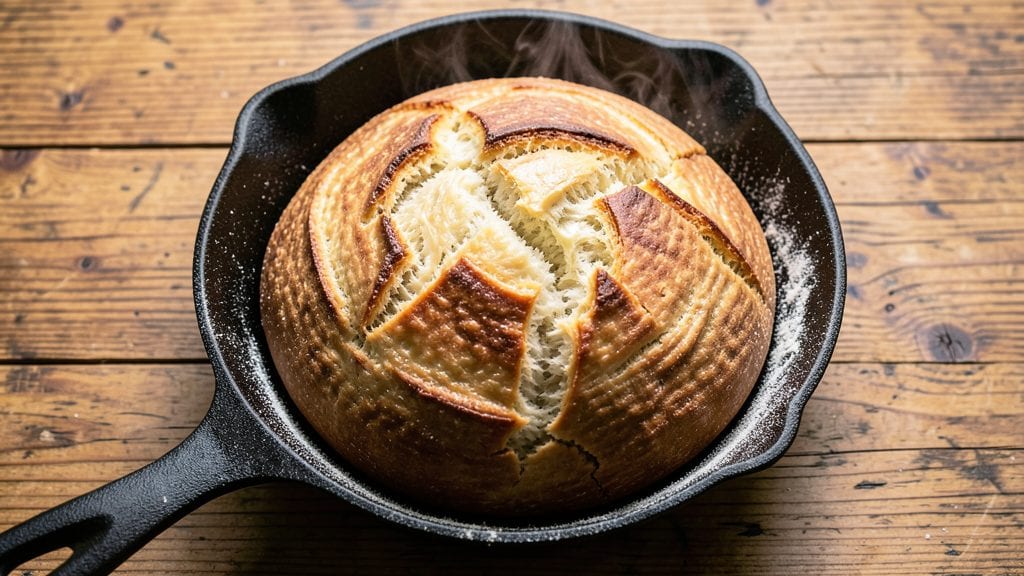
The Amish Country Bread recipe brings the warmth of a Pennsylvania farmhouse to your kitchen table, where every slice tells a story of tradition and simplicity. This bread delivers a crusty exterior with a soft, open crumb inside—perfect for soaking up gravy or serving alongside a hearty stew.
I've perfected this recipe over years of baking, using just a few simple ingredients and a method that honors its heritage.
What sets this bread apart is its no-knead technique, which allows the dough to develop naturally over time, creating that signature rustic texture. The secret lies in letting the dough rise slowly in the refrigerator, which enhances the flavor and makes the bread easier to handle.
Whether you're baking for a family gathering or just want a taste of homestyle comfort, this recipe is designed to deliver consistent results.
By the time it emerges from the oven, you'll have a loaf with a deep golden crust and a tender, airy interior—just like the bread you'd find at an Amish market.
The aroma alone will fill your home with nostalgia, and the taste is pure, unadulterated comfort. This is bread that feels like a hug, made with love and patience.
For those who want to explore further, variations include adding seeds or herbs to the dough, or even using a sourdough starter for an even more traditional touch. Let's get started on creating this timeless recipe that brings a piece of Amish country to your kitchen.
Ingredients for amish country bread
Nine simple ingredients, one timeless loaf—this is the bread that brings Amish farmhouse warmth to your kitchen.
| Ingredient | Amount | Notes |
|---|---|---|
| All-Purpose Flour 🌾 | 4 cups | Spooned and leveled, not scooped |
| Active Dry Yeast 🍞 | ¼ tsp | Fresh or 1 packet (2.25 tsp) |
| Granulated Sugar 🍚 | 1 tbsp | White or light brown |
| Salt 🧂 | 1 tsp | Kosher or sea salt |
| Unsalted Butter 🧈 | ½ cup | Cold, cubed, full-fat |
| Warm Water 💧 | 1 ½ cups | 110°F, not boiling |
| Cornmeal 🌽 | ¼ cup | For dusting loaf pan |
| Coarse Sea Salt 🧂 | ½ tsp | For sprinkling crust |
| Sesame Seeds 🌻 | 1 tbsp | Optional, for topping |
Flour is the backbone here, so King Arthur or Gold Medal are my go-tos—they bake up beautifully. The yeast? Fresh is best if you can find it, but those little packets work fine. Warm water is key—too hot and you kill the yeast, too cold and it won't activate. I keep a thermometer handy to check it's exactly 110°F. For the butter, Land O'Lakes or Plugrah are reliable brands, but any full-fat butter will do. The salt matters too—use Morton kosher or a flaky sea salt for that authentic taste. Grab a 9x5-inch loaf pan if you want the classic shape, but Dutch ovens work too for a rustic look.
No cornmeal? Semolina or all-purpose flour works in a pinch—just make sure your pan is well-coated. Running short on sesame seeds? Poppy seeds or everything bagel seasoning add a nice touch. The butter can be softened slightly if you're in a hurry, but cold cubes melt slower for that perfect crust. No thermometer? Test the water with your wrist—it should feel warm, not hot. The sugar can be swapped for honey or maple syrup if you prefer, but keep it to the same amount. For a heartier bread, add 1/2 cup whole wheat flour to the mix.
This dough is forgiving—it can chill in the fridge for up to 48 hours if you want to bake tomorrow. For the best crust, bake it straight from the fridge. The bread keeps well wrapped at room temp for 3 days or frozen for 3 months. I like to slice it fresh and toast it—nothing beats that crunchy crust with soft inside. Store leftovers in a bread bag or wrapped in a towel to keep it fresh longer. The aroma alone will make your kitchen smell like a Pennsylvania farmhouse.
Why You'll Love This Recipe
- No-Knead, No-Fuss Dough: I’ll be honest—this dough takes zero effort. Just mix the flour, yeast, sugar, and butter, let it rise overnight, then bake. That’s it. My lazy Sunday mornings just got a whole lot better.
- Buttery Crust, Soft Core: The cold butter baked right into the crust gives it that golden, flaky magic, while the inside stays pillowy. Honestly? It tastes like a bakery loaf, but I made it.
- Weeknight Workhorse: This bread is my go-to for sandwiches, toast, or even French toast. Freeze half the batch, and you’ve got a quick breakfast for days. (Yes, even on a Tuesday night.)
- Pantry Staple, Pocket-Friendly: Five ingredients, all basic. The yeast and butter might be the priciest, but they stretch far—one batch feeds a family, and leftovers last forever. Budget win.
Step-by-step instructions for homestyle Amish country bread
Here's how to bake that perfect rustic loaf with a crisp crust and tender crumb—just like from the Amish kitchens.
Activate the Yeast and Mix the Dough
In a large bowl, combine 1.5 cups warm water, 1 tbsp granulated sugar, and 0.25 tsp active dry yeast. Let it sit for 5-10 minutes until frothy—this means your yeast is alive and ready to work. If it doesn't bubble, your yeast might be dead, and you'll need to start over.
Once bubbly, add 4 cups all-purpose flour and 1 tsp salt. Mix with a wooden spoon until a shaggy dough forms. Then, cut in 0.5 cup cold unsalted butter using a pastry cutter or your fingers. The butter should be in small pea-sized pieces—this creates those delicious pockets of flavor in the finished bread.
Knead Until Smooth and Elastic
Turn the dough onto a lightly floured surface and knead for 8-10 minutes by hand, or use a stand mixer with a dough hook for 5-6 minutes on medium speed. You're looking for a smooth, elastic dough that springs back when poked. If it feels sticky, add just enough flour to make it workable—don't overdo it or your bread will be dense.
Here's the thing—Amish bread gets its signature texture from proper kneading. The dough should feel slightly tacky but not wet, and it should pull away cleanly from the surface. If it sticks too much, you've added too much flour. Cover the bowl with a damp towel and let it rise in a warm place for 1 hour or until doubled in size.
Shape and Let Rise Again
Punch down the risen dough to release air, then turn it out onto a lightly floured surface. Gently shape it into a 9x5-inch loaf pan by folding the edges inward. The dough should fill the pan about 2/3 full—it will rise as it bakes. Sprinkle 0.25 cup cornmeal in the bottom of the pan first to prevent sticking.
Let the shaped dough rise again for 30-45 minutes until it's just about to overflow the pan. Preheat your oven to 375°F while it rises. This second rise is crucial—it develops that light, airy texture you want in Amish bread. If your kitchen isn't warm enough, place the dough near the oven (but not too close) to help it rise faster.
Bake to Golden Perfection
Brush the top of the dough with a little water, then sprinkle 0.5 tsp coarse sea salt evenly over the surface. This creates that beautiful crust and adds flavor. Bake for 35-40 minutes until the bread is deep golden brown and sounds hollow when tapped on the bottom. If the top browns too quickly, tent it loosely with foil after 20 minutes to prevent over-browning.
For that classic Amish touch, sprinkle 1 tbsp sesame seeds over the top right after removing it from the oven. The seeds will toast slightly and add a nutty crunch. Let the bread cool in the pan for 10 minutes, then transfer to a wire rack to cool completely before slicing—this prevents a gummy texture.
Pro Tips For Making Amish Country Bread
- Use Warm Butter: Straight from the fridge, butter won’t melt properly in the dough—it’ll just sit there like a stubborn lump. Warm it to about 90°F (or until it’s soft but not liquid), then mix it into the flour. Your bread will rise better and develop that classic tender crumb.
- Measure Yeast Precisely: That little ¼ teaspoon of sugar mixed with the yeast? Don’t eyeball it. Too much sugar feeds the yeast too fast, and it’ll fizz out before the dough even gets going. Use a scale or a proper measuring spoon—no guesswork.
- Let Dough Rest Fully: I used to punch down the dough once and think I was done. Wrong. After the first rise, let it sit another 10–15 minutes before shaping. This relaxes the gluten so it doesn’t snap back and fight you when you fold it. Your bread will be softer, not chewy.
- Skip the Overmixing: Once you add the yeast mixture to the flour, stir just until combined. Overmixing develops too much gluten, and your bread turns out dense instead of light. A few lumps are fine—don’t stress about perfection.
Dietary considerations for this amish country bread
Gluten-Free Adaptation
To make this bread gluten-free, replace the 4 cups all-purpose flour with a 1:1 gluten-free flour blend like King Arthur Measure for Measure or Bob's Red Mill 1-to-1. Add 1 tsp xanthan gum to help bind the dough since gluten-free flours lack elasticity.
Use 1 extra tbsp water as gluten-free dough tends to be drier. Let it rest 10 minutes after mixing to hydrate fully before kneading.
The texture will be slightly denser, so bake at 350°F instead of 375°F to prevent over-browning. Brush the crust with olive oil instead of water for extra moisture. Cool completely before slicing—gluten-free bread is more fragile when warm. 🌾
Dairy-Free Version
For a dairy-free twist, swap the ½ cup cold butter with ½ cup dairy-free butter like Miyoko's or Earth Balance. Alternatively, use ½ cup coconut oil (solid) for a neutral flavor.
The dough will be slightly softer, so chill it 30 minutes before shaping to make handling easier. The crust may lack richness, so brush it with melted dairy-free butter after baking.
Add 1 tbsp flaxseed meal mixed with 3 tbsp water to the dough for extra binding and a nutty flavor. This works especially well if you're also making the gluten-free version. The bread will keep for 2 days in the fridge due to the higher oil content. ❄️
Low-Carb Keto Option
Transform this into a keto-friendly loaf by omitting all flour and using 2 cups almond flour (finely ground) plus 1 cup coconut flour. Replace the yeast with 1 tbsp psyllium husk powder mixed with ¼ cup water—this acts as a binder and replaces gluten.
The dough will be very thick, so don't overmix. Bake in a 9x5-inch loaf pan at 325°F for 50-60 minutes until the internal temp reaches 200°F.
Add 2 tbsp erythritol or monk fruit sweetener to the dough for a touch of sweetness. The texture will be more cake-like than traditional bread, so slice it thicker.
Store in an airtight container with silica gel packets to prevent moisture absorption. This version keeps for 5 days at room temperature. 💪
Allergen-Free Notes
For nut allergies, use sunflower seed flour instead of almond flour in the keto version. Double-check all ingredients—some gluten-free blends contain oats or soy. If avoiding sesame seeds, try pumpkin seeds or toasted cumin for topping.
Always use separate utensils and surfaces if cross-contamination is a concern. I keep a dedicated gluten-free baking kit with its own measuring cups and mixing bowls.
The yeast in this recipe is naturally gluten-free, but some brands process in shared facilities. Look for certified gluten-free yeast like Red Star Gluten-Free Yeast.
For soy allergies, ensure your butter is soy-free (most are, but check labels). When in doubt, I reach out to manufacturers—they're usually happy to clarify. 💡
Nutrition facts
Frequently asked questions
Why does Amish bread have such a thick crust compared to regular bread?
The signature crust comes from the no-knead technique and slow rise in the refrigerator, which develops complex flavors and creates that perfect golden-brown exterior. The butter also contributes to a richer crust when baked at 375°F with a water brush and salt sprinkle. This method mimics traditional wood-fired ovens used in Amish kitchens.
Can I make this bread without a loaf pan?
Shape the dough into a round or oval and bake it on a baking sheet lined with parchment paper. For extra rustic texture, bake in a Dutch oven for 40-45 minutes at 375°F. Just reduce the baking time by about 5-10 minutes compared to the pan method. The crust will be even crunchier!
What's the best way to store leftover Amish bread?
Wrap the cooled loaf in a clean kitchen towel or place it in a paper bag at room temperature for up to 3 days. For longer storage, slice and freeze individual portions on a tray before transferring to a ziplock bag. Toast directly from frozen for maximum freshness. The towel method helps maintain moisture better than plastic.
Why did my bread turn out dense instead of light and airy?
Dense bread usually means one of three things: over-kneading (which develops too much gluten), under-proofing (not enough rise time), or too much flour added during mixing. Try this fix: reduce kneading to 5-6 minutes in a mixer or 8 minutes by hand, ensure both rises reach full volume (doubled size), and measure flour by spooning and leveling. The butter should also be cold when mixed in.
Can I substitute honey for the sugar in this recipe?
Yes! Replace the 1 tbsp granulated sugar with 1 tbsp honey or 1 tbsp maple syrup. The dough will be slightly stickier, so add 1 extra tbsp flour if needed. Honey adds subtle floral notes that pair beautifully with the buttery crust. Just note that honey may slightly darken the crust during baking.