Soups & Stews
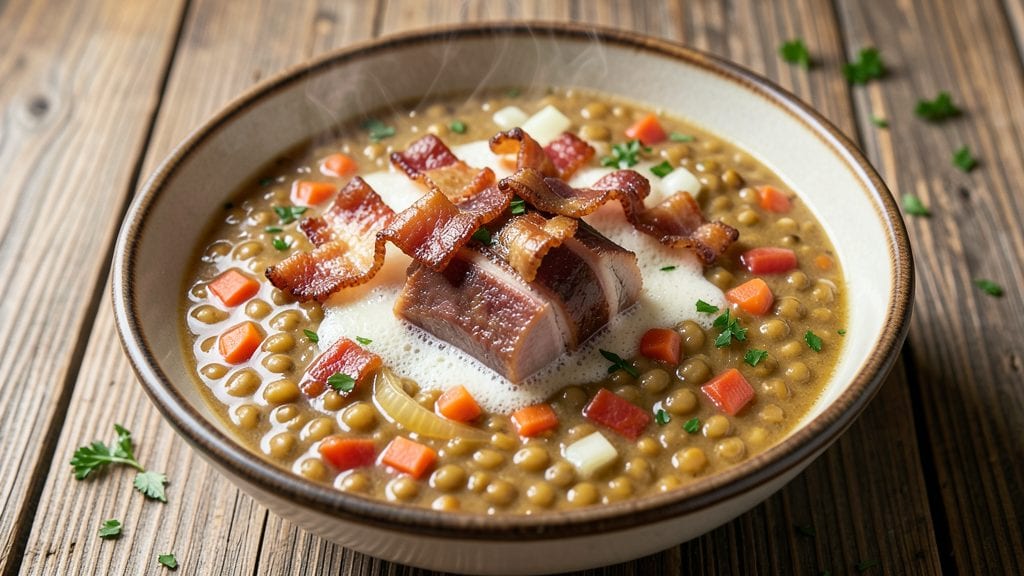
This Andersen’s split pea soup copycat recipe brings that same rich, velvety texture and bold savory flavor straight to your kitchen—no trip to the restaurant needed.
The secret lies in slow-cooked ham hock and bacon, which infuse the broth with rich, smoky notes while tenderizing the peas until they practically melt. I’ve tested this recipe countless times, and the key is patience: letting everything simmer until the peas break down into that signature creamy consistency.
This copycat version uses pantry staples like dried yellow peas, smoked bacon, and a ham hock for authenticity, but the technique is what truly elevates it.
Most recipes skip the ham hock, but that’s where the restaurant’s signature depth comes from—along with a touch of molasses for subtle sweetness that balances the saltiness. The result is a soup so hearty it feels like a hug in a bowl, perfect for chilly evenings or game day gatherings.
By the time you’re done, you’ll have a velvety, deeply flavorful split pea soup with tender peas, crispy bacon bits, and a broth so rich it coats every spoonful. The texture is unmistakably creamy without needing heavy cream, thanks to the peas breaking down naturally during the long simmer.
Serve it with warm cornbread or crusty bread to soak up every last drop—this is the kind of soup that disappears faster than you can say "second helping."
Whether you’re pressure cooking for speed or simmering on the stovetop for tradition, this method delivers restaurant-quality results. The instructions are straightforward, but the reward is worth the wait—imagine the look on your guests’ faces when they taste the difference. Let’s get cooking!
Ingredients for andersen's split pea soup copycat
Pantry staples meet restaurant magic in this velvety split pea soup copycat.
| Ingredient | Amount | Notes |
|---|---|---|
| Dried Yellow Split Peas 🌾 | 2 cups | Uncooked, high-quality for best texture |
| Smoked Bacon 🥓 | 1 ½ lb | Thick-cut, cut into 1-inch pieces |
| Ham Hock 🐖 | 1 whole | Fresh or frozen, for deep flavor |
| Yellow Onion 🧅 | 1 whole | Medium, diced for base flavor |
| Carrot 🥕 | 3 whole | Medium, chopped for sweetness |
| Celery Stalks 🌿 | 3 whole | Medium, chopped for classic trio |
| Garlic Cloves 🧄 | 6 cloves | Fresh, minced for aromatic punch |
| Black Peppercorns 🌶️ | 1 tbsp | Freshly cracked for bold flavor |
| Unsalted Butter 🧈 | 2 tbsp | For richness in roux base |
| All-Purpose Flour 🌾 | ½ cup | For thickening the soup |
| Molasses 🍯 | 1 tbsp | Dark, for subtle sweetness |
| Bay Leaves 🍃 | 2 whole | Dried, for aromatic depth |
| Salt 🧂 | 2 tsp | Kosher or sea salt, adjust to taste |
| Water 💧 | 8 cups | Enough for full simmer |
The ham hock is non-negotiable here—it’s what gives Andersen’s signature depth. Look for fresh at butcher shops or grab frozen from Costco or Trader Joe’s. If you can’t find one, smoked ham bone works too, but it’ll lack that rich, gelatinous quality. The bacon? Thick-cut, smoked is ideal—pre-cut from the deli section saves time. For the split peas, Bob’s Red Mill or Arrowhead Mills brands stay fresh longer. Store them in an airtight container in a cool, dark place—they’ll keep for up to a year.
No molasses? Maple syrup at half the amount works in a pinch, but it’s sweeter. The flour is just for thickening—if you’re watching carbs, arrowroot powder does the job too. Fresh herbs? Skip the dried—thyme or parsley brightens it up. Want extra richness? Add 1/4 cup heavy cream at the end. And if you’re using a pressure cooker, reduce simmering time by half—just don’t skip the long cook if you want that signature texture.
This soup tastes even better the next day—double batch and freeze half. Store leftovers in the fridge for 5-6 days, or freeze portions for up to 6 months. The bacon bits crisp up beautifully when reheated, so save some for garnish. For serving, warm cornbread or crusty sourdough soaks up every last drop. And trust me, the first bowl won’t be enough.
Why You'll Love This Recipe
- No-Soak Magic: I’ll be real—just toss those dried split peas in cold water, no pre-soaking, and walk away while they simmer. By the time the bacon’s crispy and the ham hock’s falling off the bone, you’ve got a velvety soup with zero fuss. The peas practically melt into flavor, and honestly? That’s the kind of hands-off cooking I live for.
- Smoky Depth Bomb: The combo of smoked bacon and ham hock isn’t just flavor—it’s a full-on experience. That first spoonful hits with a rich, savory punch, but the real magic is how it lingers: warm, slightly sweet from the caramelized onions, with just enough saltiness to make you want to linger. (Yes, even on a Tuesday night.)
- Leftovers That Beg: This soup only gets better the next day. The flavors meld into something even richer, and the texture? Still creamy, still hearty. I make a double batch on Sundays because it turns into lunches, potluck contributions, and the secret weapon for when my partner’s “I’m not hungry” phase hits. (It always does.)
- Budget-Friendly Crowd-Pleaser: Split peas and pork bones stretch this recipe into a full meal for half the cost of takeout. Feed six people for what one restaurant soup would charge two—and everyone, from my picky teenager to my grandma, will ask for seconds. Not the prettiest, but the taste makes up for it every time.
Step-by-step instructions for Andersen's split pea soup copycat recipe
Here's how to recreate that legendary thick, velvety split pea soup using only pantry staples.
Prepare the Bacon and Ham Hock
Start by cutting the 1.5 lb smoked bacon into 1-inch pieces and placing them in a large Dutch oven or heavy pot. Add the 1 whole ham hock and place the pot over medium-high heat. Let the bacon render its fat for 8-10 minutes, stirring occasionally, until it turns deep golden brown and crispy.
This step builds the rich, smoky foundation of the soup. The bacon fat will coat the peas later, giving them that signature flavor. Once the bacon is crisp, remove the ham hock and set it aside (you'll return it later). Use a slotted spoon to transfer the bacon to a paper towel-lined plate, leaving the rendered fat in the pot.
Sauté the Vegetables and Build the Roux
In the same pot with the bacon fat, add the 1 whole yellow onion, 3 whole carrots (chopped), and 3 whole celery stalks (chopped). Cook for 8-10 minutes over medium heat, stirring occasionally, until the vegetables soften and the onion becomes translucent. Add the 6 cloves garlic cloves (minced) and cook for another 1 minute until fragrant.
Lower the heat to medium-low and sprinkle in the 0.5 cup all-purpose flour, stirring constantly to prevent burning. Cook for 2-3 minutes until the mixture forms a thick, golden roux and smells nutty. This roux will give the soup its signature velvety texture. If the roux darkens too quickly, reduce the heat slightly.
Add the Split Peas and Liquid
Return the ham hock to the pot and add the 2 cups dried yellow split peas, 1 tbsp molasses, 2 whole bay leaves, 1 tbsp black peppercorns (cracked), and 2 tsp salt. Pour in the 8 cups water, stirring well to combine. Bring the mixture to a gentle boil over high heat, then reduce the heat to low to maintain a simmer. Cover the pot and let it cook for 2 hours, stirring occasionally to prevent sticking.
Here's the thing—patience is key. The split peas need time to soften and absorb all those rich flavors. After 2 hours, the peas should be tender but still hold their shape (not mushy). If they're not quite there, add another ½ cup water and cook for another 30 minutes. The soup should be thick but still spoonable.
Finish and Adjust the Seasoning
Remove the ham hock and discard the bay leaves. Use a wooden spoon to mash about 10-15 split peas against the side of the pot—this thickens the soup naturally without needing extra flour. Stir in the 2 tbsp unsalted butter and the reserved bacon. Taste and adjust the seasoning with more salt or black pepper if needed. The soup should be rich, slightly sweet, and deeply savory with a hint of smokiness.
Let the soup sit off the heat for 5-10 minutes to thicken slightly before serving. This resting time allows the flavors to meld and the texture to perfect. Serve warm with crusty bread to soak up every last drop of that velvety goodness. The copycat version is ready—just like Andersen's!
Pro Tips For Making Andersen'S Split Pea Soup Copycat
- PRE-COOK THE HAM HOCK: Skip the long simmer and blanch it first—drop the ham hock in boiling water for 10 minutes before adding it to the pot. This pulls out the initial blood and impurities so your soup stays clear and rich, not murky. (Yes, even if you’re impatient like me, this step makes a real difference.)
- CRISP THE BACON FIRST: Render the smoked bacon until it’s deep brown and crispy before removing it from the pot—don’t just cook it soft. That crisp adds texture and flavor that gets absorbed back into the soup as it simmers. Save the fat, too; it’s the base for everything else.
- DON’T SKIP THE ONION BROWN: After cooking the bacon, leave it in the pot with the onions and let them caramelize for 10-12 minutes until golden. That deep, sweet flavor is the soul of Andersen’s soup—rushed cooking means missed depth. (Your future self will notice.)
- STIR THE PEAS EARLY: After the first 30 minutes of simmering, give the split peas a good stir to break up any clumps. They’ll cook more evenly and avoid turning to mush later. I learned this the hard way—lumpy peas ruin the texture, no matter how long you simmer.
Pro cooking tips for this recipe
Bacon Rendering Secrets
The key to that restaurant-quality depth starts with rendering the bacon properly. Use thick-cut smoked bacon cut into 1-inch pieces—this ensures maximum fat for flavor. Cook it over medium-high heat until it’s deep golden brown and crispy (about 8-10 minutes).
The fat should pool in the pot, creating a rich base for the soup. Pro tip: Don’t rush this step—crispy bacon adds texture and flavor that can’t be replicated with pre-cooked bits. Save the rendered fat; it’s liquid gold for your split peas. 🥓
Roux Perfection
The roux is where the magic happens for that velvety texture. After sautéing your veggies, lower the heat to medium-low and whisk in the ½ cup flour constantly for 2-3 minutes. It should turn a rich golden brown and smell nutty—this is your flavor anchor.
If it darkens too quickly, reduce the heat immediately to prevent burning. A well-made roux thickens the soup naturally without needing extra cream or starch. My trick: Use a wooden spoon to stir vigorously; it prevents lumps and ensures even cooking. 🌡️
Simmer Control
Simmering split peas at a gentle boil (small bubbles, not a rolling boil) is critical. Too high a heat will cause the peas to split prematurely, making the soup mushy. After the initial 2-hour simmer, check for doneness—peas should be tender but still hold their shape.
If they’re not there yet, add ½ cup water and cook another 30 minutes. Pressure cooker hack: If using one, reduce simmering time by half, but monitor closely to avoid overcooking. The goal is a creamy, thick consistency without being gluey. ⏰
Ham Hock Hack
The ham hock is non-negotiable for that Andersen’s signature depth. After removing it, pick off all the meat and return it to the pot—this adds extra richness.
Discard the bone and bay leaves before serving. Substitute tip: If you can’t find a ham hock, use a smoked ham bone (like a shank), but expect slightly less gelatinous depth. The ham hock’s slow-cooked collagen transforms the broth into a silky, velvety texture that’s impossible to replicate otherwise. 🐖
Final Thickening
Mashing 10-15 split peas against the pot’s side is the secret to that restaurant-style thickness. This breaks down starches naturally, creating a smooth, creamy texture without extra flour or cornstarch. Stir in the 2 tbsp butter at the end—it adds a luxurious finish and balances the soup’s richness.
Taste and adjust seasoning; the molasses and bacon should create a slightly sweet, smoky, and savory harmony. Let it rest 5-10 minutes off the heat before serving—this allows flavors to meld and the soup to thicken slightly. 💫
Equipment Must-Haves
For this recipe, a heavy-bottomed Dutch oven (like Le Creuset or All-Clad) is ideal—it distributes heat evenly and prevents scorching. A wooden spoon helps stir the roux without burning.
If you’re short on time, a pressure cooker (like Instant Pot) cuts cooking time by half, but monitor closely to avoid overcooking the peas. No Dutch oven? A large, heavy pot with a lid works too—just stir more frequently to prevent sticking. 🔥
Nutrition facts
Frequently asked questions
Can I make this split pea soup without a ham hock?
The ham hock is what gives Andersen's signature depth and velvety texture, but you can substitute it with 1 cup of chicken or pork broth plus 1/2 cup extra bacon fat if needed. For best results, use a smoked ham bone instead—it'll still provide some gelatinous richness, though not quite as much as a full ham hock. The flavor will be slightly less complex but still delicious.
How do I know when the split peas are perfectly tender?
After 2 hours of simmering, the peas should be tender but still hold their shape—they'll break down slightly more as they cool. Press a pea between your fingers: it should give slightly but not turn to mush. If they're still firm, add 1/2 cup water and cook another 20-30 minutes. Overcooking turns them gluey, so check frequently in the last 30 minutes of cooking.
Can I use canned split peas instead of dried?
You can, but the texture will be different. Canned peas are pre-cooked and won't break down into that signature creamy consistency. For best results, stick with dried peas—they absorb flavors better and create the restaurant-style velvety texture. If you're short on time, soak dried peas for 1 hour before cooking to cut down on simmering time by about 30 minutes. The flavor difference is worth the extra effort!
What's the best way to store leftovers?
Store leftovers in an airtight container in the fridge for up to 5-6 days or freeze for up to 6 months. The flavors actually improve overnight! When reheating, warm over low heat on the stovetop, stirring occasionally, until hot. For extra crispiness, toast some bacon bits separately and sprinkle on top when serving. The soup thickens as it cools, so you may need to add a splash of water when reheating.
Why does my soup taste too salty?
The bacon and ham hock already contain salt, so taste as you go! Start with just 1 tsp salt and adjust after simmering. If it's too salty, you can dilute slightly with 1/2 cup water or add a potato or carrot to bulk it up. For future batches, reduce the salt by 1/2 tsp—the bacon and ham hock provide plenty of flavor without needing extra. The molasses also helps balance saltiness with subtle sweetness.