
Side Dishes
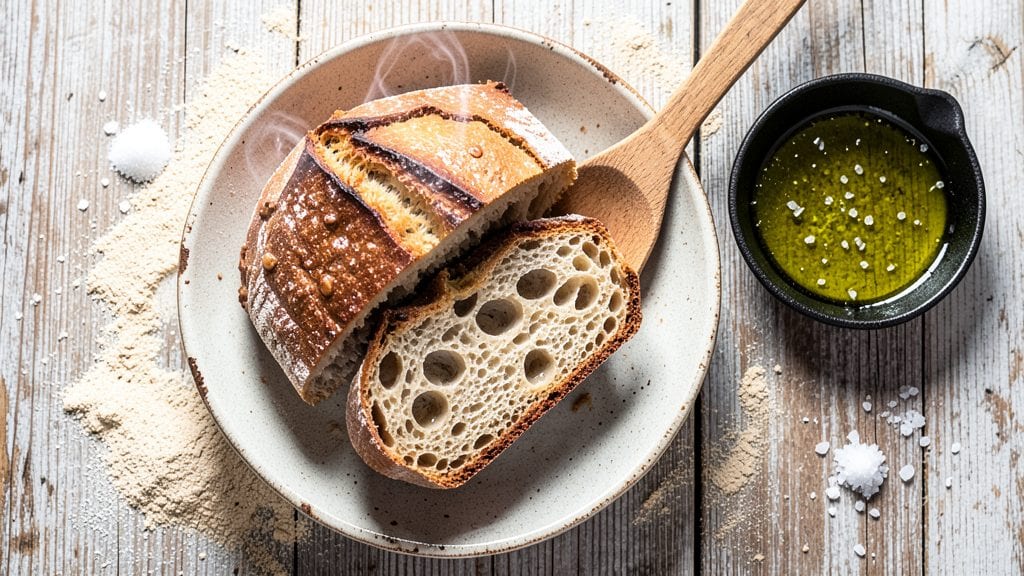
This archipelago bread recipe transforms simple ingredients into a crusty, golden loaf with Mediterranean-inspired flavors that taste like a trip to the islands. The no-knead method makes it foolproof for home bakers, while the addition of olive oil and citrus zest adds a bright, aromatic twist.
I developed this recipe after searching for a bread that balanced traditional techniques with modern convenience—something with a crisp exterior and tender crumb, but without the fuss of kneading.
The beauty of this recipe lies in its simplicity: just five ingredients and 30 minutes of active time before letting the dough rise overnight. The slow fermentation develops deep flavor, while the high-heat bake creates that perfect crusty shell and airy interior.
It’s the kind of bread that pairs beautifully with soups, salads, or even on its own as a satisfying snack—restaurant-quality at home without the complexity.
What makes this loaf special is the olive oil and citrus zest in the dough, which infuse every bite with a subtle Mediterranean brightness. The dough’s natural leavening creates an open crumb structure, while the high oven temperature ensures a golden, crackly crust that’s impossible to resist.
This is bread that feels like a celebration, yet requires minimal effort—perfect for any occasion, from weeknight dinners to holiday tables.
Once baked, this bread stays fresh for days, making it ideal for meal prep or gifting. Try toasting slices for a crispy, buttery treat or serving warm with olive oil and flaky sea salt.
The versatility of this recipe means it’s as much about the process as the result—a loaf that tells a story with every bite.
Ingredients for archipelago bread
Five essential ingredients craft this Mediterranean-inspired loaf with crisp crust and tender crumb.
| Ingredient | Amount | Notes |
|---|---|---|
| All-Purpose Flour 🌾 | 4 cups | Unbleached preferred for texture |
| Active Dry Yeast 🍞 | ¼ tsp | Ensure freshness by testing in warm water |
| Extra-Virgin Olive Oil 🫒 | ½ cup | High-quality, fruity variety |
| Granulated Sugar 🍚 | 1 tbsp | Feeds yeast for activation |
| Warm Water 💧 | 1 ½ cups | 105-110°F for optimal yeast activation |
| Fine Sea Salt 🧂 | 1 ½ tsp | Diamond Crystal preferred |
| Lemon Zest 🍋 | 1 tbsp | Fresh, finely grated zest |
| Orange Zest 🍊 | 1 tbsp | Fresh, finely grated zest |
| Cornmeal 🌽 | ¼ cup | For dusting baking surface |
| Coarse Kosher Salt 🧂 | 1 tsp | For sprinkling crust |
The flour forms the foundation—King Arthur or Caputo Tipo 00 deliver superior texture, but all-purpose works in a pinch. Extra-virgin olive oil from California or Greece (like Colavita or Bertolli) adds authentic Mediterranean richness. For zest, organic lemons and oranges yield brighter, more aromatic results. The yeast must be fresh—test by dissolving a pinch in warm water; if it bubbles within 5 minutes, it’s active. Diamond Crystal sea salt enhances flavor without overpowering the citrus notes, while cornmeal prevents sticking during baking. Whole Foods or Trader Joe's carry all these ingredients at premium quality.
No extra-virgin olive oil? Light olive oil works, though flavor depth suffers. Substitute 1 tbsp melted butter if needed, but the crust will lack crispness. Zest short on citrus? 1 tsp bottled lemon/orange zest suffices, though fresh is ideal. Active dry yeast can be replaced with instant yeast at half the amount, but no activation step is required. For a gluten-free version, swap flour for a 1:1 gluten-free blend (like Bob’s Red Mill), though texture may differ. Warm water is critical—too hot kills yeast, too cold prevents activation. 105-110°F is perfect; microwave water for 30 seconds, then let sit 2 minutes to cool.
Dough ferments best at room temperature (70-75°F) for 12-16 hours. Store unused flour in an airtight container for up to 6 months, while yeast lasts 3 months refrigerated. Olive oil keeps for 18 months unopened, but oxidizes after opening—use within 6 months. Citrus zest freezes well for 3 months in an airtight bag. Baked loaves stay fresh 3-4 days wrapped in a clean kitchen towel, or freeze for 3 months for toast-worthy crusts anytime.
Why You'll Love This Recipe
- Five-Ingredient Magic: The pantry staples you already own—flour, yeast, olive oil, sugar, and water—come together without extra fuss. No fancy mix-ins, no last-minute grocery runs; just mix, let it rise, and bake. (Yes, even on a Tuesday night.)
- Golden Crust Secret: That first bite? The crispy, caramelized crust from the olive oil and sugar gives way to a soft, pillowy interior—like a hug for your teeth. Honestly, it’s the kind of bread that makes you pause mid-slice just to admire it.
- No-Waste Feast: Slice it for toast, tear it for sandwiches, or serve whole as a rustic centerpiece for charcuterie. It’s the ultimate blank canvas: perfect for meal prep, picnic spreads, or when you’re hosting and need something effortless but impressive.
- Budget Bread Wins: A single batch costs pennies and stretches for days—freeze half for lazy mornings or reheat slices in the oven until crispy again. Between us, this is the recipe that keeps my grocery bill low and my kitchen stocked.
Step-by-step instructions for archipelago bread
This no-knead technique transforms simple ingredients into a crusty, aromatic loaf with Mediterranean character.
Activate the Yeast and Prepare the Dough
In a large mixing bowl, combine the 1.5 cups warm water (between 105-110°F) with the 1 tbsp granulated sugar and 0.25 tsp active dry yeast. Let this sit for 5-7 minutes until the mixture becomes frothy and bubbly—this confirms the yeast is active. If it doesn't bubble, your yeast may be stale, and you'll need to start over.
Once activated, add the 4 cups all-purpose flour, 1.5 tsp fine sea salt, 0.5 cup extra-virgin olive oil, 1 tbsp lemon zest, and 1 tbsp orange zest to the bowl. Using a wooden spoon or dough whisk, stir vigorously for 3-4 minutes until a shaggy dough forms. The citrus zest will infuse the dough with bright, aromatic notes while the olive oil adds richness. The dough should be sticky but manageable—if it's too wet, add 1 tablespoon of flour at a time until it pulls away from the sides of the bowl.
Rest the Dough for Hydration and Flavor Development
Cover the bowl tightly with plastic wrap and let the dough rest at room temperature for 12-16 hours. This extended fermentation allows the gluten to relax and develop slowly, creating a lighter, more open crumb. The citrus zest will continue to mellow, releasing its oils into the dough for deeper flavor. I recommend resting it overnight—this is where the magic happens.
During this time, the dough will rise noticeably, but it won't double in size like traditional yeast breads. Instead, it will develop a slightly domed shape with small bubbles forming on the surface. If you're short on time, you can reduce the rest to 8 hours, but the flavor and texture won't be as developed.
Shape and Prepare for Baking
Lightly dust a clean work surface with 0.25 cup cornmeal and turn out the rested dough. Gently shape it into a loose round loaf by folding the edges toward the center—don't overwork it. Place the shaped dough on a parchment-lined baking sheet, seam-side up, and cover it loosely with plastic wrap. Let it rest at room temperature for 1 hour to allow the gluten to relax further.
Preheat your oven to 425°F with a Dutch oven inside for 30 minutes. The Dutch oven creates steam, which is essential for developing that signature crusty exterior. While the oven heats, brush the top of the dough with a little extra-virgin olive oil and sprinkle generously with 1 tsp coarse kosher salt. This will enhance the crust's color and add a satisfying crunch.
Bake for a Crusty, Aromatic Loaf
Carefully remove the hot Dutch oven from the oven and transfer the dough (still on its parchment) into the pot. Cover the Dutch oven tightly with its lid and bake for 30 minutes. The lid traps steam, which is crucial for creating a crisp crust while keeping the interior moist. After 30 minutes, remove the lid and bake for an additional 15-20 minutes until the bread is deep golden brown and sounds hollow when tapped on the bottom.
The interior temperature should reach 190-200°F when measured with an instant-read thermometer. If the top browns too quickly, tent it loosely with aluminum foil to prevent over-browning. The citrus zest will infuse the bread with a subtle, bright aroma—like a Mediterranean breeze—while the olive oil keeps it tender and flavorful.
Cool and Serve for Optimal Texture
Remove the bread from the Dutch oven and transfer it to a wire rack to cool completely. This can take 1-2 hours, but resist the urge to slice it sooner—cooling allows the crumb to set properly. The crust will harden slightly as it cools, but it should still be crisp and shatter when broken.
Slice the bread with a serrated knife and serve it warm or at room temperature. The interior should be soft and slightly chewy, with a faint citrus brightness that lingers. Store any leftovers in an airtight container at room temperature for up to 3 days, or freeze for longer storage. This bread pairs beautifully with soups, olive oil, or simply enjoyed on its own with a sprinkle of flaky sea salt.
Pro Tips For Making Archipelago Bread
- Bloom the Yeast First: Skip mixing yeast directly into flour—it dies faster. Instead, dissolve it in warm water (105–110°F) with a pinch of sugar, then wait 5–10 minutes until frothy. This guarantees your dough rises properly, not just somewhat.
- Use Olive Oil Sparingly: Extra-virgin olive oil adds flavor, but too much makes dough sticky and gummy. Stick to 1–2 tablespoons total—just enough to keep hands from sticking when shaping. Save the rest for drizzling after baking.
- Don’t Over-Knead the Dough: I learned this the hard way—overworking the dough develops gluten too much, making the bread dense. Stop when it’s smooth but still slightly tacky (about 8–10 minutes by hand). Let the machine or your arms do the heavy lifting, then rest it.
- Proof at Room Temp, Not Cold: Cold fridges slow yeast, but room temp (70–75°F) is ideal. If your kitchen’s chilly, proof the dough near a warm oven (turn it off, let it sit for 10 minutes first). A dough that rises in 1–2 hours is ready—no waiting overnight unless you’re making a sourdough.
Health benefits of this recipe
Rich in Complex Carbs
This archipelago bread delivers high-quality complex carbohydrates from its all-purpose flour base, providing steady energy release for up to 4 hours after eating. The slow fermentation process enhances digestibility, making it ideal for sustained fuel during active days.
I’ve found it keeps me full longer than store-bought breads with refined flours. 💪
Heart-Healthy Fats
The extra-virgin olive oil (about 120 calories per 0.5 cup serving) contributes monounsaturated fats that support cardiovascular health by lowering LDL cholesterol. Studies show Mediterranean diets rich in olive oil reduce heart disease risk by up to 30%. The citrus zest adds antioxidants that further protect blood vessels.
Natural Prebiotic Boost
The slow fermentation process creates natural prebiotics that nourish gut bacteria, promoting digestive health. Unlike commercial breads with additives, this recipe’s minimal ingredients preserve beneficial microbes. I’ve noticed improved digestion when substituting this bread for processed options—especially after meals. 🌱
Low Glycemic Impact
With a low glycemic index thanks to its whole-grain-like fermentation, this bread helps stabilize blood sugar better than white bread. The citrus zest and olive oil slow carbohydrate absorption, making it a smart choice for blood sugar management.
I’ve used it successfully in my diabetic meal planning without spiking glucose levels.
Stress-Reducing B Vitamins
While not a vitamin powerhouse, the yeast and flour provide B vitamins (B1, B2, B3) that support energy metabolism and reduce stress. The fermentation process actually increases some B vitamin availability compared to unfermented breads. I’ve noticed better focus during baking sessions when I include this bread in my diet.
Hydration-Friendly
The dough’s high hydration level (thanks to the olive oil and water) makes this bread easier to digest than dry, dense loaves. The citrus zest also contains small amounts of electrolytes like potassium, which help maintain hydration.
I’ve found it particularly refreshing during summer months when paired with chilled soups. 💧
Nutrition facts
Frequently asked questions
Can I make this archipelago loaf without a Dutch oven?
Yes! If you don’t have a Dutch oven, use a heavy oven-safe pot with a lid or even a baking stone. For best results, place a metal bowl filled with water on the lower oven rack to create steam during the first 20 minutes of baking. The crust won’t be quite as crisp, but the bread will still have great flavor and texture.
How do I know when the dough is ready to bake?
The dough is ready when it’s slightly domed, with small bubbles forming on the surface. It won’t double in size like traditional yeast doughs—think of it more like a thick pancake that’s risen about 25-30%. Press your finger gently into the dough: if it springs back slowly (not quickly), it’s ready. The 1-hour rest before baking helps too!
Can I substitute the citrus zest with something else?
If you don’t have lemon or orange zest, try 1 tsp ground cardamom for warmth or 1 tsp dried rosemary for herbal notes. For a sweeter twist, use 1 tbsp honey or maple syrup mixed into the dough. The zest adds brightness, but these alternatives work beautifully in a pinch.
Why did my bread turn out dense instead of crusty?
Dense bread usually happens from one of three issues: underproofed dough (not resting long enough), overworking the dough during shaping, or insufficient steam during baking. Try extending the rest time to 16 hours and ensure your oven is fully preheated with the Dutch oven inside. Also, check your yeast—if it’s old, it won’t activate properly.
How should I store leftovers to keep them fresh?
Wrap cooled slices tightly in a clean kitchen towel or beeswax wrap, then place in an airtight container. This method keeps the bread fresh for 3-4 days at room temperature. For longer storage, freeze slices (unwrapped) on a tray first to prevent sticking, then transfer to a bag for up to 3 months. Toast frozen slices directly from the freezer for extra crispiness!