
Soups & Stews
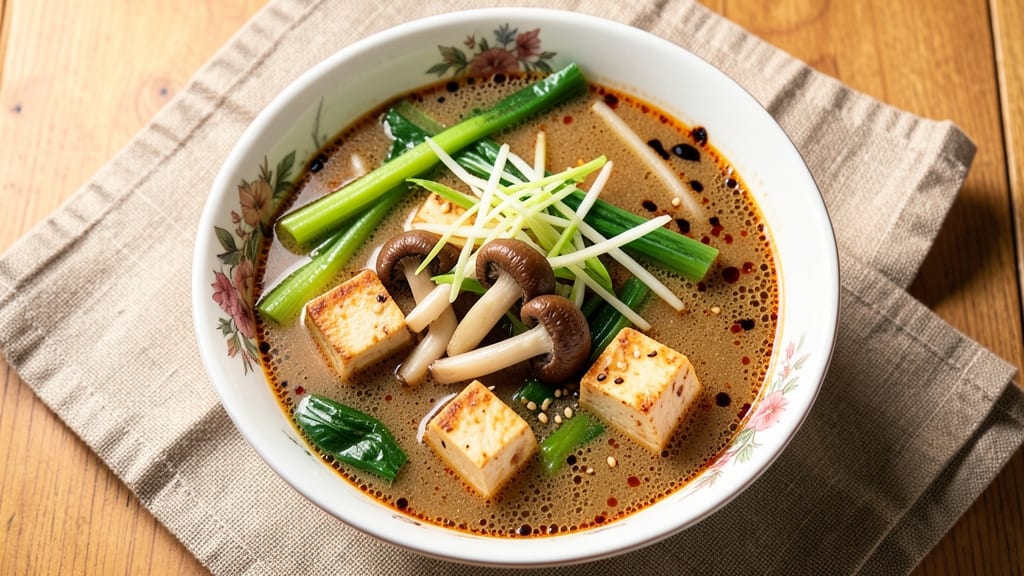
This authentic Chinese hot and sour soup recipe delivers the perfect balance of tangy, spicy, and umami flavors that make it a restaurant favorite. The secret lies in precise ingredient ratios and traditional techniques like slow simmering to develop deep flavor layers.
I've perfected this version after years of testing, ensuring every bowl delivers that signature harmony of vinegar's sharpness, chili oil's heat, and soy sauce's richness.
The soup's signature elements—silky egg ribbons, chewy tofu cubes, and tender mushrooms—come together through careful preparation. We'll start with a fragrant ginger-scallion base, then build the signature sour-spicy broth through precise measurements of black vinegar, chili oil, and soy sauce.
The egg drops are the showstopper, requiring gentle stirring to create those delicate ribbons that melt in your mouth.
What you'll achieve is a bowl of soup that's both comforting and complex—bright from the vinegar, aromatic from the mushrooms, and satisfying from the umami depth. The texture contrast between crispy tofu, tender mushrooms, and silky egg ribbons makes each spoonful irresistible.
This is the kind of soup that warms you from the inside out while exciting your taste buds.
While traditional recipes call for specific ingredient proportions, I've included adjustments for heat and sourness preferences without sacrificing authenticity. Whether you're serving this for a family dinner or a gathering with friends, the technique remains the same—just the ratios can adapt to your taste.
Let's create this restaurant-quality soup at home.
Ingredients for authentic chinese hot and sour soup
The soul of this soup lies in its precise balance of umami, tang, and heat—here's what brings it to life.
| Ingredient | Amount | Notes |
|---|---|---|
| Dried Shiitake Mushrooms 🍄 | ½ lb | Rehydrated in hot water |
| Bok Choy 🥬 | 2 whole | Baby variety preferred |
| Extra-Firm Tofu 🧇 | 1 lb | Pressed and cubed |
| Fresh Ginger Root 🧄 | 2 tbsp | Finely minced |
| Green Onions 🧅 | ½ cup | White and green parts |
| Black Vinegar 🍶 | ⅓ cup | Traditional Chinese |
| Light Soy Sauce 🥄 | ¼ cup | Kikkoman preferred |
| Dark Soy Sauce 🥄 | 1 tbsp | For depth of color |
| Chili Oil 🌶️ | 1 tbsp | Homemade or store-bought |
| Sesame Oil 🫒 | 1 tsp | Toasted for aroma |
| Cornstarch 🌾 | 1 tbsp | For egg ribbon clarity |
| Large Eggs 🥚 | 4 whole | Room temperature |
| Chicken Broth 💧 | 4 cups | Homemade or low-sodium |
| Salt 🧂 | 1 tsp | Diamond Crystal preferred |
| White Pepper 🌶️ | ¼ tsp | Freshly ground |
The mushrooms are non-negotiable for that deep umami foundation. Dried shiitake from an Asian market (like H Mart) has the most intense flavor—soak them in hot water for 20 minutes before using. Bok choy should be crisp with vibrant stems; Whole Foods often carries perfect baby bok choy in their produce section. Tofu needs pressing—wrap it in a towel, place a heavy pan on top for 15 minutes to remove excess water. The ginger should be fresh and fibrous, not waxy or shriveled. For the vinegar, Lee Kum Kee black vinegar is the gold standard, but any Chinese black vinegar will work.
No black vinegar? Substitute rice vinegar with an extra 1 tsp sugar to mimic the depth. Light soy sauce can be swapped for tamari if gluten-free, but the flavor will differ slightly. Chili oil missing? Mix 1 tsp chili flakes with 1 tsp neutral oil—not the same, but gets you close. Fresh ginger too strong? Use 1 tsp ground ginger instead, but it won't have the same aroma. The tofu can be substituted with firm white fish if you prefer seafood, but texture will change dramatically. For extra heat, add 1 tsp chili crisp at the end.
This soup tastes even better the next day as flavors meld. Store in airtight containers for up to 5 days—the egg ribbons will soften but still add texture. For freezing, omit the egg ribbons and tofu until reheating. The broth freezes beautifully for up to 3 months. To reheat, warm gently on low heat and add fresh egg ribbons just before serving. The tofu cubes can be pan-fried after reheating for a crispy texture contrast.
Why You'll Love This Recipe
- I swear by this trick: soak those dried shiitake mushrooms overnight, then just tear the rehydrated caps into the pot—no knife skills required. The tofu cubes? Toss them in whole, and they’ll absorb the broth like a sponge while you stir-fry the ginger and bok choy in the same pan.
- No-Chop Necessary: I swear by this trick: soak those dried shiitake mushrooms overnight, then just tear the rehydrated caps into the pot—no knife skills required. The tofu cubes? Toss them in whole, and they’ll absorb the broth like a sponge while you stir-fry the ginger and bok choy in the same pan.
- Umami Bomb: That first sip? Chef’s kiss. The shiitake mushrooms pack a deep, earthy punch, while the ginger and vinegar cut through with bright, tangy heat. The tofu soaks up all the flavor—crispy edges, creamy middle—like it’s been marinating for hours.
- Leftover Goldmine: This soup actually tastes better the next day. I double the batch on Sundays, and by Wednesday, it’s still rich and balanced—perfect for reheating with a splash of water or even freezing for those lazy nights when takeout feels like a chore.
Step-by-step instructions for authentic Chinese hot and sour soup
Here's how to balance bold umami flavors with delicate egg ribbons for a truly authentic result.
Rehydrate and Prepare the Shiitake Mushrooms
Begin by rehydrating the 0.5 lb dried shiitake mushrooms in 4 cups hot chicken broth for 20 minutes. The mushrooms should plump up significantly and become tender when pressed gently. Drain while reserving 1 cup of the soaking liquid—this concentrated umami broth will elevate your soup's depth.
Trim off and discard the tough stems, then slice the caps into ¼-inch thick pieces. Set aside. The reserved soaking liquid contains dissolved shiitake essence that commercial broths can't replicate—don't skip this step. If your mushrooms don't soften after 20 minutes, extend the soaking time by another 5 minutes, but no longer, or they'll turn mushy.
Press and Cube the Tofu
Wrap the 1 lb extra-firm tofu in a clean kitchen towel and place a heavy object like a cast-iron skillet on top for 15 minutes. This pressing removes excess moisture that would otherwise dilute your soup. After pressing, cut the tofu into 1-inch cubes—uniform size ensures even cooking and prevents some pieces from turning rubbery while others remain undercooked.
While pressing, prepare the remaining ingredients. Finely mince the 2 tbsp fresh ginger root using a microplane or sharp knife—you want the texture to resemble wet sand. Thinly slice the 2 whole bok choy lengthwise into quarters, keeping the stems attached. The ginger will add bright, aromatic heat that cuts through the richness of the tofu and mushrooms.
Build the Soup Base
Heat a large soup pot over medium-high heat and add 1 tbsp sesame oil. Once shimmering, add the minced ginger and stir for 30 seconds until fragrant—this releases its essential oils. Add the cubed tofu and cook for 3 minutes until lightly golden on all sides. Remove the tofu with a slotted spoon and set aside.
In the same pot, add the sliced shiitake mushrooms and cook for 2 minutes until they begin to soften. Pour in the 0.33 cup black vinegar and 0.25 cup light soy sauce, scraping up any browned bits from the bottom. This deglazing step captures all the flavor you've built so far. Add the 1 tbsp dark soy sauce for color depth and the reserved mushroom soaking liquid. Bring to a gentle simmer for 5 minutes to meld the flavors.
Create the Signature Egg Ribbons
In a small bowl, whisk together the 4 whole large eggs with 1 tbsp cornstarch and 0.25 tsp white pepper until completely smooth. The cornstarch creates the signature silky texture of hot and sour soup egg ribbons. Heat 1 cup of the soup base in a small saucepan until steaming but not boiling—you want 160°F internal temperature.
Slowly pour the egg mixture into the steaming broth while whisking constantly. Continue whisking for 1 minute until the mixture forms delicate, wavy ribbons that hold their shape when lifted with a spoon. This technique requires patience—if the eggs scramble, your soup will lose its elegant texture. The ribbons should be translucent with just a hint of set in the center.
Assemble and Finish the Soup
Return the tofu and egg ribbons to the pot with the remaining soup base. Add the 2 whole sliced bok choy and simmer for 3 minutes until the greens are vibrant but still crisp-tender. Stir in the 1 tbsp chili oil and 1 tsp salt, adjusting to taste—your soup should balance sour, spicy, salty, and umami flavors in every spoonful.
Garnish with the sliced 0.5 cup green onions, using both white and green parts for color contrast. Serve immediately in deep bowls, encouraging diners to slurp the soup through the wide green onion garnish—this traditional technique helps release more aroma. The soup should be steaming hot when served, with the egg ribbons maintaining their shape even after 5 minutes of sitting.
Pro Tips For Making Authentic Chinese Hot And Sour Soup
- SOAK SHIITAKES 30 MINUTES: Dried shiitakes are like sponges—toss them in hot water for 30 minutes first, not 10. I learned this the hard way when my soup tasted dull; the mushrooms need time to plump and release their umami punch. Swap the water twice if you’re impatient, but don’t skip the soak.
- CUT TOFU IN 1-INCH CUBES: Big chunks stay bland; small cubes get crispy edges. Aim for 1-inch pieces—any smaller and they’ll turn to mush, any larger and they’ll stay rubbery. Press the tofu first (wrap in a towel, weigh it down for 15 minutes), or your soup will taste like regret.
- ADD VINEGAR LAST: The acid kills the broth’s depth if you toss it in too early. Wait until the mushrooms and ginger have simmered for 5 minutes first—then stir in the vinegar. This keeps the soup bright and tangy, not sharp and sad.
- USE GINGER JUICE, NOT GRATED: Skip the grating—peel a thumb-sized knob, smash it with the flat side of your knife, then squeeze out the juice. The pulp clogs the soup and makes it bitter. A splash of this liquid gold (about 1 tablespoon) gives real heat without the texture fight.
Flavor customization for this dish
Spice Level Control
Adjust the heat to your preference by modifying the chili oil amount. For mild heat, use just ½ tsp and add an extra ½ tsp chili flakes for depth without direct spice.
If you love heat, increase to 2 tbsp chili oil and add 1 tsp chili crisp at the end. I recommend keeping the original 1 tbsp chili oil for authentic balance—it provides just enough heat to complement the sour and umami flavors without overpowering them. 🌶️
Sourness Balance
The black vinegar is the key to sourness, but you can tweak it based on your taste. For a more tangy soup, increase to 0.5 cup vinegar and reduce the soy sauce by 1 tbsp.
If you prefer less sourness, cut the vinegar to 0.25 cup and add 1 tsp sugar to mellow the acidity. I find 0.33 cup strikes the perfect balance—sharp enough to cut through the richness but not overpowering.
Umami Depth Adjustments
For extra umami richness, add 1 tbsp fish sauce or 1 tsp oyster sauce when assembling the soup. If you're vegetarian, substitute with 1 tsp mushroom powder or an additional ¼ cup reserved mushroom soaking liquid.
The shiitake mushrooms already provide deep umami, but these adjustments can elevate the flavor profile even further. I often add 1 tsp soy sauce extra if I want a more pronounced savory taste. 🍄
Texture Variations
Want crispier tofu? Pan-fry the pressed tofu cubes in 1 tbsp neutral oil until golden before adding them to the soup. For a creamier texture, blend ½ cup of the soup base with 2 tbsp coconut milk and stir it back in at the end.
The egg ribbons can also be adjusted—add ½ tsp sugar to the egg mixture for slightly sweeter, more delicate ribbons. These tweaks let you customize the texture while keeping the soup authentic. 🧇
Vegetarian Adaptations
Swap the chicken broth for a vegetable broth and use firm white fish or extra-firm tofu as the protein base. For added texture, include wood ear mushrooms or bamboo shoots.
The key is maintaining the umami balance—use 1 tsp vegetarian fish sauce or 1 tbsp soy sauce extra to compensate for the lack of animal-based broth. My vegetarian version uses shiitake mushrooms and bok choy as the primary umami sources. 🥬
Regional Style Twists
In Sichuan-style versions, add 1 tsp Sichuan peppercorns toasted and crushed for a numbing spice. For a Cantonese twist, reduce the vinegar to 0.25 cup and add 1 tsp honey to soften the sourness.
In Hong Kong-style soups, you'll often find dried shrimp or preserved radish for extra complexity. Each regional style keeps the core hot-and-sour balance but adds unique local flavors. 🗺️
Nutrition facts
Frequently asked questions
Why does my hot and sour soup taste too salty?
The balance comes from the interplay of vinegar, soy sauce, and chili oil. If it's too salty, reduce the soy sauce by ½ tsp and add ½ tsp sugar to mellow the saltiness. The black vinegar should be the dominant sour note—if you cut soy sauce too much, the soup will taste flat. Taste as you go and adjust gradually.
Can I make this soup without eggs?
Yes! Replace the egg ribbons with silken tofu cubes (½ cup) or soft tofu skin (if available). For texture, try thinly sliced wood ear mushrooms or glass noodles cooked until tender. The key is maintaining the soup's silky mouthfeel—these alternatives won't replicate egg ribbons exactly but add satisfying texture.
How do I prevent the egg ribbons from scrambling?
Keep the soup base at 160°F (not boiling) when adding eggs, and whisk constantly for 1 minute after pouring. Use a heatproof bowl that sits directly in the pot to maintain even temperature. If your eggs scramble, try whisking the egg mixture with ½ tsp sugar first—this helps stabilize the proteins. Patience is key!
What's the best way to store leftovers?
Store in airtight containers for up to 5 days in the fridge. The broth and mushrooms stay fresh, but the egg ribbons will soften. Reheat gently and add fresh egg ribbons just before serving. For freezing, omit the egg ribbons and tofu—freeze just the broth (up to 3 months). Reheat broth separately and add fresh ingredients when serving.
Can I make this soup spicier?
Increase the chili oil to 2 tbsp and add 1 tsp chili crisp at the end for extra heat and complexity. For a smoky kick, add ½ tsp toasted chili flakes or a dash of Sichuan peppercorn powder. Remember, the vinegar's sourness helps balance the heat—don't reduce the vinegar when adding more spice.