Main Courses
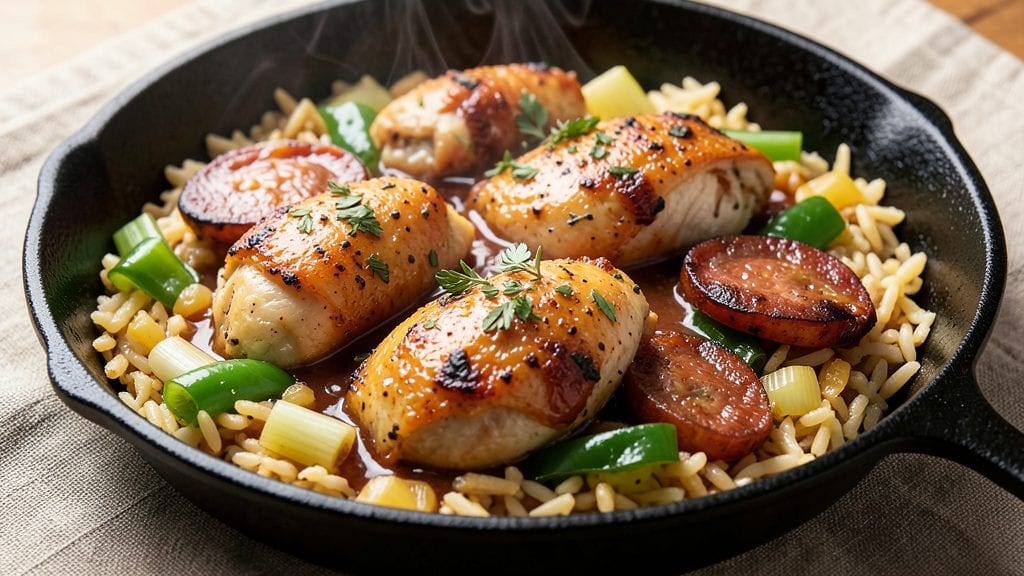
This baked jambalaya recipe transforms a simple one-pan dish into a restaurant-quality masterpiece with its perfect balance of smoky sausage, tender chicken, and aromatic rice. The secret lies in layering flavors through the classic trinity of onions, bell peppers, and celery, then letting everything meld together in the oven.
I've perfected this method over years of testing, ensuring the rice stays perfectly tender while absorbing all those rich, savory juices.
The beauty of this recipe is its simplicity—just one pan, minimal prep, and a 30-minute bake time that delivers deep, complex flavors. You'll start with browning andouille sausage and chicken thighs to build a flavorful base, then add the trinity vegetables for that essential Cajun foundation.
The rice gets toasted in the pan before adding liquid, creating a crispy bottom layer that adds texture to every bite.
What you end up with is a dish that's hearty enough for a family dinner but elegant enough for company—golden rice speckled with sausage and chicken, all infused with the smoky aroma of Cajun seasoning.
The sauce clings to every grain, ensuring no bite goes dry, while the crispy bottom layer adds a satisfying contrast. This is jambalaya that tastes like it's been simmering all day, even though it comes together in under an hour.
Serve with crusty bread to soak up every last bit of that flavorful sauce, or pair it with a simple green salad for a complete meal. The leftovers reheat beautifully, making this an ideal recipe for meal prep. Let's get started on creating your perfect one-pan jambalaya.
Ingredients for baked jambalaya
Sixteen essential ingredients for jambalaya that tastes like it simmered for hours.
| Ingredient | Amount | Notes |
|---|---|---|
| Andouille Sausage 🌭 | 1 ½ lb | Smoked sausage, sliced into rounds |
| Boneless Chicken Thighs 🍗 | 2 lb | Skin-on preferred for flavor |
| Long-Grain White Rice 🍚 | 2 cups | Uncooked, converted from 1 lb |
| Yellow Onion 🧅 | 1 ½ whole | Medium size, diced small |
| Green Bell Pepper 🍃 | 1 whole | Medium size, diced small |
| Celery Stalks 🥕 | 3 whole | Trimmed, diced small |
| Garlic Cloves 🧄 | 4 cloves | Fresh, minced fine |
| Cajun Seasoning 🌶️ | 2 tbsp | High-quality blend, not salt-heavy |
| Smoked Paprika 🌶️ | 1 tbsp | For extra depth of flavor |
| Chicken Broth 💧 | 2 ½ cups | Low-sodium preferred |
| Tomato Paste 🍅 | 2 tbsp | Smooth, not chunky |
| Unsalted Butter 🧈 | 2 tbsp | For toasting rice |
| Bay Leaves 🍃 | 2 whole | Fresh preferred |
| Thyme Sprigs 🌿 | 1 tbsp | Fresh, chopped fine |
| Salt 🧂 | 1 ½ tsp | Adjust to taste |
The andouille sausage is the heart of this dish—look for high-quality smoked sausage at specialty butchers or Zatarain's brand in the grocery store. Chicken thighs stay juicier than breasts when baked, so skin-on is ideal if you can find them. The Cajun seasoning is non-negotiable; Tony Chachere's or Slap Ya Mama are the gold standards. For the trinity vegetables, buy fresh and dice them uniformly—this ensures even cooking and that classic jambalaya texture. If you can't find andouille, spicy kielbasa works in a pinch, though it won't have the same depth of flavor.
No Cajun seasoning on hand? Mix 1 tbsp smoked paprika, 1 tsp dried thyme, 1 tsp dried oregano, 1/2 tsp garlic powder, and 1/2 tsp onion powder for a quick substitute. The tomato paste can be replaced with 1/4 cup crushed tomatoes if you prefer a smoother sauce. For the rice, long-grain white rice is essential—it stays separate and absorbs the flavors beautifully. If you're using pre-minced garlic, reduce to 3 cloves since it's more potent. The butter is crucial for toasting the rice—don't skip this step as it creates that coveted crispy bottom layer.
This jambalaya reheats beautifully—cover with a damp paper towel and microwave for 2-3 minutes. It keeps well in the fridge for 4-5 days, though the flavor actually improves overnight as everything melds together. For longer storage, freeze portions in airtight containers for up to 3 months. The crispy bottom layer is best enjoyed fresh, so plan to serve it immediately if you're going for that restaurant-quality texture. Leftovers make fantastic lunches—just reheat with a splash of broth to restore moisture.
Why You'll Love This Recipe
- One-Pot Magic: I swear by this recipe when I’m too tired to scrub pots—just dump everything in one dish, bake, and walk away. The rice soaks up all the smoky andouille and juicy chicken while the peppers caramelize right in the pan. No strainers, no extra bowls, just pure convenience.
- Smoky, Savory Soul: That crispy edge on the chicken thighs? The deep, spiced warmth from the andouille? Honestly, it’s the kind of flavor that makes you pause mid-bite. The bell pepper adds just enough brightness to cut through the richness—like a little hug in every mouthful.
- Weeknight to Potluck: Between us, this is my go-to for lazy nights and Sunday dinners. Double the recipe, bake it in a big dish, and you’ve got leftovers for days—or bring it to a gathering where everyone asks for seconds. (Yes, even the picky eaters.)
- Budget-Friendly Feast: Chicken thighs and sausage stretch farther than you’d think, and rice keeps costs low without sacrificing taste. I’ll be real: this feeds four for under $15, and the leftovers? Even better the next day when the flavors meld together. My wallet and my taste buds thank me.
Step-by-step instructions for baked jambalaya
This one-pan method delivers deep, smoky flavors with minimal effort—perfect for weeknight dinners.
Sear the Protein for Maximum Flavor
Preheat your oven to 375°F. In a large, oven-safe skillet, heat 2 tablespoons unsalted butter over medium-high heat until it foams. Add the sliced 1.5 lb andouille sausage and cook for 3-4 minutes until lightly browned. Remove the sausage and set aside.
In the same skillet, add the 2 lb boneless chicken thighs (skin-side down if using skin-on). Cook for 4-5 minutes until golden brown, then flip and cook another 3-4 minutes until the internal temperature reaches 165°F. Remove the chicken and set aside with the sausage. This initial searing builds rich, caramelized flavors that infuse the entire dish.
Build the Flavor Base with Aromatics
In the same skillet (no need to wipe it clean—those browned bits are pure flavor), add the diced 1.5 whole yellow onion, 1 whole green bell pepper, and 3 whole celery stalks. Cook over medium heat for 5-6 minutes, stirring occasionally, until the vegetables soften and begin to release their juices.
Add the 4 cloves minced garlic cloves and cook for 30 seconds until fragrant. Stir in the 2 tablespoons Cajun seasoning and 1 tablespoon smoked paprika, coating the vegetables evenly. This step develops the jambalaya's signature depth of flavor—don't rush it. The spices should bloom and create an aromatic base for the rice.
Toast the Rice and Combine Ingredients
Add the 2 cups long-grain white rice to the skillet and stir to coat it evenly with the vegetables and spices. Toast the rice for 1-2 minutes until it becomes translucent at the edges. This step prevents the rice from becoming mushy and adds a subtle nutty flavor.
Pour in the 2.5 cups chicken broth, scraping up any browned bits from the bottom of the pan. Stir in the 2 tablespoons tomato paste, 2 whole bay leaves, 1 tablespoon chopped thyme sprigs, and 1.5 teaspoons salt. Return the sausage and chicken to the skillet, spreading them evenly over the rice. The liquid should just cover the rice—if it doesn't, add a splash of water.
Bake Until Tender and Flavorful
Cover the skillet tightly with a lid or aluminum foil and transfer it to the preheated oven. Bake for 35-40 minutes until the rice is tender and the liquid has been absorbed. If the top begins to brown too quickly, tent it loosely with foil to prevent burning.
After 35 minutes, check the rice—it should be tender but still have a slight bite. If it's not quite done, continue baking for another 5 minutes. The jambalaya is ready when the rice is fluffy and the chicken reaches an internal temperature of 175°F. The flavors should be rich, smoky, and perfectly balanced.
Rest and Serve with Confidence
Remove the skillet from the oven and let the jambalaya rest for 5-10 minutes before serving. This allows the juices to redistribute, ensuring every bite is moist and flavorful. Stir gently to combine everything, then taste and adjust the seasoning if needed—you might want to add a pinch more salt or a splash of broth for the perfect consistency.
Serve the jambalaya directly from the skillet, letting guests scoop up the rice along with the tender chicken and sausage. The dish should be aromatic, with a perfect balance of smoky, spicy, and savory flavors. Pair it with crusty bread or a simple green salad for a complete meal that's sure to impress.
Pro Tips For Making Baked Jambalaya
- CRISP THE SAUSAGE FIRST: After browning and removing the chicken, toss the sliced andouille in the same pan for 2-3 minutes until the edges turn golden. That extra color carries through to the finished dish—no one wants bland sausage hiding in their jambalaya.
- DON’T SKIP THE RICE SOAK: Rinse your long-grain rice until the water runs clear, then let it sit in warm water for 15 minutes before draining. I used to skip this, and my jambalaya always came out gummy—this guarantees fluffy, separate grains every time.
- CHECK CHICKEN TEMPERATURE: Pull the chicken thighs when they hit 165°F, even if they still look slightly underdone. Overcooking later in the oven dries them out, and you’ll end up with rubbery meat instead of tender, juicy bites.
- SAUTE THE ONIONS LOW AND SLOW: Cook the onions and bell peppers at medium-low heat for 8-10 minutes until soft but not browned. Rushing this step burns their natural sweetness, turning your jambalaya from rich and aromatic to bitter and one-dimensional.
Pro cooking tips for perfect results
Protein Prep Mastery
Sear the chicken thighs and sausage until they reach 165°F internal temperature—this ensures they're fully cooked while building deep, caramelized flavors. I always use a meat thermometer for accuracy, especially with chicken. For extra crispiness, leave the skin on the thighs and sear skin-side down first. 🔥
Trinity Vegetable Technique
The classic onion, bell pepper, celery trinity should be diced uniformly—aim for ¼-inch pieces—so they cook evenly. I like to pulse them in a food processor for consistency.
Cook them until soft but not mushy; this prevents a watery jambalaya. The vegetables should release their juices but still hold some texture.
Rice Toasting Secret
Toast the rice in the skillet for 1-2 minutes until translucent at the edges—this creates a crispy bottom layer that adds incredible texture. I use unsalted butter for toasting because it adds richness without overpowering the Cajun flavors. Never skip this step; it's what makes restaurant-quality jambalaya shine. ✨
Liquid Balance Control
The broth should just cover the rice—if it looks too shallow, add 1-2 tablespoons of water. Too much liquid will make the rice mushy, while too little can dry it out.
I always check the consistency before baking, adjusting as needed. The goal is tender rice with a flavorful sauce clinging to every grain.
Baking Time Precision
Bake for 35-40 minutes, but check at 35 minutes—the rice should be tender but still slightly firm. If it's not done, bake another 5 minutes. Overcooking turns rice mushy, while undercooking leaves it raw. The chicken should reach 175°F for perfect tenderness. 🌡️
Resting for Perfection
Let the jambalaya rest for 5-10 minutes before serving—this allows juices to redistribute, ensuring every bite is moist. I often tent it loosely with foil to keep it warm.
Stir gently before serving to combine all the flavors. The resting time is just as important as the cooking time for that restaurant-quality finish. 💫
Nutrition facts
Frequently asked questions
Can I substitute chicken with shrimp or seafood for this baked jambalaya?
Shrimp cooks much faster than chicken, so add it only in the last 10 minutes of baking. Use 1.5 lbs peeled shrimp and toss them with 1 teaspoon Cajun seasoning before adding. For seafood jambalaya, you can also use 1 lb crawfish tails or 12 oz crab meat—just fold them in gently after the rice is cooked to avoid overcooking.
Why did my jambalaya turn out mushy instead of fluffy?
Mushy rice usually happens from too much liquid or insufficient toasting. Start by toasting the rice for 2 minutes in the skillet before adding broth. Also, ensure your liquid (broth + tomato paste) only just covers the rice—no more than 2.5 cups total. If using pre-cooked rice, reduce the broth by 1/3 cup. The oven time should be 35-40 minutes, not longer.
How can I make this jambalaya spicier or milder?
For extra heat, add 1/2 teaspoon cayenne pepper with the Cajun seasoning or serve with hot sauce on the side. To mellow the flavor, reduce the Cajun seasoning to 1.5 tablespoons and add 1/2 teaspoon sugar to balance the spices. You can also stir in 1/4 cup diced tomatoes at the end for freshness.
Can I make this jambalaya in a slow cooker instead of baking?
Yes! Brown the sausage and chicken first, then transfer everything to a 6-quart slow cooker. Cook on low for 3-4 hours or high for 2 hours, stirring occasionally. The texture will be more tender, but you'll lose the crispy bottom layer. Add 1/4 cup water if it looks dry before serving.
What's the best way to reheat leftovers without drying them out?
Sprinkle 1 tablespoon broth or water over the jambalaya, cover tightly with a damp paper towel, then microwave for 2-3 minutes on medium-high. For stovetop reheating, cover with a lid and cook on low heat for 5-7 minutes, stirring occasionally. Never reheat completely dry—always add moisture to restore tenderness.