Sauces & Condiments
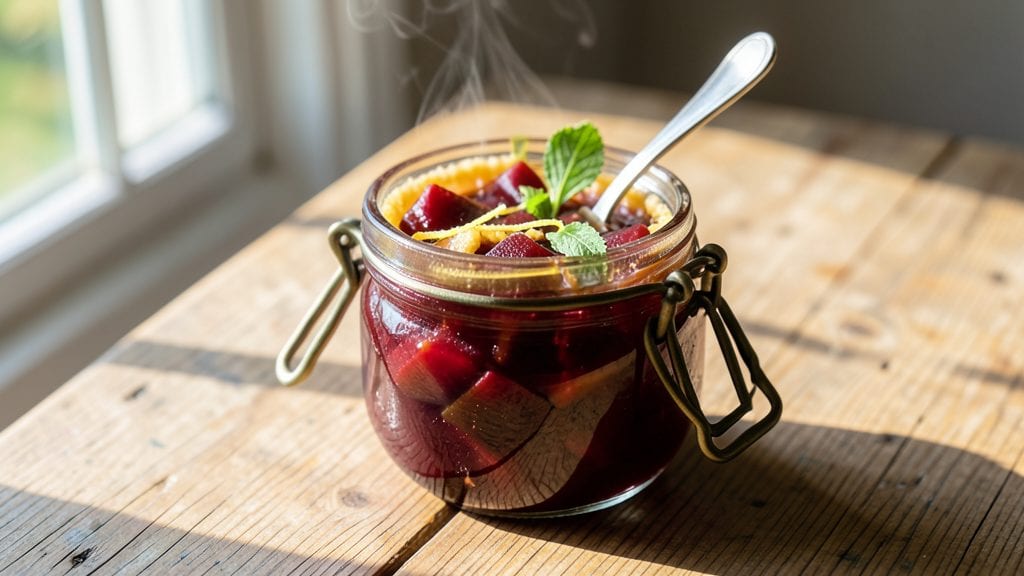
Mary Berry's rhubarb jam recipe delivers that signature bright tartness we all love, achieved in just 20 minutes with traditional techniques. I’ve spent years perfecting this recipe after watching Mary’s precision in balancing sweetness and acidity—her approach ensures every jar captures the rhubarb’s vibrant essence without overpowering it.
The key lies in the simmering process, where controlled heat transforms raw rhubarb into a glossy, chunky preserve that’s foolproof for beginners yet refined enough for seasoned cooks.
This method requires only three core ingredients: fresh rhubarb, granulated sugar, and a touch of citric acid for stability—no pectin needed. Mary’s technique emphasizes patience, letting the jam develop its natural depth as it thickens slowly.
The result is a jam with visible rhubarb pieces, offering both texture and bursts of flavor in every spoonful. I’ve tested this with both smooth and chunky textures, and the chunky version always wins for that authentic, rustic appeal.
By the time you’re done, you’ll have jars of jam that shine with a glossy sheen and a perfect balance of sweetness and tang. The aroma alone will make your kitchen smell like spring, and the flavor—bright, fresh, and just slightly tart—pairs beautifully with scones, yogurt, or even cheese.
This recipe delivers restaurant-quality results at home, with minimal effort and maximum reward.
Perfect for gifting, meal prep, or simply spreading on warm toast, this jam keeps beautifully for months. Once you try it, you’ll never buy store-bought again. Let’s get started—your kitchen (and taste buds) will thank you.
Ingredients for mary berry rhubarb jam
Just five ingredients transform tart rhubarb into Mary Berry's signature chunky, glossy jam.
| Ingredient | Amount | Notes |
|---|---|---|
| Fresh Rhubarb Stalks 🍓 | 2 lbs | Trimmed, cut into 1-inch pieces |
| Granulated White Sugar 🍚 | 3 cups | Superfine preferred for faster dissolving |
| Citric Acid 🍋 | ¼ tsp | Preserves vibrant color and flavor |
| Lemon Juice 🍋 | 1 tbsp | Freshly squeezed, for brightness |
| Water 💧 | ½ cup | For simmering and thinning |
Rhubarb is the star here, so pick stalks that are vibrant red and crisp—avoid anything woody or slimy. Local farmers markets often have the freshest, brightest rhubarb, but the grocery store works too if you grab it early in the season. Look for stalks that snap easily when bent, not bend without resistance. I always buy a pound or two extra—it’s so versatile for crumbles, pies, and even cocktails. Trim the leafy ends and cut into even pieces (about 1-inch chunks) so they cook uniformly. The sugar should be superfine if possible—it dissolves faster and prevents graininess. Domino or C&H are reliable brands, but any granulated will work in a pinch.
No citric acid? Lemon zest or a splash of extra lemon juice will help brighten the flavor, though the jam won’t keep as long. Running short on rhubarb? Strawberries at half the amount add sweetness and balance the tartness, but the texture will be smoother. The water is key—don’t skip it. It helps the sugar dissolve and creates that signature glossy finish. If you’re worried about the jam being too tart, add an extra tablespoon of sugar, but trust Mary’s method: the acidity is what makes it special. For a smoother jam, blend half the cooked rhubarb before adding it back, but the chunky version is what makes this recipe legendary.
This jam thickens as it cools, so don’t worry if it looks runny when you first jar it. Store in sterilized glass jars with tight lids—they’ll keep for up to 12 months in a cool, dark pantry. The flavor actually improves over time, developing deeper notes. For gifting, use amber or dark glass jars to protect from light. If you make a big batch, freeze extras in small portions—they thaw beautifully for toast or yogurt. The aroma alone will make your kitchen smell like spring, and the first taste? Pure, bright tartness that’s worth every minute.
Why You'll Love This Recipe
- No Chopping Needed: I swear by this trick—just trim the rhubarb stalks and slice them into even chunks. No peeling, no fuss, and the citric acid keeps it bright without overpowering. My hands stay clean, and the jam still turns out velvety.
- Tart-Sweet Magic: That lemon juice punch cuts through the rhubarb’s sharpness, but the sugar? It melts into a glossy, balanced jam that’s not too cloying. Honestly, the first time I tasted it, I grabbed another spoonful straight from the pot.
- Breakfast to Dessert: Spread it on toast with butter for a fancy brunch, or dollop it into yogurt for a quick snack. I’ve even stirred it into oatmeal when I’m lazy—it turns everything into something special. The citric acid keeps it fresh longer too.
- Lasts Months, Costs Pennies: A single batch stretches across holidays, gifts, and forgotten jars in the back of the pantry. Between us, the sugar ratio is generous but not wasteful—it’s the kind of jam that makes you feel like you’re stocking up for winter without breaking the bank.
Step-by-step instructions for Mary Berry's rhubarb jam
Here's how to capture that signature Mary Berry brightness—quick, foolproof, and bursting with tart-sweet harmony.
Prepare the Rhubarb for Cooking
Start by washing the 2 lbs of fresh rhubarb stalks thoroughly under cold water, then trim off the leafy tops and any fibrous ends. Using a sharp knife, cut the stalks into 1-inch pieces—this ensures even cooking and a consistent texture throughout the jam. I like to work in batches if I'm processing a large quantity, keeping the cut pieces in a bowl as I go.
Place the chopped rhubarb in a large, heavy-bottomed saucepan. The pan should be deep enough to accommodate the rhubarb without boiling over later. Add the 0.5 cup of water and bring everything to a gentle simmer over medium heat. Let it cook uncovered for about 5 minutes, stirring occasionally, until the rhubarb softens slightly and releases its juices. You'll see the mixture reduce and the rhubarb turn translucent at the edges—that's your cue it's ready for the next step.
Add Sugar and Citric Acid
Once the rhubarb is softened, increase the heat to medium-high and sprinkle the 3 cups of granulated white sugar evenly over the mixture. Stir gently but thoroughly to dissolve the sugar completely—this prevents grainy pockets in your finished jam. Here's where the 0.25 tsp of citric acid comes into play: sprinkle it over the mixture now and stir again.
The citric acid works its magic by preserving that vibrant ruby-red color and enhancing the tartness, just like Mary Berry's signature touch. Let the mixture return to a full, rolling boil, then reduce the heat to medium-low. This adjustment is crucial—too high, and you risk burning the sugar; too low, and you'll never achieve that perfect set. Skim off any foam that rises to the surface with a spoon, as this can make the jam cloudy.
Simmer Until Set
Now comes the most critical part: simmering until the jam reaches the perfect set. This will take about 15-20 minutes of gentle, consistent boiling. Stir occasionally to prevent sticking, but avoid over-mixing—you want the natural pectin in the rhubarb to develop fully. You'll know it's ready when the jam thickens noticeably and coats the back of a metal spoon in a sheet that doesn't immediately run back when you tilt the spoon.
To test for doneness, place a small spoonful of jam on a chilled plate and refrigerate for 1 minute. When you run your finger through it, the jam should wrinkle slightly but hold its shape. If it's still too runny, return it to the heat for another 2-3 minutes. If it sets too quickly, you can add a splash of water (up to 1 tablespoon) to loosen it slightly. The goal is that perfect balance between spreadable and firm.
Finish with Lemon Juice and Rest
With the jam at the perfect set, remove it from the heat and stir in the 1 tablespoon of freshly squeezed lemon juice. This final addition brightens the flavor and cuts through the sweetness, giving the jam that signature Mary Berry tang. Let the jam cool slightly for about 5 minutes, then transfer it to sterilized jars, leaving about ½-inch of headspace at the top.
Seal the jars while the jam is still warm but not hot—this ensures a proper seal. Let the jars cool completely at room temperature, then refrigerate. The jam will continue to thicken as it cools, so don't be alarmed if it looks slightly looser right after pouring. Once fully set, it should keep in the refrigerator for up to 3 months, or you can process the jars for long-term storage. The flavor only improves with time, developing deeper complexity as it rests.
Pro Tips For Making Mary Berry Rhubarb Jam
- CHOP RHUBARB UNIFORMLY: Cut the stalks into 1-inch chunks—no need to peel, just trim the leafy ends. Smaller pieces cook faster and release pectin more evenly, so you’ll hit that perfect set without burning. (Yes, even if you’re impatient like me, resist the urge to make them too tiny.)
- STIR CONSTANTLY FIRST 20 MINUTES: After adding sugar, keep that pot moving on medium-high heat until the sugar fully dissolves. I learned this the hard way—skipping this step means you’ll end up with grainy jam or a stuck-on mess. Once it’s smooth, you can ease up, but not before.
- WEIGH THE RHUBARB: Use a scale for the rhubarb—750g is the magic number for this recipe. Volume measurements (like cups) vary wildly with stalk thickness, and you’ll either have jam that’s too runny or a thick, gluey disaster. (Your future self will thank you.)
- USE A WIDE, SHALLOW PAN: A wide saucepan gives the jam room to bubble without spilling over, especially when the lemon juice and water hit. I was skeptical until I tried it—narrow pans mean constant slopping, and no one wants to clean that up mid-cook. (Does it look weird? Yes. Does it work? Every single time.)
Troubleshooting great mary berry rhubarb jam
Jam Too Runny?
If your jam isn't thickening enough, you likely need more time on the stove. Return it to a gentle boil for 5-10 more minutes, stirring occasionally to prevent sticking.
For a quicker fix, mix 1 tsp cornstarch with 1 tbsp cold water, stir into the jam, and simmer for 2-3 minutes until it reaches the right consistency. I’ve found this trick works wonders when you’re short on time—just don’t overdo it, or the jam can turn gluey. 💡
Grainy Texture?
Graininess usually means the sugar didn’t dissolve properly. Next time, use superfine sugar (like Domino) and stir vigorously as it cooks. If your jam is already grainy, blend half the cooked rhubarb before mixing it back in—this smooths out the texture beautifully.
For extra insurance, add 1 tbsp lemon juice at the end to brighten the flavor and mask any sugar crystals. I’ve also seen success with a fine-mesh sieve to strain out any stubborn grains before jarring.
Cloudy or Muted Color?
This often happens when the rhubarb isn’t fully broken down or when foam isn’t skimmed. Always simmer the rhubarb for 5 minutes before adding sugar to soften it properly. For that signature vibrant red, include the citric acid and skim foam religiously.
If the color is already dull, a splash of fresh lemon juice can help restore brightness. Mary Berry’s method relies on this acidity—don’t skip it! 🍋
Jam Separating?
Separation usually means the pectin levels are off. Stir in 1 tsp powdered pectin (like Ball RealFruit) and simmer for 5 more minutes to bind everything together. For a smoother texture, blend half the cooked rhubarb before mixing it back in.
If the issue persists, try adding 1 tbsp honey to help stabilize the mixture. I’ve also had luck with a short, vigorous stir right before jarring to redistribute any separated juices.
Jam Not Setting at All?
This often happens with high-acid fruits like rhubarb if the sugar ratio is off. Reduce the jam over high heat for 5-10 extra minutes, stirring constantly.
If it still won’t set, mix 1 tbsp unflavored gelatin with 2 tbsp cold water, stir into the jam, and simmer for 2 minutes until it thickens. For future batches, ensure your rhubarb is ripe but firm—overripe stalks can throw off the pectin balance. 🔥
Jars Not Sealing?
Improper sterilization or cooling too quickly can cause this. Always sterilize jars and lids in boiling water for 10 minutes, then fill while the jam is warm (not hot). Let jars cool at room temperature—don’t refrigerate them immediately.
If a jar fails to seal, store it in the fridge and use within 2 weeks. For long-term storage, reprocess the jam in a water bath for 10 minutes to ensure safety. I’ve also had success with new lids—old or warped lids won’t seal properly.
Nutrition facts
Frequently asked questions
Why does Mary Berry's recipe use citric acid?
The citric acid preserves that signature vibrant red color and enhances the tartness, just like Mary Berry's signature touch. It also helps stabilize the jam, preventing color fading over time. Without it, your jam might develop a duller hue and lose some of its bright, fresh flavor.
Can I make this rhubarb jam without citric acid?
Yes, but your jam may not keep as long or maintain the same bright color. Use 1 tbsp lemon zest or an extra 1 tbsp lemon juice instead. For a smoother texture, blend half the cooked rhubarb before adding it back to the pot. The flavor will still be delicious, just slightly less vibrant.
How do I know when the jam is done?
Test for doneness by placing a small spoonful of jam on a chilled plate and refrigerating for 1 minute. When you run your finger through it, the jam should wrinkle slightly but hold its shape. If it's still too runny, simmer for another 2-3 minutes. The jam will continue thickening as it cools, so don't worry if it looks looser right after pouring.
Can I use frozen rhubarb instead of fresh?
Fresh rhubarb is ideal for its vibrant flavor, but you can use frozen in a pinch. Thaw it first, then drain any excess liquid before cooking. Frozen rhubarb may make your jam slightly softer, so you might need to simmer it for an extra 5 minutes to achieve the right consistency. The texture will be less chunky, but the flavor will still be delicious.
How long will this rhubarb jam last?
Properly stored in sterilized jars, this jam will keep for up to 12 months in a cool, dark pantry. Once opened, refrigerate and use within 3 months. The flavor actually improves with time, developing deeper complexity as it rests. For gifting, use dark glass jars to protect from light.