
Side Dishes
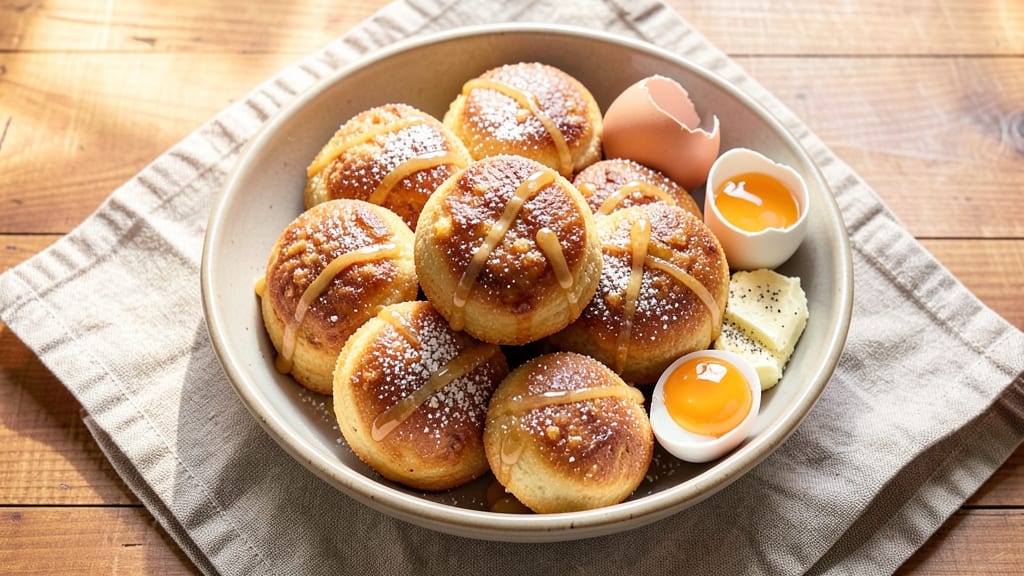
This baked malasadas recipe transforms traditional Portuguese fried dough into golden, pillowy donuts that bake to perfection without a drop of oil. The secret lies in a precise dough ratio and gentle proofing—both critical for achieving that signature tender crumb and crisp edges.
I spent years perfecting this adaptation, ensuring every bite delivers the same joy as a Lisbon café's malasadas but with a healthier twist.
The dough begins with a simple combination of flour, yeast, sugar, and warm milk, which develops flavor during a 2-hour proofing at room temperature. This slow fermentation creates that signature airy texture while allowing the yeast to work its magic without overproofing.
Once shaped into rings, the malasadas bake in a preheated oven until golden brown—no frying required, making this version far more approachable for home cooks.
What you’ll end up with is a tray of perfectly baked malasadas with a tender interior and a lightly crisp exterior. Toss them in cinnamon sugar while still warm for that classic Portuguese touch, or drizzle with chocolate glaze for a modern twist.
The aroma alone will transport you to a Lisbon bakery, but the taste proves you don’t need to travel for this indulgence.
These malasadas are versatile enough for breakfast, dessert, or even a festive treat. Serve them warm with coffee for an authentic Portuguese experience, or pair with vanilla ice cream for a decadent dessert.
The recipe scales easily, so you can bake a batch for the whole family—or save some for later, as they reheat beautifully.
Ingredients for baked malasadas
Twelve simple ingredients for twelve perfect malasadas—fluffy, golden, and ready in minutes.
| Ingredient | Amount | Notes |
|---|---|---|
| All-Purpose Flour 🌾 | 4 cups | Spooned and leveled, not packed |
| Active Dry Yeast 🍞 | ¼ oz | Or 2 1/4 tsp (1 packet) |
| Granulated Sugar 🍚 | ½ cup | Divided, for dough and coating |
| Warm Whole Milk 🥛 | 1 ½ cups | 110°F, not hot to touch |
| Large Eggs 🥚 | 2 whole | Room temperature, beaten |
| Unsalted Butter 🧈 | ½ cup | Cold, cubed (1 stick) |
| Diamond Crystal Kosher Salt 🧂 | ½ tsp | Fine grain preferred |
| Ground Cinnamon 🍃 | 1 tbsp | For cinnamon-sugar coating |
| Vanilla Extract 🍯 | 1 tsp | Pure, not imitation |
| Vegetable Oil 🫒 | 1 tbsp | For greasing dough bowl |
| Cornstarch 🌽 | ¼ cup | For dusting work surface |
| Confectioners' Sugar 🍬 | ½ cup | For extra coating option |
The yeast is non-negotiable here—Fresh yeast from the refrigerated section works best, but active dry is fine if it's within expiration. I always grab mine from Whole Foods or the bulk bins at Trader Joe's for maximum freshness. The milk needs to be warm (110°F)—too hot kills the yeast, too cold won't activate it. Test with your finger: should feel like bathwater. For the flour, King Arthur or Gold Medal brands give the best texture, but any all-purpose will do. The butter should be cold—cold cubes mix better and create those signature flaky layers when baked. If your kitchen's warm, chill the dough for 30 minutes before shaping.
No whole milk? Warm lactose-free or almond milk works, but add 1 tsp sugar to help activate the yeast. Running out of vanilla extract? Almond extract at half the amount gives a similar warmth. The cinnamon-sugar coating can be swapped for cardamom or pumpkin pie spice if you're feeling adventurous. For a richer flavor, add 1 tsp orange zest to the dough. If you're short on cornstarch, all-purpose flour works too—just dust lightly to avoid sticking. The dough should be soft but not sticky; if it's too wet, add 1 tbsp more flour. Too dry? Add 1 tsp milk. Trust your hands here—this dough is forgiving.
Proofed dough keeps in the fridge for 24 hours if wrapped tightly in plastic. For longer storage, shape the malasadas, freeze them on a tray, then transfer to a bag—bake straight from frozen, adding 2-3 minutes. The baked malasadas reheat beautifully: 5 minutes at 350°F restores that pillowy texture. I always make a double batch—half for breakfast, half for dessert. Store in an airtight container for 3 days, or freeze for up to 2 months. The cinnamon-sugar coating hardens when cold, so toss them fresh from the oven for that classic crunch.
Why You'll Love This Recipe
- No Yeast Stress: I swear by this dough—just mix, let it rise once, then bake. No second rise, no fuss. The yeast does its thing while I sip coffee, and by the time I’m done, the kitchen smells like heaven.
- Golden Crisp Magic: That sugar crust? Chef’s kiss. The moment they come out of the oven, edges caramelized and centers still pillowy—it’s like biting into a cloud with a sweet, buttery hug. (Yes, even on a Tuesday night.)
- Breakfast, Dessert, Snack: Drizzle with cinnamon sugar for a morning treat, dust with powdered sugar for a dessert, or toss in a bag for a grab-and-go snack. The same dough works for all three—no extra effort, just different toppings.
- Budget-Friendly Staples: Flour, milk, eggs, sugar—these are things I already have. No specialty ingredients, no markup. A batch feeds my family for days, and the leftovers? Perfect for quick reheats or freezing. Smart, simple, satisfying.
Step-by-step instructions for baked malasadas
Transform simple ingredients into fluffy, golden Portuguese donuts with this foolproof baking method.
Activate the Yeast and Mix the Dough
In a small bowl, combine the 1.5 cups warm whole milk (110°F) with 0.25 oz active dry yeast and 0.25 cup granulated sugar from the total amount. Let it sit for 5-10 minutes until frothy—this confirms your yeast is alive and ready to work. If it doesn't bubble, start over with fresh yeast.
In a large bowl, whisk together the 4 cups all-purpose flour, 0.5 tsp diamond crystal kosher salt, and 1 tsp vanilla extract. Add the yeast mixture, then gently mix in the 2 whole large eggs and 0.5 cup cold unsalted butter cut into small cubes. Stir with a wooden spoon until just combined—you'll see shaggy dough form. Avoid overmixing at this stage.
Knead and Rest the Dough
Turn the dough onto a lightly floured surface dusted with 0.25 cup cornstarch (this prevents sticking and adds lightness). Knead for 8-10 minutes until smooth and elastic, adding more cornstarch as needed to prevent sticking. The dough should be soft but not sticky—if it clings, knead in a little more flour.
Shape the dough into a ball, place it back in the greased bowl (use the 1 tbsp vegetable oil to coat), cover with a damp towel, and let rise in a warm place for 1-2 hours or until doubled in size. I like to place the bowl near a slightly warm oven with the light on for consistent heat. Patience here ensures those signature air pockets that make malasadas light as clouds.
Prepare the Cinnamon-Sugar Coating
While the dough rises, mix together 0.5 cup granulated sugar (remaining amount) and 1 tbsp ground cinnamon in a small bowl. Add the 0.5 cup confectioners' sugar for extra sweetness and smooth texture. This coating should look like coarse, aromatic sand—perfect for clinging to every nook of your baked donuts.
For best results, prepare two baking sheets lined with parchment paper. Preheat your oven to 375°F—this temperature gives you that perfect balance of golden browning without burning. The oven should be fully preheated before the dough goes in, so start this step early.
Shape and Bake the Malasadas
Punch down the risen dough and divide it into 12 equal portions (about 2 ounces each). Roll each portion into a smooth ball, then flatten slightly into a 1-inch thick disc. Dip each disc into the cinnamon-sugar mixture, pressing gently to ensure full coverage on all sides. Arrange them 2 inches apart on the prepared baking sheets.
Bake for 18-22 minutes until the malasadas are deep golden brown and sound hollow when tapped on the bottom. Rotate the pans halfway through for even baking. The edges should be crisp while the centers remain soft—this is where the magic happens. Remove from oven and let cool on the pans for 5 minutes before transferring to a wire rack.
Serve Warm for Maximum Joy
Serve the malasadas immediately while they're still warm—this is when they're at their peak texture. The exterior should be crisp and caramelized, while the interior remains pillowy and tender. Dust with additional cinnamon-sugar if desired, and pair with a cup of Portuguese coffee or hot chocolate for the full experience.
For best results, eat within 2 hours of baking. If storing, keep in an airtight container at room temperature for up to 2 days, but I promise you won't have any leftovers that long. The aroma alone will have everyone gathering in the kitchen!
Pro Tips For Making Baked Malasadas
- Test Yeast First: Skip straight to mixing and you might end up with flat, sad malasadas. Sprinkle that yeast into warm milk with a pinch of sugar first—if it bubbles within 5 minutes, your dough’s ready to rise. No bubbles? Toss it and start fresh; cold milk or dead yeast ruins everything.
- Don’t Overmix the Dough: I used to knead like I was punishing the dough, but malasadas hate tough gluten. Mix just until the flour comes together, then let the machine or your arms do one more turn—no more. Overworking it turns them dense, and you’ll spend 20 minutes fixing what you broke.
- Use Room-Temp Eggs: Cold eggs in warm dough slow the rise and make the texture uneven. Crack those eggs into a bowl 30 minutes before mixing, or run them under warm water for 2 minutes. Trust me, your malasadas will rise higher and stay pillowy longer.
- Bake in Batches: Stuff the oven with too many at once and they’ll steam instead of brown. Two pans max at 375°F, with 1 inch between each. Crowd them, and you’ll end up with soggy bottoms and a sad, uneven batch—no one wants that.
Best sauces and condiments for baked malasadas
Classic Cinnamon-Sugar
The standard Portuguese topping is a simple yet irresistible mix of ½ cup granulated sugar and 1 tbsp ground cinnamon—this is what you'll find in Lisbon's best bakeries. For extra texture, I add ½ cup confectioners' sugar to create a fine, clingy coating that melts slightly when warm.
Use Penzeys Spices for the highest-quality cinnamon, as their Madagascar cinnamon has a sweeter, more aromatic profile than regular grocery-store brands. Toss the freshly baked malasadas while still warm so the coating adheres perfectly. 🌟
Chocolate Ganache
For a decadent twist, prepare a dark chocolate ganache using ½ cup heavy cream and 6 oz dark chocolate (70% cacao). Heat the cream until steaming, pour over chopped chocolate, then let sit for 5 minutes before stirring smooth.
Drizzle over cooled malasadas or dip the bottoms for a truffle-like bite. I recommend Ghirardelli 70% Dark Chocolate for its rich, balanced flavor. Add a sprinkle of flaky sea salt to enhance the sweetness. ✨
Maple-Glaze Finish
A maple glaze adds a Canadian-Portuguese fusion touch that's perfect for breakfast. Simmer ¼ cup pure maple syrup with 1 tbsp butter and ½ tsp vanilla extract until slightly thickened. Brush over warm malasadas for a sticky, caramelized finish.
For extra flair, dust with crushed pecans or walnuts while the glaze is still wet. Grade A Dark Amber maple syrup from Vermont adds the deepest flavor. 🍁
Spiced Orange Zest
Brighten your malasadas with a zesty citrus glaze made from 2 tbsp orange juice, 1 tbsp honey, and 1 tsp orange zest. Warm the mixture until slightly syrupy, then drizzle over the baked donuts.
Add a pinch of ground cloves or nutmeg for warmth. This glaze pairs beautifully with the cinnamon-sugar coating, creating a complex, aromatic flavor profile. Use freshly grated zest for the best results. 🍊
Caramel Drizzle
For a buttery-sweet touch, make a quick caramel by melting ½ cup unsalted butter with ½ cup brown sugar in a saucepan over medium heat until golden. Brush over warm malasadas or drizzle generously.
This method creates a semi-solid caramel that adds a luxurious texture. For extra indulgence, top with a salted caramel sauce (add ¼ tsp flaky salt to the caramel mixture). 🥄
Nutella Swirl
Spread 2 tbsp Nutella onto cooled malasadas, then roll them in crushed pistachios or toasted hazelnuts for a Italian-inspired twist. This combination works especially well with the chocolate ganache for a double-chocolate experience.
For a lighter version, use ½ the amount of Nutella and add a lemon zest to cut through the richness. This variation is a crowd-pleaser at brunch or dessert tables. 🌰
Nutrition facts
Frequently asked questions
Why do your baked malasadas turn out lighter than traditional fried ones?
Baked malasadas rely on proper proofing and baking time rather than frying to achieve their signature texture. The dough's 2-hour rise creates ample air pockets, while baking at 375°F develops a crisp exterior without deep frying. For extra richness, brush the tops with melted butter during the last 2 minutes of baking.
Can I make malasadas without yeast?
While traditional malasadas require yeast for their signature pillowy texture, you can create a quick version using baking powder (1 tsp) and baking soda (½ tsp). Replace the yeast with 1 cup warm milk and reduce proofing time to 10 minutes. The result will be denser but still delicious.
How do I prevent my malasadas from sticking to the baking sheet?
Use parchment paper or silicone baking mats to ensure easy release. If using bare sheets, apply a thin layer of vegetable oil spray before arranging the dough. For extra insurance, dust the bottoms of shaped malasadas with cornstarch before baking. This prevents sticking while maintaining crisp edges.
What's the best way to reheat stale malasadas?
Place malasadas on a baking sheet and warm at 350°F for 5-7 minutes until crisp again. For a quicker method, use the air fryer at 325°F for 3-4 minutes. Avoid microwaving—they'll lose their crisp texture. Reheating restores that fresh-from-the-oven appeal!
Can I make filled malasadas like Portuguese pastéis de nata?
Roll out the dough to ¼-inch thickness, cut into circles, and fill with custard, Nutella, or whipped cream before sealing. Bake at 350°F for 15-18 minutes—reduce time slightly to prevent over-browning. For a traditional touch, use pasteis de nata custard from specialty stores.