
Appetizers
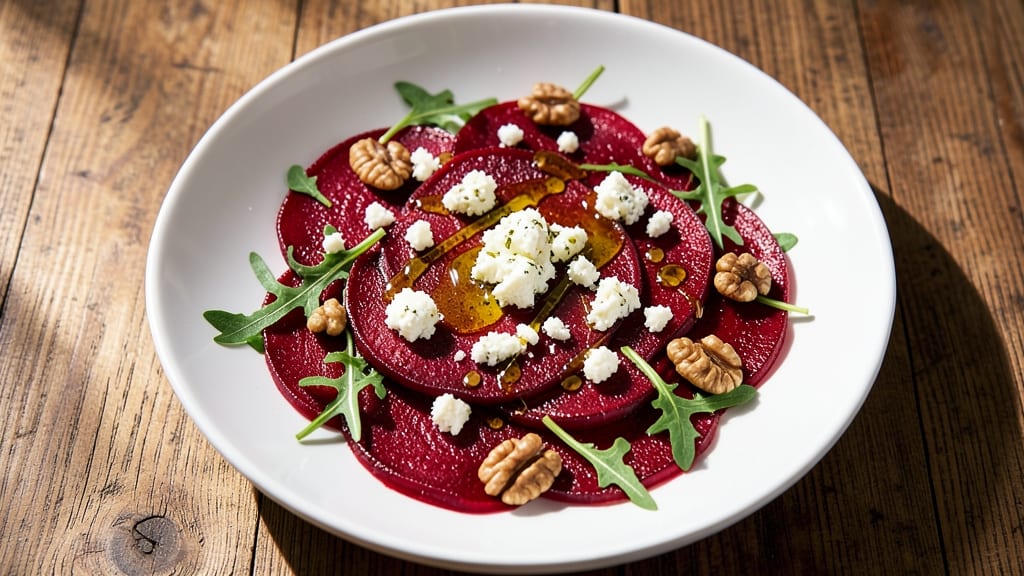
Creating beet carpaccio with goat cheese transforms simple ingredients into a restaurant-worthy vegetarian dish that balances earthy sweetness with creamy richness. The key lies in achieving perfectly thin, uniform slices that reveal the beet's vibrant magenta heart while maintaining a tender bite.
I've perfected this technique over years of testing, and the result is a dish that looks as stunning as it tastes.
This recipe delivers a harmonious blend of textures—delicate beet slices, crumbly goat cheese, and crisp walnuts—all elevated by a drizzle of honey and bright arugula. The process requires just a mandoline slicer and 15 minutes of prep, making it surprisingly accessible for a dish that feels so refined.
The goat cheese adds a luxurious creaminess that complements the beets' natural sweetness without overpowering their earthy depth.
By the time you plate this dish, you'll have created a visual masterpiece with layers of color: deep magenta beets, creamy white goat cheese, green arugula, and golden walnuts. Every bite offers a perfect balance of flavors—sweet, tangy, nutty, and herby—while the textures provide contrast from tender to crisp.
This is the kind of appetizer that transforms any gathering into an elegant affair.
The beauty of beet carpaccio lies in its versatility—serve it as a standalone appetizer, pair it with crusty bread, or make it the centerpiece of a vegetarian platter.
The recipe scales beautifully for parties, and the ingredients can be prepped ahead for effortless plating. Let's bring this sophisticated dish to your table with confidence.
Ingredients for beet carpaccio with goat cheese
Elevate simple ingredients into restaurant-worthy beet carpaccio with creamy goat cheese and vibrant textures.
| Ingredient | Amount | Notes |
|---|---|---|
| Medium Beets 🍠 | 2 whole | Cooked until tender, peeled |
| Extra-Virgin Olive Oil 🫒 | ¼ cup | For drizzling and slicing |
| Goat Cheese 🧀 | 8 oz | Soft, crumbled variety preferred |
| Walnuts 🥜 | ½ cup | Toasted, roughly chopped |
| Baby Arugula 🌱 | 3 cups | Fresh, vibrant leaves |
| Honey 🍯 | 2 tbsp | Wildflower or clover variety |
| Flaky Sea Salt 🧂 | 1 tsp | Diamond Crystal preferred |
| Fresh Black Peppercorns 🌶️ | 10 whole | Cracked for garnish |
| Lemon Juice 🍋 | 1 tbsp | Freshly squeezed |
| Balsamic Glaze 🍷 | 1 tbsp | Reduction preferred |
| Fresh Thyme Leaves 🌿 | 2 tsp | Finely chopped, optional garnish |
The beets are the foundation—organic, medium-sized with vibrant magenta hues work best. Whole Foods or local farmers markets carry the most flavorful varieties. Cook until fork-tender (about 45 minutes), then cool completely before slicing. A mandoline slicer ensures uniform 1/16-inch slices, but a sharp knife works too. The goat cheese should be soft and crumbly—La Tourangelle or Mont Saint-Michel brands excel. Opt for a mild, creamy variety rather than tangy to complement the beets' earthy sweetness without overpowering.
No mandoline? A sharp chef's knife and steady hand will suffice—just keep slices even. Substitute walnuts with toasted pecans or candied pecans for a sweeter profile. Arugula can be swapped for baby spinach, though it lacks the peppery bite. For honey alternatives, agave nectar or maple syrup work well. The balsamic glaze can be omitted if preferred, but it adds a sophisticated tang. Fresh thyme adds aromatic depth—dried thyme at half the amount works in a pinch, though fresh is superior.
Prep components separately for effortless plating. Store cooked beets in the fridge for up to 3 days before slicing. Goat cheese keeps 1 week unopened, while walnuts last 6 months in a cool, dark place. Assemble just before serving to maintain crispness. This dish reheats poorly—always serve at room temperature. For parties, prep components in advance and plate moments before serving to preserve visual appeal.
Why You'll Love This Recipe
- No-Cook Magic: I swear by this when I’m too tired to boil water. Just slice those beets thin, toss with olive oil, and let the earthy sweetness do the work—no oven, no fuss.
- Weeknight or Wow Factor: Honestly, this is my go-to for both lazy nights and dinner parties. Serve it on a platter for guests or pack it in a jar for a no-stress lunch—same deliciousness, different vibes.
- Budget-Friendly Flex: Beets last forever, goat cheese stretches, and walnuts add richness without breaking the bank. I’ve made this for under $10 and still felt like I fed a crowd.
Step-by-step instructions for beet carpaccio with goat cheese
Transform simple ingredients into an elegant, creamy beet carpaccio with precise technique.
Cook and Slice the Beets
Preheat your oven to 375°F. Pierce the 2 whole medium beets with a fork and wrap them tightly in aluminum foil. Roast for 45-50 minutes until completely tender when pierced with a knife. The beets should yield easily but not be mushy.
Remove from the oven and let cool for 10 minutes, then carefully peel away the skin using a paring knife. Place each beet on a cutting board and slice into 1/8-inch thick rounds using a sharp mandoline or chef's knife. Arrange the slices on a platter, slightly overlapping for visual appeal. The goal is uniformity—each slice should be paper-thin for optimal texture.
Prepare the Goat Cheese and Dressing
In a small bowl, crumble the 8 oz goat cheese into soft, uneven pieces. Set aside and keep chilled until ready to use. The cheese should be cool but not cold—this ensures it melts gently when combined with the warm beets.
In a separate bowl, whisk together the 0.25 cup extra-virgin olive oil, 2 tbsp honey, 1 tbsp lemon juice, and 2 tsp finely chopped fresh thyme leaves. The mixture should be smooth with a balanced sweet-tart profile. Taste and adjust seasoning if needed—this dressing is the foundation of the dish's creamy richness.
Assemble the Carpaccio
Spread the 3 cups baby arugula evenly across the platter, creating a lush green base. Drizzle the olive oil and honey dressing lightly over the arugula, reserving 1 tbsp for later. The arugula should be moist but not soggy—this prevents the delicate leaves from wilting.
Arrange the beet slices in an overlapping pattern over the arugula, creating a visually striking design. Sprinkle the crumbled goat cheese evenly across the beets, allowing it to nestle into the crevices. The cheese should be distributed in small, irregular clumps rather than a uniform layer.
Toast the Walnuts and Finish
Heat a dry skillet over medium heat and toast the 0.5 cup walnuts for 3-4 minutes, stirring constantly until fragrant and lightly golden. Remove from heat immediately to prevent burning. Roughly chop the toasted walnuts with a knife or pulse briefly in a food processor.
Crack the 10 whole fresh black peppercorns with the flat side of your knife and sprinkle evenly over the assembled carpaccio. Drizzle the reserved 1 tbsp dressing and 1 tbsp balsamic glaze in zigzag patterns. Finish with 1 tsp flaky sea salt, pressing gently to adhere. The contrast of textures—creamy cheese, crispy walnuts, tender beets—creates the perfect balance.
Pro Tips For Making Beet Carpaccio With Goat Cheese
- Peel Beets After Roasting: I learned this the hard way—raw beet skins are stubborn, but roasting loosens them so they slide off like butter. Toss whole, unpeeled beets in olive oil, roast at 400°F (200°C) for 45-55 minutes until fork-tender, then cool before peeling. The skins will practically fall away, saving you from scrubbing and peeling mess.
- Slice Beets Thin and Even: Use a sharp mandoline or knife to cut beets into paper-thin, uniform slices—about 1/8-inch thick. Uneven slices mean some will overcook while others stay raw. Arrange them in overlapping rows like shingles for that classic carpaccio look, and let them sit for 10 minutes before dressing so they soften just enough to hold up.
- Toast Walnuts Until Golden: Skip the raw crunch—lightly toast the walnuts in a dry pan over medium heat for 3-4 minutes until fragrant and just starting to brown. Watch them like a hawk; they burn fast. The nutty aroma and texture make a world of difference, especially when paired with the earthy beets and tangy goat cheese.
- Dress Beets Just Before Serving: Hold off on the olive oil and vinegar until the last minute. The acid in the dressing will make the beets turn an unappetizing gray if left sitting too long. Toss the arugula and beets together with a light drizzle of olive oil and a squeeze of lemon right before plating—your guests will notice the brighter colors and fresher flavors.
Perfect pairings for this beet carpaccio with goat cheese
Wine Pairings
For this dish, I always reach for a dry white wine with bright acidity to complement the earthy beets and creamy goat cheese. A Sauvignon Blanc from New Zealand—like Kim Crawford or Oyster Bay—cuts through the richness with its citrus and herbal notes.
The crispness balances the sweetness of the beets and honey while enhancing the peppery arugula. 🍷
Beer Complements
If you prefer beer, a German-style wheat beer (Weißbier) with a hint of banana and clove works beautifully. Brands like Weihenstephaner or Blue Moon provide a refreshing contrast to the dish’s earthy and creamy elements.
For a darker option, a Belgian Dubbel with caramel and spice notes pairs wonderfully with the caramelized beets and walnuts. 🍺
Non-Alcoholic Options
For a refreshing non-alcoholic pairing, I recommend sparkling water with a splash of lemon juice and a drizzle of agave syrup—it mirrors the dish’s sweet-tart balance. Alternatively, a hibiscus iced tea with a touch of honey adds a floral note that harmonizes with the thyme and goat cheese.
Both options keep the palate clean and bright. 💧
Cheese Board Fusion
Serve this carpaccio alongside a vegetarian cheese board to extend the meal. Include aged pecorino, creamy brie, and dried apricots for additional texture and flavor. The contrast of firm, creamy, and sweet elements will elevate the dish into a full spread. 🧀
Bread Pairings
A crusty baguette or sourdough is essential for soaking up the residual dressing and goat cheese. Toast the bread lightly and rub it with a garlic clove before serving. The crunch and garlic complement the dish’s delicate flavors without overpowering them. ✨
Seasonal Garnishes
In summer, add edible flowers like nasturtiums for a pop of color and mild peppery flavor. In winter, swap arugula for baby kale and top with candied pecans for extra sweetness. These seasonal tweaks keep the dish exciting year-round. 🌸
Nutrition facts
Frequently asked questions
Why should I use a mandoline for slicing beets?
A mandoline creates perfectly 1/8-inch thick slices that ensure even cooking and presentation. Thin, uniform slices reveal the beet's vibrant magenta heart while maintaining a tender bite. Without one, use a sharp chef's knife and steady hand—just keep slices consistent for visual appeal.
Can I make this dish ahead of time?
Prep components separately for up to 3 days ahead: store cooked beets in the fridge, crumble goat cheese, and toast walnuts in advance. Assemble just before serving to maintain crispness—this dish reheats poorly and should always be served at room temperature.
What if I don't like goat cheese?
Try creamy ricotta or whipped feta for a similar texture, or swap for aged pecorino shavings for a sharper contrast. The key is a soft, crumbly cheese that complements the beets' earthy sweetness without overpowering their natural flavor.
How do I avoid soggy arugula?
Drizzle the olive oil and honey dressing lightly over the arugula—just enough to moisten, not drown. Arrange beet slices immediately after, and keep the platter chilled until serving to preserve crispness. The arugula should stay vibrant without wilting.
Can I use store-bought balsamic glaze?
Yes, but opt for a high-quality reduction (like Balsamic Glaze by Colavita) for the best flavor. Store-bought glazes often contain added sugar—balance with extra lemon juice if needed. Alternatively, reduce 1 cup balsamic vinegar to 2 tbsp for a homemade version.