
Side Dishes
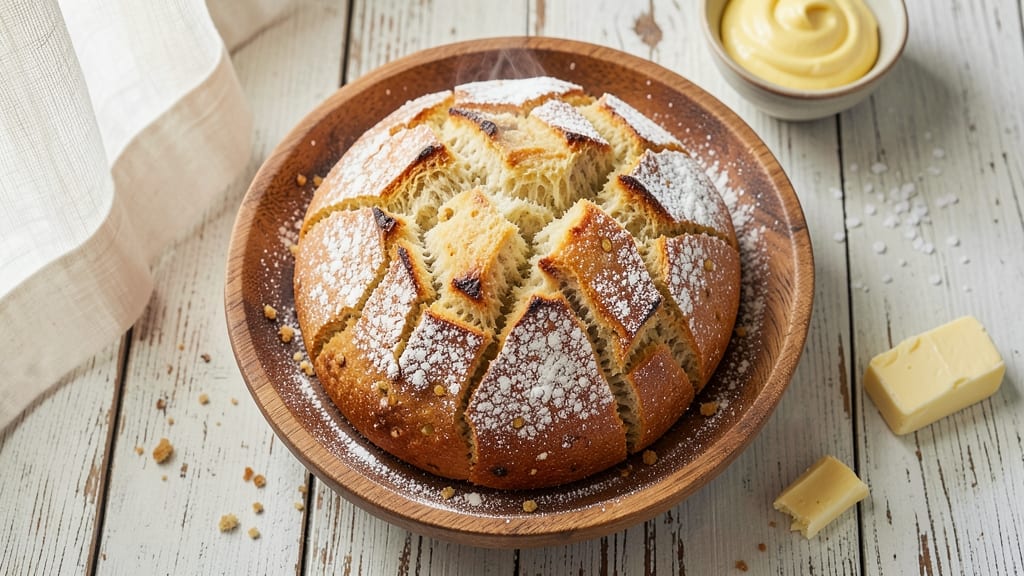
Martha Stewart’s Irish soda bread recipe delivers that perfect balance of tangy crumb and crispy crust—just like the loaves you’d find in an Irish countryside bakery. The secret lies in the soda ash activation and buttermilk tang, which create that signature dense yet tender texture without yeast or kneading.
I’ve baked this version countless times for holiday tables, and it never fails to impress, even with its rustic charm.
What sets this apart is Martha’s attention to detail—the way the dough develops a golden crust while staying moist inside, thanks to the baking soda and baking powder working together.
The recipe uses simple pantry staples (flour, buttermilk, soda ash) but transforms them into something extraordinary with just 30 minutes of active time and 45 minutes in the oven. No fancy equipment needed—just a bowl, a mixing spoon, and your favorite baking dish.
The result is a loaf with a crisp exterior and a soft, slightly crumbly interior, perfect for soaking up soups or spreading with Irish butter. The tangy flavor comes from the buttermilk, while the soda ash gives it that classic rise without yeast.
This bread is as much about tradition as it is about taste—simple enough for beginners but refined enough to feel special.
Serve it warm with honey, jam, or alongside stews for a meal that feels like a hug. Once you try this version, you’ll never go back to store-bought. Let’s get baking!
Ingredients for martha stewart irish soda bread
Pantry staples transformed into rustic Irish magic—just eight ingredients for that iconic crispy crust and tangy crumb.
| Ingredient | Amount | Notes |
|---|---|---|
| All-Purpose Flour 🌾 | 4 cups | Unbleached preferred for best texture |
| Buttermilk 🥛 | 1 ½ cups | Full-fat for optimal tanginess |
| Soda Ash 🧂 | ½ tsp | Not baking soda—critical for authentic rise |
| Baking Soda 🧂 | 1 tsp | Ensures proper leavening |
| Salt 🧂 | 1 tsp | Diamond Crystal preferred |
| Irish Butter 🧈 | ½ cup | Cold, cubed for crispy crust |
| Whole Milk 🥛 | ¼ cup | For dough moisture balance |
| Honey 🍯 | 2 tbsp | Wildflower for floral notes |
| Rolled Oats 🌾 | ½ cup | For rustic texture contrast |
| Fresh Rosemary 🌿 | 1 tbsp | Finely chopped, aromatic |
| Coarse Sea Salt 🧂 | 1 tbsp | For sprinkling crust |
The flour is non-negotiable—King Arthur or Bob's Red Mill work best for that signature crumb. Soda ash (not baking soda!) is the secret to authentic Irish soda bread—Penzeys or specialty baking stores carry it if your grocery doesn't. For buttermilk, full-fat is essential—the fat content creates that signature tang. I always make my own by mixing milk with vinegar (1 tbsp vinegar to 1 cup milk), but store-bought works too. The Irish butter should be cold when cubbed—room temperature makes the crust soggy. If you can't find Irish butter, Plugrá or Land O'Lakes cultured butter are solid substitutes.
No soda ash? Double the baking soda but expect a slightly different rise. Substituting buttermilk? Plain yogurt thinned with milk works in a pinch, but the flavor won't be identical. Short on rolled oats? Toasted whole wheat berries add similar texture. Rosemary can be swapped for fresh thyme or marjoram if you prefer milder herbs. The honey should be raw and unfiltered—pasteurized honey lacks depth. For a sweeter loaf, add 1 extra tbsp honey or 2 tbsp molasses. This bread freezes beautifully—slice before freezing for easy toast.
Mix the dough just until combined—overworking develops gluten and ruins the crumbly texture. Shape the loaf 2/3 taller than wide for that classic soda bread silhouette. Score the top with a sharp knife before baking—a deep cross or simple slash prevents cracking. The crust should be deep golden brown when done, with internal temps at 190°F. Store wrapped at room temperature for 3 days or freeze for up to 3 months. I always bake two loaves—one for the table, one for freezing. The flavor improves overnight as the crumb firms up.
Why You'll Love This Recipe
- No-Mix Magic: I swear by this recipe because it’s literally dump-and-stir. No kneading, no fuss—just flour, buttermilk, and those two little leaveners (soda ash and baking soda) working their magic. The buttermilk’s tang cuts through the richness, and the soda ash gives it that signature crisp crust without needing yeast or waiting hours.
- Tangy Crust, Soft Heart: Here’s what sold me—the crust is chewy in all the right ways, not dry or crumbly, while the inside stays tender. That soda ash kick? It’s like a warm hug for your taste buds, especially when you toast a slice and spread butter on it. (Yes, even on a Tuesday night.)
- Breakfast or Snack Star: This bread is my go-to for lazy mornings—just tear off chunks and pair with jam, or slice it for a quick toast. It’s also the perfect side for soups or stews, soaking up flavors like a sponge. Honestly, I’ve even used it as a base for open-faced sandwiches when I’m in a hurry.
- Pantry Staple, Zero Waste: Between us, this recipe uses ingredients you already have—flour, buttermilk, salt. The leftovers? They last forever if you wrap them well, and the slices stay fresh for days. Plus, it’s one of those recipes where you can halve the batch if you’re cooking for one, no guilt. Solid, reliable, and my secret weapon for lazy days.
Step-by-step instructions for Martha stewart's Irish soda bread
Here's the method that delivers Martha's signature buttery crust and tender crumb every time.
Combine Dry Ingredients for Perfect Leavening
In a large mixing bowl, whisk together the 4 cups all-purpose flour, 0.5 teaspoon soda ash, 1 teaspoon baking soda, and 1 teaspoon salt. The soda ash is critical here—it reacts with the buttermilk to create that signature tangy flavor and open crumb structure. I like to sift these ingredients through a fine-mesh sieve to eliminate any lumps and ensure even distribution throughout the dough.
Next, stir in the 0.5 cup rolled oats and 1 tablespoon finely chopped fresh rosemary. The oats add a delightful rustic texture contrast, while the rosemary infuses subtle herbal notes that pair beautifully with the buttermilk's tang. Use your fingers to break up any oat clusters, ensuring they're evenly dispersed in the flour mixture. This preparation step sets the foundation for that authentic Irish soda bread texture.
Mix Wet Ingredients for Tangy Foundation
In a separate bowl, combine the 1.5 cups buttermilk, 0.25 cup whole milk, 2 tablespoons honey, and 0.5 cup cold, cubed Irish butter. The buttermilk should be at room temperature—this ensures proper activation of the leavening agents. Gently whisk the mixture until the butter is just melted and incorporated, creating a smooth, slightly thick liquid.
Here's where the magic happens: the honey not only adds natural sweetness but also helps balance the acidity of the buttermilk. I like to warm the honey slightly (just enough to make it pourable) before adding it to the milk mixture—this helps it dissolve completely and distribute evenly. The butter should remain cold enough to create pockets of fat that will develop into that coveted crust during baking.
Form the Dough and Shape the Loaf
Create a well in the center of your dry ingredients and pour in the wet mixture. Using a wooden spoon or rubber spatula, gently combine everything until just mixed—you should still see dry flour streaks. Overmixing develops gluten, which would make the bread dense rather than tender. The dough will be shaggy and sticky, which is completely normal for Irish soda bread.
Turn the dough out onto a lightly floured surface and knead gently just 4-5 times until it comes together. Shape it into a round loaf about 8 inches in diameter, slightly taller in the center than the edges. This creates that classic Irish soda bread shape with a pronounced top. Don't worry about making it perfectly round—rustic imperfections are part of the charm. Place the shaped loaf on a parchment-lined baking sheet.
Create the Signature Crust and Bake
Preheat your oven to 375°F. Make a deep cross-shaped incision about ½ inch wide on top of the loaf using a sharp knife. This serves two purposes: it allows steam to escape (preventing a dense crumb) and creates that iconic cross pattern. Sprinkle the 1 tablespoon coarse sea salt evenly over the top and around the sides of the loaf—this enhances flavor and contributes to the crust development.
Bake for 45-50 minutes until the bread is deep golden brown and sounds hollow when tapped on the bottom. The internal temperature should reach 190°F at the center. I always check for doneness by listening for that hollow sound—it's a more reliable indicator than just looking at the color. During the last 10 minutes of baking, you'll notice steam escaping from the cross—this is perfect and indicates the bread is developing its signature texture.
Cool and Serve for Maximum Flavor
Remove the bread from the oven and transfer it to a wire rack to cool completely. This cooling step is crucial—it allows the internal structure to set properly and prevents a gummy texture. I know it's tempting to slice into warm bread, but resisting this urge ensures the best possible crumb structure and flavor development.
Once completely cooled, slice the bread into 8 even wedges (about 1.5 inches wide each) using a serrated knife. The exterior should be crisp and golden, while the interior reveals that characteristic open, slightly tangy crumb. Serve at room temperature with your favorite butter or jam. The flavor actually improves as the bread sits—this is when all the components truly come together in perfect harmony.
Pro Tips For Making Martha Stewart Irish Soda Bread
- MEASURE SODA ASH PRECISELY: That tiny box of soda ash is not like baking soda—it’s potent stuff. Use a scale for ½ teaspoon (2.5 grams) or measure it in a dry measuring spoon twice to avoid overdoing it. I learned this the hard way when my first batch tasted like a chemistry experiment.
- LET THE DOUGH REST (YES, REALLY): Skip the rush and let the mixed dough sit covered for 10 minutes before shaping. This lets the baking soda and soda ash activate fully, giving you a lighter crumb instead of a dense brick. (I know, I know—you’re eager, but trust me on this.)
- DON’T OVERMIX THE BUTTERMILK: Stir the buttermilk into the flour just until combined—lumps are fine. Overmixing develops gluten, and soda bread’s magic comes from its tender, crumbly texture. Think of it as a quick hug, not a workout for the dough.
- USE A LIGHT HAND WHEN SHAPING: Press the dough into the loaf pan with your hands, but don’t pack it down like you’re making a pie crust. A gentle press ensures the bread rises properly and doesn’t turn out gummy. (And no, your hands won’t be dough-free—embrace the mess.)
Storing and reheating your leftovers
Room Temperature Storage
Keep your Irish soda bread wrapped in a clean kitchen towel or parchment paper at room temperature for up to 3 days. The towel helps maintain moisture while allowing the crust to stay crisp.
I like to store it in a burlap sack for that authentic Irish bakery feel—it keeps the bread fresh longer and adds rustic charm. 🌾
Refrigerator Refresh
If you need to extend freshness beyond 3 days, slice the bread and refrigerate in an airtight container with a paper towel between layers. The bread will stay fresh for 5-7 days, though the crust may lose some crispness.
To revive, wrap slices in a damp paper towel and warm in a 350°F oven for 5-7 minutes—this restores that golden crunch. 💡
Freezer Preservation
For long-term storage, slice the bread and freeze in a single layer on a baking sheet before transferring to a freezer bag. This prevents slices from sticking together.
Thaw at room temperature for 1-2 hours or warm directly from frozen in a toaster oven at 300°F for 8-10 minutes—the crust crisps beautifully this way. I always freeze half a loaf to enjoy fresh-baked soda bread anytime. ❄️
Reheating Perfection
For the best texture, reheat slices in a skillet over medium heat for 1-2 minutes per side until golden and crisp. Add a pat of Irish butter while warming for extra richness.
Alternatively, pop slices in a 400°F oven for 5-7 minutes until heated through. Avoid the microwave—it turns the bread gummy. 🔥
Reviving Stale Bread
If your bread loses its crispness, don’t toss it! Sprinkle slices with water, wrap in aluminum foil, and bake at 375°F for 8-10 minutes.
The steam will restore moisture while the oven crisps the crust. This trick works wonders for bread that’s been sitting in the pantry too long. 💫
Nutrition facts
Frequently asked questions
Why does Irish soda bread need soda ash instead of baking soda?
Soda ash (sodium carbonate) creates that signature tangy flavor and open crumb structure that baking soda can't replicate. The chemical reaction with buttermilk produces carbon dioxide for rise and a subtle acidic bite. Baking soda alone would make the bread taste too alkaline and dense. For a substitute, double the baking soda—but expect a milder flavor.
Can I make this bread without buttermilk?
Yes! Mix 1 cup milk with 1 tablespoon vinegar or lemon juice, let sit for 5 minutes until curdled, then use as a 1:1 substitute. The tang remains, though not identical. For extra richness, add 1 tablespoon melted butter to the wet ingredients. The texture will be slightly less tender but still delicious.
What's the best way to prevent a dense soda bread?
Don't overmix the dough—just combine until flour disappears. Knead only 4-5 times to avoid developing gluten. Also, ensure your oven is fully preheated to 375°F and score the top before baking to release steam. A metal baking pan conducts heat better than glass, which can make the crust uneven.
How do I know when it's fully baked?
Tap the bottom—it should sound hollow when done. The crust should be deep golden brown with cracks forming. Internal temp should reach 190°F. If unsure, bake 5 more minutes—soda bread continues cooking after removal. Let it cool completely before slicing to prevent a gummy texture.
Can I add savory ingredients like cheese?
Try ½ cup sharp cheddar or feta mixed into the dough for a savory twist. For extra flavor, add 1 tsp smoked paprika or dried herbs—but reduce honey to 1 tbsp—to balance richness. The buttermilk's tang pairs beautifully with salty cheeses. Shape into a round and bake as directed.