
Main Courses
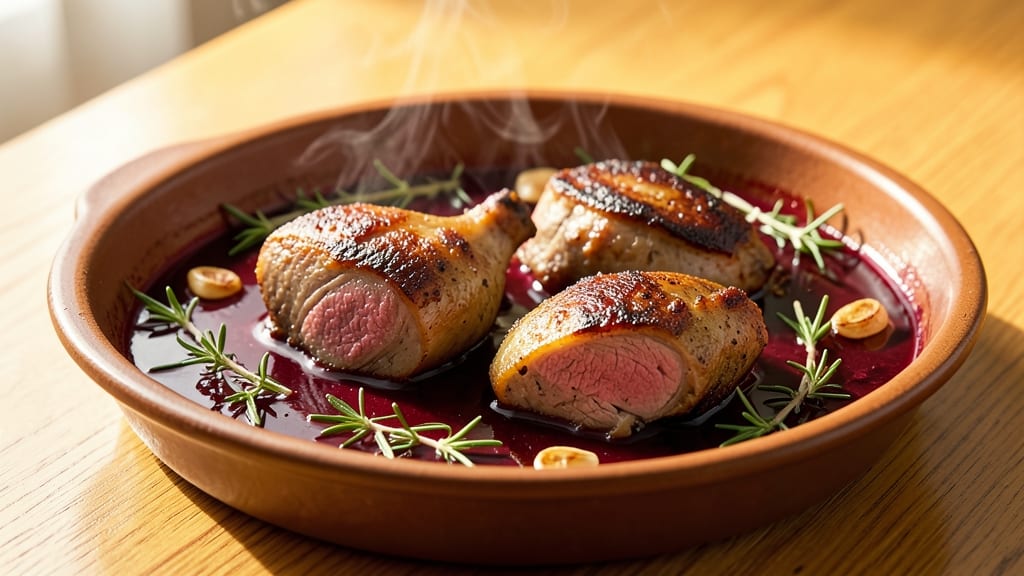
Mary Berry’s lamb shanks in red wine deliver the kind of slow-braised richness that transforms tough cuts into melt-in-your-mouth perfection. The secret lies in her signature technique of searing the meat, then braising it gently in a fragrant red wine and herb-infused sauce until tender enough to fall apart.
I’ve recreated this classic dish countless times, and each batch brings that same restaurant-quality depth to my dinner table.
What sets this recipe apart is Mary Berry’s attention to detail—herb bundles tied with twine, precise deglazing of the pan, and the careful balance of acidity and sweetness in the red wine reduction.
The result is a dish that’s both elegant and comforting, with a sauce so rich it coats every bite. This isn’t just a recipe; it’s a lesson in patience and precision that rewards you with a meal worthy of any special occasion.
The process begins with searing the lamb shanks to lock in flavor, followed by a slow braise that transforms them into tender, succulent slices.
The red wine sauce, enriched with stock and aromatics, develops layers of complexity as it simmers, creating a velvety finish that pairs beautifully with roasted vegetables or creamy mashed potatoes. Every step is designed to maximize flavor while keeping the technique accessible for home cooks.
Once you taste the first forkful—juicy lamb, caramelized edges, and a sauce that’s both bold and balanced—you’ll understand why this dish has stood the test of time.
It’s the kind of meal that turns a simple weeknight dinner into something memorable. Let’s get started on creating your own version of this timeless classic.
Ingredients for mary berry lamb shanks in red wine
Mary Berry’s signature lamb shanks need just 15 ingredients for restaurant-worthy flavor.
| Ingredient | Amount | Notes |
|---|---|---|
| Lamb Shanks 🐑 | 4 whole | Bone-in, 1.5-2 lb each |
| Dry Red Wine 🍷 | 1 ½ cups | Bold like Cabernet Sauvignon |
| Lamb or Beef Stock 🥄 | 2 cups | Homemade or high-quality store-bought |
| Fresh Rosemary 🌿 | ¼ cup | Chopped, stems removed |
| Fresh Thyme 🌿 | ¼ cup | Leaves only, stems removed |
| Garlic Cloves 🧄 | 6 cloves | Smashed, not minced |
| Carrots 🥕 | 2 whole | Whole, peeled, cut into chunks |
| Celery Stalks 🥬 | 2 whole | Cut into 1-inch pieces |
| Onion 🧅 | 1 whole | Yellow, peeled, quartered |
| Olive Oil 🫒 | 2 tbsp | Extra-virgin for searing |
| All-Purpose Flour 🌾 | 2 tbsp | For dredging shanks |
| Salt 🧂 | 1 ½ tsp | Kosher or sea salt |
| Black Peppercorns 🌶️ | 1 tsp | Freshly cracked |
| Twine 🧵 | 1 package | Kitchen twine, 18-inch pieces |
| Fresh Parsley 🌿 | 0.1 cup | Chopped, for garnish |
The lamb shanks are non-negotiable here. Bone-in, 1.5-2 pounds each—this cut stays tender during the long braise. Most butchers will cut them for you, but if you’re buying whole legs, ask for the shank portion. Costco or Whole Foods usually carry pre-cut shanks, but check the marbling—you want fat streaks for flavor. The herbs? Fresh rosemary and thyme from the grocery store’s produce section work, but I always grab extra since they’re used in both the braise and garnish. Twine isn’t fancy—just grab a small roll at the dollar store.
No red wine? Substitute beef stock with 1 tbsp balsamic vinegar for depth, but the acidity won’t be the same. Fresh herbs wilt fast? Dried thyme at one-third the amount works in a pinch, but fresh is worth the effort. The carrots, celery, and onion form the base—baby carrots or pre-cut veggies save chopping time. For the flour, all-purpose is fine, but if you’ve got bread flour, use that for a slightly thicker sauce. The garlic? Smash it with the flat side of your knife—this releases more flavor than mincing.
This dish tastes even better the next day, so make extra sauce if you’re serving seconds. Store leftovers in an airtight container for 4-5 days, or freeze portions for 3 months. I like to portion the sauce separately—it reheats beautifully over rice or pasta. The twine can be reused if you wash it well, but I usually toss it after one use. Garnish with parsley just before serving—it brightens up the rich sauce.
Why You'll Love This Recipe
- One-Pot Magic: The lamb shanks practically cook themselves—just sear, deglaze with wine, and let the oven do the work. I swear, the only real effort is choosing the right bottle of red (and I’ll let you in on my cheap-but-decent shortcut).
- Rich Without Trying: That deep red wine and rosemary-thyme combo? It turns tough shanks into melt-in-your-mouth perfection with almost no effort. Honestly, the first time I tasted it, I thought I’d overcooked them—until I cut in.
- Leftovers That Feel Fresh: It tastes even better the next day, and reheats like a dream (just add a splash of stock). Between us, I’ve brought this to potlucks and had people ask for the recipe—no one suspects it’s a "leftover" dish.
- Budget-Friendly Luxury: Lamb shanks stretch farther than you’d think, and a good red wine elevates it without breaking the bank. I’ll be real: this is the only "fancy" dish I make that doesn’t require a second mortgage.
Step-by-step instructions for Mary Berry's lamb shanks in red wine
Here's how to achieve tender, fall-off-the-bone lamb shanks with a rich red wine sauce.
Sear the Lamb Shanks for Maximum Flavor
Pat the 4 whole lamb shanks dry with paper towels—this ensures a proper sear. Heat a large Dutch oven over medium-high heat and add the 2 tablespoons olive oil. Once the oil shimmers, add the lamb shanks in batches, leaving space between them. Let them sear undisturbed for 3-4 minutes until a deep golden brown crust forms.
Here's the thing—don't crowd the pan. You want that beautiful crust to develop without steaming. Flip the shanks and sear the other side for another 3-4 minutes. As they cook, sprinkle with all 1.5 teaspoons salt and 1 teaspoon freshly cracked black peppercorns. The shanks should be well-seasoned on all sides before moving to the next step.
Dredge and Brown the Shanks
Remove the seared shanks from the Dutch oven and set them aside. In a small bowl, combine the 2 tablespoons all-purpose flour with 1 extra teaspoon salt and ½ teaspoon black peppercorns. Lightly dredge each lamb shank in this flour mixture, tapping off any excess. Return the shanks to the Dutch oven.
Place the Dutch oven back on medium heat and let the shanks brown for another 1-2 minutes per side. The flour will create a light crust that helps thicken our sauce later. You'll know it's ready when the flour turns a light golden color. This step is crucial for building depth of flavor in the final dish.
Sauté the Aromatics
Remove the lamb shanks once again and set them aside. In the same Dutch oven, add the 1 whole onion, 2 whole carrots, 2 whole celery stalks, and the 6 smashed garlic cloves. Cook over medium heat for 5-6 minutes, stirring occasionally, until the vegetables begin to soften and the garlic becomes fragrant.
Next, add the 0.25 cup chopped fresh rosemary and 0.25 cup fresh thyme leaves. Stir everything together and cook for another 1 minute until the herbs release their aromatic oils. You'll notice the kitchen filling with that wonderful herbal fragrance—this is when your dish starts to come together. The vegetables will form the flavorful base for our rich red wine sauce.
Deglaze and Simmer the Shanks
Pour in the 1.5 cups dry red wine, scraping up any browned bits from the bottom of the Dutch oven with a wooden spoon. Return the lamb shanks to the pot and bring everything to a simmer over medium heat. Once simmering, add the 2 cups lamb or beef stock. The liquid should come about halfway up the sides of the shanks.
Here's where patience pays off: cover the Dutch oven and transfer it to a preheated 325°F oven. Let the shanks braise for 2 to 2.5 hours, until they're fork-tender. You'll know they're done when a knife slides in easily and the meat pulls apart with gentle pressure. The sauce should have thickened into a rich, glossy consistency.
Finish and Garnish
Once the lamb shanks are tender, remove them from the Dutch oven and transfer to a serving platter. Strain the cooking liquid through a fine-mesh sieve into a clean saucepan and simmer over medium heat until slightly thickened. If needed, you can reduce it further by simmering uncovered for 3-4 minutes.
Return the lamb shanks to the sauce and spoon the reduced liquid over the top. Garnish each serving with 0.025 cup (about 1 tablespoon) of the 0.1 cup chopped fresh parsley. Serve immediately with crusty bread or mashed potatoes to soak up that delicious red wine sauce. The result should be tender, flavorful lamb shanks with a rich, aromatic sauce that's perfect for a special dinner.
Pro Tips For Making Mary Berry Lamb Shanks In Red Wine
- Sear the Shanks Hard: Get that Dutch oven screaming hot—lamb shanks need a deep, dark crust to hold up during hours of braising. I used to rush this, and the meat would turn out mushy instead of tender. Two minutes per side, undisturbed, until it’s the color of old leather.
- Deglaze Like a Pro: After browning, don’t just splash in the wine—scrape every last bit of fond from the pot with a wooden spoon. That’s where flavor lives, and skipping it means a dull sauce. I learned this the hard way when my first batch tasted like it was missing something.
- Simmer, Don’t Boil: Keep the liquid at a gentle simmer, not a rolling boil, or you’ll cook the wine off too fast and turn the sauce into glue. A steady, barely-there bubble is all you need—this recipe is about slow extraction, not speed.
- Herb Bundle Hack: Tie rosemary and thyme in cheesecloth (or use a sprig tied with twine) so you can pull it out at the end—no fishing for stems in your sauce. My grandmother swore by this, and it saves you from chewing on woody bits.
Wine and beer pairings for this mary berry lamb shanks in red wine
Wine Pairing Essentials
The rich, deep flavors of Mary Berry’s lamb shanks demand a wine with equal intensity. A bold Cabernet Sauvignon from Napa Valley or Tuscany is my go-to choice—its dark fruit notes and velvety tannins mirror the dish’s complexity.
Look for a wine with 14-15% alcohol to stand up to the lamb’s richness without overpowering it. 🍷
For a lighter but still robust option, try a Syrah from Rhône Valley—its peppery undertones complement the rosemary and thyme in the sauce beautifully. If you prefer Italian wines, a Chianti Classico with its bright acidity cuts through the dish’s richness, creating a perfect balance.
Avoid overly oaky wines; they’ll clash with the lamb’s natural flavors.
Beer Pairing Secrets
If wine isn’t your thing, a dark ale or stout can be a surprisingly great match. I love pairing this dish with a Belgian Dubbel—its caramel and spice notes harmonize with the red wine sauce.
For something lighter, a malty brown ale from New Belgium Brewing adds a touch of sweetness that rounds out the lamb’s savory profile. 🍺
Avoid hoppy IPAs—they’ll compete with the dish’s depth. Instead, opt for beers with moderate bitterness (around 30-40 IBU) to balance the lamb’s richness without overpowering it. A German Dunkel with its roasted malt flavors also works wonderfully, especially if you’ve added a touch of balsamic to the sauce.
Unexpected Pairings
For a non-traditional twist, consider a Port wine or Ruby Port as a dessert pairing—its sweetness contrasts deliciously with the savory lamb. Even a dry sparkling wine like Prosecco can refresh your palate between bites.
I’ve also found that a smoked Scotch whisky (like Laphroaig) complements the dish’s depth, especially if you’ve added smoked paprika to the sauce. 🔥
Serving Temperature Tips
Serve your red wine at 60-65°F to let its flavors shine alongside the lamb. If using beer, chill it to 45-50°F—just cold enough to highlight its malt and spice notes without muting them.
For whisky, serve it room temperature or slightly chilled to balance its smokiness with the dish’s richness.
Pro tip: Let your wine breathe for 10-15 minutes before serving—this opens up its aromas and makes the pairing even more harmonious. If you’re using a young Cabernet, decant it for 30 minutes beforehand to soften its tannins and enhance its fruitiness. The extra effort makes all the difference! ⏰
Nutrition facts
Frequently asked questions
How do I know when lamb shanks are fully tender?
Mary Berry’s method guarantees tender results when the lamb shanks can be easily pierced with a knife and the meat separates with gentle pressure—usually after 2 to 2.5 hours in the oven at 325°F. For extra assurance, check the internal temperature: it should reach 195-203°F. If they’re not quite there, add another 30 minutes covered.
Can I substitute beef stock for lamb stock in this recipe?
Yes, you can use beef stock as a 1:1 substitute, but lamb stock adds deeper flavor since it mirrors the meat’s natural taste. For extra richness, combine 1.5 cups beef stock with 0.5 cups lamb stock. If using only beef stock, add 1 teaspoon soy sauce or Worcestershire sauce to enhance umami.
Why does Mary Berry use herb bundles instead of chopped herbs?
Herb bundles (rosemary and thyme tied with twine) infuse flavor more evenly and prevent the herbs from turning bitter. They also make the dish look elegant! Remove them after 1 hour of braising to avoid overpowering the sauce. For convenience, use 1 teaspoon dried thyme and ½ teaspoon dried rosemary (crumbled) if fresh isn’t available.
What’s the best way to reheat leftover lamb shanks?
Reheat gently in the oven at 300°F for 15-20 minutes with a splash of water or stock to keep the sauce moist. Avoid microwaving—it makes the sauce watery. For quick reheating, warm the sauce separately on the stovetop, then toss the lamb shanks in for 2-3 minutes to reheat through. Leftovers taste even better the next day!
Can I make this dish in a slow cooker?
Sear the shanks as directed, then transfer everything (including wine and stock) to a 6-quart slow cooker. Cook on LOW for 7-8 hours or HIGH for 4-5 hours until tender. The sauce may be thinner—reduce it on the stovetop afterward. For deeper flavor, add ½ cup extra stock halfway through.