
Soups & Stews
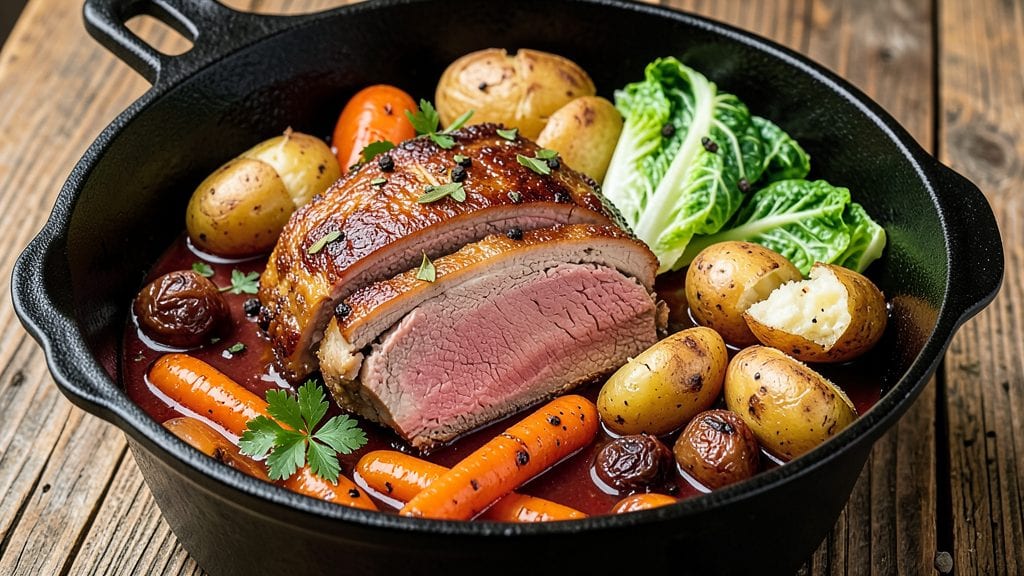
This old-fashioned corned beef and cabbage recipe delivers the hearty, comforting flavors that make it a St. Patrick's Day staple—just like Grandma used to make. The secret lies in slow-cooking the beef until it's fork-tender, then simmering it with cabbage, carrots, and potatoes until everything absorbs that rich, savory broth.
I've perfected this method over years of holiday cooking, ensuring every bite is packed with traditional Irish-American flavor.
The beauty of this classic dish is its simplicity and versatility. You start with a 3-pound corned beef brisket, which needs at least 4 hours of soaking to remove excess salt before slow cooking.
The cabbage, carrots, and potatoes cook directly in the broth, transforming tough cuts into melt-in-your-mouth perfection. This method guarantees a dish that's hearty enough for a crowd but still feels special enough for a family dinner.
What you'll end up with is a steaming pot of golden cabbage, tender beef, and fluffy potatoes, all bathed in a deeply flavorful broth. The aroma alone will fill your kitchen with nostalgia, while the taste delivers that perfect balance of savory, slightly sweet, and tangy notes.
This is the kind of meal that feels like a hug on a plate—warm, comforting, and impossible to resist.
Perfect for St. Patrick's Day gatherings, potlucks, or any occasion calling for a classic, crowd-pleasing dish. The leftovers reheat beautifully, making it ideal for meal prep. Let's get started on this timeless recipe that brings a taste of tradition to your table.
Ingredients for old fashioned corned beef and cabbage
Sixteen ingredients, one unforgettable St. Patrick's Day centerpiece—just like Grandma's legendary pot.
| Ingredient | Amount | Notes |
|---|---|---|
| Corned Beef Brisket 🥩 | 3 lb | Pre-soaked 4+ hours in water |
| Green Cabbage 🥬 | 1 ½ lb | Green cabbage, cut into wedges |
| Russet Potatoes 🥔 | 2 lb | Cut into 2-inch chunks |
| Carrots 🥕 | 1 lb | Whole, scrubbed, or baby carrots |
| Yellow Onions 🧅 | 2 whole | Quartered, skin on |
| Bay Leaves 🌿 | 2 whole | Fresh or dried |
| Garlic Cloves 🧄 | 4 cloves | Smashed, not minced |
| Black Peppercorns 🌶️ | 1 tbsp | Freshly cracked |
| Salt 🧂 | 1 tsp | Diamond Crystal kosher |
| Apple Cider Vinegar 🍎 | ¼ cup | For soaking (optional) |
| Juniper Berries 🌿 | 2 whole | Optional, for authentic flavor |
| Water 💧 | 12 cups | For slow cooking |
| Fresh Thyme 🌿 | ¼ cup | Leaves only, chopped |
| Whole Cloves 🌶️ | 4 whole | For aroma |
The corned beef is the star, so pick a 3-pound brisket from the deli counter—Boar's Head or Hormel are reliable brands. If it's pre-corned, skip the soak; if it's plain brisket, soak it 4+ hours in water with the vinegar and juniper berries (if using). The cabbage should be firm and vibrant, not wilted—Trader Joe's or local farmers markets have the best quality. Potatoes? Russets hold up best to long cooking, but Yukon Golds add creaminess if you prefer. I always grab extra carrots—they disappear fast when serving seconds.
No juniper berries? Skip them—this isn't a dealbreaker. Fresh thyme? Dried works at one-third the amount, but fresh has that bright aroma. The vinegar is key for tang, but lemon juice in a pinch works too. For the potatoes, cut them evenly so they cook at the same rate. Baby carrots are perfect here—they stay intact and sweet. And if you're short on time, parboil the potatoes for 5 minutes before adding to the pot to cut cooking time by 30 minutes.
This reheats like a dream—better the next day when flavors meld. Store in the broth for 4-5 days in the fridge, or freeze for up to 3 months. I always double the recipe for potlucks—leftovers make amazing sandwiches. For serving, garnish with extra thyme and a sprinkle of cracked peppercorns. The broth? Strain and reduce it for a quick gravy if you're feeling fancy.
Why You'll Love This Recipe
- One-Pot Magic: I swear by this recipe because it’s literally dump-and-go. Toss the brisket, chopped veggies, and potatoes into the pot with the corned beef liquid—no fancy layers, no stress. The onions caramelize right there, and the cabbage softens into tender, salty strands without a single extra pan.
- Salty-Sweet Perfection: That first bite? The brisket’s rich, peppery depth paired with the cabbage’s briny crunch—it’s like a hug in food form. The potatoes soak up all the flavor, turning into fluffy, buttery pillows, while the carrots add just enough sweetness to balance everything.
- Leftovers for Days: Between us, this recipe begs for seconds. The corned beef stays tender for hours, and the veggies only get better as they absorb more of that flavorful juice. I’ve turned it into sandwiches, hash, or even a quick fried rice—it’s my go-to when I’m too lazy to cook.
- Budget-Friendly Feast: Honestly, this is the kind of meal that makes grocery day exciting. A single brisket feeds four, the veggies are cheap staples, and the spices? Just salt, pepper, and bay leaves. No fancy ingredients, just pure, satisfying comfort food that won’t break the bank.
Step-by-step instructions for old-fashioned corned beef and cabbage
A slow-cooked masterpiece that brings traditional Irish flavors to life with tender meat and perfectly seasoned vegetables.
Prepare the Corned Beef Brisket
Begin by rinsing the 3 lb corned beef brisket under cold water to remove any excess curing salt. Place it in a large stockpot with the 12 cups water, 2 whole bay leaves, 4 smashed garlic cloves, 1 tbsp freshly cracked black peppercorns, 1 tsp salt, 0.25 cup apple cider vinegar, 2 whole juniper berries, and 4 whole cloves. Bring to a boil over high heat, then immediately reduce to a gentle simmer.
Skimming any foam that rises to the surface during the first 10 minutes is crucial—this ensures a clear broth. The corned beef needs to simmer uncovered for 3 hours, allowing the flavors to meld deeply. You'll know it's ready when the meat is fork-tender and pulls away from the bone with minimal resistance. Keep the pot off the heat's edge to maintain even temperature—uneven heat can lead to tough meat.
Add Vegetables for Perfect Texture
While the corned beef simmers, peel and cut the 2 lb russet potatoes into 2-inch chunks. Scrub the 1 lb carrots clean (no need to peel) and quarter the 2 whole yellow onions, leaving the skins on for added flavor. Core the 1.5 lb green cabbage and cut it into wedges, ensuring each piece is roughly the same size for even cooking.
After the corned beef has simmered for 3 hours, carefully remove it from the broth and set it aside on a cutting board. Add the potatoes, carrots, and onions to the pot, then return everything to a gentle simmer. Cook for 45 minutes until the potatoes are tender when pierced with a fork. Add the cabbage wedges and the 0.25 cup chopped fresh thyme, then simmer for another 30 minutes until the cabbage is just tender—it should still hold its shape but be easily pierced with a knife.
Rest and Slice for Maximum Juiciness
Once all the vegetables are tender, remove the pot from heat and let the corned beef and cabbage rest together for 15 minutes. This resting period allows the juices to redistribute throughout the meat and vegetables, ensuring every bite is moist and flavorful. During this time, preheat your serving platter or cutting board to help maintain the warmth of the dish.
Using a sharp carving knife, slice the corned beef against the grain into ¼-inch thick slices. Arrange the meat on a platter, then spoon the vegetables and their rich broth around it. The cabbage should be vibrant green with just a hint of tenderness, while the potatoes and carrots should be fork-tender but not mushy. Serve immediately with a ladle of the flavorful broth for dipping—this classic dish is best enjoyed fresh from the pot.
Pro Tips For Making Old Fashioned Corned Beef And Cabbage
- Brown the Brisket First: That pink corned beef isn’t traditional—it’s bland. After rinsing the brisket, sear it in a cold pot over medium heat until it releases a deep caramel crust (about 10 minutes). I used to skip this, but the flavor difference is like comparing store-bought gravy to homemade.
- Shred the Cabbage: Whole cabbage leaves turn mushy and bitter. Cut it into 4 wedges, core intact, then slice each wedge into ½-inch strips—like coleslaw but thicker. My grandmother swore this kept it crisp, and she was right: the texture stays perfect even after hours of simmering.
- Don’t Crowd the Potatoes: Piling potatoes on top of the brisket steams them into glue. Instead, layer them in a single layer around the meat, then add another layer of veggies. I learned this the hard way—my first batch turned out like mashed potatoes. Tight quarters = sad spuds.
- Add Onions Last: Onions caramelize fast and burn easy. Toss them in only 15 minutes before the end—just enough to soften without turning to ash. I was skeptical until I tried it: they stay sweet and jammy, not bitter or rubbery. (Yes, even if you’re impatient like me.)
Pro cooking tips for great old fashioned corned beef and cabbage
Soak Like a Pro
Never skip the 4-hour soak for your corned beef—this removes excess salt and ensures tender meat. I use a large stockpot with 12 cups cold water, ¼ cup apple cider vinegar, and 2 juniper berries (if available) for authentic flavor.
The vinegar adds tang while the juniper berries bring earthy depth. Change the water halfway through if using pre-corned beef to reduce sodium further. 💧
Skimming Secrets
During the first 10 minutes of simmering, skim off any foam or scum that rises to the surface with a fine-mesh skimmer. This keeps your broth clear and prevents a cloudy finish.
I use a slotted spoon>—it’s more precise than a ladle. Skim frequently until the water looks clean and sparkling. This step is non-negotiable for a restaurant-quality result.
Vegetable Timing
Add potatoes and carrots 45 minutes before the corned beef is done to prevent overcooking. The cabbage goes in last for 30 minutes—it should be tender but still hold its shape.
I parboil potatoes for 5 minutes beforehand to cut total cook time by 30 minutes without sacrificing texture. This is especially helpful when feeding a crowd.
Resting for Juiciness
Let the corned beef rest in the broth for 15 minutes after cooking. This allows juices to redistribute, preventing dry slices. I place the pot on a warm burner during resting to maintain temperature.
For extra flavor, add ¼ cup chopped fresh thyme during the final 30 minutes>—it infuses beautifully into the cabbage.
Slice Against the Grain
Use a sharp carving knife and slice the corned beef ¼-inch thick against the grain for maximum tenderness. I recommend a Dexter-Russell 12-inch slicing knife—it glides through the meat effortlessly.
For presentation, arrange slices on a platter with cabbage wedges fanned around them. The broth? Strain and reduce it for a quick gravy if you're feeling fancy.
Broth Magic
Save the cooking liquid—it’s packed with flavor! Strain it through a fine-mesh sieve and reduce by half on the stovetop for a rich gravy. I add 1 tbsp cornstarch> to thicken it further.
This gravy elevates the dish from classic to showstopper. For extra depth, stir in 1 tsp Worcestershire sauce> during reduction. 💡
Nutrition facts
Frequently asked questions
Why does my corned beef turn out tough?
Overcooking is the #1 culprit—corned beef should simmer 3 hours max for tender results. Always check doneness with a fork: meat should pull apart easily. Also, never skip the 4-hour soak (or at least 2 hours minimum) to reduce salt content. If using pre-corned beef, change the soaking water halfway through for extra tenderness.
Can I make this in a slow cooker?
Transfer the soaked corned beef and spices to your slow cooker, then add 8 cups water instead of 12 cups. Cook on low for 8-9 hours or high for 5-6 hours. Add vegetables during the last 1.5 hours to prevent mushiness. The slow cooker method actually enhances flavor—just don't skip the resting time!
What's the best way to reheat leftovers?
Reheat gently in the broth to maintain moisture—never microwave dry. Place leftovers in a pot with a splash of broth and warm on low heat for 10-15 minutes, stirring occasionally. For extra richness, add a splash of heavy cream or a pat of butter. This method keeps the meat juicy and prevents drying out. Leftovers actually taste better the next day when flavors meld!
Can I substitute sauerkraut for cabbage?
Yes, but with adjustments! Sauerkraut has more flavor and acidity, so use half the amount (about ½ lb) and reduce cooking time to 15 minutes to avoid over-softening. Skip the thyme since sauerkraut already has tangy depth. The broth will have a more pronounced tang—great for balancing rich dishes like mashed potatoes. Rinse the sauerkraut first to remove excess brine.
How do I make this dish more festive for St. Patrick's Day?
Add 1 tbsp Irish whiskey to the broth during the final 30 minutes of cooking for a boozy aroma. Garnish with fresh parsley and a sprinkle of gold leaf for visual flair. Serve with buttered soda bread and a side of creamy colcannon for an authentic Irish spread. The whiskey adds warmth without overpowering the classic flavors!