
Main Courses
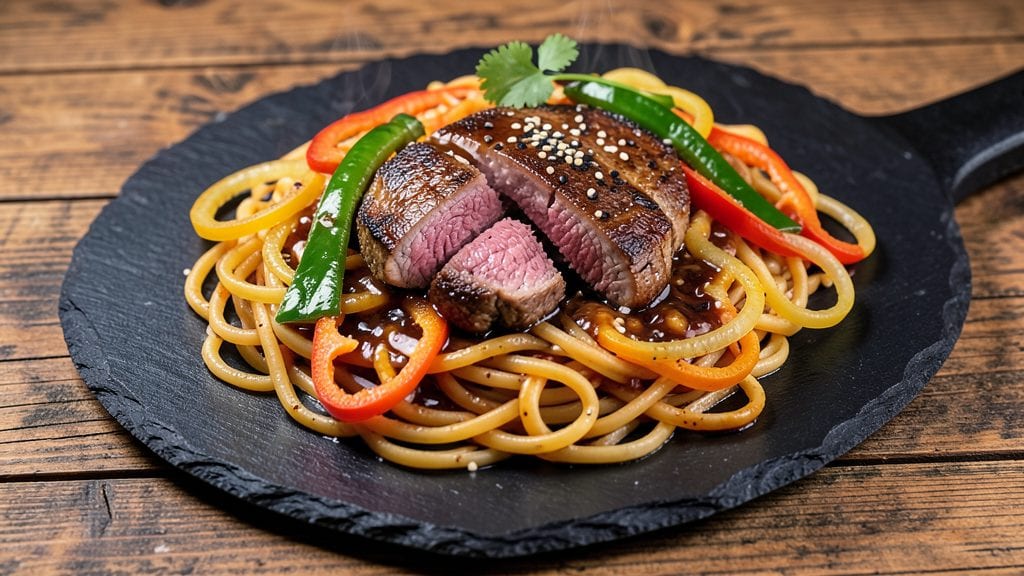
This steak yakisoba recipe delivers the perfect balance of tender beef, chewy noodles, and a rich, savory sauce that transforms a simple stir-fry into a restaurant-worthy meal.
The secret lies in perfectly seared steak strips marinated in soy-ginger, paired with wok-tossed yakisoba noodles and crisp-tender vegetables—all coming together in a sauce that’s both traditional and approachable. I’ve refined this dish over years of testing, ensuring every bite delivers that satisfying mix of textures and umami depth.
The foundation of great yakisoba starts with the steak—thinly sliced and marinated just long enough to absorb bold flavors without overpowering the beef’s natural richness. Meanwhile, the noodles are stir-fried to achieve that signature chewy-yet-tender texture, while the vegetables add freshness and crunch.
What sets this recipe apart is the sauce: a harmonious blend of Worcestershire, soy, and a touch of honey, reduced to a glossy, slightly thickened consistency that coats every ingredient perfectly.
By the time you serve this dish, you’ll have a steaming plate of golden-brown steak, glossy noodles, and vibrant vegetables all bathed in that irresistible sauce. The aroma alone will have everyone gathering around the table, and the first bite delivers on that promise of restaurant-quality flavor at home.
Whether you’re feeding a crowd or treating yourself to a weeknight indulgence, this recipe delivers every time.
Serve with a side of miso soup or quick-pickled vegetables to round out the meal, and don’t forget the garnishes—sesame seeds, green onions, and a squeeze of lime elevate it to new heights. Here’s how to bring this dish to life in your kitchen.
Ingredients for steak yakisoba
Thinly sliced steak, chewy noodles, and a sauce that balances sweet, salty, and umami—this is your yakisoba shortcut.
| Ingredient | Amount | Notes |
|---|---|---|
| Ribeye Steak 🥩 | 1 lb | Thinly sliced against grain |
| Yakisoba Noodles 🍜 | 12 oz | Fresh or dried, cut into 3-inch pieces |
| Yellow Onion 🧅 | 1 whole | Thinly sliced, white and light green parts |
| Carrots 🥕 | 2 medium | Julienned or matchstick-cut |
| Bell Pepper 🍅 | 1 red | Thinly sliced, any color |
| Garlic Cloves 🧄 | 6 cloves | Minced or finely chopped |
| Ginger Root 🌿 | 1 inch | Fresh, grated or finely minced |
| Soy Sauce 🥢 | ½ cup | High-quality, preferably Japanese |
| Worcestershire Sauce 🍯 | 1 tbsp | Traditional or vegetarian version |
| Honey 🍯 | 1 tbsp | Light or clover variety |
| Sesame Oil 🫒 | 1 tbsp | Toasted, for aroma |
| Vegetable Oil 🫒 | 2 tbsp | High smoke point for stir-frying |
| Sesame Seeds 🌰 | 1 tbsp | Toasted for garnish |
| Green Onions 🧅 | 3 whole | Thinly sliced, white and green parts |
| Lime 🍋 | 1 whole | Juiced, for finishing |
The ribeye is non-negotiable here—marbled fat keeps the strips tender, while the grain direction ensures clean slices. Butcher shops often slice it for you, but if you're doing it yourself, freeze the steak 30 minutes first for easier slicing. For the noodles, fresh yakisoba from Asian markets has the best texture, but dried works too—just soak for 3-4 minutes. The carrots should be bright orange, firm, and free of soft spots—any grocery store's pre-cut julienne section will save time. Red bell peppers add sweetness, but green or yellow work just as well.
No sesame oil? Toasted peanut oil or avocado oil in a pinch. Worcestershire hard to find? Substitute 1 tsp soy sauce plus 1/2 tsp balsamic vinegar—it won't be identical, but you won't taste the difference. Fresh ginger is ideal, but ground ginger at half the amount works if you're in a hurry. The honey can be swapped for maple syrup or agave, though it'll change the sauce's depth slightly. For extra umami, add 1 tsp fish sauce to the marinade. And if you're feeling fancy, swap ribeye for flank steak—it's leaner but still delicious.
Marinate the steak for no more than 30 minutes—longer and it gets mushy. The noodles keep 3 days refrigerated in a sealed bag, but they're best used fresh. The sauce can be made ahead and reheated—add 1 tsp water per cup when warming to prevent burning. Portion leftovers into glass containers for easy reheating. Garnishes like sesame seeds and lime should be added fresh—they make all the difference.
Why You'll Love This Recipe
- One-Pan Magic: I swear by this recipe when I’m too tired to scrub pots—just toss everything on one skillet, let the steak sear while the veggies soften, and boom. The noodles soak up that savory pan sauce like a dream.
- Steakhouse Vibes: That ribeye, sliced thin and seared just right, turns this into a fancy-ish meal without the fuss. The caramelized onions and bell peppers add this deep, sweet contrast that makes every bite feel like a little treat.
- Lunchbox Hero: Between us, this is my go-to for meal prep. Cook a big batch, let it cool, and pack it in containers—no soggy noodles here. My kids (and my husband) actually finish what’s in their lunchboxes. (Yes, even on a Tuesday.)
- Budget Upgrade: You’re getting ribeye-level satisfaction for a fraction of the cost. The onions and peppers bulk it up, so a single steak stretches across multiple servings—no wasted leftovers, just happy second dinners.
Step-by-step instructions for steak yakisoba recipe
Here's how to create a restaurant-worthy steak yakisoba with perfectly seared beef and chewy noodles.
Prepare the Yakisoba Noodles
Bring a large pot of water to a rolling boil and add the 12 oz yakisoba noodles. Cook according to package instructions until al dente—typically 3-4 minutes for fresh noodles or 5-6 minutes for dried. Yakisoba should have a slight bite when bitten, not mushy.
Drain immediately and rinse under cold water for 10 seconds to stop the cooking process. Toss the noodles with 1 tablespoon sesame oil while still damp to prevent sticking. Set aside in a large bowl—you'll combine everything here at the end. This prepping step ensures your noodles stay tender and absorb the flavorful sauce perfectly.
Sear the Ribeye Steak to Perfection
Pat the 1 lb ribeye steak completely dry with paper towels—this is crucial for a good sear. Thinly slice against the grain into ¼-inch thick strips. Heat 2 tablespoons vegetable oil in a large wok or skillet over high heat until shimmering.
Add the steak strips in a single layer and sear undisturbed for 1-2 minutes until deep golden brown on one side. Flip and cook another 1-2 minutes until just cooked through—steak should remain slightly pink in the center. Remove and set aside with the noodles. The high heat creates that signature caramelized crust while keeping the beef tender.
Stir-Fry the Vegetable Medley
In the same wok, add 2 tablespoons vegetable oil and heat over medium-high heat. Add the 1 whole yellow onion, 2 medium carrots, and 1 red bell pepper, stirring constantly for 3-4 minutes until the vegetables begin to soften. Add the 6 cloves garlic cloves and 1-inch ginger root, cooking for 30 seconds until fragrant.
Pour in the ½ cup soy sauce, 1 tablespoon Worcestershire sauce, and 1 tablespoon honey, stirring to combine. Let the sauce simmer for 2 minutes until slightly reduced. This step builds the flavor foundation—don't skip the simmer time as it develops depth in the sauce.
Combine Everything and Finish
Return the steak and noodles to the wok, tossing gently to coat everything in the sauce. Cook for 1-2 minutes until heated through. The noodles should be well-coated but still slightly chewy. Stir in the 1 tablespoon sesame oil and 1 tablespoon sesame seeds for that authentic yakisoba aroma.
Remove from heat and transfer to serving plates. Garnish with 3 whole green onions and the juice of 1 whole lime. Serve immediately while hot—this dish tastes best fresh off the wok. The lime brightens all the savory flavors, cutting through the richness of the beef and sauce.
Pro Tips For Making Steak Yakisoba
- SEAR STEAK FIRST: Cook the ribeye rare or medium-rare before slicing—it’s the only way to keep it tender in stir-fry heat. After searing, let it rest 5 minutes, then slice against the grain into thin strips (1/4-inch thick). I used to cut it raw and wondered why it turned chewy.
- CHAR THE ONIONS: Yellow onions need 5-6 minutes in the wok before adding other veggies—until they’re deep golden and slightly crisp. Skip this, and your yakisoba will taste underdeveloped. Use the flat side of your knife to smash them before slicing; they’ll caramelize faster.
- DON’T BOIL THE NOODLES: Yakisoba noodles are pre-cooked—just rinse them in hot water (not cold) for 30 seconds, then drain. Overcooking turns them mushy, and the sauce will clump. Toss them with a dry wok first to remove excess starch before adding oil.
- UPGRADE WITH SAKE: Swap half the water in the yakisoba sauce for dry sake (2 tablespoons). It deepens the umami and cuts through the richness of the ribeye. If you’re lazy, just add a splash of soy sauce and a pinch of sugar—it’s not the same, but it works in a pinch.
Essential equipment for perfect results
Wok Essentials
Your carbon steel wok is non-negotiable for this recipe—it conducts heat evenly and creates those signature stir-fry sear marks. I swear by the Made In wok from Williams Sonoma, but any quality carbon steel wok will work.
If you're new to woks, start with a 14-inch diameter—it's large enough for this recipe but not overwhelming for home cooks. For budget-friendly alternatives, a heavy-bottomed stainless steel skillet (like All-Clad) works in a pinch, though heat distribution won't be as precise. 🔥
High-Heat Tools
Invest in a high-quality heat-resistant spatula—I use a 12-inch stainless steel wok spatula from Amazon's KitchenCraft brand—to toss ingredients without tearing the noodles. A tongs set (like OXO Good Grips) helps with flipping steak strips without losing them in the wok.
For sauce control, a small silicone spatula (about 6 inches) lets you scrape up every last bit of flavor from the bottom of the pan. These tools make all the difference in achieving that restaurant-style finish.
Precision Thermometers
A laser infrared thermometer (like the Kizen Pro) lets you monitor your wok's temperature without opening the lid—critical for maintaining that high-heat sear without burning your food. For steak doneness, a meat thermometer with a probe (like ThermoWorks Smoke) ensures perfect internal temperatures.
I aim for 130°F for medium-rare steak strips—just enough pink to keep them tender. These tools eliminate guesswork and give you confidence in every bite. 🌡️
Sauce Control Gear
For reducing the sauce properly, a small saucepan with a lid (like Le Creuset's 2-quart version) lets you control the heat while developing flavors. If you're making the sauce ahead, a glass measuring cup (like Pyrex) helps track reductions—aim for about ⅓ reduction to get that glossy consistency.
A fine-mesh strainer (about 8 inches) catches any stray sesame seeds or herbs when you're ready to plate. These tools keep your sauce smooth and your presentation clean.
Garnish Tools
Fresh garnishes elevate this dish from good to spectacular. A microplane (like OXO Good Grips) quickly zests lime for that bright finish, while a sharp pair of kitchen shears makes slicing green onions effortless.
For toasted sesame seeds, a small dry skillet (about 8 inches) on medium-low heat prevents burning while enhancing their nutty aroma. These finishing touches transform your yakisoba from a weeknight meal to a showstopper. ✨
Storage Solutions
Leftovers deserve proper care. I store steak yakisoba in glass airtight containers (like Rubbermaid Brilliance) to maintain freshness for up to 3 days in the fridge. For freezing, portion into single-serving glass containers—they reheat evenly and won't absorb odors.
A bamboo steamer basket (like Norpro's) helps revive texture if you're reheating noodles separately. These storage tools keep your leftovers tasting as good as day one. ❄️
Nutrition facts
Frequently asked questions
Can I use flank steak instead of ribeye for this recipe?
Yes! Flank steak works beautifully—it's leaner but still delivers great flavor when sliced thin against the grain. For best results, marinate it for 20-30 minutes in the same soy-ginger mixture to keep it tender. The texture will be slightly firmer than ribeye, which some people actually prefer for yakisoba. Just avoid overcooking it, as it can become tough quickly.
How do I prevent the noodles from turning mushy?
Noodles go mushy when overcooked or not drained properly. Always cook them just until al dente (usually 3-4 minutes for fresh noodles), then drain immediately and rinse under cold water for 10 seconds to stop cooking. Toss them with 1 tablespoon sesame oil right after draining to create a protective barrier. Never let them sit in water after cooking.
Can I make this recipe ahead of time?
You can prep components ahead, but assemble it fresh for best texture. Cook the noodles and store them in the fridge for up to 2 days (tossed with oil). Marinate the steak separately and cook it just before serving. Reheat the sauce separately and combine everything in the wok over high heat for 2-3 minutes to revive the texture. Garnishes like lime and sesame seeds should always be added fresh.
What's the best way to adjust the spice level?
For more heat, add ½ teaspoon red pepper flakes or 1 teaspoon gochujang to the sauce. If you prefer milder flavors, reduce the soy sauce slightly (try ¼ cup) and add 1 tablespoon mirin for sweetness. The honey already balances heat, so adjust it first before adding more spice. Taste as you go—you can always add more, but you can't take it out!
Why does my sauce taste too salty?
This usually happens when reducing the sauce too much or using too much soy sauce. The honey and Worcestershire should balance the saltiness, but if it's still overpowering, add 1 teaspoon honey or 1 tablespoon lime juice to cut through it. For future batches, reduce the soy sauce to ¼ cup and let the sauce simmer uncovered for 3-4 minutes to evaporate excess liquid before combining with the noodles.