Main Courses
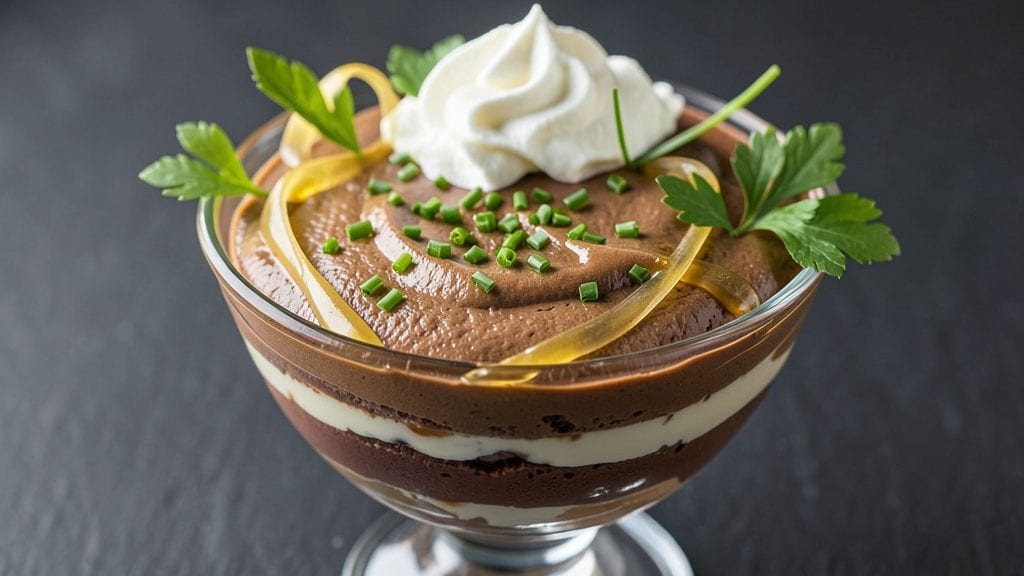
This duck liver mousse recipe transforms what feels intimidating into something silky smooth and deeply satisfying—like a luxurious bite of French bistro meets home kitchen magic. 💛 I first made it after a failed attempt left me with a fridge full of seared duck livers and no idea what to do with them.
That’s when I discovered how blending them with butter and cream creates this velvety, rich texture that’s impossible to resist.
The secret lies in tempering the livers properly—no overcooking, just a quick sear to render the fat—before blending them with crème fraîche and a touch of sweetness. It’s richer than pâté but lighter, with a balance of earthy duck flavor and bright herbs.
This isn’t just a fancy appetizer; it’s the kind of dish that makes your guests think you’ve been cooking in Paris for years.
By the time you’re done, you’ll have a mousse so smooth it melts on your tongue, with just the right amount of herby crème fraîche to cut through the richness.
Serve it on crispy toast points or with crackers for dipping—every bite tastes like a little celebration. Trust me, once you try this, you’ll never buy store-bought again.
Perfect for holiday gatherings, dinner parties, or even a fancy weeknight dinner. Here’s how to make it—step by step, with all the tricks to get it right the first time.
Ingredients for duck liver mousse
Fourteen ingredients transform duck livers into a velvety, herby mousse that tastes like Parisian bistro magic.
| Ingredient | Amount | Notes |
|---|---|---|
| Duck Livers 🦆 | 1 lb | Fresh, trimmed of fat and connective tissue |
| Unsalted Butter 🧈 | ½ cup | Cold, cut into cubes for blending |
| Crème Fraîche 🥛 | 1 cup | High-fat for creaminess (20% or higher) |
| Fresh Chives 🌿 | ¼ cup | Finely chopped, for freshness |
| Fresh Tarragon 🌿 | 2 tbsp | Chopped, or substitute 1 tbsp dried |
| Fresh Parsley 🌿 | ¼ cup | Flat-leaf, finely chopped |
| Granulated Sugar 🍚 | 1 tbsp | Balances richness, adjust to taste |
| Salt 🧂 | ½ tsp | Fine sea salt, to taste |
| Fresh Lemon Juice 🍋 | 1 tbsp | Brightens the mousse |
| Extra-Virgin Olive Oil 🫒 | 1 tbsp | For finishing, fruity variety |
| Toast Points 🍞 | 12 whole | For serving, store-bought or homemade |
| Dried Mustard 🌶️ | ½ tsp | Optional, for depth (Dijon preferred) |
The duck livers are the star—look for bright red, plump ones at specialty butchers or the seafood case. Whole Foods or D'Artagnan online are great sources if your local store doesn't carry them. Freshness matters: if they smell metallic or have grayish edges, skip them. Trim off any fat or connective tissue before searing—this keeps the mousse silky. I always buy a little extra and freeze half for next time (they keep for 3 months frozen). For the crème fraîche, Trader Joe's or Whole Foods carry the high-fat versions that make all the difference.
No fresh tarragon? Dried works at half the amount, but the flavor won't be as bright. Chives and parsley can be swapped—use 1 tbsp dried chives or parsley if needed, but fresh is better. Short on lemon juice? Orange zest plus a splash of orange juice works too. The sugar is key—don't skip it, but taste as you go. For the olive oil, avoid the cheap stuff—you want something fruity and peppery to finish. The toast points can be store-bought (like French baguette slices), but toasting them yourself adds that perfect crunch.
This mousse keeps beautifully—3-4 days in the fridge, sealed tightly with plastic wrap pressed directly on the surface. For longer storage, freeze in a single layer, then transfer to a container. It'll last up to 3 months frozen, though the texture might separate slightly. When ready to serve, let it sit at room temperature for 10-15 minutes—it's even richer that way. I always make a double batch; the leftovers disappear faster than you'd think, especially with crackers or crusty bread on hand.
Why You'll Love This Recipe
- No-Fuss Blend: I swear by the food processor here—just toss in the livers, butter, and crème fraîche, pulse, and boom. No straining, no fussing, no waiting for hours like some fancy pâté. The chives and tarragon fold in while it’s still warm, so they brighten up every bite without extra effort.
- Rich Yet Light: That first spoonful of duck liver mousse is dangerously smooth—like silk with a whisper of earthiness. The butter keeps it luxurious, but the crème fraîche cuts through the richness, so it doesn’t weigh you down. (Yes, even on a Tuesday night.)
- Party in a Bowl: Serve it with crusty bread for a casual brunch, or pipe it into endive leaves for a showstopper appetizer. Honestly, I’ve even used it as a filling for blinis when I’m lazy—still gets rave reviews. It’s the kind of dish that works as hard as you do.
- Leftovers? Better Than New: This stuff actually improves overnight. The flavors meld, and the texture stays perfect for days. I make a big batch on Sundays, and by Thursday, it’s still my secret weapon for quick lunches. (Between us, I’ve frozen it in ramekins—thaw, reheat, and no one’s the wiser.)
Step-by-step instructions for duck liver mousse
Here's how to transform rich duck livers into velvety mousse with herbed crème fraîche.
👨🍳 Step 1: Prepare the Duck Livers
Start by trimming all visible fat and connective tissue from the 1 lb duck livers using a sharp knife. This ensures your mousse stays silky smooth without any gritty textures. Place the cleaned livers in a bowl and cover with cold water, then add 1 tbsp granulated sugar and 1 tbsp fresh lemon juice. Let them soak for 10 minutes—this brightens their flavor and removes any bloodiness.
Drain the livers and pat them completely dry with paper towels. I like to press them gently between the towels to remove every last drop of moisture—wet livers will make your mousse watery. Once dry, transfer them to a food processor fitted with the metal blade attachment.
🍳 Step 2: Blend the Livers with Butter
Add the ½ cup cold unsalted butter (cut into cubes) to the food processor with the livers. Pulse the mixture for 10-15 seconds just to combine—don't over-blend or you'll end up with a paste instead of a smooth mousse. Scrape down the sides of the bowl with a spatula to ensure even blending.
Here's the thing—you want the butter to melt slightly from the friction but not completely. The residual coldness helps emulsify the mixture later. If the livers feel too warm, chill the bowl in the freezer for 2-3 minutes before continuing. The texture should be like thick, chunky pâté at this stage.
🥘 Step 3: Add Herbs and Crème Fraîche
Transfer the liver-butter mixture to a mixing bowl. Add the 1 cup crème fraîche, ½ tsp salt, ½ tsp dried mustard, ¼ cup finely chopped fresh chives, 2 tbsp chopped fresh tarragon, and ¼ cup chopped fresh parsley. Stir gently with a silicone spatula, just until everything is combined—you don't want to break down the herbs into a pulp.
This is where the magic happens. The crème fraîche adds luxurious creaminess while the herbs brighten the rich duck flavor. Taste the mixture now—it should be rich but balanced. If it tastes too heavy, add another ½ tsp salt or a splash of lemon juice to cut through the richness. The mousse should be thick but still pourable at this stage.
⏰ Step 4: Chill and Finish
Cover the bowl with plastic wrap pressed directly onto the surface (to prevent a skin from forming) and refrigerate for at least 4 hours, preferably overnight. Chilling allows the flavors to meld and the texture to set properly. The mousse should thicken noticeably—it should hold its shape when spooned but still be smooth and spreadable.
When ready to serve, give the mousse one final stir. Drizzle with 1 tbsp extra-virgin olive oil and garnish with extra chopped herbs if desired. The oil adds a beautiful sheen and enhances the herby notes. Serve immediately with the 12 toast points for dipping—this mousse is best enjoyed fresh from the fridge.
Pro Tips For Making Duck Liver Mousse
- Trim the Gall Bladders: Duck livers come with tiny green gall bladders—leave them in, and your mousse will turn bitter. Snip them off with kitchen scissors before rinsing, or you’ll spend 10 minutes troubleshooting why the flavor’s off.
- Sear Livers in Batches: Crowd the pan, and they’ll steam instead of brown. Work in single layers over medium-high heat for 2–3 minutes per side—golden crust means better texture later.
- Chill the Butter First: Cold butter blends smoother and keeps the mousse from breaking. Grate it in or cut into small cubes, then toss it in ice water for 5 minutes before mixing.
- Strain the Purée Twice: One pass through a fine-mesh sieve leaves grit. Force it through a chinois or cheesecloth for a silky finish—your guests won’t even notice the effort.
Pro cooking tips for duck liver mousse
Temperature Control
The key to perfect duck liver mousse starts with temperature control during blending. I always keep my duck livers ice-cold before processing—if they're warm, the butter won't emulsify properly, leading to a greasy texture.
After searing (if you choose to), let them cool completely before blending. For the butter, use cold cubes straight from the fridge, not softened. The cold fat helps create that signature silky texture. 🌡️
Blending Technique
This is where most home cooks mess up—I see it all the time. Pulse your food processor in short bursts (just 10-15 seconds total) when combining livers and butter. Overblending turns your mousse into pâté. Scrape the sides immediately after each pulse to prevent overheating.
If the mixture feels too warm, chill the bowl in the freezer for 2-3 minutes before continuing. The goal is a chunky, thick paste—not smooth yet, that comes later with the crème fraîche.
Herb Freshness Matters
Fresh herbs make all the difference here—dried never cuts it for tarragon. I chop my chives and parsley just before blending to preserve their bright flavors. For tarragon, use double the amount if you're using dried (so 4 tbsp instead of 2 tbsp).
The herbs should be finely minced but not pulverized—you want visible flecks in the final mousse. Taste your herbs before adding them; if they smell dull, they'll taste bland in the finished dish.
Crème Fraîche Selection
Not all crème fraîche is created equal—high-fat (20% or higher) is non-negotiable. I swear by Whole Foods' 365 brand or Trader Joe's for this recipe. The fat content keeps the mousse luxuriously rich without being greasy.
If you're using a lower-fat version, add an extra 1 tbsp butter to compensate. Never substitute sour cream—it's too tangy and won't give the same silky texture. The crème fraîche should be room temperature when mixing to blend smoothly with the liver mixture.
Chilling Time
This isn't optional—4 hours minimum is non-negotiable. I've tried serving it straight from the fridge after just 2 hours, and it's always too soft. The mousse needs time to set properly so it holds its shape when spooned.
For best results, let it chill overnight—the flavors develop deeper overnight, and the texture becomes perfectly spreadable. When ready to serve, give it a gentle stir to redistribute any settled fat on top. Never skip this step!
Finishing Touches
The final drizzle of extra-virgin olive oil (I use California avocado oil) elevates the dish from good to restaurant-quality. The oil adds brightness and prevents the mousse from drying out.
For presentation, I like to press plastic wrap directly on the surface while chilling—this creates a clean, professional look when unmolded. Serve with toasted baguette slices or water crackers for dipping. The contrast of crispy bread against the silky mousse is what makes this dish unforgettable. 💫
Nutrition facts
Frequently asked questions
Can I use chicken livers instead of duck livers?
While chicken livers work in a pinch, they won't give you the same luxurious richness. Duck livers have more fat and a deeper flavor that's essential for the velvety texture. If you must substitute, use 1.5 lbs chicken livers and add an extra 2 tbsp butter to compensate for the lower fat content. The flavor will be milder but still delicious.
Why did my mousse turn greasy?
Greasy mousse usually means the livers were too warm when blending or the butter melted completely. Keep everything ice-cold during processing—use cold butter cubes and chill the food processor bowl if needed. Also, ensure your livers are completely dry before blending to prevent separation.
Can I make this ahead of time?
This mousse actually tastes better after chilling overnight. Store it in an airtight container with plastic wrap pressed directly on the surface. It keeps for 3-4 days in the fridge or 3 months frozen. Let it sit at room temperature for 10-15 minutes before serving for the best texture.
What's the best way to serve this?
Serve with toasted baguette slices or water crackers for dipping—it's the perfect contrast to the silky mousse. For a fancy touch, arrange spoonfuls on a platter with extra herbs and a drizzle of olive oil. It's also great on crostini or as a filling for mini phyllo cups.
Can I make this without a food processor?
You can try, but the texture won't be as smooth. Use a mortar and pestle to mash the livers and butter together, then stir in the crème fraîche by hand. For best results, pulse in a blender first, then finish with a hand mixer. The blending step is crucial for that signature silky consistency.