Salads
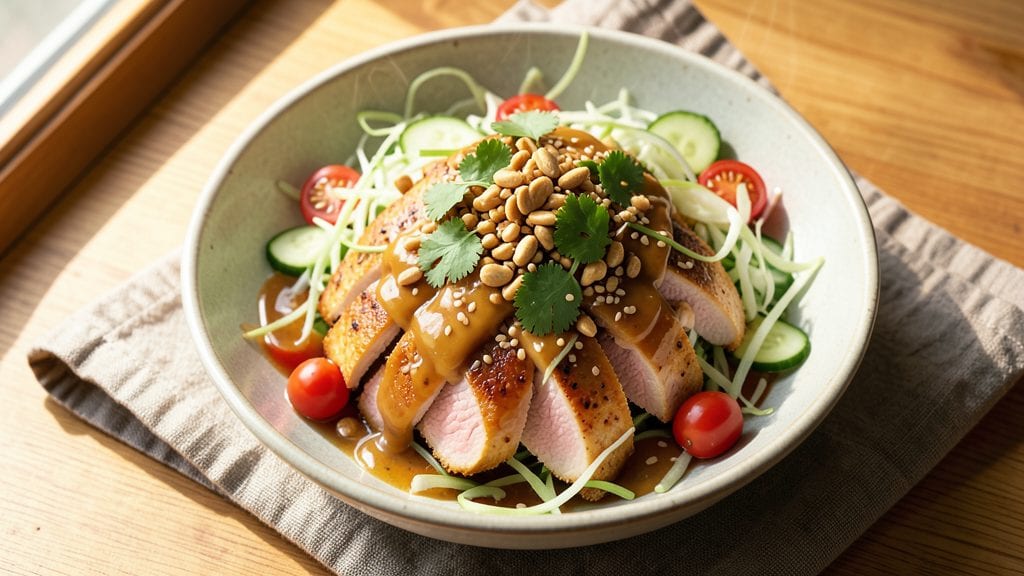
J Alexander's Thai Kai Salad copycat recipe delivers the same restaurant-quality crunch and creamy dressing you crave—right in your home kitchen. The secret lies in perfectly seared chicken, crisp vegetables, and a velvety peanut-lime dressing that balances sweet, tangy, and savory notes.
I've recreated this dish after years of testing, ensuring every element comes together just like the original.
What makes this salad special is the wok-seared chicken, which stays juicy on the inside while developing a crispy exterior. The dressing is emulsified properly for that signature creamy texture without separating, and the toppings—crunchy peanuts, fresh herbs, and lime—add layers of flavor in every bite.
This isn't just a salad; it's a complete meal with protein, freshness, and depth.
By the time you're done assembling it, you'll have a dish that's vibrant, satisfying, and packed with authentic Thai flavors. The chicken stays tender, the vegetables retain their crunch, and the dressing clings perfectly to everything. It's the kind of recipe that transforms a simple lunch into something truly special.
Ready in just 30 minutes, this copycat version keeps the restaurant magic alive while adapting for home cooks. Whether you're serving it for a weeknight dinner or a weekend gathering, it's a dish that always impresses. Let's get started!
Ingredients for j alexander's thai kai salad copycat
Crispy chicken, creamy dressing, and crunchy veggies—here's how to nail J Alexander's Thai Kai Salad at home.
| Ingredient | Amount | Notes |
|---|---|---|
| Boneless Chicken Breast 🍗 | 1 ½ lb | Pounded thin for even cooking |
| Extra-Virgin Olive Oil 🫒 | ½ cup | For searing chicken and dressing |
| Peanut Butter 🥜 | ½ cup | Creamy, unsweetened preferred |
| Lime Juice 🍋 | ¼ cup | Freshly squeezed, seeds removed |
| Soy Sauce 🍶 | ¼ cup | Low-sodium preferred |
| Brown Sugar 🍬 | ¼ cup | Packed, light or dark |
| Garlic Cloves 🧄 | 6 cloves | Minced, fresh preferred |
| Fresh Ginger 🌿 | 1 tbsp | Grated, peeled |
| Red Bell Pepper 🌶️ | 1 whole | Thinly sliced, seeds removed |
| Green Cabbage 🥬 | 4 cups | Shredded, thinly sliced |
| Carrot 🥕 | 1 whole | Julienned, thin strips |
| Roasted Peanuts 🥜 | ½ cup | Crushed, unsalted preferred |
| Fresh Cilantro 🌱 | ¼ cup | Chopped, stems removed |
| Red Chili Flakes 🔥 | ½ tsp | Adjust for heat preference |
| Sesame Seeds 🌾 | 1 tbsp | Toasted for garnish |
The chicken is everything here. Buy boneless, skinless breasts—they cook faster and stay juicier. Pound them to ¼-inch thickness with a meat mallet or rolling pin. Costco or Whole Foods often have the best quality for this. If you can't find fresh ginger at the grocery store, the frozen stuff in the Asian aisle works just as well—just thaw and grate it. For the peanut butter, creamy and unsweetened is non-negotiable—it keeps the dressing smooth and authentic. Grab a small jar of Jif or Skippy if you're in a pinch, but the natural brands at Trader Joe's have better flavor.
No fresh cilantro? Substitute 2 tbsp chopped mint or basil—it won't be identical, but it'll still add freshness. Out of red bell pepper? Green or yellow works too, but the color difference is noticeable. The dressing can be made ahead (up to 3 days in the fridge), but wait to add the lime juice until serving—it keeps the dressing vibrant. For extra crunch, toast your peanuts in a dry pan for 3-4 minutes before crushing them. The brown sugar can be swapped for honey or agave if you're avoiding refined sugar, but the molasses notes are key here.
This salad tastes even better the next day—the flavors meld and the chicken stays juicy. Store the dressing separately in an airtight container, and keep the veggies and chicken in a sealed container with paper towels to absorb moisture. Reheat chicken in a skillet for 1-2 minutes before serving to restore crispiness. The dressing keeps for 5 days in the fridge, and you'll have enough for leftovers or another salad. Freeze the dressing without the lime juice for up to 3 months—just add fresh lime when you're ready to use it.
Why You'll Love This Recipe
- No-Fuss Protein Base: The chicken cooks in one pan while you toss the salad—no separate boiling or steaming. Just season, sear, and slice. That crispy edge with the creamy center? Chef’s kiss, and it’s ready before the kids even finish their homework.
- Peanut Butter Magic: Honestly, I wasn’t sure about peanut butter in a salad until I tried this. The creamy richness cuts through the bright lime and soy, while the olive oil keeps it from feeling heavy. It’s weirdly addictive—like a Thai takeout hug in bowl form.
- Lunchbox Hero: Between us, this is my go-to for meal prep. The dressing clings to everything, so it stays fresh for days. Pack it in jars or containers—no soggy greens here. My daughter picks out the chicken first, but still asks for seconds. (Yes, even on a Tuesday.)
- Budget-Friendly Flex: You’re using pantry staples here: peanut butter, soy sauce, lime. The chicken stretches further than you’d think, and leftovers reheat like a dream. I’ve served it at BBQs, potlucks, and lazy Sundays—no one ever asks what’s in it.
Step-by-step instructions for J Alexander's Thai kai salad
Here's how to recreate that signature creamy, crunchy salad with perfect texture and flavor.
Cook and Slice the Chicken Breast
Start by pounding the 1.5 lb boneless chicken breast between two sheets of plastic wrap to an even ¼-inch thickness. This ensures even cooking and tender bites. Heat 2 tablespoons of the 0.5 cup extra-virgin olive oil in a large skillet over medium-high heat until shimmering.
Add the chicken and cook for 3-4 minutes per side until golden brown and cooked through to an internal temperature of 165°F. Transfer to a cutting board and let rest for 5 minutes before slicing against the grain into thin strips. The chicken should be juicy but firm - not rubbery. Keep it warm while you prepare the rest of the salad components.
Prepare the Creamy Peanut Dressing
In a medium bowl, whisk together the 0.5 cup peanut butter, 0.25 cup lime juice, 0.25 cup soy sauce, 0.25 cup packed brown sugar, minced 6 cloves garlic, and 1 tablespoon grated fresh ginger. The mixture will be thick - this is perfect for creating that signature creamy texture.
Slowly drizzle in the remaining 0.3 cup extra-virgin olive oil while whisking continuously. Add 0.5 tsp red chili flakes and mix until smooth. Taste and adjust seasoning - you might want to add a splash more lime juice or a pinch of salt. This dressing should be thick enough to coat the back of a spoon but still pourable.
Assemble the Crunchy Vegetable Base
In a large mixing bowl, combine the 4 cups shredded green cabbage, 1 whole thinly sliced red bell pepper, and 1 whole julienned carrot. This vegetable mix should be vibrant and colorful - the cabbage should be crisp with thin, even shreds. Add the 0.5 cup crushed roasted peanuts and 0.25 cup chopped fresh cilantro, tossing gently to distribute evenly.
Drizzle half of the peanut dressing over the vegetable mixture and toss again until everything is evenly coated. The vegetables should be lightly dressed but still retain their individual textures. Set aside while you prepare the final garnish.
Combine and Garnish for Perfect Presentation
Add the sliced chicken to the vegetable mixture and gently toss everything together. The chicken should be evenly distributed throughout the salad. Drizzle the remaining peanut dressing over the top and toss one final time to combine. This is where the magic happens - the creamy peanut sauce should be evenly distributed but still visible in pockets throughout the salad.
Transfer the salad to a serving platter and sprinkle with the 1 tablespoon toasted sesame seeds. For that signature J Alexander's presentation, arrange the salad in a circular pattern with the sesame seeds forming a decorative border around the edges. Serve immediately while the chicken is still warm and the vegetables are crisp.
Pro Tips For Making J Alexander'S Thai Kai Salad Copycat
- Sear Chicken High: Get that pan screaming hot—like, smoking hot—before adding the chicken. I used to rush this and end up with bland strips; now I wait until the oil shimmers and the first piece sizzles aggressively. That’s when the Maillard reaction kicks in, and the chicken actually tastes like it belongs in a restaurant dish.
- Toast the Peanut Butter: Skip the raw peanut butter—heat it gently in a small pan with a splash of lime juice until it’s just fragrant and slightly nutty. This banishes that beany aftertaste and makes the dressing sing. (Yes, even if you’re impatient like me, give it 2 minutes.)
- Rest Chicken Twice: First, let the chicken rest 5 minutes after cooking—this keeps it from turning rubbery. Then, before slicing, tent it with foil and wait another 5. I learned this the hard way when my strips turned to sad, dry sticks mid-salad assembly.
- Whisk Soy Last: Mix everything except the soy sauce first, then add it at the end. The peanut butter-lime base needs to emulsify smoothly, and soy can break that up if tossed in too early. Stir like you’re angry at the dressing—just until combined.
Pro cooking tips for this recipe
Wok-Searing Secrets
To get that signature crispy-yet-juicy chicken, I swear by a wok or cast-iron skillet—they conduct heat better than nonstick pans. Heat your pan until it's smoking hot before adding the chicken. If you don’t have a wok, a Lodge cast iron works perfectly.
I like to sear the chicken in batches if needed, but don’t overcrowd the pan—this keeps the temperature high and the chicken crispy. 🔥
Pro tip: After searing, transfer the chicken to a wire rack set over a baking sheet. This lets air circulate underneath, keeping it crispy while it rests. If you don’t have a rack, a slotted spoon works in a pinch.
The key is to never skip the rest—even 5 minutes makes a difference in texture.
Dressing Emulsification
The dressing is where the magic happens, but it’s easy to mess up. Start by whisking the peanut butter, lime juice, soy sauce, and brown sugar until smooth—this is your base. Then, slowly drizzle in the olive oil while whisking vigorously.
If the dressing breaks or looks grainy, you’re adding the oil too fast. I like to use a hand mixer for this step—it’s faster and more consistent than whisking by hand. 💡
For extra stability, add 1 teaspoon of rice vinegar to the dressing. It acts as a natural emulsifier, keeping the peanut oil and lime juice from separating. Taste as you go—you might need a pinch of salt or more lime juice to balance the flavors.
Store any leftovers in an airtight container in the fridge, but give it a good stir before using.
Vegetable Prep Like a Pro
Crispness is everything in this salad, so shred the cabbage as thinly as possible—almost like ribbons. A mandoline slicer makes this a breeze, but a sharp knife works too. For the carrots, julienne them into thin matchsticks—this adds texture without overpowering the dish.
I like to soak the shredded cabbage in ice water for 5 minutes before draining to keep it extra crisp. 🥬
Don’t skip the peanut toasting—it adds depth of flavor. Spread the peanuts on a dry skillet over medium heat and toast for 3-4 minutes, stirring constantly, until fragrant.
Let them cool slightly before crushing—this prevents the dressing from turning greasy. If you’re short on time, store-bought crushed peanuts work, but toasting your own makes a world of difference.
Balancing Flavors
The dressing should be sweet, tangy, and savory all at once. If it tastes too sweet, add a splash of lime juice or soy sauce. Too tangy? A pinch of brown sugar or a dash of honey balances it out.
For heat, adjust the red chili flakes—start with ½ teaspoon and add more to taste. I like to finish with a lime wedge on the side so everyone can squeeze it fresh. 🍋
For extra umami, add 1 teaspoon of fish sauce to the dressing—it’s a secret ingredient in many Thai dishes. If you’re avoiding it, a splash of extra soy sauce works in a pinch.
Taste the dressing before tossing it with the salad—this way, you can adjust it without ruining the whole dish. The goal is harmony, not overpowering flavors.
Nutrition facts
Frequently asked questions
Can I make this salad ahead of time?
The dressing and chicken can be prepped separately up to 3 days in advance. Store the dressing in an airtight container in the fridge, but wait to add the lime juice until serving to keep it vibrant. Keep the chicken and vegetables in separate containers with paper towels to absorb moisture. Reheat the chicken in a skillet for 1-2 minutes before assembling to restore crispiness. The flavors actually improve overnight as everything melds together!
What if I don't have a wok?
A cast-iron skillet or heavy-bottomed stainless steel pan works perfectly for searing the chicken. Heat it until smoking hot before adding the chicken to get that crispy exterior. If you're worried about sticking, use enough oil (about 2 tablespoons) and don't overcrowd the pan. A Lodge cast iron is my go-to for this recipe!
How do I fix a broken dressing?
If your peanut dressing separates, whisk in 1 teaspoon of rice vinegar or 1 tablespoon of hot water to re-emulsify it. For extra insurance, add ½ teaspoon of xanthan gum (found in baking aisles) and whisk vigorously. If it's still grainy, strain it through a fine-mesh sieve. The key is to add liquids slowly while whisking continuously!
Can I substitute the chicken?
For a vegetarian version, use extra-firm tofu pressed and pan-fried, or crispy baked tempeh. If you prefer seafood, shrimp or white fish work beautifully—just cook them until just done (145°F for shrimp). For a shortcut, use rotisserie chicken (skin removed) and sear it briefly in the pan to restore crispiness.
Why is my cabbage soggy?
Soggy cabbage usually means it was over-shredded or not drained properly. Shred it as thinly as possible (almost like ribbons) and soak in ice water for 5 minutes before draining thoroughly. Also, don't add the dressing until just before serving. If using pre-shredded bagged cabbage, rinse and drain it well first. The key is crispness—don't let the cabbage sit in moisture!